Suspension Safety Risk Calculator
Suspension Symptoms Assessment
Select all symptoms you're experiencing to assess your suspension safety risk:
Your suspension has critical safety issues. Stopping distances can increase by up to 17% (RAC 2023). Do not drive further. Schedule immediate inspection.
Your suspension is compromised. You're at significant risk of loss of control, especially in wet conditions. Have your vehicle inspected as soon as possible.
Your suspension shows early signs of wear. While still driveable, it's recommended to have a professional inspection within 2 weeks to prevent worsening conditions.
Driving with bad suspension isn’t just uncomfortable-it’s dangerous. You might think a bouncy ride or odd noises are just annoyances, but worn suspension parts can turn a routine drive into a serious risk. If your car feels like it’s floating over bumps, pulls to one side, or takes longer to stop, you’re not just dealing with a noisy ride-you’re compromising your control, your tires, and maybe even your life.
What Happens When Suspension Goes Bad?
Your suspension system isn’t just there to make the ride smooth. It’s a critical safety system that keeps your tires in contact with the road. Every time you hit a bump, turn a corner, or brake hard, your shocks, struts, springs, and control arms work together to maintain traction. When they wear out, that connection breaks.
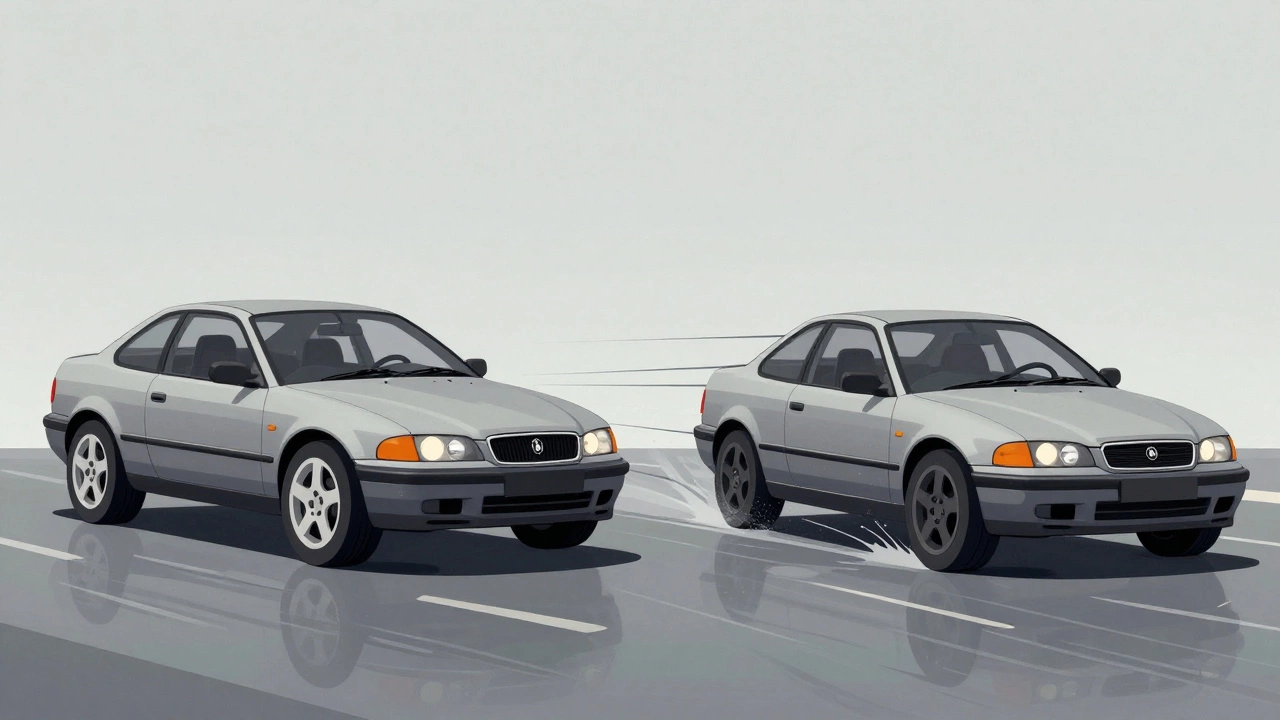
Think of it like this: if your tires are the only part of your car touching the road, then your suspension is what keeps them pressed down firmly. Worn shocks mean your tires bounce instead of grip. That’s why you’ll notice your car doesn’t stop as quickly. In fact, a 2023 study by the UK’s RAC found that vehicles with worn suspension took up to 17% longer to stop from 60 mph compared to those with healthy systems. That’s a full car length at highway speeds.
Signs You Have Bad Suspension
You don’t need a mechanic to tell you something’s wrong. Your car will tell you-if you know what to listen for:
- Excessive bouncing-after hitting a bump, your car should settle quickly. If it keeps bobbing up and down like a trampoline, your shocks are done.
- Uneven tire wear-if you see cupping (scalloped dips) on your tires, that’s a classic sign of suspension problems. The tire is bouncing instead of rolling smoothly.
- Nose diving or squatting-when you brake, the front end should dip slightly. If it dives hard, or if the back sinks when you accelerate, your suspension isn’t controlling movement anymore.
- Steering feels loose or pulls-if your car drifts to one side on a straight road, or you feel vibration through the steering wheel, worn control arms or bushings are likely to blame.
- Noise over bumps-clunking, knocking, or rattling sounds mean metal is hitting metal. That’s not normal.
These aren’t just symptoms. They’re warning signs your car is losing its ability to handle safely.
What You Risk Driving with Bad Suspension
Driving with worn suspension doesn’t just hurt your ride-it hurts your safety. Here’s what’s really at stake:
- Reduced braking-as mentioned, stopping distances increase dramatically. In wet conditions, that gap becomes deadly.
- Loss of steering control-if your tires lose contact with the road even for a fraction of a second during a turn, you could slide or spin out.
- Increased tire wear-bad suspension can destroy tires in as little as 5,000 miles. Replacing tires is expensive. Replacing suspension is cheaper.
- Damage to other parts-worn suspension puts extra stress on your steering components, wheel bearings, and even your brake lines. Fixing one problem early saves you from five more later.
- Higher chance of accidents-the AA reports that suspension-related failures contributed to over 3,200 accidents in the UK in 2024. Most were on older cars with neglected maintenance.
It’s not an exaggeration: driving with bad suspension is like driving with half-brakes and blurry vision. You might get away with it for a while-but you’re playing with fire.
How Long Can You Really Drive With It?
Some people say, “I’ve driven like this for months.” And sure, maybe you have. But that doesn’t mean it’s safe. There’s no official “grace period” for worn suspension. Once you notice signs, you’re already in the danger zone.
Here’s a simple rule: if you can see damage or feel instability, don’t wait. A cracked bushing or leaking shock absorber won’t suddenly fail in a dramatic explosion. But it will fail gradually-enough to make you lose control on a wet corner or during an emergency swerve.
Most manufacturers recommend inspecting suspension components every 20,000 miles. But if you drive on rough roads, potholes, or gravel-common in the UK-you should check them every 10,000 miles. And if you’re already noticing symptoms, don’t wait for the next service. Get it checked now.
What Parts Usually Fail First?
Not all suspension parts wear at the same rate. Here’s what typically goes first:
- Shock absorbers-these are the most common failure. They’re filled with oil and gas, and over time, they leak. Once they do, they’re useless.
- Struts-these combine the shock and spring in one unit. They’re more expensive to replace but often need replacing together.
- Control arm bushings-rubber parts that wear out over time. They’re cheap to replace but cause big problems when gone.
- Ball joints-metal joints that connect the steering to the wheels. When they wear, they cause clunking and steering drift.
- Springs-less common to fail, but when they break, your car sits lopsided. You’ll know immediately.
If you’re replacing one, it’s usually best to replace them in pairs. If one side is worn, the other isn’t far behind. Replacing only one can create imbalance and make handling worse.

What Does Repair Cost?
Costs vary, but here’s what you can expect in the UK in early 2026:
| Component | Cost per Pair | Labour Time |
|---|---|---|
| Shock absorbers | £180-£350 | 1-2 hours |
| Strut assembly | £300-£600 | 2-3 hours |
| Control arm bushings | £80-£150 | 1-1.5 hours |
| Ball joints | £100-£250 | 1-2 hours |
Labour is usually the bigger cost. But if you wait too long, you might end up paying for new tires, damaged brakes, or even an accident-related repair bill. A £200 suspension job is nothing compared to a £3,000 repair after a crash.
What About Temporary Fixes?
Some people try to stretch it out with DIY fixes: adding air to tires, swapping wheels, or ignoring the noise. None of these work. Suspension isn’t a “keep going until it breaks” system. There’s no halfway point.
Even if you’re on a tight budget, don’t skip this. Many garages offer payment plans. Some MOT centres will check suspension for free if you book a full service. And if you’re worried about cost, ask for a quote before any work starts. You’re not obligated to proceed.
What you can do right now: inspect your tires for uneven wear. Look under your car for oil leaks around the shocks. Listen for clunks over bumps. These are free diagnostics. If you see or hear anything odd, don’t ignore it.
Final Word: It’s Not Worth the Risk
You might think, “I drive slowly,” or “I only use the car for short trips.” But accidents don’t ask for permission. A child running into the road. A sudden stop on the motorway. A slick patch after rain. These aren’t hypotheticals-they happen every day.
Bad suspension doesn’t just make your car feel broken. It makes it unsafe. And in the UK, where weather and road conditions are unpredictable, that’s a gamble you can’t afford.
If your suspension is worn, fix it. Not tomorrow. Not next month. Now. It’s not an expense-it’s insurance.
Can I pass an MOT with bad suspension?
No. Suspension issues are a major MOT failure point. If your shocks are leaking, your bushings are cracked, or your ball joints have excessive play, your car will fail. MOT testers check for visible damage, movement in joints, and uneven tire wear-all signs of suspension failure. Passing an MOT with bad suspension is extremely rare.
How often should I check my suspension?
Check your suspension every 10,000 miles if you drive on rough roads, or every 20,000 miles under normal conditions. Many mechanics recommend a visual inspection during every oil change. Look for oil leaks, cracks in rubber bushings, and unusual tire wear. Don’t wait for symptoms-you’ll already be in danger by then.
Can I drive with one bad shock absorber?
Technically, yes-but you shouldn’t. Driving with one worn shock creates imbalance. Your car will pull to one side, handle poorly in corners, and wear out tires faster on that side. It also puts extra stress on the other components. Replace shocks in pairs to ensure even performance and safety.
Will bad suspension affect fuel efficiency?
Yes. When your suspension is worn, your tires don’t stay flat on the road. This increases rolling resistance. Studies show vehicles with failing suspension can use up to 5% more fuel. That’s about £80 extra per year on average UK mileage. It’s not just safety-it’s money.
Is it cheaper to replace suspension myself?
It depends. Replacing shocks or struts yourself can save you £100-£200 in labour. But it requires special tools, lift access, and experience. If you’re not confident, you risk damaging parts or injuring yourself. For most people, the peace of mind and safety of professional installation is worth the cost. If you do DIY, always get a wheel alignment after.