Engine Oil Mixing Simulator
Simulation Controls
Engine Visualization
Adjust settings and click simulate to see the effects of mixing oils.
Protection Analysis
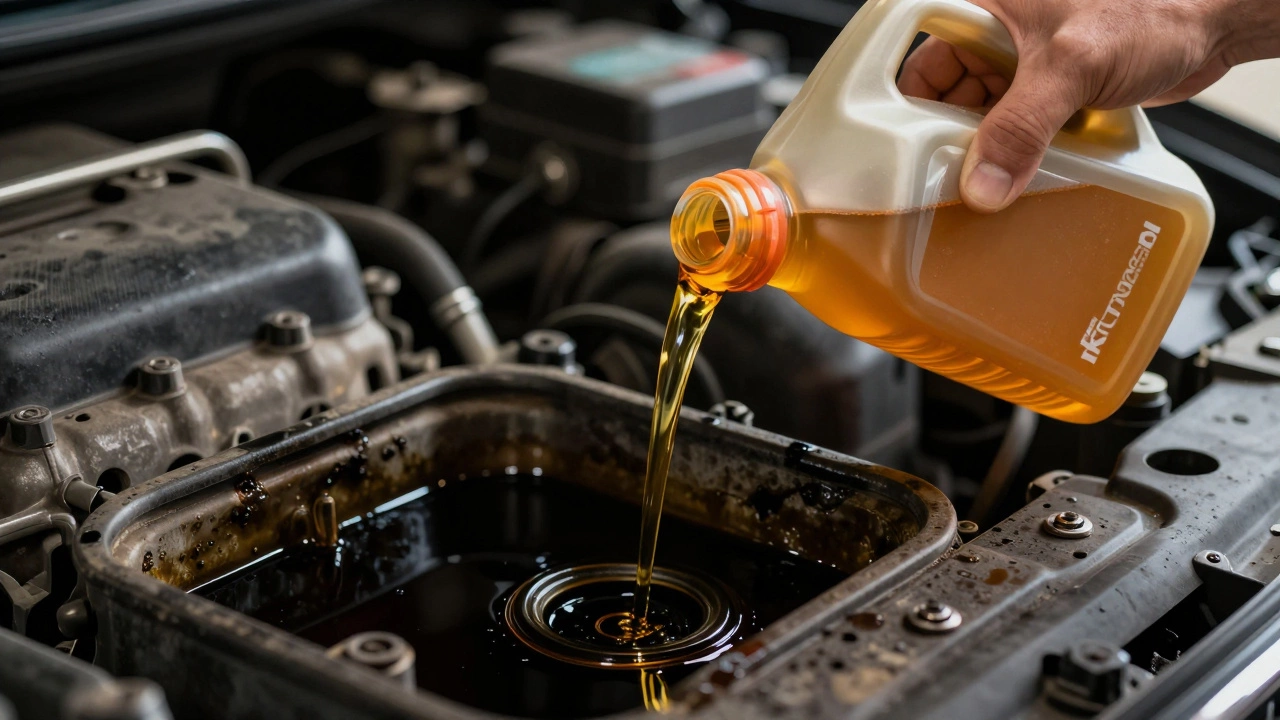
You’re about to top up your car’s oil, but you notice the dipstick is low. You have a fresh bottle of synthetic engine oil in the garage, but there’s still some used oil sitting in the crankcase. It seems logical to just pour the new stuff on top, right? Why waste money changing it all if you only need a quart? Before you grab that funnel, stop. Mixing old engine oil with new isn’t just a bad habit; it can actively damage your engine.
The short answer is no, you should never mix old engine oil with new. While it might seem like a minor shortcut, doing so compromises the chemical integrity of the lubricant. Your engine relies on specific additives to protect metal surfaces, prevent sludge, and manage heat. Once oil has been used, those additives are depleted or contaminated. Adding fresh oil doesn’t restore them; it just dilutes the problem.
Why Used Oil Loses Its Protective Powers
To understand why mixing is dangerous, you first need to know what happens to oil inside an engine. Fresh oil contains a precise cocktail of detergents, dispersants, anti-wear agents, and viscosity index improvers. These chemicals work together to keep your engine clean and running smoothly.
As soon as the engine starts, these additives begin to break down. Combustion byproducts, such as sulfur and nitrogen, mix with the oil, turning it acidic. Tiny particles of metal from normal wear and tear, along with soot and carbon deposits, get suspended in the fluid. Over time, the detergents become saturated-they’ve done their job cleaning the engine, but now they can’t clean anything else. The dispersants, which keep contaminants floating so the oil filter can catch them, also lose effectiveness.
When you add new oil to this dirty mixture, you aren’t resetting the clock. You’re introducing high-quality chemicals into a soup of acids, sludge, and metallic grit. The new additives get overwhelmed immediately. Instead of protecting your bearings and camshafts, they spend their energy trying to neutralize the acidity and suspend the grime already present. This leads to accelerated wear, especially during cold starts when circulation is slow.
The Viscosity Trap: Why Thickness Matters
Another major issue is viscosity-the thickness of the oil. Every engine is designed for a specific viscosity grade, like 5W-30 or 0W-20. This number tells you how the oil flows at different temperatures. Used oil changes its viscosity profile due to contamination and thermal breakdown.
If you mix old and new oil, you create an unpredictable blend. The new oil might be thin enough to flow easily in winter, but the degraded old oil could be thicker than intended. This mismatch means the oil pump has to work harder to circulate the fluid. In extreme cases, this can lead to oil starvation, where critical components don’t get enough lubrication because the mixture is too thick to move quickly through narrow passages.
Conversely, if the old oil has broken down and become thinner (a process called shear thinning), adding new oil won’t necessarily fix the viscosity. You might end up with a mixture that’s too thin to maintain a proper hydrodynamic film between moving parts. That metal-on-metal contact is what causes premature engine failure.

Contamination Spreads Like Wildfire
Think of used oil like dirty water. If you have a glass of muddy water and you add a splash of clear water, does the whole glass become clear? No. It just becomes slightly less muddy. But it’s still dirty. In an engine, this “mud” includes abrasive particles.
These microscopic shards of metal and carbon act like sandpaper inside your engine. When you introduce fresh oil, these particles remain suspended. As the new oil circulates, it carries these abrasives past sensitive areas like piston rings and valve guides. Over thousands of miles, this constant scrubbing wears down tolerances. You might not hear it happening, but your engine’s compression drops, fuel efficiency suffers, and eventually, you’ll face a costly rebuild.
Furthermore, modern engines have tight emission controls, including Catalytic Converters. Contaminated oil can leak past seals and burn off in the combustion chamber. The ash and metals from old oil can coat the catalyst, reducing its ability to treat exhaust gases. This can trigger your Check Engine light and force you into expensive repairs down the line.
When Is Topping Up Acceptable?
There is one scenario where adding oil is necessary: topping up between scheduled changes. If your dipstick shows the level is low, you must add oil to bring it back to the full mark. Running an engine low on oil is far more dangerous than having slightly dirty oil.
However, even here, rules apply. You should always use the same type and viscosity of oil specified in your owner’s manual. Don’t switch from synthetic to conventional mid-cycle unless you’re in an emergency. And remember, topping up is a temporary fix. It buys you time until your next service appointment. It is not a substitute for a full drain and refill.
If you find yourself needing to top up frequently, that’s a red flag. It suggests a leak or excessive consumption. Ignoring this sign and just keeping the level topped with mixed oil will mask the underlying problem until it becomes catastrophic.

The Right Way to Change Your Oil
Avoiding the mix-up is simple: perform a complete oil change. Here is the standard procedure that ensures your engine gets the protection it needs:
- Drain the old oil completely: Warm up the engine first to make the oil flow better. Then, remove the drain plug and let every drop out. This removes the bulk of the sludge and contaminants.
- Replace the oil filter: The filter holds a significant amount of dirty oil and trapped particles. Putting a new filter on old oil defeats the purpose. Always swap both.
- Use the correct specification: Check your manual for the API (American Petroleum Institute) rating and ACEA (European Automobile Manufacturers Association) standards. For example, many modern cars require API SP or ACEA C3 oils to meet emissions and performance criteria.
- Fill with fresh oil only: Pour in the recommended amount of new oil. Do not overfill, as this can cause foaming and pressure issues.
This process resets the chemical balance. The new additives start working from a clean slate, providing maximum protection for the next 5,000 to 10,000 miles (depending on your oil type and driving conditions).
Cost vs. Risk: The Real Math
Let’s talk money. A full synthetic oil change might cost you £40-£60 at a shop, or less if you do it yourself. Buying a single quart of oil to top up costs maybe £5. On the surface, skipping the change saves cash. But consider the alternative.
An engine rebuild can run you anywhere from £1,500 to £3,000+. Even a simple timing belt replacement, often required if an engine seizes, is hundreds of pounds. The risk of saving £20 on oil is not worth the potential thousands in repairs. Think of oil as insurance. Paying a small premium keeps your most expensive component safe.
In Manchester, where we see plenty of wet weather and stop-start traffic, engines work harder. Cold starts are frequent, and condensation can mix with oil, creating emulsions. Keeping your oil fresh and uncontaminated is crucial in these conditions. Mixing old and new oil adds another layer of uncertainty to an already demanding environment.
What happens if I accidentally mix old and new oil?
If you accidentally mix them, don’t panic. One instance won’t destroy your engine immediately. However, you should schedule an oil change sooner than usual. Drive gently until you can get the system flushed and refilled with fresh oil. Monitor your oil pressure gauge and listen for unusual noises.
Can I mix different brands of new engine oil?
Yes, generally you can mix different brands of new oil as long as they meet the same specifications (e.g., both are API SN Plus 5W-30). Major manufacturers follow similar base formulations. However, it’s best to stick to one brand for consistency. Avoid mixing synthetic and conventional oils unless necessary, as their additive packages differ significantly.
How do I know if my oil is too dirty?
Check the dipstick. Fresh oil is amber and translucent. Dirty oil turns dark brown or black. If it looks gritty, smells like burnt toast, or feels slimy between your fingers, it’s time for a change. Also, watch for the oil life monitor on your dashboard, though visual inspection is always reliable.
Is it okay to top up with a different viscosity?
No. Always match the viscosity specified in your owner’s manual. Using 5W-40 instead of 5W-30, for example, can affect fuel economy and engine performance. In a pinch, using the closest available viscosity is better than running low on oil, but correct it at your earliest convenience.
How often should I change my engine oil?
It depends on your oil type and driving habits. Conventional oil typically needs changing every 3,000 to 5,000 miles. Synthetic oil can last 7,500 to 10,000 miles or more. Always follow your manufacturer’s recommendation. Severe driving conditions-like short trips, towing, or extreme temperatures-may require more frequent changes.