Ever pop the hood of your car and wonder what that dark liquid in the dipstick is really doing? Engine oil isn’t just there to make the engine look clean-it’s the lifeblood of your engine. Without it, your car wouldn’t last more than a few minutes. So, what is engine oil used for? It’s not one job. It’s five critical jobs, all happening at once, every time you turn the key.
Reduces Friction Between Moving Parts
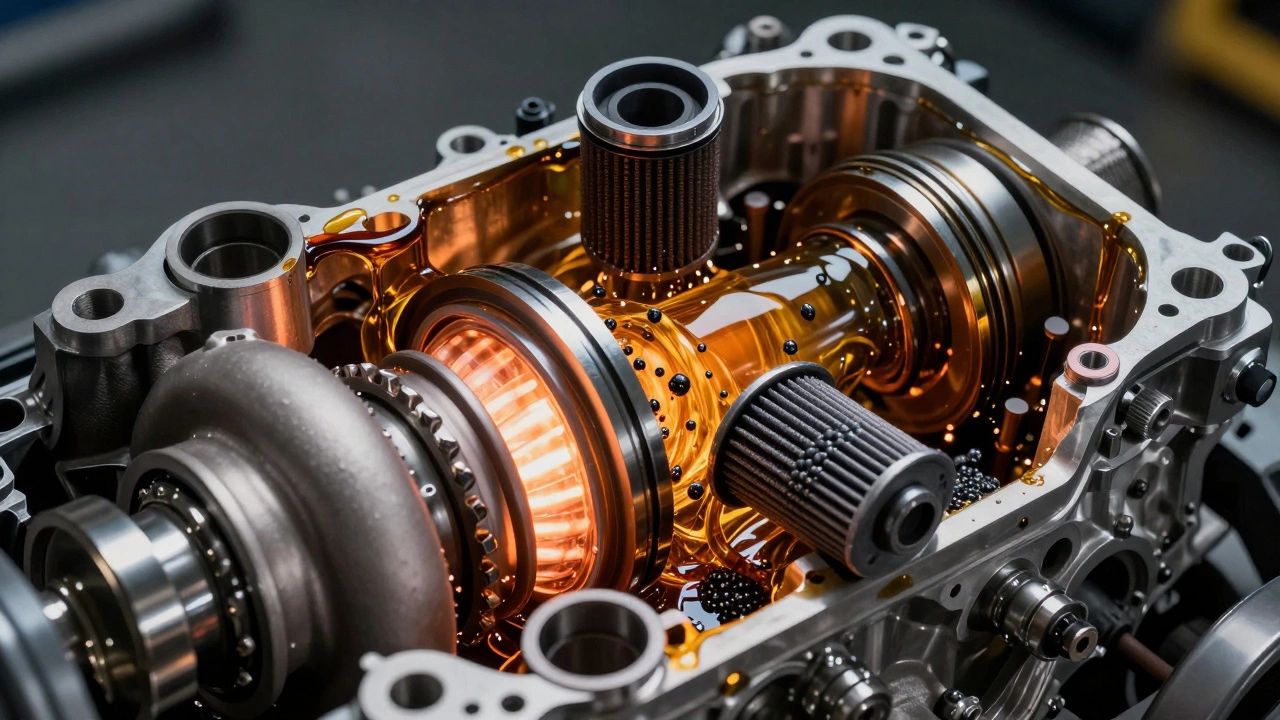
Your engine has dozens of metal parts sliding, bouncing, and spinning against each other at thousands of revolutions per minute. The piston rings scrape along the cylinder walls. The crankshaft spins on bearings. Valves open and close with hydraulic force. Left alone, all that metal-on-metal contact would generate enough heat and friction to melt components in minutes. That’s where engine oil comes in. It forms a thin, slippery film between these surfaces, letting them glide past each other instead of grinding down. Think of it like wax on a ski-without it, you’d just be dragging through snow. With it, you’re gliding. Modern synthetic oils can reduce friction by up to 40% compared to old mineral oils, which means less wasted energy and better fuel economy.
Dissipates Heat
When fuel burns in your engine, temperatures inside the combustion chamber hit over 2,500°C. Even though the cylinder head and cooling system handle most of that heat, other parts-like the pistons, bearings, and turbochargers-get extremely hot too. Engine oil doesn’t just lubricate; it also acts as a coolant. As it circulates, it picks up heat from hot zones and carries it away to the oil pan, where some of that heat dissipates into the air. In turbocharged engines, oil is especially critical because the turbo spins at over 100,000 RPM and can reach 900°C. Without oil cooling those bearings, the turbo would seize in seconds.
Cleans Inside the Engine
Combustion doesn’t just make power-it makes gunk. Carbon deposits, soot, tiny metal shavings, and unburned fuel all end up inside the engine. Left unchecked, this sludge clogs oil passages, coats pistons, and sticks valves open or shut. Engine oil contains detergent and dispersant additives that trap these contaminants and hold them in suspension until the oil filter catches them. High-quality synthetic oils can carry up to 30% more contaminants than conventional ones before they break down. That’s why changing your oil before it gets too dirty is so important. You’re not just replacing old fluid-you’re removing built-up grime that could damage your engine.

Prevents Corrosion and Rust
Even if your car sits for a week, moisture from the air can settle inside the engine. That moisture, combined with leftover combustion byproducts like sulfuric acid, creates a perfect environment for rust. Engine oil contains anti-corrosion additives-zinc dialkyldithiophosphate (ZDDP) and other inhibitors-that coat metal surfaces and shield them from oxygen and water. These additives form a protective layer that lasts even when the engine is off. That’s why engines that sit for months without oil changes often suffer from rusted camshafts or stuck valves. Fresh oil is your engine’s rust shield.
Seals the Combustion Chamber
You might think the piston rings alone seal the combustion chamber. But they don’t work alone. Engine oil plays a crucial role here too. A thin film of oil on the cylinder walls helps the piston rings create a tighter seal between the piston and the wall. Without that film, combustion gases would leak past the rings into the crankcase-a problem called blow-by. That leads to lost power, higher emissions, and oil contamination. In older engines or ones with worn rings, the oil’s sealing ability becomes even more vital. That’s why using the right viscosity matters. Too thin, and the seal breaks. Too thick, and the oil can’t flow fast enough to form the film where it’s needed.
What Happens When Engine Oil Fails?
If you ignore oil changes, use the wrong type, or let your oil level drop, all five functions start to fail. The engine begins to overheat. Friction increases, and metal parts start to wear. You might hear knocking or ticking noises-those are signs of bearing wear. Eventually, the engine starts losing power, burning oil, or even seizing. A seized engine isn’t just expensive to fix-it’s often not fixable at all. In the UK, over 12,000 engine replacements each year are linked directly to neglected oil maintenance. That’s not just a repair cost-it’s a total car loss.

Choosing the Right Oil Matters
Not all engine oils are the same. The numbers on the bottle-like 5W-30 or 10W-40-tell you how the oil flows at cold and hot temperatures. Your car’s manual says which one to use. Using the wrong viscosity can hurt performance or even cause damage. In colder climates like Manchester, a 5W-30 flows better at startup than a 10W-40. In hotter conditions or older engines, a thicker oil might help with sealing. Synthetic oils last longer, resist breakdown better, and protect better under stress. If your car is newer or has a turbo, synthetic is almost always required. Conventional oil might save you £10 at the pump, but it could cost you £3,000 in engine repairs later.
How Often Should You Change It?
Old advice said every 3,000 miles. That’s outdated. Most modern cars can go 7,500 to 10,000 miles between changes-some even up to 15,000 with full synthetic. But mileage isn’t the only factor. If you drive short trips in the rain, sit in traffic daily, or tow heavy loads, your oil degrades faster. That’s because short trips don’t let the engine get hot enough to burn off moisture and contaminants. In Manchester’s damp climate, many drivers fall into this trap. Check your manual. If you’re unsure, look for signs: dark, gritty oil on the dipstick, a burning smell, or the oil warning light flashing. Don’t wait for it to turn black. Check it monthly.
Bottom Line: Oil Isn’t Optional
Engine oil is the unsung hero of your car. It’s not just a fluid you top up-it’s a multi-tasking system that keeps your engine running smoothly, cool, clean, and sealed. Skip oil changes, use the wrong type, or ignore low levels, and you’re gambling with your engine’s life. The cost of a £20 oil change is nothing compared to the £2,000+ it costs to replace a damaged engine. Treat your oil like your car’s heartbeat. Check it. Change it. Respect it.
Can I use any engine oil in my car?
No. Your car’s manufacturer specifies the exact viscosity grade (like 5W-30) and performance standard (like API SP or ACEA C3). Using the wrong oil can damage seals, reduce fuel efficiency, or cause engine failure. Always follow your owner’s manual. If you’re unsure, check the oil cap-many modern cars list the recommended oil right there.
Does engine oil expire?
Yes. Unopened bottles of engine oil last about 5 years if stored in a cool, dry place. Once opened, moisture and air can break down additives within 1-2 years. Old oil won’t protect your engine properly. If you’ve had a bottle sitting in your garage for years, don’t use it. Buy fresh.
Why does engine oil turn black so fast?
It’s not always a bad sign. Modern oils contain detergents that pick up carbon and soot from combustion. Black oil often means the oil is doing its job-cleaning your engine. But if the oil turns black within 1,000 miles, or feels gritty, it could mean contamination, a failing PCV valve, or an engine burning fuel. Check for smoke from the exhaust or a drop in performance.
Can I mix synthetic and conventional oil?
Technically, yes-both are made from base oils and additives. But mixing them isn’t ideal. Synthetic oil has better additives and stability. Mixing can dilute its performance. If you’re low on oil and only have conventional on hand, use it to get to a service station. But don’t make it a habit. Always top up with the same type your engine was designed for.
What happens if I drive with low engine oil?
Driving with low oil is dangerous. The oil pump can’t circulate enough fluid to lubricate critical parts. This causes metal-to-metal contact, rapid overheating, and bearing failure. You might hear loud knocking or see the oil warning light. If you ignore it, the engine can seize within minutes. Always check oil levels weekly. If it’s below the minimum mark, top it up immediately-even if you’re due for a change.