Radiator Leak Diagnostic Tool
Diagnose Your Radiator Leak
Answer these questions to identify where your radiator is likely leaking from. Based on your symptoms, we'll provide specific guidance.
Symptom Analysis
Leak Identification
If your car is losing coolant and you can’t find where it’s going, you’re not alone. Radiator leaks are one of the most common cooling system problems drivers face, especially in older vehicles or those driven in extreme temperatures. The good news? Most leaks happen in the same few places. Knowing where to look can save you time, money, and a roadside breakdown.
Top 5 Places Radiators Leak From
The radiator itself is made of metal and plastic, and it connects to several parts that wear out over time. Here’s where leaks most often show up:
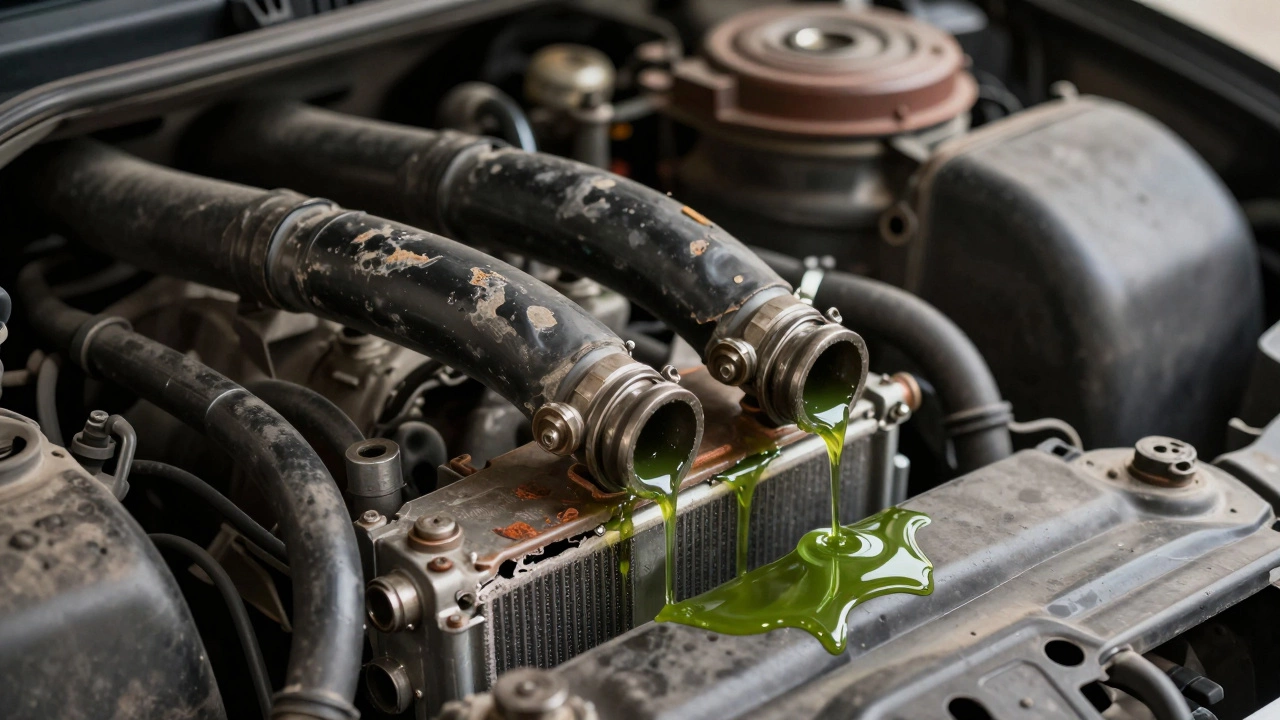
- Radiator hoses - These rubber tubes carry coolant between the engine and radiator. After 5-7 years, they harden, crack, or loosen at the clamps. A small drip near the engine or radiator end is usually a hose issue.
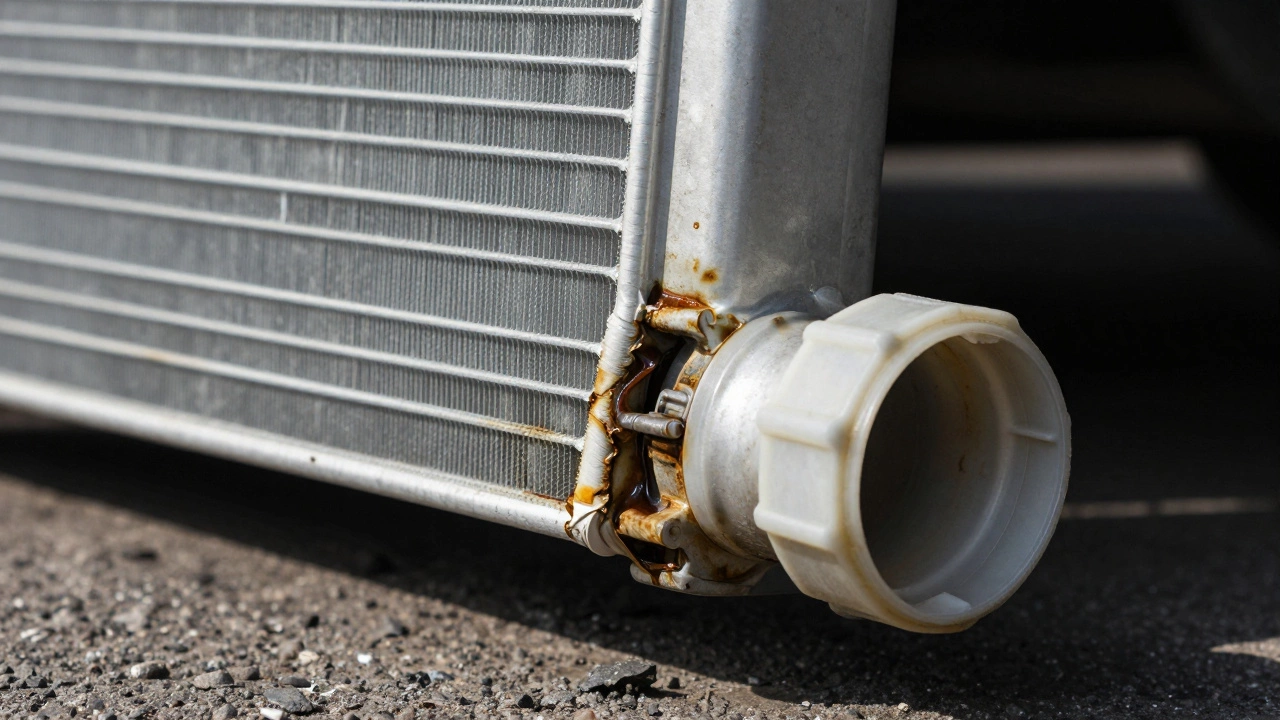
- Radiator end caps - The plastic end tanks on either side of the radiator are bonded to the metal core. Heat and pressure over time cause these seals to fail. You’ll often see coolant pooling under the front of the car, near the bottom of the radiator.
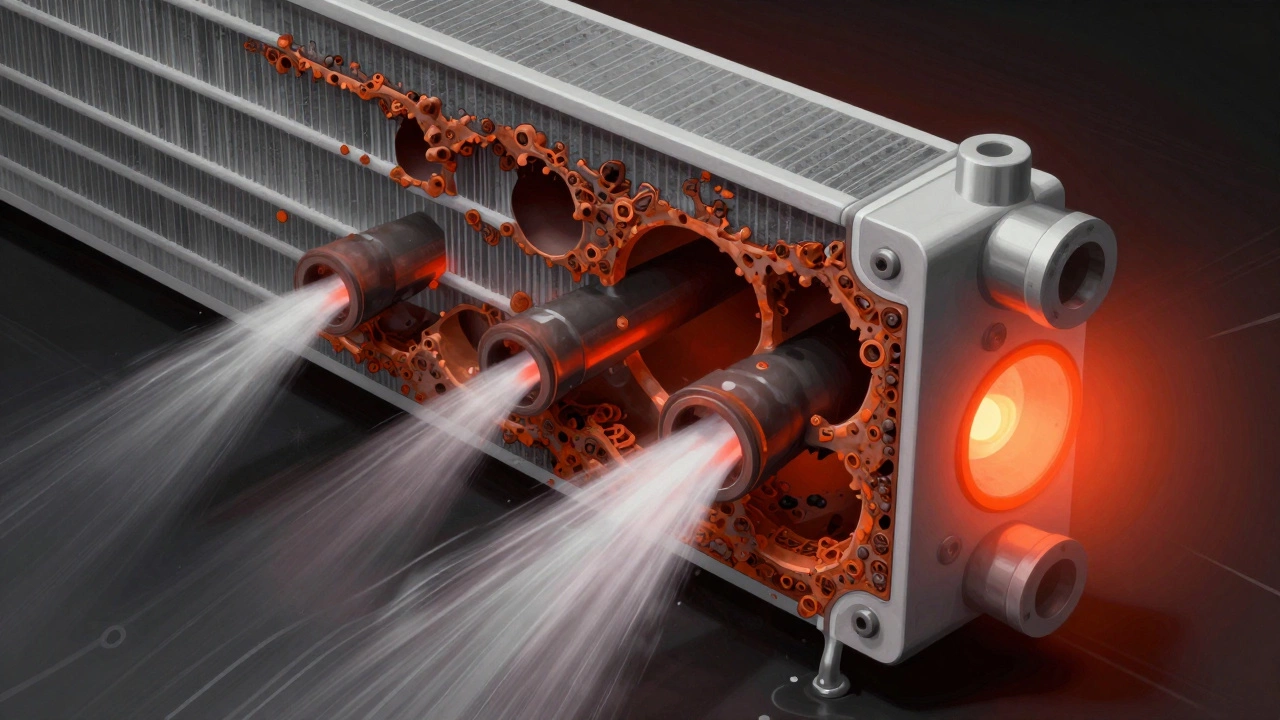
- Radiator core - The thin metal fins and tubes inside the radiator can corrode from old coolant or debris. Tiny pinhole leaks form, especially near the bottom where sediment collects. These are harder to spot because the leak may only happen when the engine is hot and pressurized.
- Radiator cap - A faulty cap won’t maintain proper pressure, which causes coolant to boil over or get pushed out through the overflow tank. If your coolant level drops fast but you see no puddles, check the cap first. It’s cheap to replace and often overlooked.
- Water pump connections - While not part of the radiator, the water pump is directly connected to it. A leaking seal around the pump shaft can drip coolant onto the radiator housing, making it look like the radiator is the source.
Why These Parts Fail
It’s not just age. Coolant doesn’t last forever. Most manufacturers recommend changing it every 4-5 years, but many drivers skip this. Old coolant turns acidic and eats away at metal and rubber parts. Rust builds up inside the radiator, clogging tubes and creating weak spots. And if you’re using tap water instead of distilled coolant mix, mineral deposits speed up corrosion.
Also, road debris like gravel and stones can dent the radiator fins. A small dent might not seem serious, but it can crack internal tubes over time. This is common in cars driven on rough roads or in winter conditions where salt and grit are everywhere.
How to Find the Leak
Don’t just guess. Here’s how to track down the source:
- Check for visible coolant - Look for green, orange, or pink fluid under the car. Let the engine cool, then inspect the radiator, hoses, and connections.
- Run the engine with the radiator cap off (only when cold!) - Watch for bubbles or gurgling. If coolant shoots out when the engine heats up, pressure is building where it shouldn’t.
- Use a pressure tester - A $20 tool from any auto parts store can pressurize the cooling system like it’s running. If pressure drops, you’ve got a leak. You’ll hear a hiss or see fluid spraying.
- Check the overflow tank - If it’s always empty or full of sludge, the system is losing coolant somewhere.
- Look for white residue - Coolant that evaporates leaves behind a sticky, chalky film. Wipe down the radiator and hoses with a rag - if it turns green or orange, you’ve found the leak.
What Happens If You Ignore It
Running low on coolant isn’t just inconvenient - it’s dangerous. The engine can overheat in minutes. Once that happens, you risk warping the cylinder head, blowing the head gasket, or even cracking the engine block. Repair costs can jump from $200 for a hose to over $2,000 for engine damage.
One driver in Manchester I spoke to ignored a small leak for three months. She thought the temperature gauge was just acting up. By the time she got it checked, the head gasket had failed. Her repair bill was nearly £1,800. A new radiator hose would’ve cost £45.
Prevention Tips
You can avoid most radiator leaks with simple habits:
- Change coolant every 4-5 years, even if the manual says "lifetime."
- Use the correct coolant type - mixing different types can cause gelling and clogs.
- Check coolant levels monthly - top up with the right mix, not plain water.
- Inspect hoses and clamps every oil change - squeeze them. If they feel stiff or crack when bent, replace them.
- Install a radiator guard if you drive on rough roads - it stops stones from damaging the core.
When to Replace vs. Repair
If the leak is from a hose or cap, fix it. Easy. But if the radiator core is leaking, replacement is almost always better than repair. Most radiator shops won’t even try to solder a leak in the core - it rarely holds. Modern radiators are cheap enough that replacement is smarter.
For end cap leaks, some shops offer plastic welding, but it’s temporary. The plastic becomes brittle with heat cycles. A new radiator with a 2-year warranty costs less than £150 in the UK. That’s a better bet than hoping a patch lasts.
Common Mistakes
Here’s what most people get wrong:
- Thinking a leak is from the heater core - That’s inside the cabin, not the radiator. It smells sweet and fogs up the windshield.
- Assuming the radiator is bad because the car overheats - Overheating can be caused by a stuck thermostat, bad water pump, or blocked radiator. Don’t jump to replacement.
- Using the wrong coolant - Dex-Cool, G12, or OAT coolants aren’t interchangeable. Mixing them causes sludge.
- Ignoring the radiator cap - It’s a $10 part. It fails more often than people realize.
Final Advice
If you spot a leak, don’t delay. Even a slow drip can turn into a disaster. Keep an eye on your coolant level, know what your radiator looks like, and don’t wait for the engine to overheat before acting. Most radiator leaks are easy to fix - if you catch them early.
Can a radiator leak be fixed with a sealant?
Radiator sealants can temporarily stop small leaks in the core, but they’re not a real fix. They clog narrow coolant passages and can damage the water pump or heater core. They’re okay for emergencies to get you to a shop, but you should still replace the radiator soon after.
How long do radiator hoses last?
Most radiator hoses last 5 to 7 years, but heat, oil contamination, and poor coolant can shorten that. If they feel hard, brittle, or have cracks, replace them - even if they’re not leaking yet.
Why does my radiator leak only when the engine is hot?
Coolant expands and builds pressure as it heats up. A small crack or weak seal only opens under pressure. That’s why leaks often show up after driving, not when the car is cold. Always check for leaks after the engine has warmed up.
Can a clogged radiator cause a leak?
Yes. When debris or rust blocks coolant flow, pressure builds up in parts of the system that aren’t designed to handle it. This can crack hoses, blow out end caps, or even rupture the radiator core. Regular coolant flushes prevent this.
Is it safe to drive with a leaking radiator?
No. Even a slow leak can lead to overheating, which can destroy your engine. If you notice coolant loss, stop driving and get it checked. Continuing to drive risks expensive repairs - sometimes more than the value of the car.