Engine Oil Change Interval Calculator
Enter your driving habits and oil preference to find out how often you should change your oil.
Your Driving Profile
Recommendation
Select your options and click calculate.
Your car isn’t a mind reader. It doesn’t know when you’re running late or if the weather is turning bad. But it does tell you when its heart-the engine-is struggling. The most common culprit? Old or insufficient engine oil is a lubricant that reduces friction between moving parts in the engine, preventing wear and overheating. When that oil breaks down, your engine pays the price. Ignoring the warning signs can lead to expensive repairs, like a seized engine or a blown head gasket. So, how do you know when it’s time for a fresh pour? You don’t need a mechanic’s degree. You just need to pay attention to a few specific cues your vehicle gives you.
The Dashboard Is Talking to You
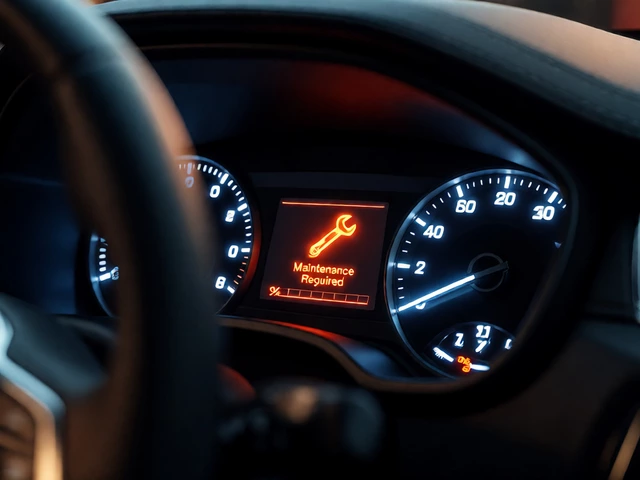
Most modern cars have built-in sensors that track the condition of your oil. If you ignore these digital hints, you’re leaving money on the table-or worse, risking major damage. The first thing to check is the Oil Life Monitor is a computer system that calculates remaining oil quality based on driving conditions, temperature, and engine load. Found in the instrument cluster or infotainment screen, this percentage tells you exactly how much useful life is left in your current oil. When it hits 10% or below, schedule a change. When it hits 0%, do it immediately. Don’t wait for the light to blink red; by then, the oil has likely lost significant protective properties.
Beyond the percentage, watch for the Low Oil Pressure Warning Light is a red icon shaped like an oil can with a drip, indicating critically low oil level or pressure. This is not a “check soon” light. This is an emergency. If this red light illuminates while you are driving, pull over safely and turn off the engine. Driving even a short distance with low oil pressure can cause metal-on-metal contact within minutes. If the light stays on after restarting, you need a tow truck, not a drive to the nearest shop.
Check the Dipstick: Color and Level Matter
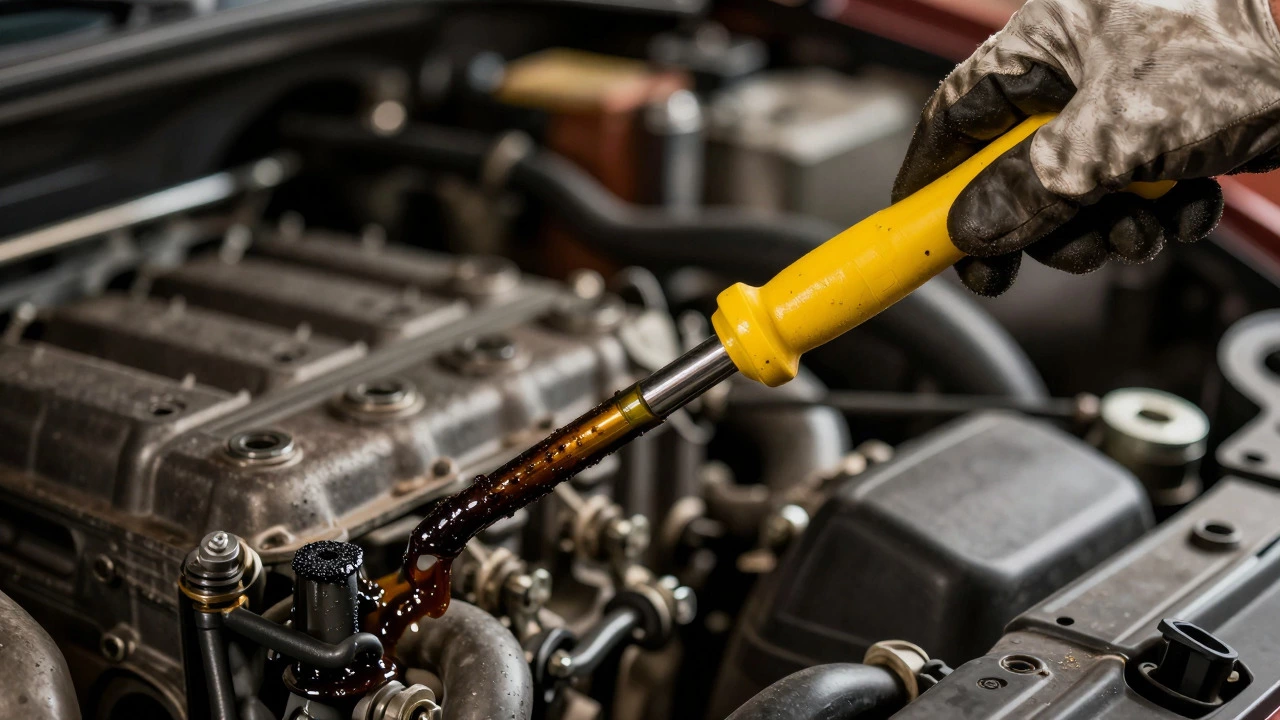
Technology is great, but the dipstick remains the gold standard for a quick DIY check. Park on level ground, let the engine cool for five minutes, and pull the stick out. Wipe it clean, reinsert it fully, and pull it out again. Two things matter here: level and color.
If the oil level is below the “MIN” mark, you have a leak or excessive consumption. Top it up immediately with the correct viscosity grade specified in your owner’s manual. If the level is fine but the color looks wrong, that’s a different story. Fresh oil is typically amber or light brown. As it ages, it turns dark brown or black due to soot and contaminants. However, color alone isn’t always a definitive sign-some synthetic oils stay lighter longer than conventional ones. What matters more is consistency. If the oil looks gritty, milky, or smells burnt, it’s done. Milky oil usually means coolant mixing (a serious head gasket issue), while a burnt smell indicates thermal breakdown.
Listen to the Engine: Noise Tells a Story
Your engine should sound smooth and consistent. If it starts sounding rougher than usual, especially during cold starts, the oil might be too thick or degraded. Thick, old oil doesn’t flow quickly to upper engine components when you start the car in winter. This causes increased friction and a distinct rattling or ticking noise known as Cold Start Rattle is a temporary noise caused by insufficient oil pressure reaching hydraulic lifters before full circulation begins. While a brief rattle that goes away after 30 seconds is normal, a persistent tick or knock that lasts until the engine warms up suggests the oil has lost its viscosity index improvers. If you hear a loud knocking sound that persists at operating temperature, stop driving. That could be rod knock-a catastrophic failure waiting to happen.
Watch the Exhaust: Smoke Colors Mean Different Things
Exhaust smoke is often dismissed as “just emissions,” but color changes can signal oil-related issues. Blue or bluish-gray smoke indicates burning oil. This happens when oil seeps past worn piston rings or valve seals into the combustion chamber. If you see this smoke, especially after idling or during acceleration, your oil levels will drop faster than normal. You’ll find yourself topping up more frequently. While this might seem like a minor annoyance, it’s a clear sign that internal engine components are wearing out, accelerated by poor lubrication.
White smoke that dissipates quickly is usually condensation, which is normal in cold weather. But thick white smoke that lingers and smells sweet is coolant. If you see this, check your oil dipstick. If the oil looks frothy or chocolate-milkshake-like, you have a head gasket failure allowing coolant into the oil passages. This is a critical repair scenario where the oil has been contaminated and must be changed immediately after the gasket is fixed.
Follow the Manual, Not Just the Mileage
Many drivers still rely on the old rule of thumb: “Change oil every 3,000 miles.” For modern engines using synthetic oil, this is often unnecessary and wasteful. Most manufacturers now recommend intervals between 5,000 and 10,000 miles, depending on whether you use conventional or full-synthetic oil. However, mileage is only one factor. Severe service conditions shorten these intervals. Severe service includes:
- Frequent short trips (under 10 miles) where the engine never reaches optimal temperature.
- Dusty or sandy environments that clog the oil filter.
- Towing heavy loads or driving in extreme heat or cold.
- City driving with frequent stop-and-go traffic.
If you live in a desert climate or commute in heavy traffic, lean toward the shorter end of your manufacturer’s recommended interval. Conversely, if you drive long highway stretches in moderate temperatures, you might stretch the interval slightly, provided your oil life monitor agrees.

Comparison: Conventional vs. Synthetic Oil Lifespan
Understanding the type of oil you use helps set realistic expectations for change frequency. Here’s a quick comparison to help you decide what to look for:
| Feature | Conventional Oil | Full-Synthetic Oil |
|---|---|---|
| Typical Change Interval | 3,000-5,000 miles | 7,500-10,000 miles |
| Viscosity Stability | Loses thickness faster in heat | Maintains viscosity across wider temps |
| Sludge Resistance | Higher risk of sludge formation | Lower risk due to better detergents |
| Cold Start Performance | Thicker, slower flow in winter | Flows quickly, protects engine sooner |
| Cost per Fill | $40-$60 | $70-$100 |
Note that while synthetic oil costs more upfront, the extended intervals and superior protection often make it more cost-effective over the life of the vehicle, especially for high-mileage drivers.
When in Doubt, Check These Three Things
If you’re unsure whether it’s time for a change, run through this quick checklist before your next trip:
- Check the Oil Life Monitor: Is it below 15%?
- Inspect the Dipstick: Is the level adequate and the oil free of grit or milkiness?
- Listen to the Idle: Are there new ticks, rattles, or knocks compared to last month?
If any answer is yes, schedule a service appointment. If all answers are no, you’re likely good for another few thousand miles. Regular monitoring takes less than two minutes and can save you thousands in potential engine repairs.
Frequently Asked Questions
How often should I really change my engine oil?
It depends on your oil type and driving conditions. Conventional oil typically needs changing every 3,000 to 5,000 miles, while full-synthetic oil can last 7,500 to 10,000 miles. Always consult your owner’s manual for the specific recommendation for your vehicle model and check the oil life monitor in your dashboard for real-time guidance.
Is it bad if my oil looks black?
Not necessarily. Oil darkens as it collects soot and contaminants, which is part of its job. Black oil is normal for many vehicles after a few hundred miles. However, if the oil looks gritty, smells burnt, or appears milky, those are signs of degradation or contamination that require immediate attention.
What does blue smoke from the exhaust mean?
Blue or bluish-gray smoke indicates that your engine is burning oil. This usually happens when oil leaks past worn piston rings or valve seals into the combustion chamber. It’s a sign of internal wear that may worsen if the oil isn’t properly maintained or if the engine components fail further.
Can I top up my oil instead of changing it?
Topping up is fine if you’ve simply leaked some oil or consumed a small amount between scheduled changes. Use the same viscosity grade listed in your manual. However, topping up does not reset the oil life counter. Once the oil has reached the end of its useful life, a full drain and fill with a new filter is required to restore proper lubrication and protection.
Does synthetic oil last longer than conventional?
Yes. Synthetic oil is engineered to resist breakdown from heat, oxidation, and shear forces better than conventional oil. This allows it to maintain its protective properties for a longer period, typically doubling the mileage between changes compared to conventional formulations. It also flows better in cold weather, providing faster protection at startup.