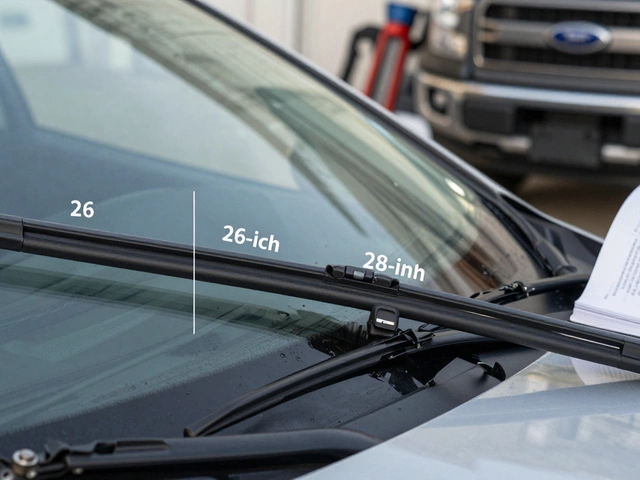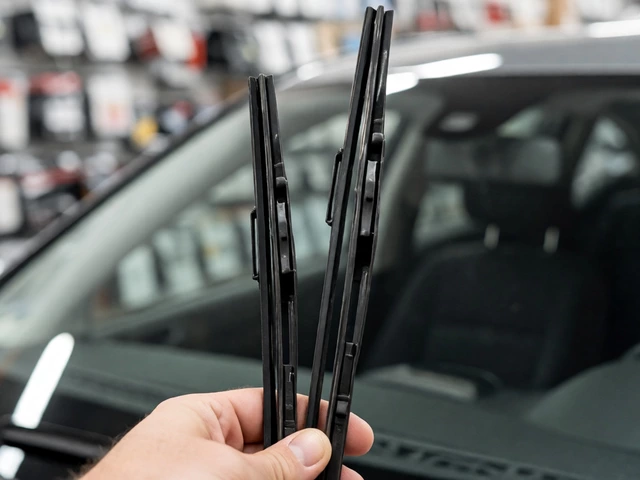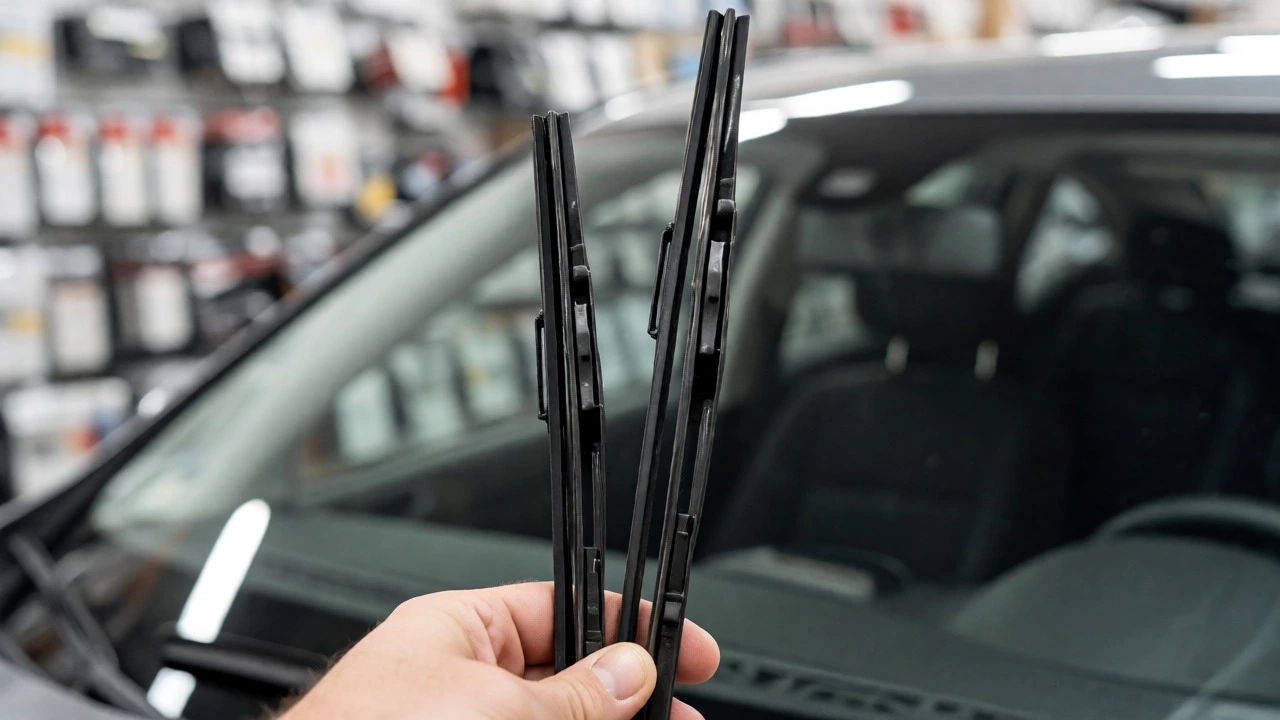
Wiper Blade Fitment Checker
Upgrading from 16" to 17" can improve coverage but risks collision or motor strain. Answer the questions below to see if your car is a good candidate.
Check the boxes on the left
Answer all 5 questions to get your recommendation.
Why this matters:
- Collision: If both blades are upgraded without checking center clearance, they will hit each other.
- Motor Strain: Longer blades weigh more. Weak motors burn out faster.
- Edge Overhang: Curved glass doesn't seal well with flat rubber, causing streaks.
You’re standing in the auto parts aisle, holding a shiny new wiper blade that’s one inch longer than what your car manual says. It feels like a no-brainer upgrade-more coverage, better visibility, right? But before you hand over your cash, there’s a critical question: can you use a 17 inch wiper blade instead of a 16?
The short answer is often yes, but with big caveats. One inch might sound negligible, but on your windscreen, it can mean the difference between clear vision and a squeaking mess or even a broken motor. Let’s break down exactly when this swap works, when it fails, and how to check if your specific car can handle the extra length.
Why Size Matters More Than You Think
Wiper blades aren’t just random strips of rubber; they are precision-engineered components matched to the curvature of your windscreen. The manufacturer calculates the optimal sweep arc based on the pivot point of the wiper arm and the glass shape. When you deviate from the recommended size, you disrupt this geometry.
A 16 inch wiper is designed to cover a specific area without hitting the edges of the glass or the opposite wiper. A 17 inch wiper extends further outward and potentially higher up. If your car was designed for a 16-inch blade, the motor and linkage system were calibrated for the weight and leverage of that specific length. Adding an inch changes the physics. It increases the load on the wiper motor, which can lead to premature wear or burnout over time, especially in heavy snow or ice conditions where resistance is already high.
The Three Risks of Going Up a Size
Before you commit to the larger blade, you need to understand the three primary failure modes. These aren’t hypotheticals; they are common issues seen in workshops every day.
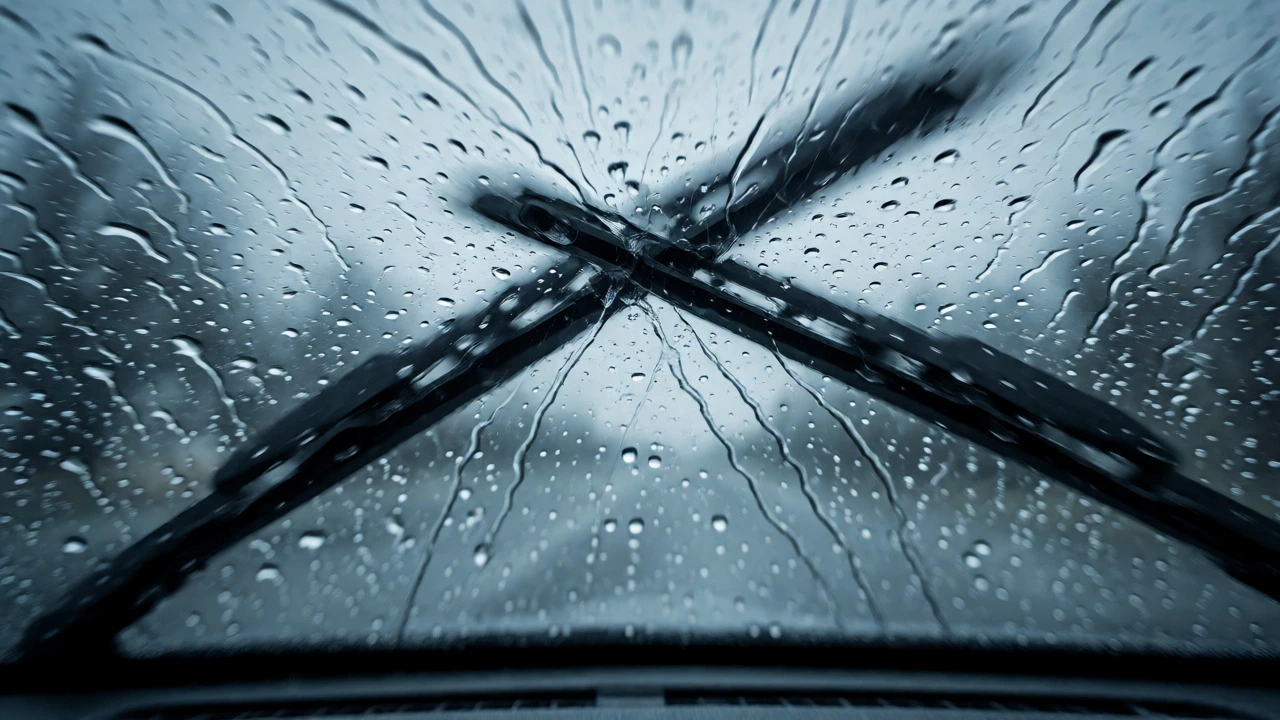
- Blade-to-Blade Collision: This is the most immediate danger. On many cars, the two wipers meet near the center of the dashboard. If both are upgraded from 16 to 17 inches, they will likely overlap at their peak extension. Instead of gliding past each other, they collide, causing a loud clacking noise, chipped paint on the arms, and rapid degradation of the rubber squeegee edge.
- Edge Overhang: The windscreen has a curved edge that meets the roofline or the A-pillar. A longer blade may extend beyond the flat part of the glass onto the curved section or the trim. Rubber doesn’t seal well against curved surfaces or plastic trim. This results in streaking, skipping, and water smearing across the driver’s line of sight.
- Motor Strain: Longer blades have more mass and create more aerodynamic lift at speed. Your windshield wiper motor has to work harder to pull them back and forth. In older vehicles with weakened motors, this extra strain can cause the wipers to slow down during rain or fail completely when trying to park themselves.
When Is It Actually Safe to Swap?
Despite the risks, plenty of drivers successfully run larger blades. Why? Because manufacturers sometimes leave headroom in their design tolerances, or because the original equipment (OE) specification was conservative. Here is how to determine if your specific setup can handle the swap.
First, check for clearance gaps. Park your car and manually move the wiper arms to their maximum outward position (the far side of the glass). Look at the tip of the blade. Is there at least half an inch of space between the blade tip and the rubber seal or body panel? If yes, you have horizontal room. Next, look vertically. Does the top of the blade hit the roof liner or sun visor area? If there is vertical slack, you might be okay.
Second, consider the type of vehicle. Sedans and coupes with steeply raked windscreens often have tighter constraints than SUVs or hatchbacks with flatter, larger glass areas. An SUV with a large, flat front window is much more forgiving of a 17-inch blade replacing a 16-inch one than a low-slung sports car.
Third, look at the asymmetry. Many modern cars use different sizes for the driver and passenger sides (e.g., 24 inches on the left, 18 inches on the right). Swapping the smaller passenger-side blade is usually safer than swapping the driver’s side, as the driver’s side has a larger sweep arc and less margin for error regarding collision with the opposite arm.
How to Test Fitment Before Buying
Don’t guess. Use this simple checklist before purchasing the new blades. It takes two minutes and saves you a trip back to the store.
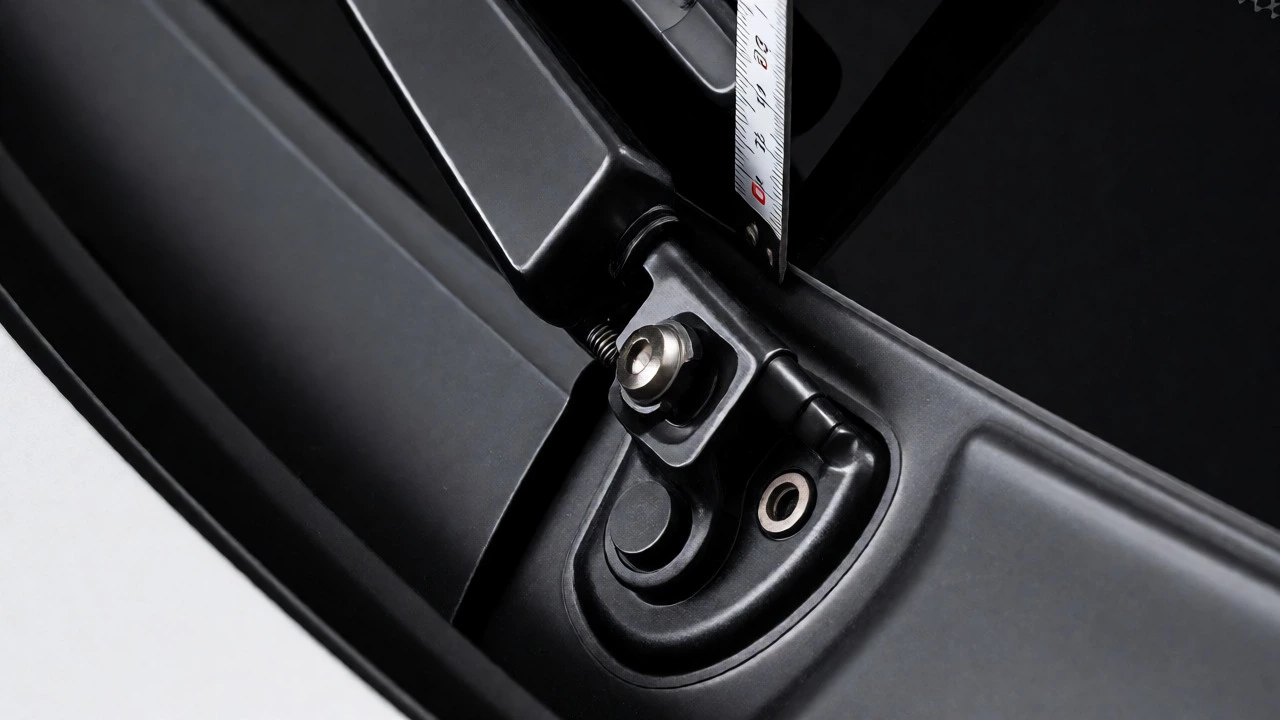
- Measure the Existing Blade: Don’t trust the sticker. Measure the rubber squeegee itself, not the metal frame. Confirm it is actually 16 inches.
- Check the Arm Pivot Point: Locate where the arm attaches to the cowl. Imagine a circle drawn by the tip of a 17-inch blade. Visualize if that circle intersects with the other arm’s path or the glass edge.
- Inspect the Spring Tension: Older arms lose tension. A longer blade requires consistent pressure to maintain contact. If your current arms feel loose or bounce at highway speeds, adding length will make the problem worse, not better.
- Consult Owner’s Manual Variants: Some manuals list optional sizes. For example, a base model might come with 16-inch blades, while the premium trim with a larger sunroof or different spoiler might specify 17-inch blades. If your car shares a platform with a variant using 17s, you are likely safe.
| Feature | 16 Inch (Stock) | 17 Inch (Upgrade) |
|---|---|---|
| Coverage Area | Standard OEM Specification | Approximately 5-8% More Coverage |
| Risk of Collision | Low (Designed for zero overlap) | Moderate to High (Depends on arm spacing) |
| Motor Load | Optimal | Increased (Potential for faster wear) |
| Cost | Generally Cheaper | Slightly Higher |
| Best For | Perfect fit guarantee | Vehicles with verified clearance gaps |
Alternatives to Changing Size
If you want better performance but fear the fitment issues of going up a size, look at technology upgrades instead of dimensional ones. The issue isn’t always the length; it’s often the quality of the contact.
Consider switching from traditional bracket-style blades to beam blades. Beam blades use a single piece of spring steel encased in rubber, providing even pressure along the entire length. They often perform significantly better than a slightly longer conventional blade. They are also lighter, reducing the strain on your motor, which offsets some concerns about increasing size.
Another option is hybrid blades, which combine the aerodynamics of beam blades with the structural support of a traditional frame. These are often available in the exact same lengths as your stock wipers but offer superior wiping performance in rain and snow.
Troubleshooting Common Issues After the Swap
If you’ve already installed the 17-inch blades and are noticing problems, here is how to diagnose them.
Chattering or Skipping: This usually means the blade isn’t maintaining uniform contact. With a longer blade, the middle section might lift off the glass due to insufficient arm tension. Try cleaning the windscreen thoroughly with a dedicated glass polish to remove wax buildup, which causes friction. If that fails, the arm tension may need adjustment by a professional.
Slow Return Speed: If the wipers seem sluggish returning to the rest position, your motor is struggling. Check the fuse rating; sometimes a marginal fuse blows under the new load. If the motor sounds strained, revert to the correct size. A burnt-out wiper motor costs hundreds, while a set of blades costs twenty pounds.
Noise at Extremes: A scraping sound at the end of the stroke indicates the blade is hitting the trim. You can sometimes mitigate this by adjusting the angle of the wiper arm relative to the glass (twisting the arm slightly so the blade sits perpendicular), but if it’s physical contact, you must downgrade the size.
Final Verdict: Should You Do It?
Can you use a 17 inch wiper blade instead of a 16? Yes, physically you can install them. But should you? Only if you have verified clearance. The marginal gain in visibility is rarely worth the risk of damaging your wiper motor or creating a noisy, streaky mess. For most drivers, sticking to the manufacturer’s recommended size-or upgrading the blade technology within that size-is the smarter, safer choice.
If you are determined to try the larger size, buy from a retailer with a generous return policy. Install them, test them in a heavy rain simulation (a garden hose works fine), and listen closely. If everything is silent and smooth, enjoy the extra view. If there’s any hesitation, stick to the spec sheet.
Will a longer wiper blade improve visibility significantly?
The improvement is usually minimal. A 1-inch increase adds roughly 5-8% more coverage area. While helpful, it rarely transforms your field of view. Proper alignment and clean rubber matter far more for clarity than a slight length increase.
Can I mix 16 and 17 inch blades on my car?
Yes, you can mix sizes if your car allows it. For instance, if your driver side has ample clearance but the passenger side does not, you could put a 17-inch on the driver side and keep a 16-inch on the passenger side. Just ensure they don't collide at the center.
Does a longer blade affect fuel efficiency?
Technically, yes, but negligibly. Longer blades create slightly more aerodynamic drag, but the impact on fuel economy is too small to measure in real-world driving. The main concern is mechanical load on the wiper motor, not fuel consumption.
What happens if the blades touch each other?
If the blades collide, you will hear a distinct clacking noise. Over time, this causes the rubber edges to chip and tear prematurely. It can also damage the metal arms, leading to bent joints that prevent proper seating against the glass.
Are universal wiper blades accurate in size?
Not always. "Universal" refers to the connector type, not the precise engineering of the blade curve. Always measure your old blades or consult your vehicle's VIN-specific lookup tool rather than relying solely on generic packaging claims.