Clutch Kit Selector
Find Your Perfect Clutch Kit
Select your vehicle's current torque and driving style to determine whether Stage 1 or Stage 2 is right for you.
Your Recommendation
Important Warning
When you’re looking to upgrade your car’s clutch, you’ll likely run into two common options: Stage 1 and Stage 2 clutch kits. They sound similar, but they’re built for very different driving styles and vehicle setups. Picking the wrong one can lead to poor performance, premature wear, or even a clutch that’s too stiff to drive every day. So what actually separates Stage 1 from Stage 2? Let’s break it down with real-world details, not just marketing buzzwords.
Stage 1 Clutch Kits: The Daily Driver Upgrade
Stage 1 clutch kits are designed for cars that still see regular street use but have made minor performance modifications. Think of it as the "I added a cold air intake and tuned the ECU" level of upgrade. The stock clutch can’t handle the extra torque, so you need something stronger - but you still want to drive comfortably.
These kits usually keep the same friction material as the OEM clutch, maybe with a slight increase in pressure plate clamping force. The disc might be made from organic or semi-metallic material, similar to factory parts, but reinforced for higher torque capacity. You’re not looking for drag-strip performance. You’re looking for reliability under slightly harder use.
Most Stage 1 kits are rated to handle 10-20% more torque than stock. For example, if your car makes 280 lb-ft of torque stock, a Stage 1 clutch might handle up to 320-330 lb-ft. That’s enough for a mild tune, a turbo upgrade, or a supercharger with low boost. Many people install Stage 1 clutches when they’re just starting to mod their car and don’t want to sacrifice daily drivability.
One big advantage? The pedal feel is still close to stock. You won’t need to relearn how to drive. Engagement is smooth, and there’s minimal chatter or noise. You can still park on hills, creep in traffic, and stop at red lights without the clutch slipping or feeling like a ratchet.
Stage 2 Clutch Kits: For the Aggressive Driver
Stage 2 clutch kits are for people who’ve gone further with modifications - maybe a larger turbo, higher boost levels, or a built engine. These clutches are built to handle 30-50% more torque than stock. If your car now makes 400 lb-ft, you’re not going to trust a Stage 1. Stage 2 is the next step up.
Here’s where things change. Stage 2 kits often use a multi-plate or sintered iron friction material. These materials grip harder and last longer under extreme heat, but they’re also much more aggressive. You’ll notice it the moment you press the pedal. Engagement is sharper, sometimes abrupt. There’s more chatter, especially when cold. The pedal pressure increases noticeably - you’ll feel it in your left leg after long drives.
These clutches are designed for track use, autocross, or serious street performance. They’re not meant for stop-and-go traffic. If you live in a city and sit in rush hour every day, a Stage 2 clutch will wear you out. It’s not just uncomfortable - it can lead to premature wear on the flywheel, pressure plate, and even the transmission input shaft.
Stage 2 kits also often come with a lighter pressure plate to reduce rotational mass. That helps with shift speed and engine response. But it also means the clutch is more sensitive to driver input. You’ll need to be precise with rev-matching and throttle control.
What’s Inside: Material and Design Differences
It’s not just about torque numbers. The real difference is in what’s inside the clutch pack.
- Stage 1: Organic or semi-metallic disc, stock-style pressure plate, single-disc design. Smooth engagement, low noise.
- Stage 2: Sintered iron or ceramic composite disc, high-clamp pressure plate, sometimes a dual-disc setup. Aggressive engagement, higher pedal effort, more noise.
Some manufacturers offer a "Stage 2+" or "performance street" option that uses a hybrid material - something like a ceramic blend with a dampened hub. These are better for daily use than pure sintered clutches but still handle more power than Stage 1.
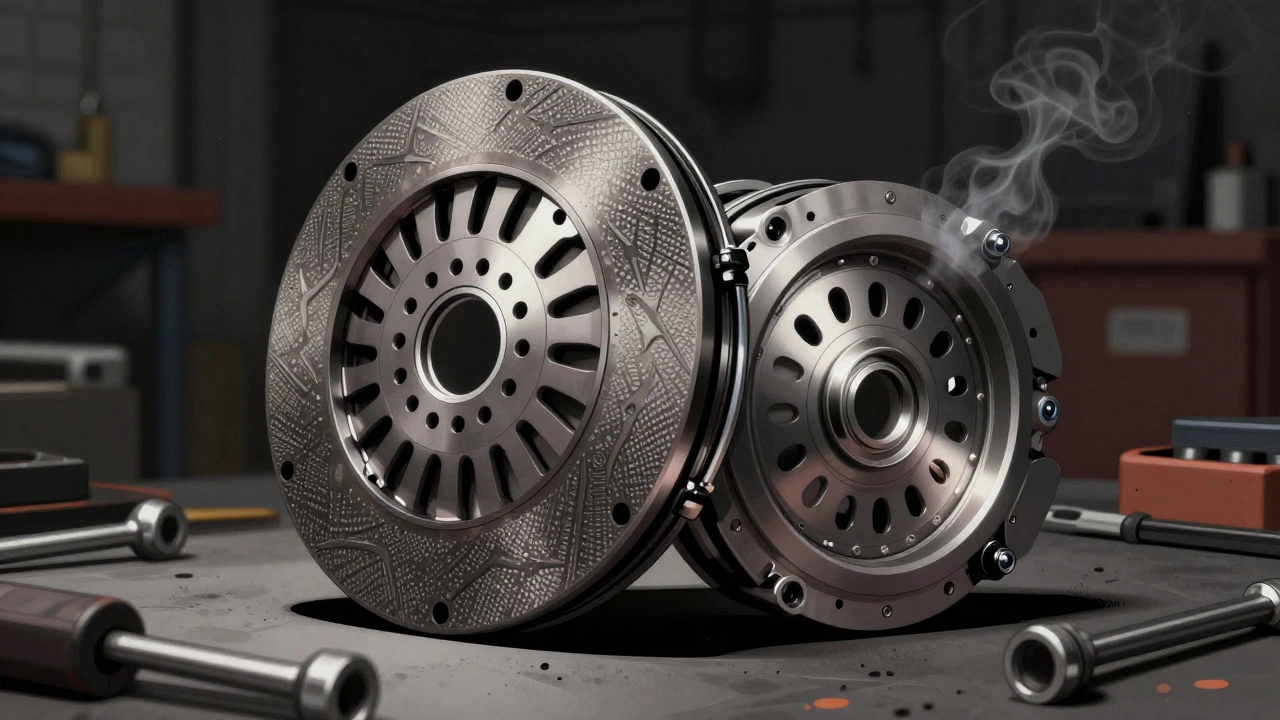
Another key difference: flywheel compatibility. Stage 1 kits usually work with your stock flywheel. Stage 2 kits often require a lightweight or performance flywheel. Skipping this step can lead to imbalance, vibration, or even clutch failure. Always check the manufacturer’s recommendations.
Who Should Choose Which?
Let’s cut through the noise. Here’s who should pick what:
- Choose Stage 1 if: You have mild mods (intake, exhaust, tune), drive daily, hate loud clutches, and want smooth engagement. You’re not racing on weekends.
- Choose Stage 2 if: You’ve added a turbo, upgraded your fuel system, or are running over 350 lb-ft of torque. You’re comfortable with a stiffer pedal, occasional chatter, and don’t mind a bit of noise. You drive on backroads or track days.
Don’t go Stage 2 just because it sounds "stronger." If your car makes 300 lb-ft and you’re not chasing 0-60 times, you’re wasting money and comfort. On the flip side, don’t stick with a stock clutch if you’ve added a supercharger. You’ll slip under load, burn the friction material, and end up with a much more expensive repair.
Common Mistakes to Avoid
People make the same mistakes over and over:
- Installing Stage 2 without a new flywheel. The stock flywheel is too heavy and doesn’t match the clutch’s torque transfer. Result? Vibration and premature failure.
- Using a Stage 1 on a heavily modified car. You’ll smell burning clutch within a few hard launches. It’s not a question of if - it’s when.
- Ignoring the break-in period. Both Stage 1 and Stage 2 clutches need a 500-1000 mile break-in. No aggressive driving. No slipping. No high RPM launches. Skip this, and you’ll shorten the clutch life by half.
- Buying cheap no-name kits. A $150 clutch from an unknown brand might seem like a deal. But if it slips at 300 lb-ft, you’ll pay more in repairs than if you’d bought a quality Stage 1 from a trusted brand like Exedy, ACT, or Centerforce.
What About Stage 3 and Higher?
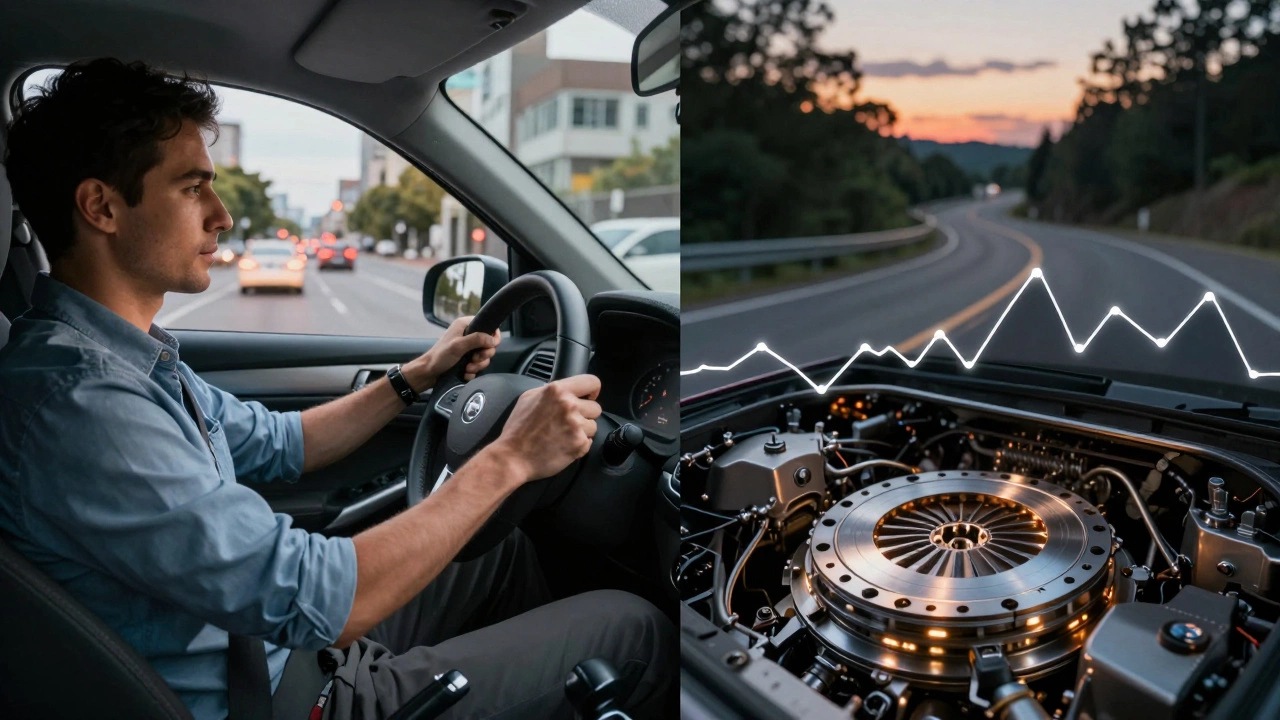
Stage 3 and above are for race cars - full sintered metal, dual-disc setups, hydraulic actuators. They’re not meant for the street. If you’re asking about Stage 1 vs Stage 2, you’re probably not there yet. Stick to the basics. A Stage 3 clutch will make your daily commute unbearable, and you’ll need a professional mechanic to install it.
Stick with Stage 1 or Stage 2 based on your power level and driving habits. There’s no need to over-engineer it.
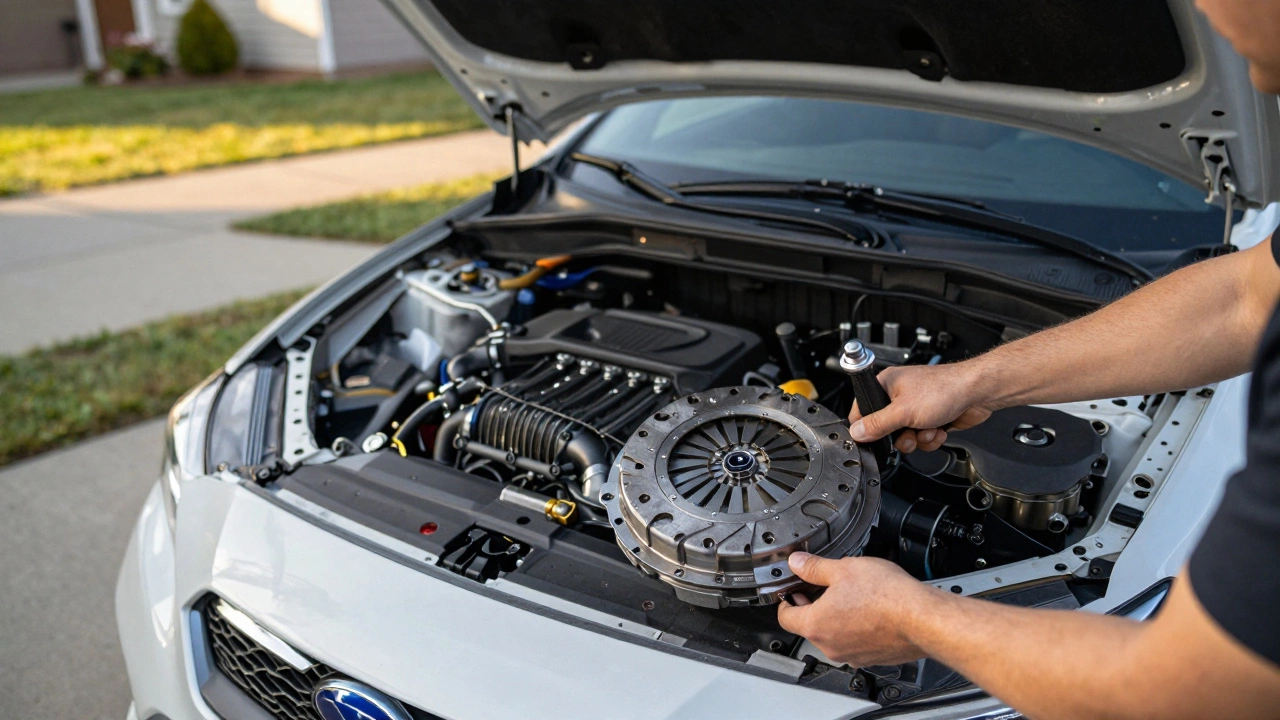
Real-World Example: A 2018 Subaru WRX
Let’s say you have a 2018 Subaru WRX. Stock, it makes about 268 lb-ft of torque. You’ve added a cat-back exhaust and a tune - now you’re at 310 lb-ft. You still drive it to work, the grocery store, and on road trips.
Stage 1 is your best bet. You’ll get a clutch that handles the extra torque, doesn’t chatter, and still feels like your old one. Spend $800-$1,000 on a quality kit, and you’re done.
Now, if you’ve added a turbo upgrade and are hitting 420 lb-ft, you’re in Stage 2 territory. You’ll need a new flywheel, a stronger clutch, and you’ll need to accept that your clutch pedal is going to feel like a brick. But now you can launch hard, hold boost, and not worry about slipping.
The difference isn’t just about power - it’s about how you use your car.
| Feature | Stage 1 Clutch | Stage 2 Clutch |
|---|---|---|
| Typical Torque Capacity | 10-20% over stock | 30-50% over stock |
| Friction Material | Organic or semi-metallic | Sintered iron or ceramic composite |
| Pedal Effort | Similar to stock | Noticeably stiffer |
| Engagement Feel | Smooth, gradual | Sharp, abrupt |
| Noise/Chatter | Minimal | Noticeable, especially cold |
| Best For | Daily driving with mild mods | Track use, high-torque builds |
| Required Flywheel | Stock | Performance or lightweight |
Final Thought: Match the Clutch to Your Driving, Not Your Budget
The cheapest clutch isn’t always the best. The most expensive isn’t always right. The right clutch is the one that matches your power, your driving style, and your daily needs.
Stage 1 keeps your car drivable. Stage 2 turns it into a performance tool. Choose based on what you’re actually doing behind the wheel - not what the forum guy with 1000 posts says you "should" have.
Can I install a Stage 2 clutch without changing the flywheel?
Technically, yes - but you shouldn’t. Stock flywheels are too heavy and not balanced for the higher clamping force of Stage 2 clutches. This mismatch causes vibration, premature wear, and can even damage the transmission input shaft. Always replace the flywheel when upgrading to Stage 2.
Will a Stage 1 clutch handle a turbo upgrade?
It depends. If your turbo adds only a small boost (under 5 psi) and you’re still under 330 lb-ft of torque, a good Stage 1 clutch will hold up. But if you’re pushing over 350 lb-ft, you’re asking for trouble. Stage 1 clutches start slipping under sustained high torque, which burns the friction material. If you’re unsure, go Stage 2.
Is a Stage 2 clutch bad for city driving?
Yes, if you drive in heavy traffic daily. Stage 2 clutches have a very aggressive engagement and high pedal pressure. You’ll get tired faster, and the chatter can be annoying in stop-and-go. It’s not dangerous, but it’s uncomfortable. If you’re in the city, stick with Stage 1 or look for a hybrid "performance street" clutch.
How long does a Stage 1 clutch last?
With proper use and a good break-in, a Stage 1 clutch can last 60,000 to 100,000 miles - similar to a stock clutch. Aggressive driving, frequent slipping, or skipping the break-in period can cut that in half. The key is smooth engagement and avoiding high-RPM launches.
Do I need to re-tune my car after installing a new clutch?
No, not for the clutch itself. Clutches don’t require an ECU tune. But if you’re installing a Stage 2 clutch because you’ve upgraded your engine (turbo, injectors, etc.), then yes - you already need a tune. The clutch upgrade just lets you safely use that tune.