Air Filter Replacement & Cost Calculator
Your Driving Profile
Enter your details to see when you should change your filters and how much money you can save.
Most drivers in the UK treat their air filters like a mystery box. You know they’re there somewhere under the bonnet or behind the glovebox, but you rarely think about them until something goes wrong. Maybe your engine feels sluggish on the M60, or perhaps your eyes start watering every time you drive through central Manchester. Before you panic and assume you need a new turbo or an expensive AC repair, check the filter. It’s often just dirty.
The short answer to "how often should I change my air filter?" is: it depends on where you live and how you drive. But ignoring this simple task can cost you money at the pump and lead to costly repairs down the line. Let’s break down exactly when to swap them out, why it matters, and how to do it yourself without breaking a sweat.
Two Filters, Two Different Jobs
First, we need to clear up a common confusion. Most modern cars have two different types of air filters, and they serve completely different purposes. Mixing them up leads to bad advice and wasted cash.
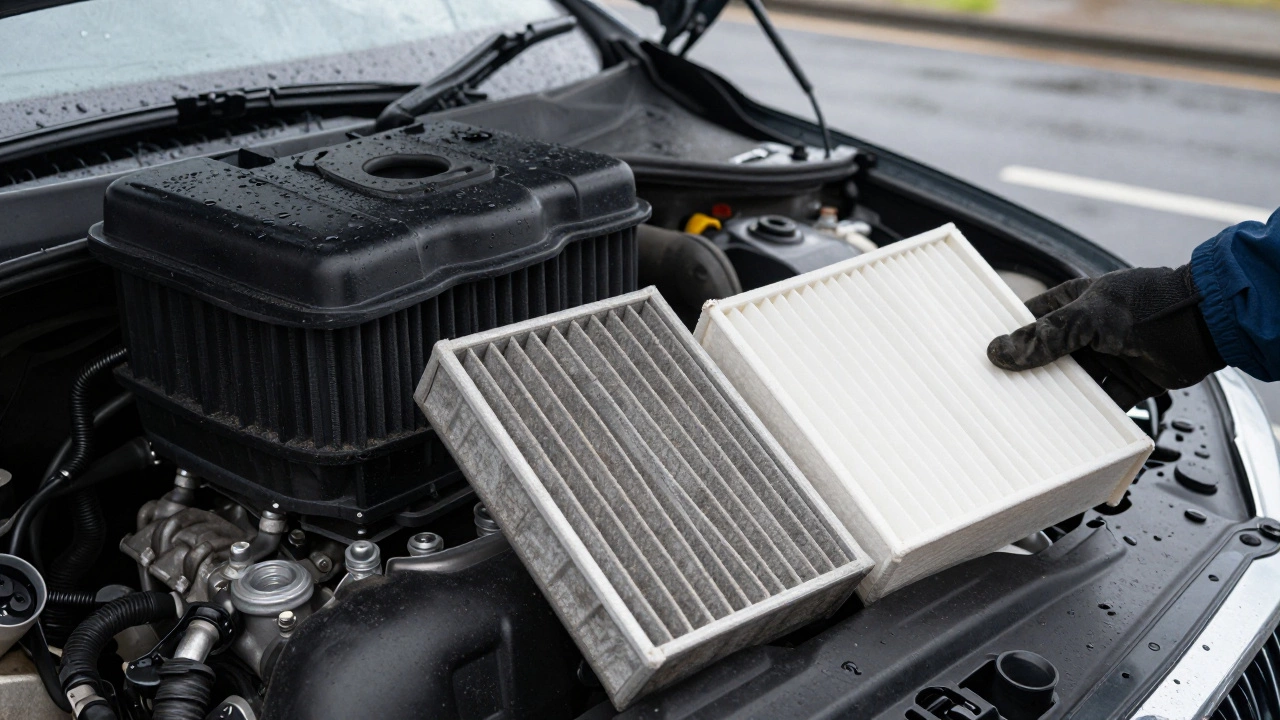
Engine Air Filter protects your engine from dust, pollen, and debris entering through the intake system. Think of it as the car’s nose hairs. If dirt gets past this filter, it enters your combustion chamber. Over time, that grit acts like sandpaper on your pistons and cylinders. A clogged engine filter also chokes the airflow, meaning your engine has to work harder to breathe. This directly impacts fuel efficiency. In the UK, where petrol prices fluctuate wildly, wasting even 5% more fuel adds up quickly over a year of commuting.
Then there’s the Cabin Air Filter cleans the air you and your passengers breathe inside the vehicle. This one sits between your exterior vents and the interior of the car. It traps pollen, exhaust fumes, road dust, and even some bacteria. If this filter is blocked, your demister struggles to clear foggy windows-a dangerous situation during our typical damp British winters. It also means you’re breathing in recycled, dirty air every time you sit in the driver’s seat.
The General Rule of Thumb
If you want a single number to remember, most manufacturers recommend changing your engine air filter every 12,000 to 15,000 miles (roughly 20,000 to 24,000 km). For the cabin filter, the interval is usually shorter: every 12,000 miles or once a year, whichever comes first.
However, "manufacturer recommendations" are based on ideal conditions. They assume you drive on clean highways in dry weather. Living in the UK, especially in urban areas like Manchester, Leeds, or London, changes the equation entirely. Here is a more realistic schedule based on real-world driving conditions:
- City Driving & High Pollution: Change both filters every 6-9 months or 8,000 miles. City centres have higher levels of particulate matter, diesel soot, and construction dust. These tiny particles clog filters much faster than rural roads.
- Rural & Highway Driving: Stick to the 12-month or 12,000-mile mark. Cleaner air means the filters last longer.
- Allergy Season: Swap the cabin filter before spring hits. Pollen counts in the UK peak between April and June. A fresh filter ensures you aren’t inhaling birch or grass pollen every time you open the ventilation.
- Dusty Conditions: If you frequently drive on gravel tracks or unpaved roads, check the engine filter every 3-6 months. Gravel dust is abrasive and heavy; it packs into the pleats of the filter rapidly.
Signs Your Filter Needs Changing Now
You don’t always need to track mileage perfectly. Your car will give you clues if the filters are failing. Pay attention to these symptoms:
| Symptom | Engine Filter Issue | Cabin Filter Issue |
|---|---|---|
| Reduced Acceleration | Yes - Engine feels sluggish | No |
| Poor Fuel Economy | Yes - MPG drops noticeably | No |
| Strange Engine Noises | Yes - Whistling or sucking sounds | No |
| Weak HVAC Airflow | No | Yes - Fan runs loud but little air comes out |
| Foul Odours Inside Car | No | Yes - Musty or dusty smell |
| Excessive Window Fogging | No | Yes - Demister takes forever to clear |
If your engine makes a whistling noise when you accelerate, it’s trying to pull air through a solid wall of dirt. That’s a clear sign to pop the bonnet. Similarly, if you crank the fan to max speed but barely feel a breeze, your cabin filter is likely packed with leaves and grime.

Why Not Just Clean It?
I see this all the time. People vacuum their engine air filters or blow them out with compressed air, thinking they’ve saved £20. Don’t do it. Modern paper-based filters are designed to be disposable. Vacuuming removes surface dust but leaves the deep-seated particles that restrict airflow. Worse, high-pressure air can damage the delicate fibre structure, creating micro-tears that let dirt pass straight into your engine.
Some performance cars use oiled cotton gauze filters (like K&N) that are washable. Unless you specifically own one of these aftermarket parts, assume your filter is single-use. The cost of a genuine replacement is low-usually between £15 and £40 for the engine filter and £10 to £30 for the cabin filter. Compare that to the potential cost of engine damage or a ruined catalytic converter, and the savings vanish instantly.
DIY vs. Mechanic: Who Should Do It?
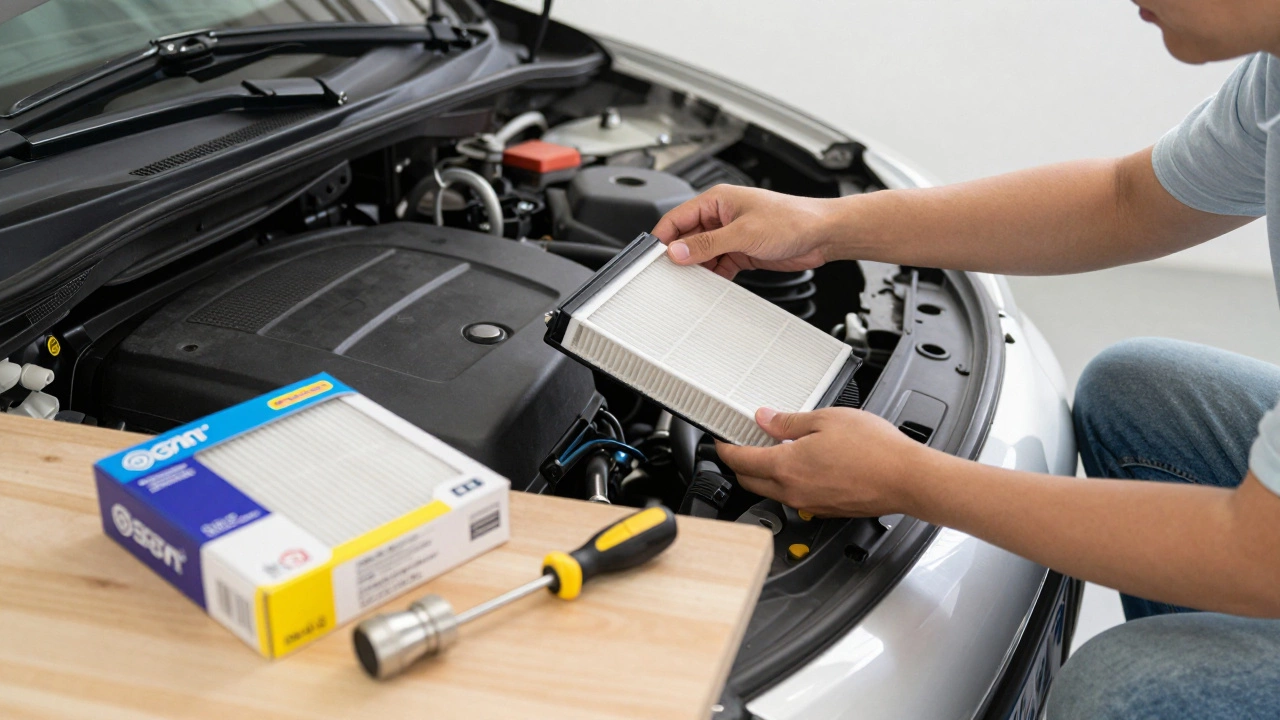
Changing an air filter is one of the easiest DIY tasks in car maintenance. You don’t need a degree in engineering. In fact, most engine air filters are designed to be user-serviceable.
For the Engine Air Filter:
Locate the black plastic box near the front of the engine bay. It’s connected to large rubber hoses. Unclip the metal clamps or twist locks holding the lid. Lift the lid, take out the old filter, and drop in the new one. Make sure the seal sits flat. Replace the lid and tighten the clamps. Done. Total time: 5 minutes.
For the Cabin Air Filter:
This is slightly trickier depending on your car model. On many vehicles, it’s located behind the glovebox. You may need to remove the glovebox by pressing down on the sides to release stops, then unscrewing a few panels. On others, it’s under the dashboard on the passenger side, accessible from outside the car via a small panel near the windshield wipers. Consult your owner’s manual or search YouTube for "[Your Car Model] cabin air filter replacement." Most jobs take 10-15 minutes.
If you’re uncomfortable with tools, any local garage in Manchester or elsewhere in the UK can do this as part of an interim service. However, garages often charge labour rates of £50-£75 per hour. Doing it yourself saves significant money, especially if you do it annually.
The Cost of Neglect
Let’s talk numbers. A clogged engine air filter can reduce your fuel economy by up to 10%. If you drive 12,000 miles a year and get 40 mpg, you’re using 300 gallons of petrol. A 10% loss means you’re burning 30 extra gallons. At current UK fuel prices, that’s roughly £60-£80 wasted annually. Over five years, that’s nearly £400 gone just because you ignored a £20 part.
Beyond fuel, restricted airflow forces the engine control unit (ECU) to adjust the air-fuel mixture. This can lead to incomplete combustion, fouled spark plugs, and increased carbon buildup. In severe cases, it strains the mass airflow sensor, leading to error codes and limp mode. Replacing a mass airflow sensor costs hundreds of pounds. Preventative maintenance is always cheaper than reactive repair.
Choosing the Right Replacement
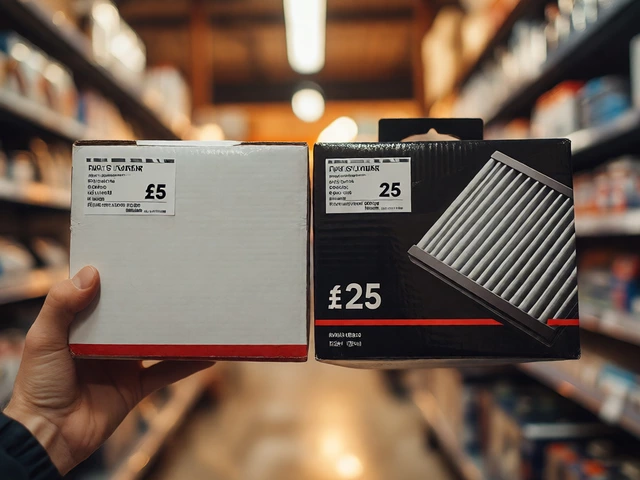
When buying a new filter, stick to reputable brands. Bosch, Mann-Filter, and Fram are reliable choices widely available in the UK. Avoid the cheapest generic options found online; they often use lower-quality paper that disintegrates or doesn’t seal properly, allowing unfiltered air to bypass the media entirely.
Check the part number against your vehicle registration. Websites like Autodoc or Halfords allow you to enter your reg plate to find the exact fit. Using the wrong size can result in gaps where dirt enters, defeating the purpose of the filter.
Can I drive with a dirty air filter?
Technically, yes, your car will still run. However, you’ll experience reduced performance, higher fuel consumption, and increased emissions. Short trips are fine, but long-distance driving with a severely clogged filter risks overheating the engine components due to inefficient combustion. It’s not recommended to delay replacement for more than a few weeks once symptoms appear.
Does changing the air filter improve horsepower?
Only if the previous filter was significantly clogged. A clean stock filter restores your engine to its factory-specified performance levels. It won’t add extra horsepower beyond what the manufacturer intended. Aftermarket "performance" filters claim better flow, but independent tests show minimal gains in street-driven cars compared to the risk of ingesting larger debris particles.
How do I know if my cabin air filter is bad?
The most obvious signs are weak airflow from the vents despite the fan being on high, a musty or mouldy smell when turning on the heating or AC, and excessive condensation on the windows that the demister can’t clear quickly. If you suffer from allergies and notice symptoms worsening while driving, the cabin filter is likely saturated with pollen and needs immediate replacement.
Should I replace both filters at the same time?
It’s convenient to do them together during an annual service, but they don’t necessarily wear out at the same rate. The engine filter might last longer if you mostly drive on motorways, while the cabin filter may need swapping sooner due to urban pollution. Check each individually based on the visual inspection and mileage guidelines provided above.
Is it worth paying for a premium branded filter?
Yes, generally speaking. Premium brands like Bosch or Mann ensure tighter tolerances and better filtration media. Cheap no-name filters may fit loosely, causing rattles or allowing unfiltered air to bypass the element. Given that filters are replaced only once or twice a year, the extra £5-£10 for a quality brand is a small price for peace of mind and engine protection.