Suspension Health Diagnostic Tool
Select all the symptoms you are experiencing with your vehicle to get a diagnosis.
Excessive Bouncing
Car bounces up and down multiple times after hitting a bump or during the bounce test.
High SeveritySteering Wheel Shake
Vibration or shimmy traveling up through the steering column at highway speeds (40-50 mph).
CriticalClunking Noises
Sharp "clunk" sounds from the front when hitting bumps or uneven pavement.
Medium SeverityNose Diving
Front end drops dramatically or pitches forward violently when braking firmly.
High SeverityPulling to Side
Car pulls significantly to one side during straight-line driving despite even tire pressure.
Medium SeverityVisual Leaks/Cracks
Visible oil residue on shocks, cracked rubber bushings, or torn tie rod boots.
High SeverityDiagnostic Report
Have you ever hit a pothole and felt like your whole car bounced for three seconds? Or maybe you notice the front end dipping hard when you brake? That sinking feeling in your gut isn't just anxiety-it might be your suspension system screaming for help.
The suspension is the unsung hero of your vehicle. It connects your wheels to the frame, absorbs road shocks, and keeps your tires planted on the pavement. When it fails, you don't just lose comfort; you lose control. But here is the good news: you don't need a fancy lift or a mechanic's degree to check if your suspension is holding up. You can do a solid preliminary test right in your driveway with nothing but your eyes, ears, and hands.
The Visual Inspection: Look Before You Drive
Before you even start the engine, take a walk around your car. Most suspension failures leave visible clues long before they become dangerous. Grab a flashlight and get down low.
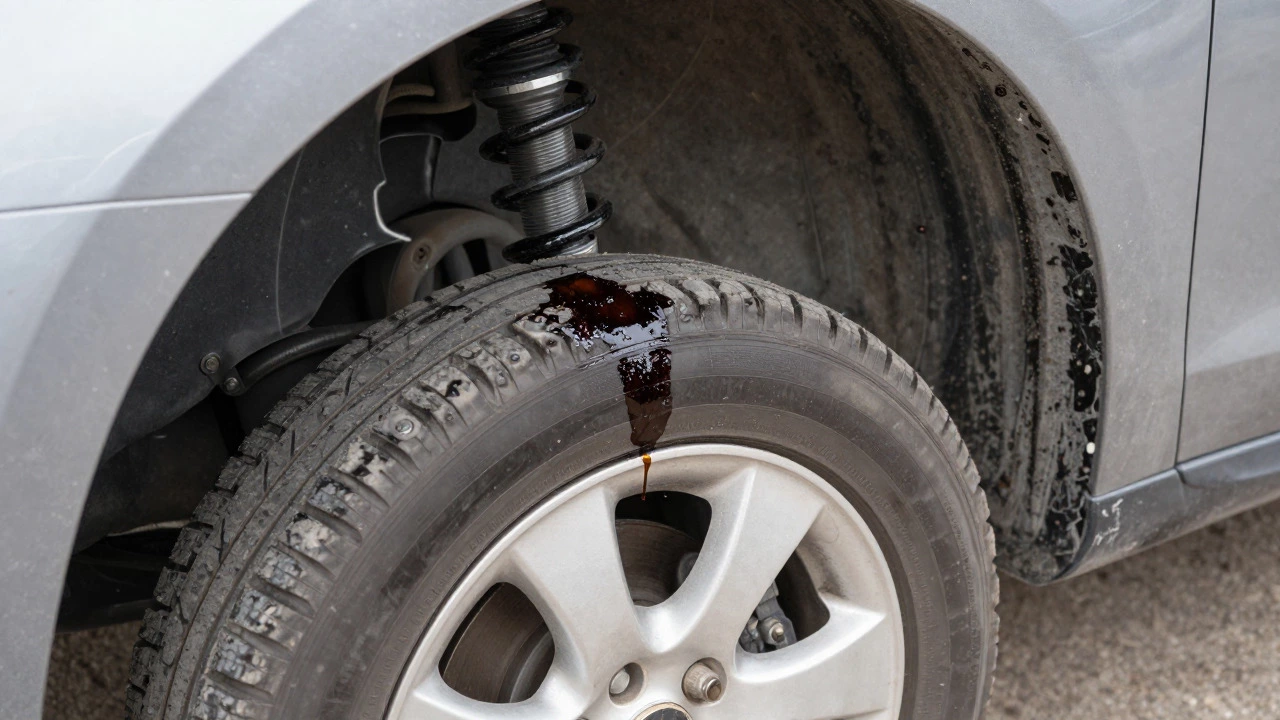
First, look at the shock absorbers and struts. These are the cylindrical components attached to your wheels. Run your eye along the metal body. Do you see any dark, wet spots? A little dust is normal. A slick, oily sheen means oil is leaking out. If you can see daylight through the seal or see drips on the ground below, that shock is dead. Once the fluid leaks out, the shock can no longer dampen the spring's movement, leaving you with a bouncy, unstable ride.
Next, check the control arm bushings. These are rubber cushions located where the control arms connect to the frame. Over time, rubber cracks, tears, or disintegrates due to heat and age. If you see chunks of rubber missing or deep splits, the metal-to-metal contact will cause clunking noises and vague steering. While you're down there, inspect the tie rod ends. They should be covered in rubber boots. If those boots are torn, dirt gets in and destroys the joint, leading to loose steering play.
- Leaking Shocks: Visible oil residue on the shock body.
- Cracked Bushings: Splits or tears in the rubber joints.
- Torn Boots: Exposed tie rods or ball joints.
- Rust: Heavy surface rust on springs (though some rust is normal).
The Bounce Test: Checking for Damping Power
This is the classic "push down" test, and it works surprisingly well for identifying worn-out shocks. Go to one corner of your car-say, the front left bumper. Push down firmly on the bumper with both hands and let go quickly. The car should bounce up once and settle back into place immediately.
If the car bounces up and down two or three times before stopping, your dampers are weak. Think of it like jumping on a trampoline versus jumping on concrete. A healthy suspension acts like the concrete-it absorbs the energy instantly. A worn suspension acts like the trampoline-it stores and releases the energy repeatedly. Repeat this test on all four corners. If one side bounces more than the others, you likely have a specific shock or strut failure on that side.
The Steering Wheel Shake Test
Suspension issues often masquerade as steering problems. Find a safe, straight stretch of road with decent pavement-not too rough, not perfectly smooth. Drive at about 40-50 mph (65-80 km/h). Keep your hands light on the steering wheel.
Do you feel a vibration or shimmy traveling up through the column? This is often caused by worn ball joints or wheel bearings. Ball joints allow the control arms to move up and down while keeping the wheel aligned. When they wear out, they create slack. At highway speeds, that tiny amount of slack turns into a noticeable shake. If the shake stops when you lightly apply the brakes, the issue is usually with the wheels themselves (balance or runout). If the shake persists despite braking, look at the suspension components.
The Braking Dive Check
Your suspension does heavy lifting when you stop. The weight of the car shifts forward, compressing the front springs and extending the rear ones. This is normal physics. However, excessive "nose dive" indicates weak front struts or springs.
Find a flat, empty parking lot. Accelerate to about 30 mph, then brake firmly (but safely) to a stop. Watch the front of the car from the side mirror or ask a friend to observe. Does the front end drop dramatically, almost touching the ground? A slight dip is expected. If the car feels like it's pitching forward violently, your front strut assemblies may be fatigued. This not only looks scary but increases stopping distance because the rear tires lose some traction.
Listening for Clunks and Rattles
Your ears are powerful diagnostic tools. Start the engine and drive over a series of speed bumps or uneven pavement at low speed. Pay attention to what you hear.
A single, sharp "clunk" from the front when hitting a bump usually points to a worn sway bar link or stabilizer bar link. These small rods connect the sway bar to the suspension to reduce body roll. They fail frequently and are cheap to replace. A constant rattling sound that gets louder over rough roads might indicate a broken spring isolator or a loose underbody shield. If you hear grinding, stop immediately-that could be a collapsed bearing or a rubbing component.
| Symptom | Likely Culprit | Severity |
|---|---|---|
| Bouncing after bumps | Worn Shock Absorbers/Struts | High |
| Steering wheel vibration | Ball Joints/Wheel Bearings | Critical |
| Clunking over bumps | Sway Bar Links/Bushings | Medium |
| Nose diving on brakes | Front Struts/Springs | High |
| Pulling to one side | Uneven Tire Pressure/Worn Control Arms | Medium |
When to Call a Professional
You can do a great job spotting obvious issues, but some tests require special tools. If your car pulls significantly to one side during straight-line driving, you need an alignment check. Worn suspension parts change the geometry of your wheels, causing rapid tire wear. A mechanic uses laser equipment to measure camber, caster, and toe angles.
Also, if you suspect a broken spring, do not drive the car. Springs store massive amounts of tension. A broken coil spring can collapse the suspension, damaging the fender, tire, and even the brake lines. In this case, call a tow truck. For everything else, schedule an inspection. Replacing suspension parts in pairs (both fronts or both rears) is standard practice to ensure balanced handling.
Maintenance Tips to Extend Suspension Life
Prevention is cheaper than repair. Here are three simple habits:
- Check Tire Pressure Monthly: Under-inflated tires act like extra soft springs, putting more stress on your shocks. Over-inflated tires make the ride harsher. Stick to the PSI listed on your driver's door jamb.
- Avoid Speed Bumps: Hitting speed bumps at high velocity is the fastest way to destroy shocks and struts. Slow down to crawl speed over them.
- Rotate Tires Regularly: Uneven tire wear puts asymmetric loads on the suspension, accelerating wear on bushings and joints.
Your suspension takes a beating every time you drive. By performing these simple checks every few months, you can catch small problems before they turn into expensive repairs-or worse, a safety hazard on the highway. Stay alert, listen to your car, and keep those wheels planted.
How much does it cost to fix a bad suspension?
Costs vary widely depending on the part and labor. Replacing sway bar links might cost $100-$200 total. New shock absorbers typically range from $150 to $300 per unit, plus labor. Full strut assemblies can cost $300-$500 each. Always get a quote for parts and labor separately.
Can I drive with a bad suspension?
You can drive short distances to a mechanic, but avoid highways. Worn suspension reduces tire contact with the road, increasing stopping distances and the risk of losing control during evasive maneuvers. It also accelerates tire wear.
How often should suspension parts be replaced?
There is no fixed mileage. It depends on driving conditions. Rough roads and heavy loads shorten lifespan. Generally, shocks and struts last between 50,000 and 100,000 miles. Bushings and ball joints may last longer but should be inspected annually.
What is the difference between a shock and a strut?
A shock absorber is purely a damper that controls spring movement. A strut is a structural component that supports the vehicle's weight and serves as a pivot point for steering. Struts are more complex to replace and often require an alignment afterward.
Will a wheel alignment fix suspension noise?
No. An alignment adjusts the angles of the wheels, but it does not repair worn parts. If you have clunking or rattling, you need to replace the faulty component first. Then, get an alignment to ensure proper tire wear and handling.