Clutch Upgrade Calculator
Determine your ideal clutch upgrade
Enter your vehicle's current power level and driving style to get the right clutch recommendation.
Key considerations for this upgrade:
Let’s cut to the chase: an upgraded clutch won’t make your car faster by itself. But if you’re pushing your engine harder-whether you’ve added a turbo, tuned the ECU, or swapped in a high-revving motor-then a stock clutch is probably the thing holding you back. You might have more power, but if your clutch can’t handle it, you’re just spinning tires and wasting money.
What a clutch actually does
A clutch connects your engine to your transmission. When you press the pedal, it disengages that connection so you can shift gears. When you let go, it re-engages, sending power to the wheels. Simple, right? But here’s the catch: factory clutches are built for smoothness and longevity, not for maximum grip or heat resistance. They’re designed for daily driving, not for hard launches or track days.
Think of it like shoes. You wouldn’t wear slippers to run a marathon. A stock clutch is the slippers. An upgraded clutch is the racing spike. It doesn’t make your legs stronger, but it lets you use the strength you already have.
When an upgraded clutch actually helps you go faster
Here’s the real scenario: you’ve added a performance exhaust, a cold air intake, and a remap. Your 2.0L turbo four now makes 320 horsepower instead of 250. You’re hitting redline in third gear and the clutch starts to slip. You feel it-a soft, spongy feeling when you mash the throttle. The engine revs, the car doesn’t respond. That’s not lag. That’s your clutch giving up.
That’s when an upgraded clutch makes you faster. Not because it adds horsepower. But because it transfers every single horsepower you’ve paid for. A high-performance clutch uses stronger pressure plates, ceramic or sintered metal friction materials, and stiffer springs. These changes mean:
- Less slippage under hard acceleration
- Higher torque capacity
- Better heat dissipation during repeated shifts
- Faster engagement for quicker gear changes
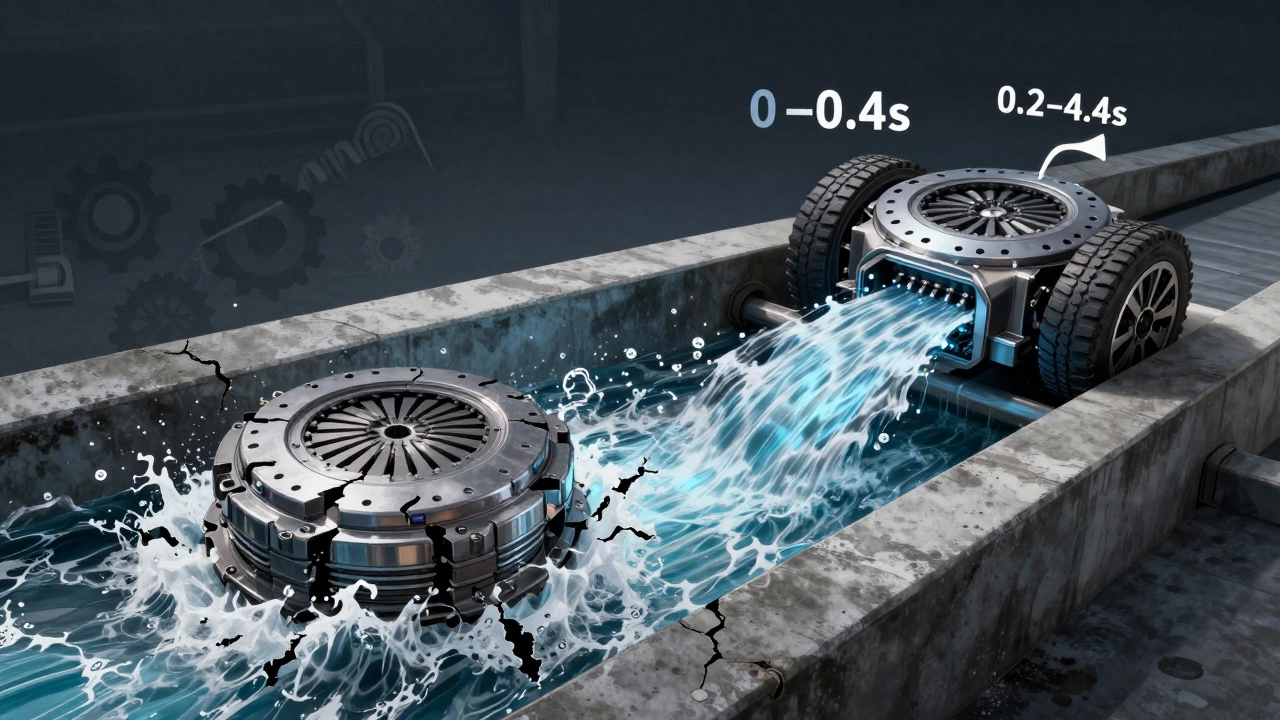
On a drag strip, that means 0.2 to 0.4 seconds faster 60-foot times. On a twisty back road, it means you can downshift harder without fear of the clutch letting go. That’s not magic. That’s physics.
Not all clutch upgrades are created equal
There’s a big difference between a "performance clutch" and a "race clutch." A stage 1 clutch kit might use a slightly stronger pressure plate and organic pads with better heat tolerance. It’s still drivable on the street. A stage 3 or 4 clutch? That’s a full sintered metal disc with a heavy-duty spring. It’s brutal on daily driving. You’ll get chatter, pedal effort like a truck, and a tendency to jerk when pulling away from a stop.
Most people don’t need a race clutch. If you’re not tracking your car regularly or running over 400 horsepower, you’re better off with a stage 2 kit. Brands like Exedy, SPEC, and LUK offer kits tuned for different power levels. For example:
| Power Level | Clutch Type | Street Drivability | Best For |
|---|---|---|---|
| Up to 300 hp | Stage 1 (Organic/Carbon) | Excellent | Stock cars with mild mods |
| 300-400 hp | Stage 2 (Ceramic) | Good | Track weekends, spirited driving |
| 400-500 hp | Stage 3 (Sintered Metal) | Poor | Track use, drag racing |
| 500+ hp | Stage 4+ (Dual Disc) | Very Poor | Professional racing, high-horsepower builds |
Choosing the wrong one is like putting race tires on a family sedan. You’ll lose comfort, wear out parts faster, and still not go much quicker if your suspension and tires can’t keep up.
Other parts matter more than the clutch
Let’s be honest: if you’re only upgrading the clutch and nothing else, you’re not going to see big gains. A clutch is just one piece of the puzzle. Here’s what actually makes a car faster:
- Tires with better grip
- Lighter wheels
- Proper suspension tuning
- Engine tuning and airflow
- Exhaust efficiency
On a front-wheel-drive car, even the best clutch won’t help if you’re spinning the tires on launch. On a rear-wheel-drive car, you might be able to put power down better-but only if your rear tires are wide enough and your diff is tuned.
One guy in Manchester I know swapped his stock clutch for a SPEC stage 2 kit on his Mk5 Golf GTI. He had a stage 1 tune already. His 0-60 dropped from 6.8 to 6.3 seconds. But he also installed a set of Michelin Pilot Sport 4 tires and lowered the car by 15mm. The clutch helped-but the tires did the heavy lifting.
What you lose with an upgraded clutch
There’s no free lunch. Performance clutches come with trade-offs:
- Harsher engagement-you’ll feel every gear change, even at low speeds
- More pedal pressure-your left leg gets a workout
- Shorter lifespan-some race clutches last 20,000 miles, not 100,000
- Noise and vibration-clutch chatter, especially when cold
- Cost-expect to pay £400-£1,200 for a good kit, plus labor
If you drive in stop-and-go traffic every day, a stage 3 clutch will make your commute miserable. If you only take your car out on weekends and love the sound of the engine screaming through the gears, then the trade-off is worth it.
When you shouldn’t upgrade your clutch
Don’t upgrade your clutch if:
- Your car still has stock power (under 250 hp)
- You haven’t fixed other issues (worn flywheel, leaking oil onto the clutch, bad transmission mounts)
- You’re planning to sell the car soon
- You’re not prepared for the maintenance or driving feel
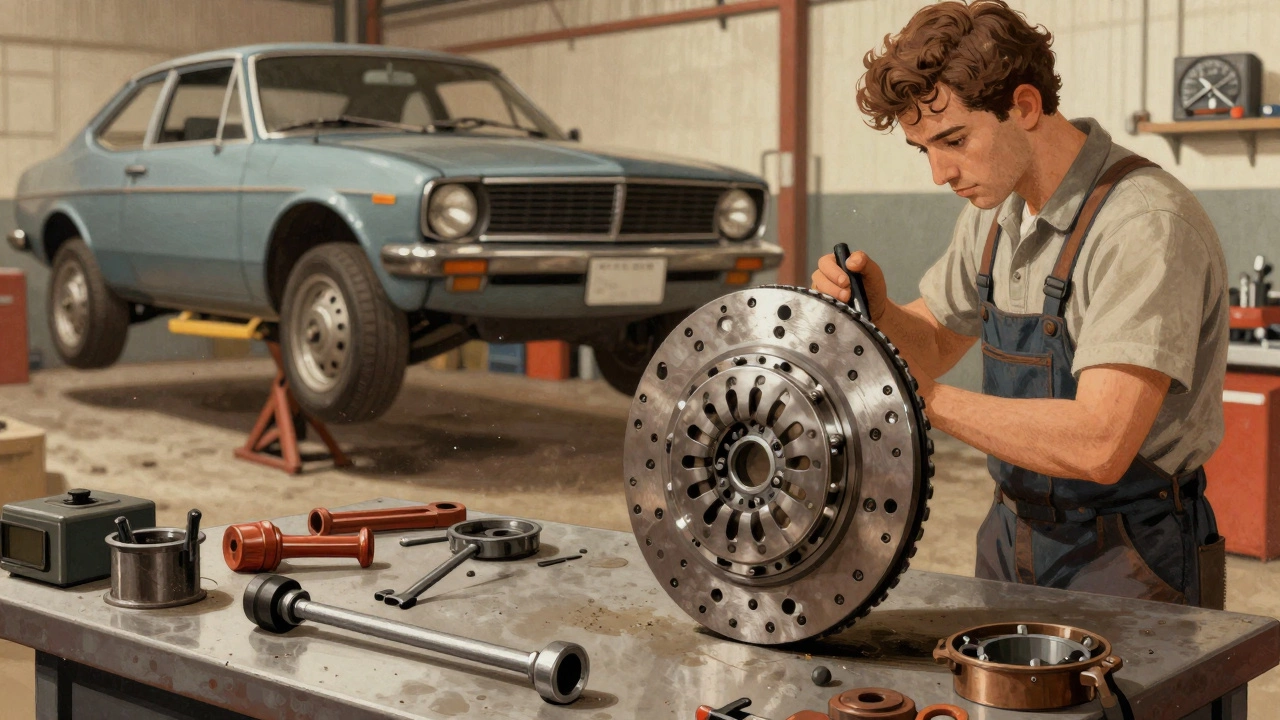
And never install a performance clutch without replacing the flywheel. A worn or warped flywheel will ruin a new clutch in weeks. Most kits include a lightweight flywheel, but if yours doesn’t, buy one. It’s not optional.
The bottom line
An upgraded clutch doesn’t make your car faster. It lets your car use the power it already has. If you’ve tuned your engine and you’re slipping the clutch under hard acceleration, then yes-you need one. If you’re just curious and haven’t touched the engine, skip it.
Think of it like this: you wouldn’t put a Ferrari engine in a tractor and expect it to fly. But if you’ve already built a high-performance car, then a weak clutch is the weak link. Fix the link, and you’ll feel the difference-not in top speed, but in how confidently you can use every bit of power you’ve worked for.
Does a performance clutch increase horsepower?
No, a performance clutch doesn’t add horsepower. It improves how efficiently your engine’s power reaches the wheels. If your stock clutch was slipping, upgrading it lets you use all the power your tune or mods have created.
How long does a performance clutch last?
It depends on the type and how you drive. A stage 2 clutch can last 50,000-80,000 miles with normal use. A stage 4 sintered metal clutch might only last 20,000 miles if you’re doing frequent launches. Aggressive driving cuts lifespan dramatically.
Can I install a performance clutch myself?
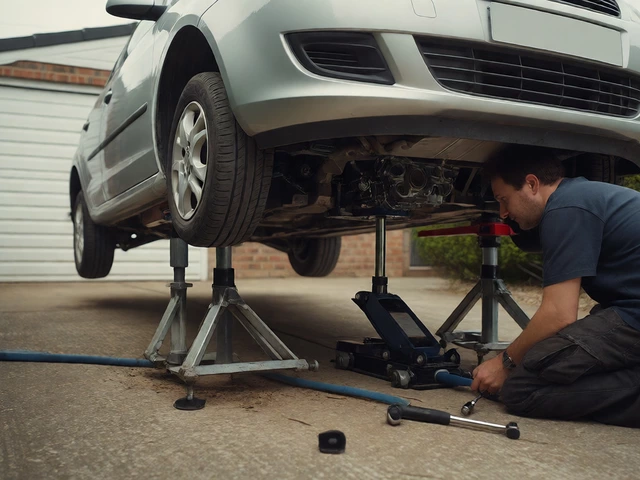
Yes, if you have experience with transmission work and the right tools-jack, torque wrench, clutch alignment tool. But it’s a 6-8 hour job, and one mistake (like not torquing the flywheel correctly) can destroy the new clutch. Most people pay £300-£500 for labor.
Do I need a new flywheel with a new clutch?
Always. A worn or warped flywheel causes uneven pressure on the clutch disc, leading to premature failure, vibration, and poor engagement. Most performance clutch kits include a lightweight flywheel. If yours doesn’t, buy one separately.
Will a performance clutch make my car harder to drive in traffic?
Yes, especially with ceramic or sintered metal discs. They engage more abruptly, require more pedal pressure, and can chatter at low speeds. Stage 1 clutches are close to stock feel. Stage 2+ will make daily driving more tiring.