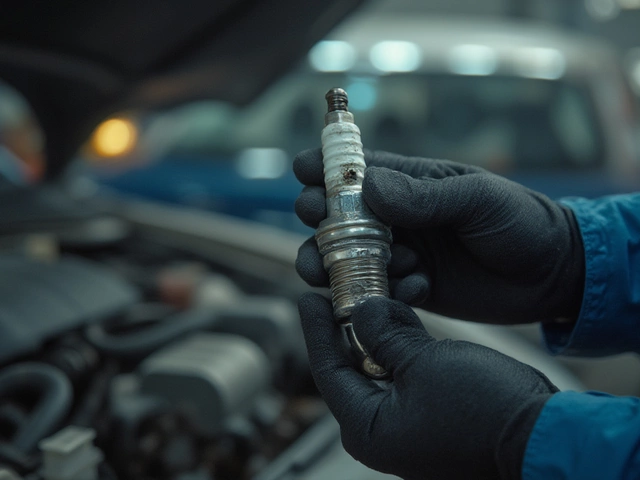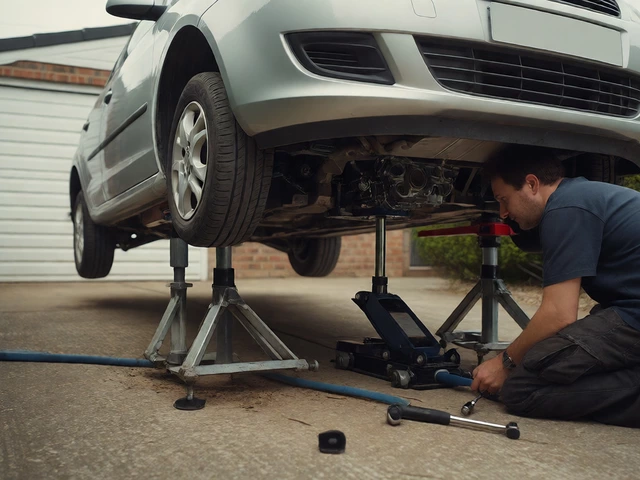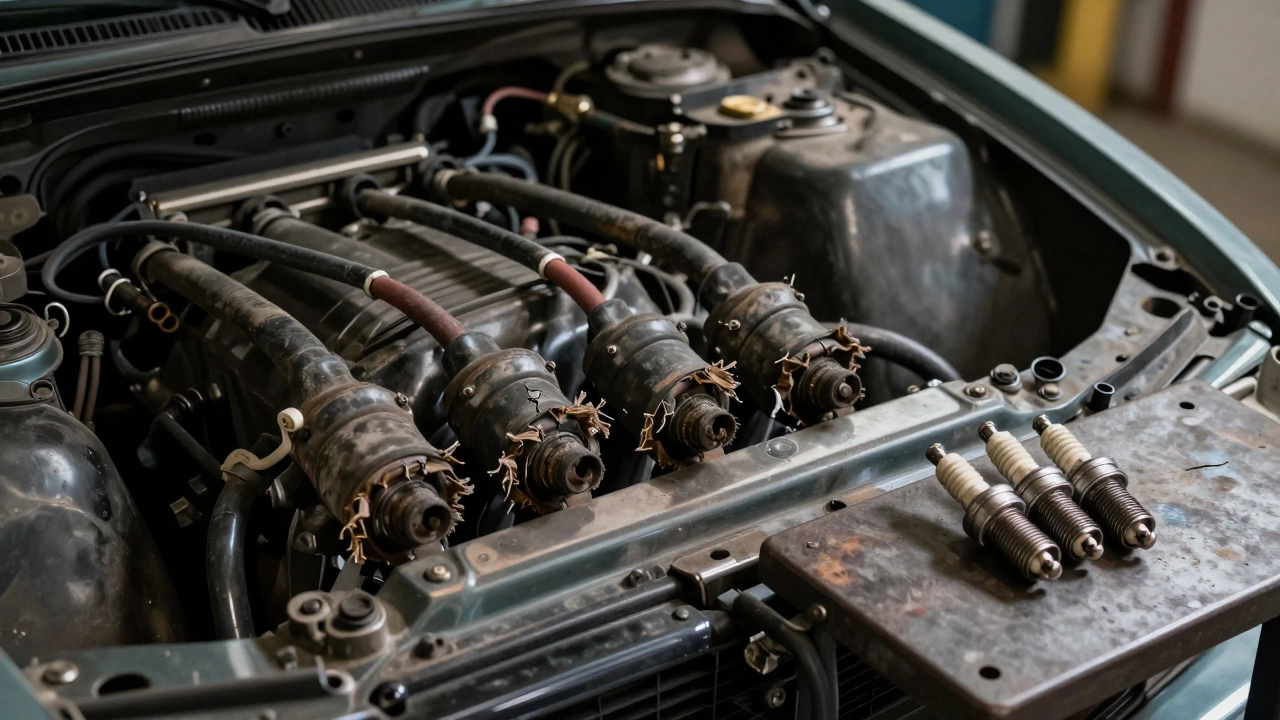
When your car starts misfiring, sputtering, or losing power, the first thing most people think of is the spark plugs. And rightly so-they’re the heart of the ignition system. But here’s the question that trips up a lot of DIYers: Is it OK to change spark plugs but not wires? The short answer? Sometimes. But it’s not always smart.
Why Spark Plugs and Wires Go Together
Spark plugs and ignition wires (also called spark plug wires or high-tension leads) work as a team. The wires carry high-voltage electricity from the ignition coil to the spark plug. That spark jumps the gap in the plug, igniting the fuel-air mix in the cylinder. If one part fails, the whole system suffers.Most cars built after 1990 use coil-on-plug systems, where each spark plug has its own coil right on top. No wires needed. But if you’re driving an older car-say, a 1998 Ford Taurus or a 2002 Honda Civic-you’ve got wires. And those wires wear out. They crack, get brittle, or develop internal resistance. That means less voltage reaches the plug. Even if you install brand-new spark plugs, old wires can still choke the spark.
What Happens If You Only Replace the Plugs
You might think, “My wires look fine. Why spend extra?” But appearances lie. You can’t tell if a wire’s insulation is breaking down just by looking. Here’s what actually happens when you skip replacing the wires:- Your engine might run fine at first-then start misfiring under load, like when you’re climbing a hill or accelerating hard.
- Fuel efficiency drops. The engine doesn’t burn fuel cleanly, so you’re using more gas for less power.
- Check Engine light comes on with codes like P0300 (random misfire) or P030X, where X is the cylinder number.
- Carbon buildup on the new plugs increases because they’re not getting a strong enough spark.
A friend of mine replaced his spark plugs on his 2001 Toyota Camry and left the wires alone. Two weeks later, the car started stumbling at idle. He thought the new plugs were defective. Turned out, the wires had 120,000 miles on them. The resistance had climbed to 40,000 ohms per foot-way above the 1,000-15,000 ohm safe range. He replaced the wires, and the car ran like new again.
When It’s Safe to Skip the Wires
There are rare cases where replacing only the spark plugs makes sense:- Your wires are brand new-installed within the last 20,000 miles.
- You’ve recently tested them with a multimeter and found resistance within manufacturer specs.
- You’re doing a temporary fix before a long trip and plan to replace the wires in the next 1,000 miles.
Even then, it’s a gamble. Ignition wires don’t usually fail suddenly-they degrade slowly. And once they start to fail, they can damage other parts of the ignition system, like the coil pack. That’s an expensive fix compared to replacing wires while you’re already under the hood.
How to Check Your Ignition Wires
You don’t need a fancy tool to check your wires. Here’s what to do:- Turn off the engine and let it cool.
- Locate the spark plug wires. They run from the ignition coil to each spark plug.
- Visually inspect each wire for cracks, burns, or fraying. Look at the boots where they connect to the plug and coil.
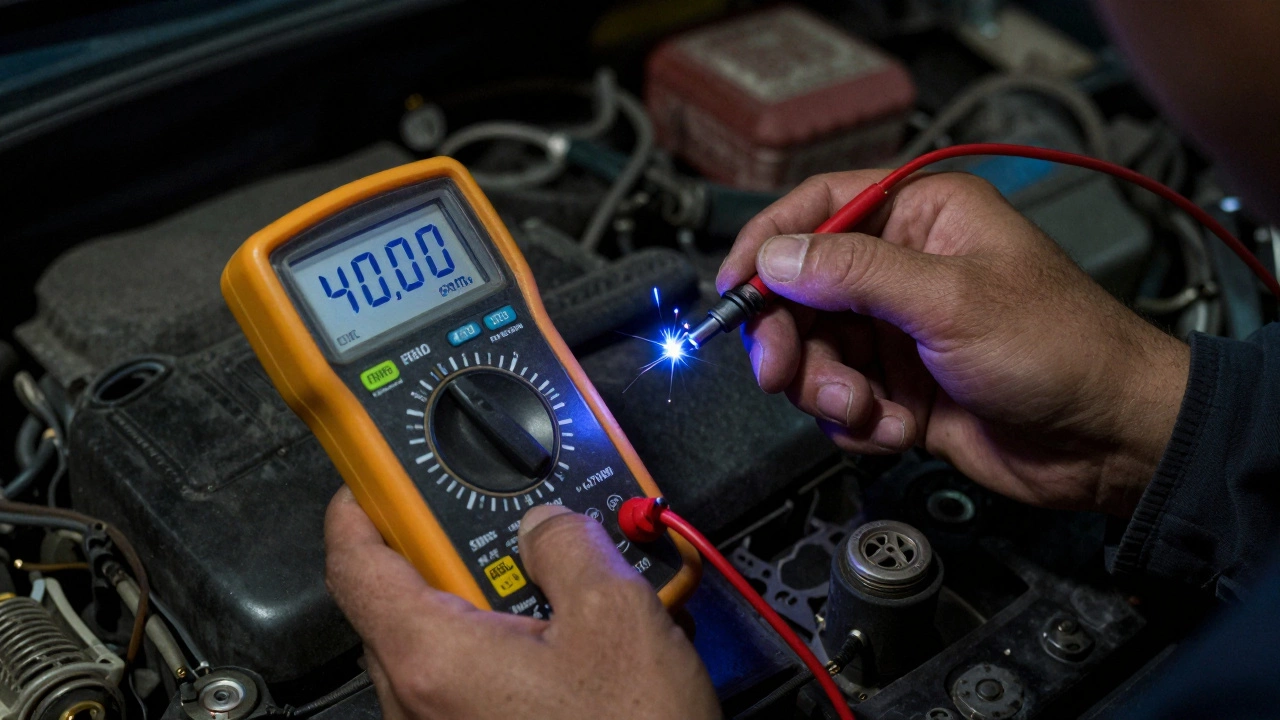
- Use a multimeter set to ohms (Ω). Touch one probe to the metal terminal at the coil end, and the other to the metal terminal at the spark plug end.
- Compare readings to your vehicle’s manual. Most manufacturers say resistance should be under 25,000 ohms per foot. If it’s over 30,000, replace them.
- Check for arcing at night. Start the engine in a dark garage. Look for blue sparks jumping from the wires-this means insulation is failing.
Most people skip step four. But if you’re serious about keeping your car running smoothly, this takes five minutes and saves you hundreds.
Replacement Intervals
Spark plugs last anywhere from 30,000 to 100,000 miles, depending on the type. Standard copper plugs need replacing every 30,000 miles. Platinum or iridium plugs can go 60,000-100,000.Ignition wires? They usually need replacing every 60,000 miles-sometimes sooner if you drive in extreme heat, humidity, or dusty conditions. In the UK, damp winters and salted roads can accelerate wire degradation. If your car is over 10 years old and the wires have never been replaced, it’s time.
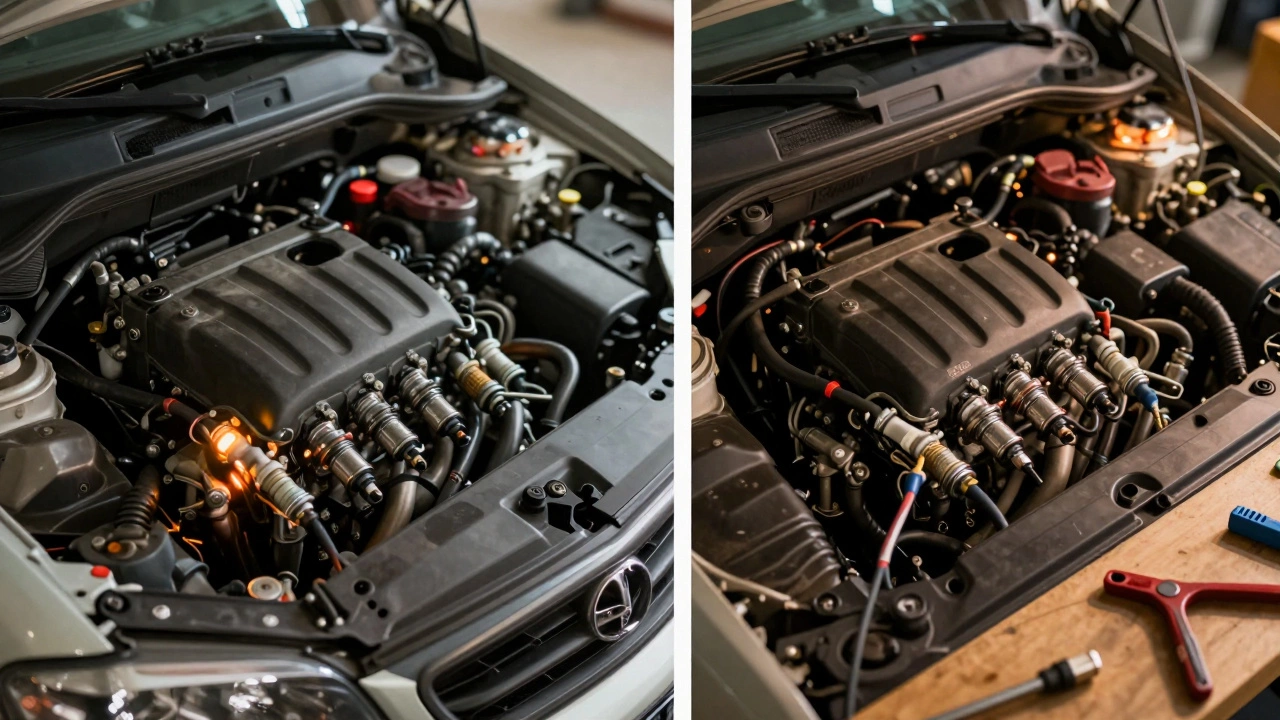
Cost Comparison: Plugs Only vs. Plugs + Wires
| Component | Typical Cost (UK) | Labour Time |
|---|---|---|
| Spark Plugs (set of 4) | £25-£60 | 1 hour |
| Ignition Wires (set of 4) | £40-£80 | 1 hour |
| Plugs Only | £25-£60 | 1 hour |
| Plugs + Wires | £65-£140 | 2 hours |
Yes, replacing both costs more upfront. But if you replace the plugs now and the wires fail in three months, you’ll pay twice for labour. And you’ll still have the same performance issues.
Real-World Consequences
I’ve seen too many cases where people saved £50 by skipping wires-only to end up paying £300 for a misdiagnosed fuel pump or catalytic converter failure. Why? Because a weak spark causes unburned fuel to flood the exhaust. That kills the catalytic converter. That’s not a minor repair.One garage in Manchester told me they see 3-4 customers a week who come in saying, “I just changed the plugs, but the car still runs rough.” Nine times out of ten, it’s the wires.
Final Verdict
If your ignition wires are original, or if they’re over 60,000 miles old, don’t just replace the spark plugs. Replace both. It’s not about being overly cautious-it’s about doing the job right the first time.Yes, it costs more. But you’ll get better fuel economy, smoother acceleration, fewer breakdowns, and longer life for your exhaust system. And if you’re doing the work yourself, you’re already under the hood. Why not finish the job?
Think of it like changing your oil but not the filter. You’re doing half the job. And half a fix isn’t a fix at all.
Can I drive with bad spark plug wires?
You can, but you shouldn’t. Driving with damaged wires causes misfires, poor fuel economy, and can damage the catalytic converter over time. If the Check Engine light is on or the engine is shaking, get it checked immediately.
Do I need to replace all spark plug wires at once?
Yes. Even if only one wire looks bad, the others are likely just as worn. Replacing them as a set ensures even performance across all cylinders and prevents future issues.
How do I know if my spark plug wires are bad?
Look for cracks, burns, or stiffness in the rubber boots. Check resistance with a multimeter-anything over 30,000 ohms per foot is a red flag. Also, listen for a ticking sound under the hood, especially at night. That’s arcing.
Are aftermarket spark plug wires worth it?
For most drivers, OEM or quality aftermarket sets (like MSD or Bosch) are fine. Avoid cheap no-name brands-they often use thinner conductors and degrade faster. You don’t need performance wires unless you’re racing.
Can I reuse spark plug wires after cleaning them?
No. Cleaning won’t fix internal wear, cracks, or loss of conductivity. Once wires are worn, they’re done. Replacing them is the only reliable fix.