AC & Cooling System Diagnostic Tool
Which symptom best describes your problem?
Select the scenario that matches your experience to find the likely cause.
Likely Cause: Cooling Fan Failure
Your AC works at speed because the wind forces air through the condenser. When you stop, the Cooling Fan is supposed to take over. If the fan is dead, heat builds up instantly.
Likely Cause: ECU Thermal Protection
Your engine is overheating. To prevent catastrophic failure, the Engine Control Unit (ECU) has shut off the AC compressor to reduce engine load.
Likely Cause: Coolant Leak
The sweet smell is typical of antifreeze. Low coolant leads to an overheating engine, which triggers the safety shutdown of your AC system.
Likely Cause: Restricted Airflow
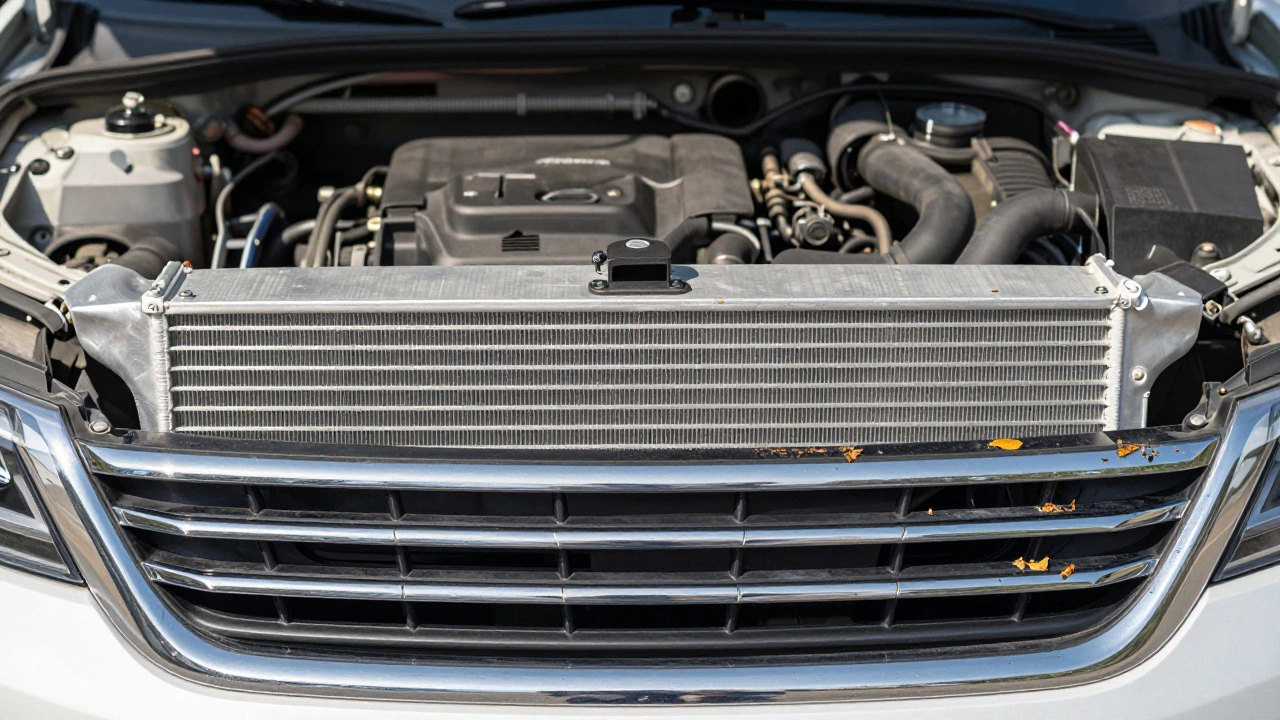
Dirt and bugs create a "blanket" over the radiator and condenser, preventing them from releasing heat into the air.
The Physical Connection: Radiators and Condensers
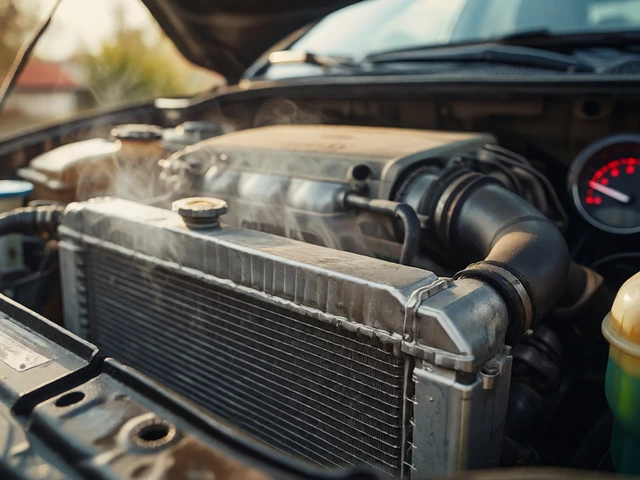
To understand why your AC might be struggling, you have to look at how your car is built. If you peek through your front grille, you'll see the Radiator. Right in front of it-or sometimes sandwiched closely-is the AC Condenser, which is a small radiator-like device that turns high-pressure gaseous refrigerant into a liquid by releasing heat into the air. Because the condenser sits ahead of the radiator, they share the same airflow. If the radiator is clogged with bugs, leaves, or dirt, it can restrict the total amount of air moving through the front of the vehicle, making both systems work harder and less efficiently.
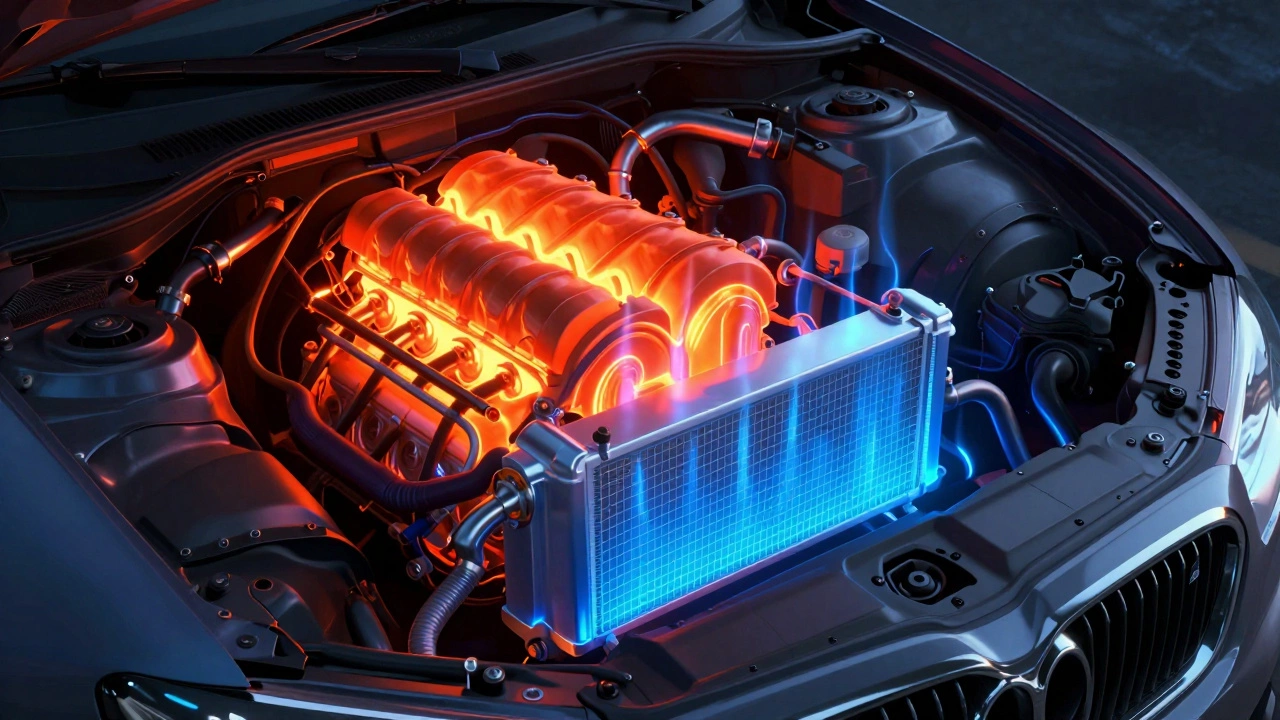
Think of it like trying to breathe through a thick blanket. If the radiator is blocked or leaking, it can create a "heat soak" effect. The air passing through the condenser is already hot, and if the radiator is failing and letting the engine run hotter than usual, that ambient heat increases. Since the AC depends on the temperature difference between the refrigerant and the outside air, a scorching engine bay makes it much harder for the AC to drop the temperature in the cabin.
When an Overheating Engine Kills Your Cool Air
Have you ever noticed your AC suddenly get warm right as your engine temperature gauge starts to climb? That's not a coincidence. When your Engine starts to overheat due to a faulty radiator or a failed water pump, your car's computer (the ECU) often makes a executive decision. To protect the engine from catastrophic failure, the system may reduce the load on the engine. Since the AC Compressor-the pump that moves refrigerant-puts a significant load on the engine, the computer might actually throttle or shut off the AC compressor entirely to save energy for cooling the engine.
This is a safety mechanism. If the engine is fighting for its life to stay cool, it can't afford to spend horsepower running a heavy AC compressor. So, while the AC system itself might be perfectly healthy, it stops working because the radiator isn't doing its job. You aren't dealing with a refrigerant leak; you're dealing with a thermal management failure.
| Radiator Problem | Impact on AC | Why it Happens |
|---|---|---|
| External debris/clogging | Weak cooling airflow | Air can't pass through the condenser/radiator stack efficiently. |
| Coolant leak/low fluid | Intermittent AC failure | Engine overheats, causing the ECU to shut off the AC compressor. |
| Failed cooling fan | Warm air at idle | Fans pull air through both the condenser and radiator; no fan means no cooling. |
| Internal scaling/rust | Reduced overall efficiency | Heat isn't dissipated quickly enough, raising the temperature of the engine bay. |
The Role of the Cooling Fan
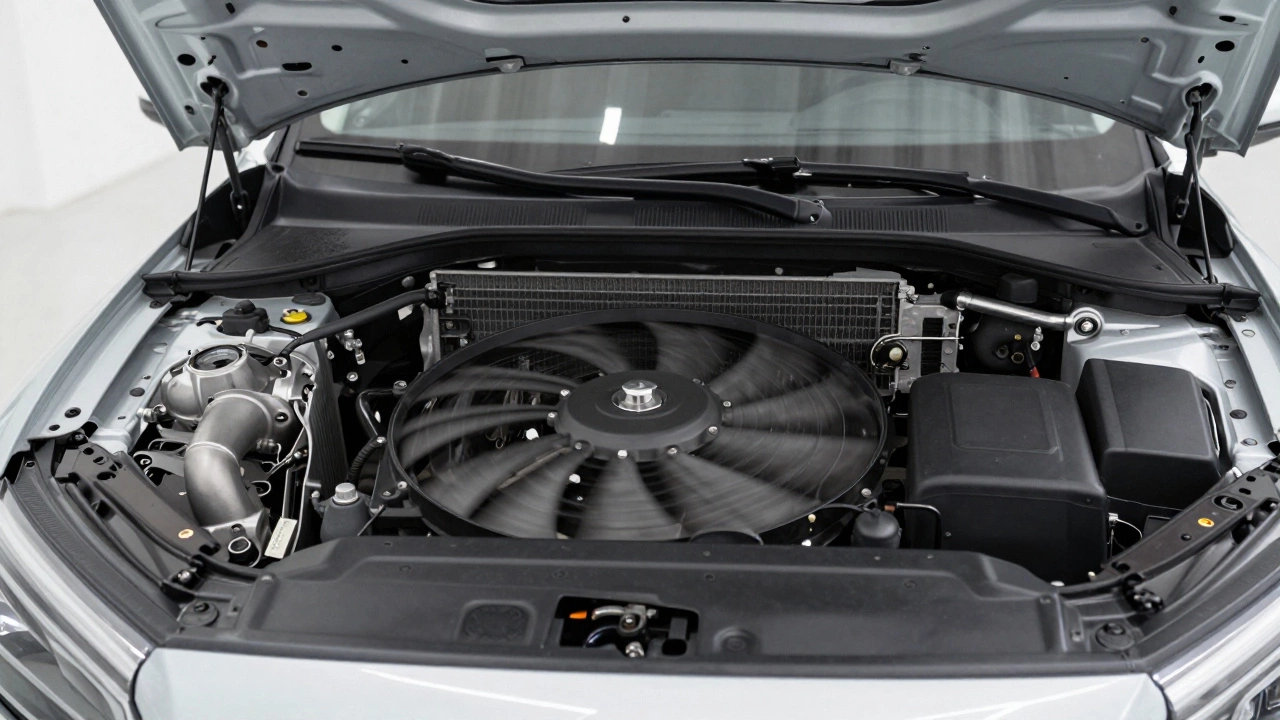
The Cooling Fan is the unsung hero that ties these two systems together. In most cars, a single large fan (or a pair of fans) pulls air through both the AC condenser and the radiator. If the fan motor burns out or the fuse blows, you'll notice a very specific pattern: your AC works great while you're driving 60 mph on the highway (because the wind is forcing air through), but as soon as you stop at a red light, the air from the vents becomes warm. This happens because without the fan, there's no airflow to remove heat from the condenser or cool the radiator fluid.
If you're experiencing this, don't start by recharging your AC refrigerant. Instead, pop the hood while the car is running and the AC is on. If those fans aren't spinning, you've found your problem. A dead fan is a cooling system failure that manifests as an AC problem.
Common Signs Your Cooling System is Sabotaging Your AC
It can be tricky to tell if your AC is actually broken or if the radiator is just making it struggle. Here are a few concrete scenarios to look for:
- The "Stoplight Warmth": Your AC is ice cold at highway speeds but turns lukewarm the second you stop. This usually points to a fan issue or a severely clogged radiator/condenser.
- The Temperature Spike: Your AC stops working exactly when the engine temperature needle moves toward the red zone. This is the ECU protecting your engine.
- Sweet Smell/Steam: If you smell a sweet, syrup-like scent (antifreeze) and notice your AC is weak, you likely have a coolant leak. Low coolant levels lead to overheating, which triggers the AC shutdown.
- Physical Blockage: You look through the grille and see a "carpet" of dead bugs and dried leaves. This creates an air barrier that starves both the radiator and the AC condenser of the air they need to dump heat.
How to Maintain Both Systems for Maximum Chill
Preventing these issues is surprisingly easy if you're proactive. First, give your front grille a gentle wash with a garden hose every few months. Do not use a high-pressure power washer too close to the fins, as you can bend them, which actually restricts airflow further. You want to clear the debris without flattening the delicate aluminum foils.
Keep an eye on your Coolant levels. Use the correct mixture of distilled water and antifreeze specified in your owner's manual. If your coolant is old and brown, it can't transfer heat efficiently, which raises the temperature of everything under the hood, including the AC lines.
Finally, check your belts. A slipping or frayed serpentine belt can cause the water pump (radiator side) and the AC compressor (AC side) to spin slower than they should. If the belt is slipping, neither system will operate at 100% capacity, and you'll feel it in the cabin temperature.
Can a clogged radiator cause the AC to blow warm air?
Yes. While the radiator cools the engine and the condenser cools the AC refrigerant, they are physically stacked. If the radiator is clogged with debris or internal scale, it restricts airflow and increases the temperature in the engine bay, making it harder for the AC condenser to release heat. This results in less cold air entering the cabin.
Why does my AC turn off when the engine gets too hot?
Modern cars have a safety feature where the Engine Control Unit (ECU) shuts down the AC compressor if it detects the engine is overheating. Running the AC puts extra load on the engine; by turning it off, the car tries to divert all available resources to cooling the engine and preventing a total breakdown.
Does adding more coolant fix a weak AC?
Only if the AC was weak because the engine was overheating. If your AC is malfunctioning due to a refrigerant leak or a bad compressor, adding coolant won't help. However, if the AC was cutting out because of a high engine temp, restoring the coolant level will stop the ECU from disabling the compressor.
Can a broken radiator fan affect the AC?
Absolutely. The cooling fan pulls air through both the AC condenser and the radiator. If the fan fails, the AC will work while the car is moving (because air is forced in by speed), but it will blow warm air as soon as you slow down or stop.
What is the difference between a radiator and a condenser?
The radiator is part of the engine cooling system and uses liquid coolant to keep the engine block from overheating. The condenser is part of the AC system and uses refrigerant gas to remove heat from the cabin air. They look similar and are located in the same area, but they handle entirely different fluids.
Next Steps for Troubleshooting
If you're currently staring at a warm vent, start with the "Low-Hanging Fruit" method. Check your coolant reservoir first-if it's empty, you have a leak. Next, turn on your AC and check if the cooling fans are spinning. If they are dead, replace the fuse or the fan motor. If everything looks mechanically sound, check the front of your car for a layer of dirt or insects and give it a gentle rinse. If the problem persists, it's time to see a professional to check the refrigerant pressures or the radiator's internal flow.