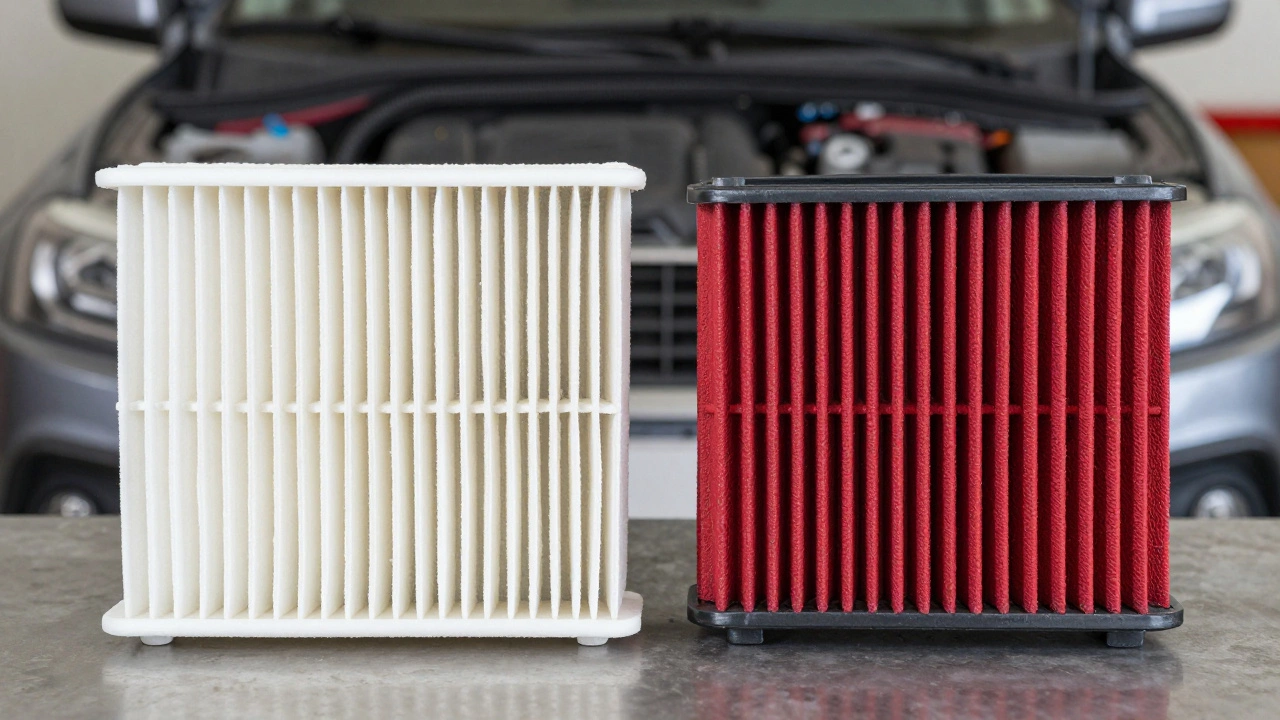
Premium Air Filter Cost-Benefit Calculator
Engine Air Filter Costs (£)
Cabin Air Filter Costs (£)
Total Estimated Costs
- Standard Engine Filters £
- Premium Engine Filters £
- Standard Cabin Filters £
- Premium Cabin Filters £
You just changed your oil, and the mechanic handed you a receipt that includes a "premium" air filter for £25 instead of the standard one for £8. Your instinct says no-it’s just a piece of paper or foam. But then you think about your car’s engine health and the air quality inside your cabin. Is that extra cash actually buying you something real, or is it just marketing fluff?
The short answer is: it depends entirely on which filter you are talking about. The automotive world splits air filtration into two distinct camps: the engine air filter, which protects your motor from dust and debris, and the cabin air filter, which cleans the air you breathe while driving. For engines, premium usually means negligible gains unless you drive in extreme conditions. For cabins, premium can mean the difference between sneezing all day and breathing clean air.
The Engine Air Filter Myth: Flow vs. Filtration
Let’s start with the engine. Manufacturers often push high-performance or "sports" air filters, claiming they increase horsepower by allowing more air into the combustion chamber. The logic sounds good on paper: more air equals more power. However, modern cars are tightly controlled by electronic fuel injection systems and engine control units (ECUs). These computers adjust the fuel-air ratio based on sensors, not just raw airflow volume.
In real-world testing, most drivers will see zero measurable increase in horsepower or torque when swapping a standard OEM (Original Equipment Manufacturer) filter for a premium performance filter. The restriction difference is often less than 1% in normal driving conditions. So, why do people buy them? Usually for aesthetics or the placebo effect of feeling like their car is "sportier."
However, there is a specific scenario where a higher-quality engine filter matters: longevity and protection. Standard paper filters are designed to trap particles down to a certain micron size. Premium dry-flow filters, often made from layered cotton gauze or advanced synthetic media, can sometimes offer better sealing and consistent filtration over time. If you live in an area with high dust levels-like rural parts of the UK during dry spells or near construction sites-a high-quality replacement filter ensures that fine particulate matter doesn’t wear down your cylinder walls. This isn’t about power; it’s about preventing premature engine wear.
| Feature | Standard Paper Filter | Premium Performance Filter |
|---|---|---|
| Average Cost | £5 - £10 | £20 - £40 |
| Filtration Efficiency | High (99%+ at 3 microns) | Variable (often lower for flow) |
| Airflow Restriction | Low | Very Low |
| Reusability | No (Disposable) | Yes (Cleanable) |
| Best For | Daily commuting, general use | Track days, dusty environments |
The Cabin Air Filter: Where Premium Actually Pays Off
This is where the conversation changes completely. While your engine might not care much about the brand of its air filter, your lungs definitely do. The cabin air filter sits behind your glovebox and filters every breath of air that enters your HVAC system. Standard cabin filters are typically simple paper or non-woven polypropylene sheets. They stop large debris like leaves and bugs but let through pollen, mold spores, and fine particulate matter (PM2.5).
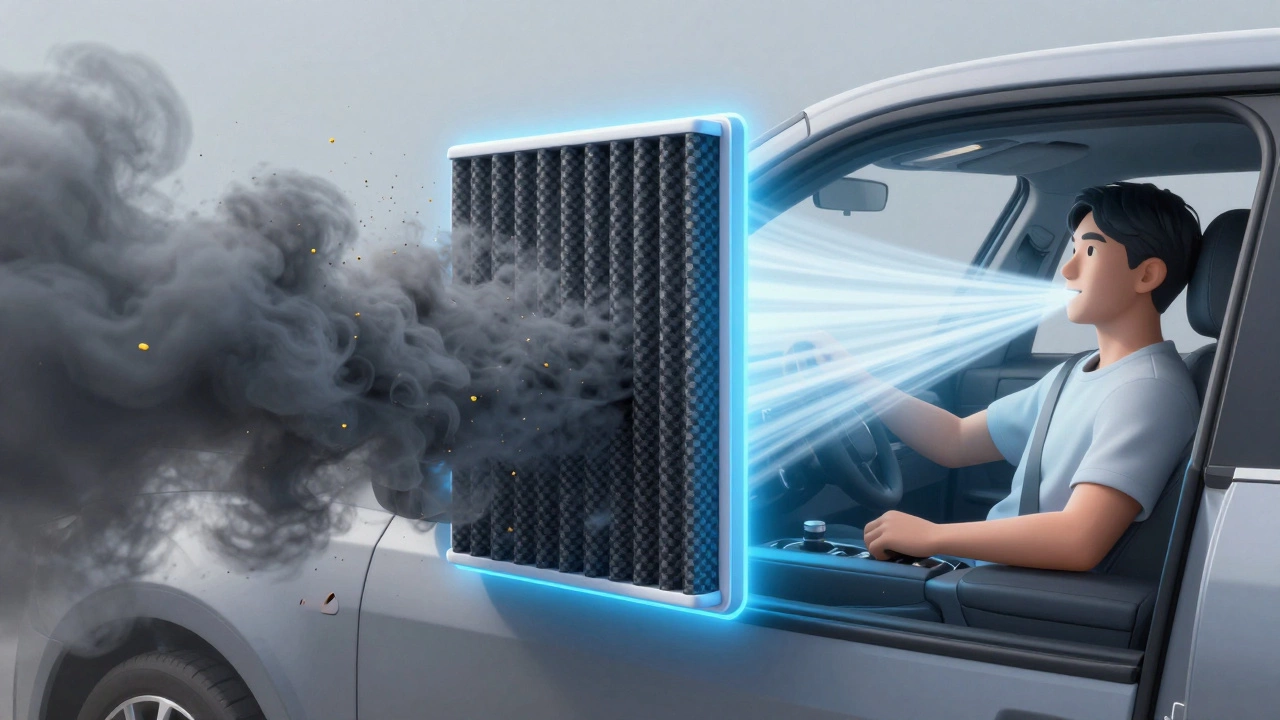
Premium cabin filters often include activated carbon layers or electrostatic media. Activated carbon works by adsorption, trapping odors, nitrogen oxides (NOx), and sulfur dioxide from exhaust fumes. This is crucial if you commute in heavy traffic in cities like Manchester or London. You’ve probably noticed that stale, metallic smell when stuck behind a diesel truck-that’s what carbon filters neutralize.
If you suffer from allergies or asthma, upgrading to a premium HEPA-style or multi-layer cabin filter is arguably the best investment you can make for your vehicle. Studies have shown that effective cabin filtration can reduce allergen exposure by up to 90%. That £15 filter could save you hundreds in antihistamines and doctor visits. Unlike engine filters, the benefit here is immediate and tangible.
Understanding MERV Ratings and Filtration Standards
To make an informed decision, you need to understand how filtration is measured. In the HVAC industry, we look at MERV (Minimum Efficiency Reporting Value) ratings. While car manufacturers don’t always list MERV ratings explicitly, the principles apply. A standard filter might operate at a MERV 8 level, capturing larger particles. A premium filter often aims for MERV 11-13, capturing smaller particles like smoke and bacteria.
However, higher filtration efficiency comes with a trade-off: airflow resistance. If a filter is too dense, your blower motor has to work harder, potentially increasing noise and reducing heating/cooling efficiency. Premium filters strike a balance, using thinner, more efficient media or electrostatic charges to capture particles without clogging as quickly. This is why a cheap, ultra-thin filter might fail after three months, while a well-engineered premium one lasts six to twelve months.
Cost-Benefit Analysis: Doing the Math
Let’s break down the economics. A standard engine air filter costs around £8 and needs replacing every 12,000 to 15,000 miles. Over five years, that’s roughly £30-£40. A premium reusable filter costs £30 upfront but lasts indefinitely if cleaned properly. If you drive 10,000 miles a year, the premium filter pays for itself in year four. But does it improve your driving experience enough to justify the wait? Probably not, unless you’re tracking your car.
Now look at cabin filters. A basic filter is £10; a premium carbon filter is £20. You replace them annually. That’s a £10 difference per year. Given the health benefits of reduced allergen and pollutant exposure, that £10 is a no-brainer for most people. It’s cheaper than a box of tissues and far more effective.
- Engine Filters: Stick with OEM or high-quality aftermarket paper filters unless you have a specific performance need.
- Cabin Filters: Always opt for premium carbon or multi-layer filters, especially if you have allergies or drive in urban areas.
- Reusable Filters: Only consider these for engine applications if you enjoy maintenance and drive in dusty conditions.
When Premium Filters Are a Waste of Money
There are scenarios where spending extra on filters is purely vanity. If you drive a hybrid electric vehicle (HEV) or a fully electric vehicle (EV), the engine air filter argument becomes even weaker. EVs don’t have internal combustion engines, so they only have cabin filters. For HEVs, the engine runs intermittently and under low load, meaning airflow demands are minimal. A standard filter performs just as well as a premium one in these cases.
Additionally, if you live in a pristine environment with little pollution or dust, the marginal gain from a premium engine filter is nonexistent. Your car’s ECU will simply adjust the fuel mixture to match the slight variation in airflow. You won’t feel faster, and you won’t save fuel. In fact, some poorly maintained reusable filters can actually *reduce* fuel economy because they become clogged with oil residue if not cleaned correctly.

Maintenance Tips for Maximum Filter Life
Whether you choose standard or premium, proper installation and maintenance matter. Here’s how to get the most out of your filters:
- Check the Seal: When installing an engine filter, ensure the rubber gasket sits flush. Even a small gap allows unfiltered air to bypass the filter, causing engine damage.
- Don’t Over-Clean Reusable Filters: If you buy a washable premium filter, follow the manufacturer’s cleaning instructions strictly. Using high-pressure air can damage the media fibers.
- Replace Cabin Filters Annually: Don’t wait until the AC smells bad. Pollen counts peak in spring and summer, loading up filters quickly.
- Inspect During Service: Ask your mechanic to show you the old filter before throwing it away. If it’s black and caked with grime, you’re likely in a high-pollution zone and should upgrade to a premium cabin filter.
Conclusion: Make the Right Choice for Your Needs
So, is it worth buying a premium air filter? For your engine, generally no-unless you’re chasing track-day performance or battling severe dust. The savings from sticking with quality OEM replacements outweigh the negligible benefits of premium sports filters. For your cabin, absolutely yes. The health benefits of filtered air, odor reduction, and allergy relief make premium cabin filters a smart, cost-effective upgrade.
Don’t fall for the hype that more expensive always means better performance in every context. Instead, focus on what matters: protecting your engine from abrasive particles and protecting yourself from harmful pollutants. By choosing the right filter for the right job, you keep your car running smoothly and your breathing easy, all without breaking the bank.
Do premium air filters really increase horsepower?
In most modern vehicles, the increase in horsepower from a premium engine air filter is negligible, often less than 1%. Modern ECUs compensate for airflow changes, so you won't notice a significant performance boost in daily driving. Premium filters are better suited for track use or dusty environments rather than street performance.
How often should I replace my cabin air filter?
It is recommended to replace your cabin air filter every 12,000 to 15,000 miles, or once a year. If you live in a polluted city or have allergies, you may need to replace it more frequently, such as every 6 months, to maintain optimal air quality and HVAC efficiency.
What is the difference between a standard and a carbon cabin filter?
Standard cabin filters primarily block large particles like dust and pollen. Carbon cabin filters include an activated charcoal layer that adsorbs odors, gases, and harmful pollutants like nitrogen oxides, providing cleaner air and eliminating unpleasant smells from outside sources.
Can I reuse a premium engine air filter?
Some premium performance filters are designed to be reusable and washable. However, they require careful cleaning and re-oiling according to the manufacturer's instructions. Improper maintenance can lead to reduced filtration efficiency and potential engine damage. Standard paper filters are disposable and should never be reused.
Does a dirty air filter affect fuel economy?
Yes, a severely clogged engine air filter can restrict airflow, forcing the engine to work harder and potentially reducing fuel efficiency. However, in modern fuel-injected cars, this effect is minor compared to older carbureted models. Regular replacement ensures optimal engine performance and fuel economy.