Air Filter Type Selector
Answer three quick questions about your vehicle and driving habits to get a personalized recommendation.
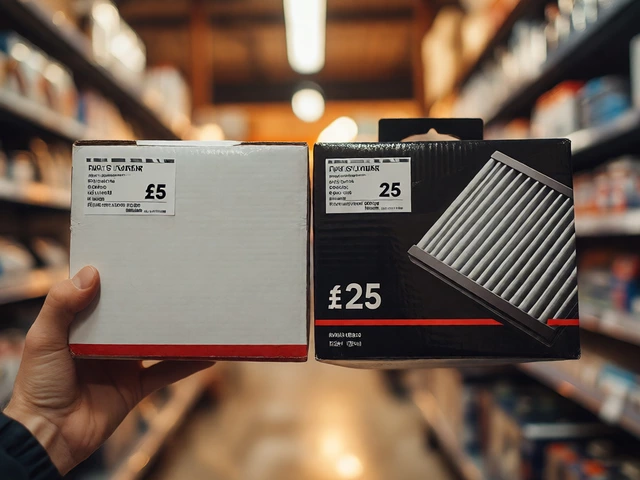
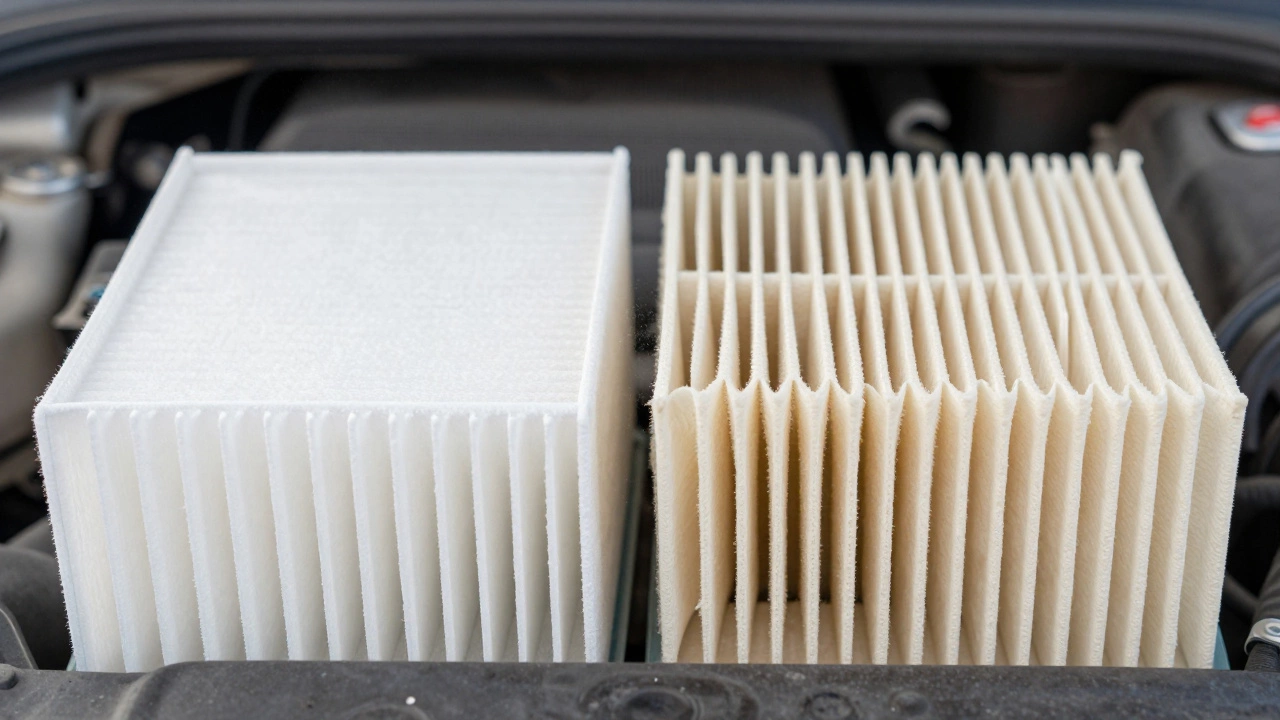
You pull up to the garage, pop the hood, and stare at that dusty rectangle sitting in your engine bay. It’s time for a change. You walk over to the shelf and see two options side by side: a thin, flat paper filter and a thicker, folded pleated one. They both look like they do the same job-keep dust out of your engine-but the price tag on the pleated version is often double. So, which one are you actually paying for? Is it just marketing hype, or does that extra surface area really matter for your vehicle?
The short answer is that pleated air filters almost always outperform flat ones in terms of filtration efficiency and lifespan, but flat filters still have their place in specific scenarios. To figure out which one belongs in your car, we need to look beyond the shape and understand how airflow, particle capture, and pressure drop interact inside your engine.
How Air Filters Actually Work
Before picking a shape, it helps to understand the goal. An engine air filter is a component designed to remove harmful particulates from the air before it enters the combustion chamber. If dirt gets into your cylinders, it acts like sandpaper on your pistons and cylinder walls, leading to premature wear and reduced compression. But if the filter is too dense, it starves the engine of oxygen, hurting performance and fuel economy.
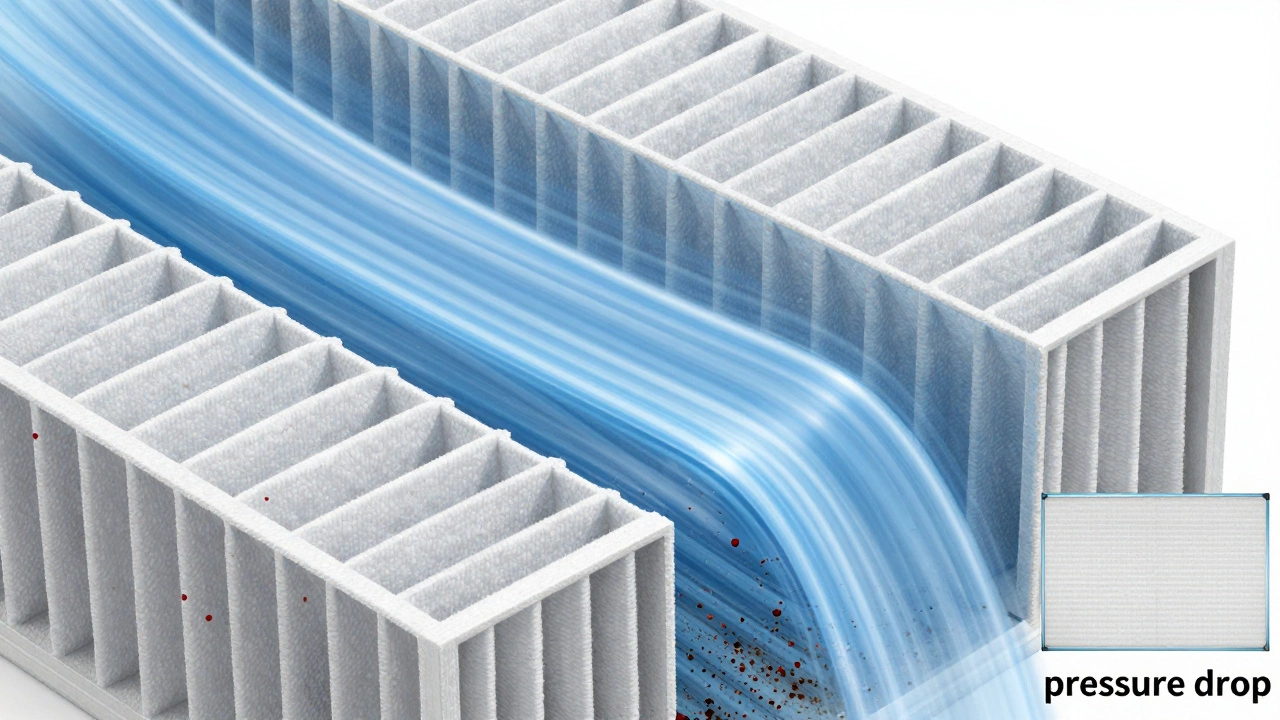
The key metric here is something called "pressure drop." Imagine breathing through a straw. If the straw is wide and clear, air flows easily. If you stuff cotton wool inside, you have to suck harder to get the same amount of air. That resistance is pressure drop. A good filter balances two competing needs: trapping tiny particles while maintaining low resistance to airflow.
- Filtration Efficiency: The percentage of particles (like dust, pollen, and soot) captured by the media.
- Airflow Capacity: How much volume of air can pass through per minute without excessive restriction.
- Pressure Drop: The loss of air pressure as it passes through the filter material.
Flat filters and pleated filters approach this balance differently. Flat filters rely entirely on the density of the paper itself. Pleated filters use geometry to multiply the available surface area without increasing the thickness of the unit.
The Case for Flat Air Filters
Flat air filters are the older design, dating back to the early days of internal combustion engines. They consist of a single layer of oiled or dry cellulose paper sandwiched between wire frames. You’ll often find these in basic economy cars, older models, or certain commercial vehicles where cost is the primary driver.
Why would anyone choose a flat filter today? The main advantage is cost. Because they use less material and simpler manufacturing processes, flat filters are significantly cheaper to produce. For a fleet manager with hundreds of delivery vans, saving £1 per filter adds up quickly. Additionally, because they are thinner, they fit into tight spaces where a bulky pleated filter simply won’t physically fit. Some older carbureted engines also prefer the unrestricted airflow of a thin flat filter, as modern high-efficiency filters can sometimes restrict flow more than these vintage systems are designed for.
However, the downside is obvious. With limited surface area, the pores in the paper clog up faster. Once those pores fill with dirt, the filter becomes a barrier rather than a sieve. This leads to a rapid increase in pressure drop. In practical terms, this means your engine works harder to breathe, which can slightly reduce fuel efficiency and power output sooner than you’d expect. You might need to replace a flat filter every 5,000 to 7,000 miles, whereas a pleated one could last twice as long.
Why Pleated Filters Are the Standard
Pleated air filters dominate the market for good reason. By folding the filter media into accordion-like pleats, manufacturers can pack a huge amount of surface area into a compact package. A typical pleated filter might have 3 to 5 times the surface area of a flat filter of the same dimensions.
This extra space changes everything. First, it allows the manufacturer to use denser, finer-grade media without choking off airflow. The air has plenty of room to spread out across the pleats, so it doesn’t have to force its way through a small section of paper. Second, it extends the service life dramatically. Because the dirt is distributed over a larger area, each individual spot on the filter stays cleaner for longer. This maintains a consistent pressure drop throughout the filter’s life.
In my experience working with vehicles here in Manchester, where we deal with everything from urban exhaust fumes to rural dust, pleated filters provide a much more stable performance curve. They don’t just work better; they last longer. Most modern cars are engineered around the airflow characteristics of pleated filters. Using a flat filter in a car designed for a pleated one can actually disrupt the calibrated airflow, potentially affecting the air-fuel ratio sensors and causing minor drivability issues.
| Feature | Flat Air Filter | Pleated Air Filter |
|---|---|---|
| Surface Area | Low (Single layer) | High (Folded design) |
| Filtration Efficiency | Moderate (Larger pores) | High (Finer media possible) |
| Lifespan | Short (5k-7k miles) | Long (15k-20k+ miles) |
| Cost | Very Low | Moderate |
| Pressure Drop | Increases rapidly when dirty | Remains stable longer |
| Best For | Budget fleets, older cars | Modern vehicles, daily drivers |
What About Cabin Air Filters?
We’ve focused heavily on engine air filters, but what about the cabin air filter is a filter located in the ventilation system of a vehicle that cleans the air entering the passenger compartment.? The rules are similar, but the stakes are different. While an engine filter protects metal parts, a cabin filter protects your lungs.
Almost all modern cabin air filters are pleated. Why? Because you need to trap microscopic allergens, bacteria, and pollution particles without making your blower motor work overtime. A flat cabin filter would clog almost instantly in a city environment, leading to weak airflow from your vents and a noisy fan. Pleated cabin filters often include additional treatments, such as activated carbon layers, to absorb odors and gases. These multi-layer designs are only feasible with the structural support and surface area provided by pleating.
If you suffer from allergies or asthma, sticking with a pleated cabin filter isn’t just a preference-it’s a health necessity. The increased surface area ensures that the fine mesh required to catch pollen and mold spores doesn’t completely block your heating and cooling system.

Performance Upgrades: Oiled vs. Dry Media
Sometimes, people confuse "flat" with "performance." You might see aftermarket filters that look flat but are made of cotton gauze or foam, often coated in oil. These are different from standard disposable flat filters. High-performance oiled filters can be cleaned and reused, offering very low restriction.
However, for the average driver, these come with risks. Oiled filters can shed oil onto Mass Air Flow (MAF) sensors, causing inaccurate readings and poor engine performance. They also tend to let through smaller particles than high-quality dry pleated filters, which can lead to increased engine wear over time. Unless you are tuning your engine for track use, a premium dry pleated filter is usually the smarter choice for reliability and longevity.
How to Choose the Right Filter for Your Car
So, how do you decide? Here is a simple decision tree based on your situation:
- Check your owner’s manual. This is the most important step. Manufacturers specify the type of filter their engine requires. If your car came with a pleated filter, stick with a pleated replacement. Deviating from this can void warranties and hurt performance.
- Consider your driving environment. Do you drive on unpaved roads, near construction sites, or in highly polluted cities? If yes, you need the superior filtration and longer life of a pleated filter. Flat filters will choke up too quickly in these conditions.
- Evaluate your budget vs. convenience. Yes, flat filters are cheaper upfront. But if you have to change them twice as often, you’re spending more time under the hood and likely more money in the long run. Pleated filters offer better value per mile driven.
- Look for quality brands. Not all pleated filters are created equal. Brands like Mann, Bosch, and Fram use advanced synthetic media that repels moisture and traps finer particles. Cheap no-name pleated filters may not offer the same benefits as a high-quality flat filter.
In most cases, the choice is easy. Modern automotive engineering favors pleated filters for their efficiency, durability, and compatibility with electronic engine management systems. Flat filters are largely a relic of the past, surviving only in niche applications where cost or space constraints are extreme.
When you next go to replace your filter, skip the cheap flat option unless your vehicle specifically demands it. Invest in a quality pleated filter. Your engine will breathe easier, your fuel economy will stay consistent, and you’ll spend less time worrying about maintenance. It’s a small upgrade that makes a big difference in how your car runs year after year.
Can I use a flat air filter in a car designed for a pleated one?
Technically, you might be able to fit it if the dimensions match, but it is not recommended. Cars designed for pleated filters expect a certain level of filtration efficiency and airflow resistance. A flat filter may allow more dirt into the engine or clog faster, leading to reduced performance and potential engine wear over time.
How often should I replace a pleated air filter?
Most manufacturers recommend replacing pleated engine air filters every 15,000 to 30,000 miles. However, this depends on your driving conditions. If you frequently drive in dusty areas or heavy traffic, you should check it every 10,000 miles and replace it if it looks visibly dirty or if airflow seems restricted.
Do pleated filters restrict airflow more than flat ones?
New pleated filters generally have lower or comparable airflow restriction to flat filters because of their increased surface area. As they age, pleated filters maintain lower restriction for longer because dirt is spread out over a larger area. Flat filters restrict airflow much faster once they begin to collect debris.
Is it worth buying a premium brand pleated filter?
Yes, especially for modern vehicles. Premium brands use higher-quality media that captures smaller particles and resists moisture better. This protects sensitive components like MAF sensors and ensures consistent engine performance. The price difference is minimal compared to the benefit of extended engine life.
Can I clean and reuse a pleated air filter?
Most standard pleated filters are made of dry paper or synthetic media and cannot be washed. Attempting to clean them with water or compressed air can damage the delicate fibers and create holes, allowing dirt to pass through. Only specific oiled cotton or foam filters are designed to be cleaned and reused.