Radiator Replacement Difficulty Estimator
How difficult is your radiator replacement?
This tool assesses your project difficulty based on vehicle type and access challenges. Results include estimated time, key challenges, and whether to DIY or call a pro.
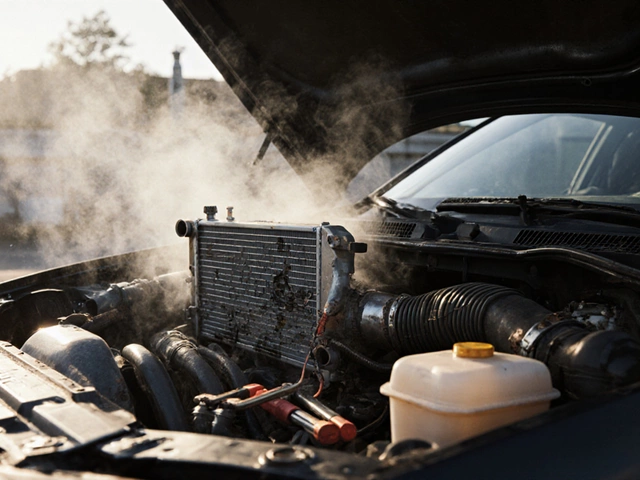
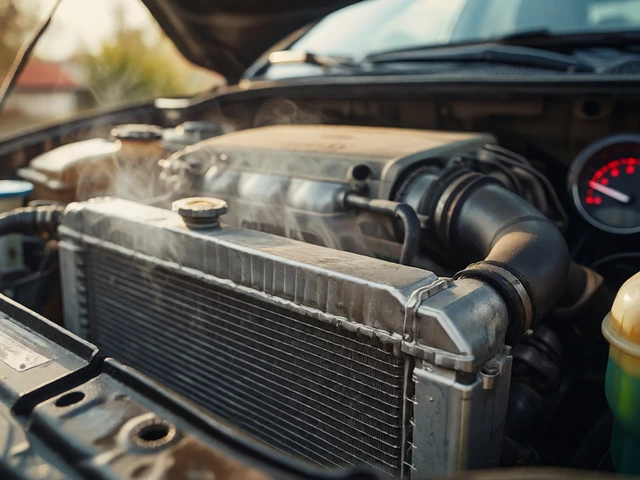
Most car owners panic when they see steam rising from under the hood or notice puddles of green or orange fluid under their car. The culprit? A failing radiator. But before you call a mechanic or start worrying about a big repair bill, ask yourself: is replacing a radiator a difficult job? The answer isn’t yes or no-it’s it depends. For some cars, it’s a Saturday afternoon project. For others, it’s a full-day challenge with a steep learning curve. Let’s break down what you’re really signing up for.
What makes radiator replacement hard?
The radiator itself isn’t complicated. It’s just a metal or plastic heat exchanger with tubes and fins that cools engine coolant. But the real challenge isn’t the part-it’s the access. In older cars like a 1998 Honda Civic or a 2005 Ford Focus, the radiator sits out front, easy to reach. You’ll need basic tools: a wrench, drain pan, funnel, and maybe a socket set. You can do it in under three hours.
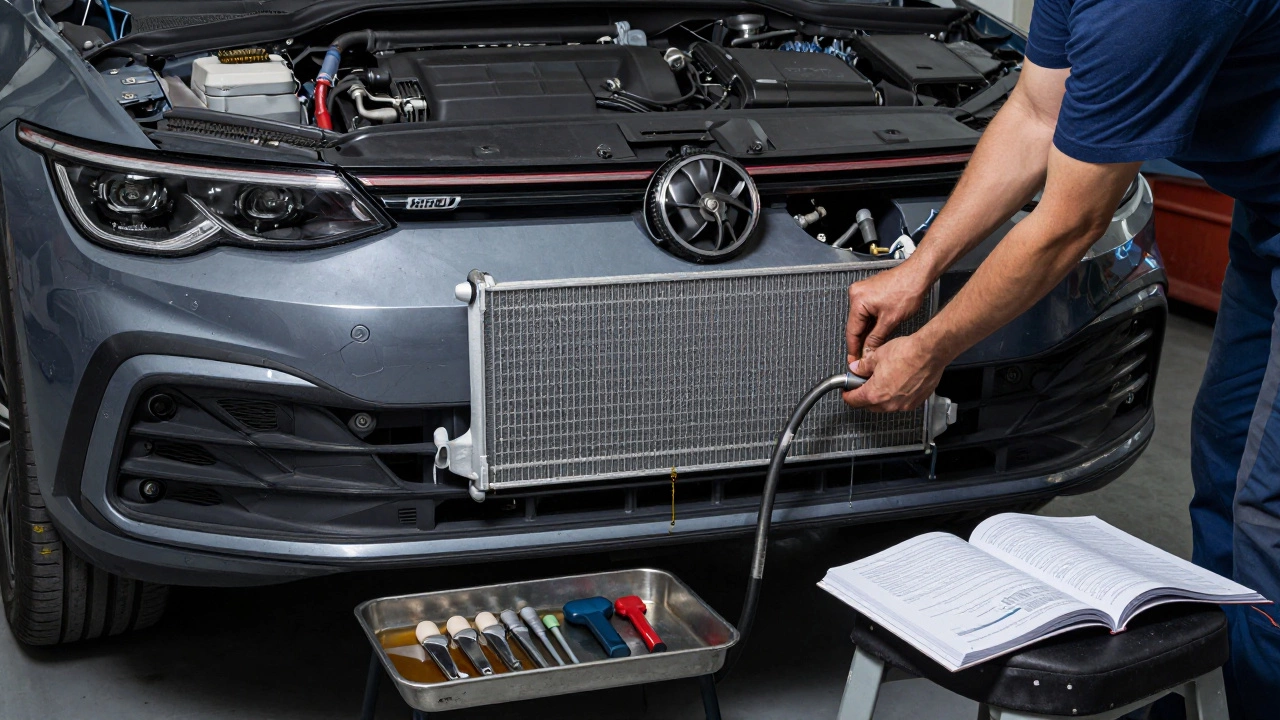
But in modern cars-especially front-wheel-drive models with tight engine bays-the radiator is buried. You might need to remove the air conditioning condenser, the cooling fan assembly, the bumper cover, or even the power steering pump just to get to the radiator hoses. A 2020 Toyota Camry or a 2023 Volkswagen Golf can take six hours or more for a first-timer. Some models require you to disconnect the transmission cooler lines, which are easy to damage if you’re not careful.
What tools and parts do you actually need?
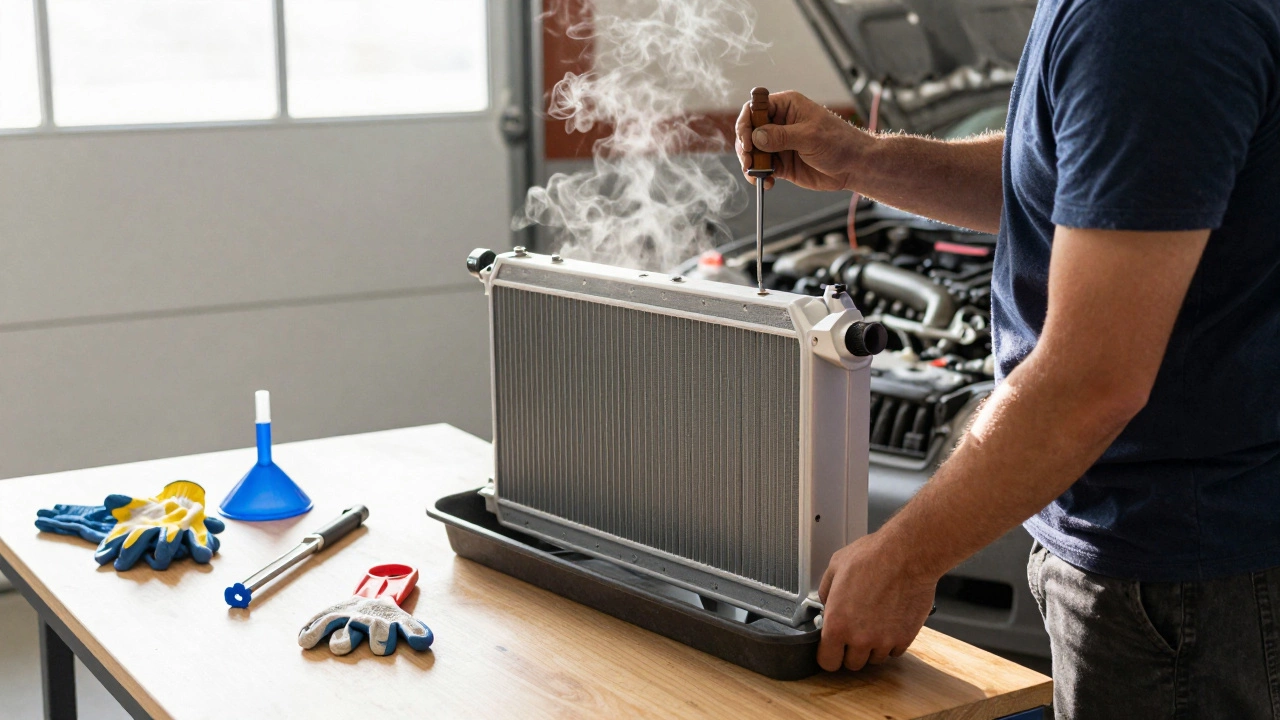
You can’t just buy a radiator and bolt it in. Here’s the real checklist:
- New radiator (make sure it’s the exact OEM part number or a direct-fit aftermarket replacement)
- New radiator cap (the cap holds pressure-old ones fail silently)
- New coolant (50/50 mix of antifreeze and distilled water-never use tap water)
- Drain pan (at least 5-gallon capacity)
- Funnel with a long spout
- Socket set and wrenches (metric or SAE, depending on your car)
- Plastic pry tools (to avoid cracking plastic clips and housings)
- Shop towels and gloves (coolant is toxic and messy)
Don’t forget the seals. Many radiators use rubber gaskets or O-rings where hoses connect. Reusing old ones is a common mistake that leads to new leaks. Always replace them. Some radiators come with new hardware included-check the box before you start.
Step-by-step: What does the job actually look like?
Here’s how it breaks down in a typical mid-range sedan:
- Let the engine cool completely. Hot coolant under pressure can boil over and cause serious burns.
- Place the drain pan under the radiator petcock or lower hose. Open the petcock or loosen the hose clamp and drain the coolant. Save it if it’s clean-you might reuse it later.
- Disconnect the battery. It’s not always required, but it prevents accidental fan activation while you’re working.
- Remove any plastic shrouds, fans, or brackets blocking access. On some cars, you’ll need to unplug the electric fan connector and unbolt the entire assembly.
- Disconnect the upper and lower radiator hoses. Use pliers to pinch the spring clamps and slide them back. Twist the hose gently as you pull-it breaks free easier than yanking straight.
- If your car has an automatic transmission, disconnect the transmission cooler lines. These are small metal tubes. Use a flare-nut wrench to avoid rounding the fittings.
- Unbolt the radiator from the mounting brackets. Some have two bolts on top, two on the bottom. Others have clips or tabs you need to release with a flathead.
- Slide the radiator out slowly. It’s heavy and awkward. Have a helper if you can.
- Install the new radiator in reverse order. Make sure the hoses line up without twisting. Tighten clamps snug but not over-torqued.
- Refill the coolant slowly. Use a funnel. Start the engine and let it idle with the radiator cap off. Watch for bubbles. Top off as needed. Then replace the cap.
- Run the engine for 10 minutes, then shut it off and check the level again after it cools.
Common mistakes people make
Even experienced DIYers mess this up. Here are the top errors:
- Skipping the coolant flush-Old coolant has rust and debris. If you just pour new fluid in, it clogs the new radiator’s tiny tubes. Flush the system with water first if the old fluid is dirty.
- Using the wrong coolant-GM cars need Dexcool. BMWs use specific blue or green formulas. Mixing types causes gelling and blockages. Check your owner’s manual.
- Tightening hoses too hard-Plastic radiator necks crack easily. Snug is enough. Over-tightening causes leaks faster than a loose clamp.
- Forgetting to bleed air-Air pockets in the cooling system cause overheating. Run the engine with the cap off until the coolant circulates and stops bubbling.
- Not checking for leaks right away-Start the car and look under the hood. Watch the hoses, connections, and the radiator itself. Wait 15 minutes. If you see a drip, shut it off. Fix it now before you drive.
When should you skip DIY and call a pro?
Not every radiator job is worth your time. Walk away if:
- Your car has a turbocharger and the radiator is behind it-access requires removing the intake manifold or intercooler.
- You need to remove the air conditioning system to reach the radiator. That requires refrigerant recovery equipment, which is illegal to handle without certification in the UK.
- The radiator is integrated with the transmission cooler, and the lines are corroded. Replacing them means pulling the transmission.
- You’re not comfortable working around high-pressure systems or electrical components.
If you’re unsure, get a quote from a local garage. In Manchester, a radiator replacement typically costs £250-£500, depending on the car. That includes parts, labor, and a coolant flush. If the job would take you more than five hours and you’re not experienced, it’s cheaper to pay someone who does this daily.
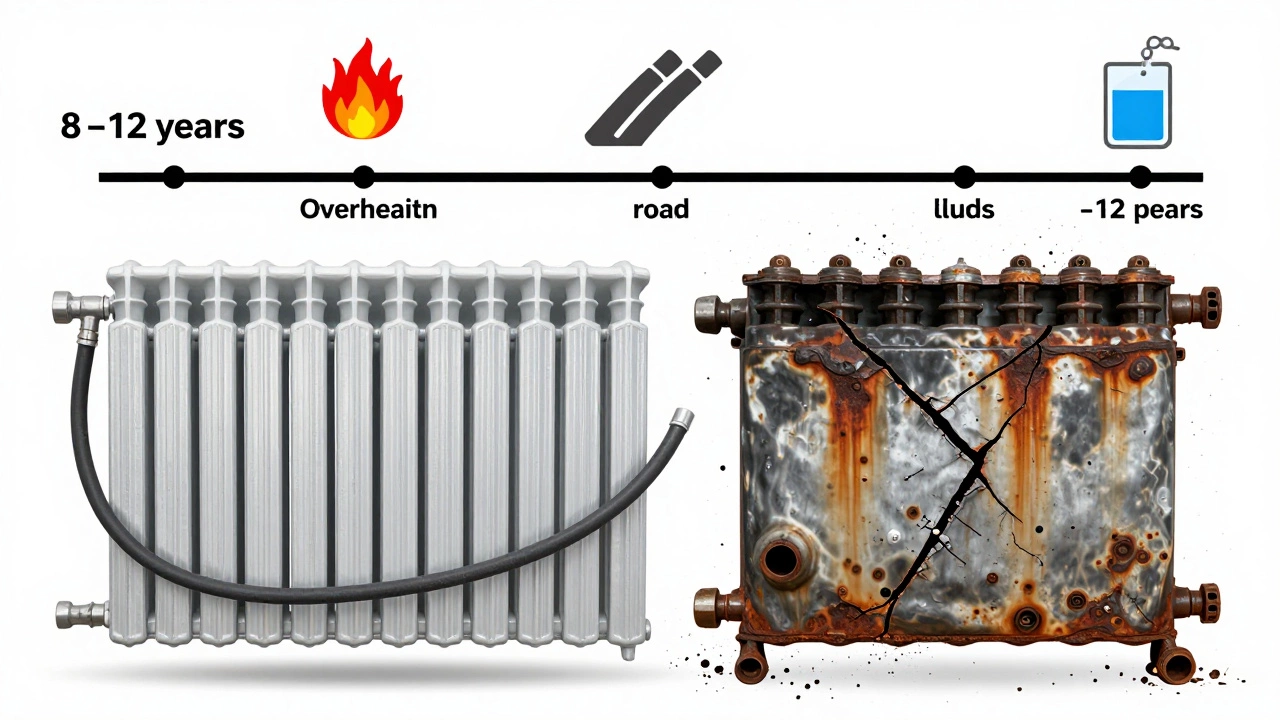
How long does a new radiator last?
A good quality radiator, installed correctly, should last 8-12 years. But lifespan depends on maintenance. If you’re topping off coolant with water every month, you’re accelerating corrosion. If you’re flushing the system every 40,000 miles, you’ll get 15+ years out of it. The biggest killers are:
- Contaminated coolant (dirt, oil, or rust)
- Overheating from a bad thermostat or water pump
- Physical damage from road debris (especially on low-clearance cars)
Keep an eye on your coolant level. If it drops faster than once a year, investigate. A small leak now can become a blown head gasket later.
Final verdict: Is replacing a radiator a difficult job?
It’s not impossible. It’s not magic. But it’s not beginner-friendly either. If you’ve changed your own oil, replaced brake pads, or swapped spark plugs-you have the skills. You just need patience, the right tools, and the willingness to learn as you go. For older, simpler cars, it’s a satisfying fix. For modern, packed-in engines, it’s a test of endurance.
Most people who try it and fail don’t fail because they’re bad with tools. They fail because they didn’t plan for the hidden steps. Read your car’s service manual. Watch a YouTube video of your exact model. Take notes. Don’t rush. And if you feel like you’re fighting the car instead of fixing it-stop. Call a mechanic. It’s not a defeat. It’s smart.
Can I drive my car with a leaking radiator?
No. Driving with a leaking radiator risks overheating, which can warp the cylinder head, blow the head gasket, or seize the engine. Even a small drip adds up fast. If you notice coolant loss, stop driving and get it fixed before you cause expensive damage.
How much does a new radiator cost?
Prices vary by car. For a common sedan like a Ford Focus or Toyota Corolla, expect to pay £80-£180 for a new radiator. Luxury or performance models can cost £300 or more. Always buy from a reputable brand like Denso, Valeo, or OEM suppliers-not the cheapest eBay option.
Do I need to replace the thermostat when replacing the radiator?
Not always, but it’s a good idea. The thermostat is often near the radiator hose, and if it’s 5+ years old, it’s likely worn. Replacing it at the same time saves labor costs later. A stuck thermostat is a common cause of overheating-even with a new radiator.
What causes a radiator to fail?
The main causes are corrosion from old or contaminated coolant, physical damage from road debris, overheating due to a faulty water pump or thermostat, and poor maintenance. Plastic end tanks can crack over time from heat cycling. Aluminum radiators are more prone to internal corrosion than copper-brass ones.
Can I use water instead of coolant in an emergency?
Only as a last resort, and only for a very short distance. Water boils at 100°C, while coolant can handle up to 130°C under pressure. Water also causes rust and doesn’t protect against freezing. If you must use water, replace it with proper coolant as soon as possible.
If you’ve replaced a radiator before, you know the satisfaction of fixing it yourself. If you’re thinking about it for the first time, start with a simple car, take your time, and don’t be afraid to ask for help. The right tools and a little patience turn a scary repair into a confidence-builder.