Suspension Noise Diagnostic Tool
Select the sound you hear from your vehicle to identify the likely cause and urgency.
Loud Clunk / Thud
Hollow knocking sound when hitting bumps or starting to drive.
Squeak / Creak
High-pitched friction noise when turning or going over small bumps.
Grinding / Popping
Metallic growl that changes pitch with speed or cornering.
Humming / Roaring
Constant drone that gets louder as you speed up.
Metallic Rattle
Continuous rattling over all surfaces, possibly visible sagging.
Diagnosis
Part Name
Description of the issue goes here.
There is nothing quite as unsettling as hearing a strange noise coming from under your car. One moment you are cruising down the road in Manchester, and the next, you hear a loud clunk or a persistent squeak that makes you wince every time you hit a bump. Before you panic about catastrophic engine failure or safety hazards, consider the possibility that your suspension system is trying to tell you something. The suspension is the bridge between your vehicle and the road, absorbing shocks and keeping your tires planted. When components wear out, they don't just fail silently; they make noise.
Identifying these sounds early can save you hundreds of pounds in repairs and prevent further damage to your wheels, alignment, and even your steering rack. This guide breaks down exactly what a broken suspension sounds like, which specific part is likely causing the racket, and what you should do next.
The Loud Clunk: Shock Absorbers and Struts
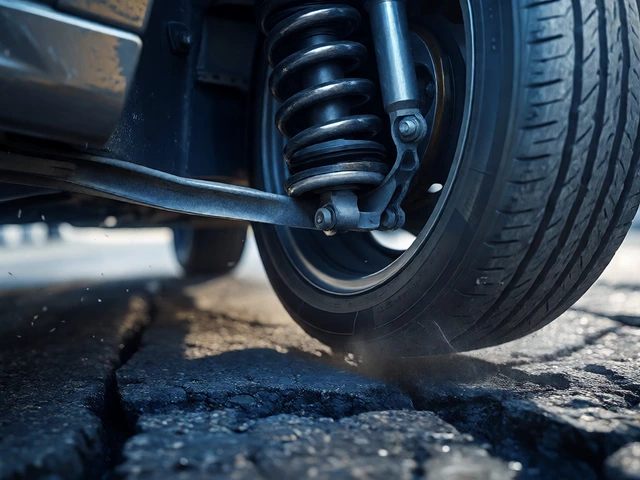
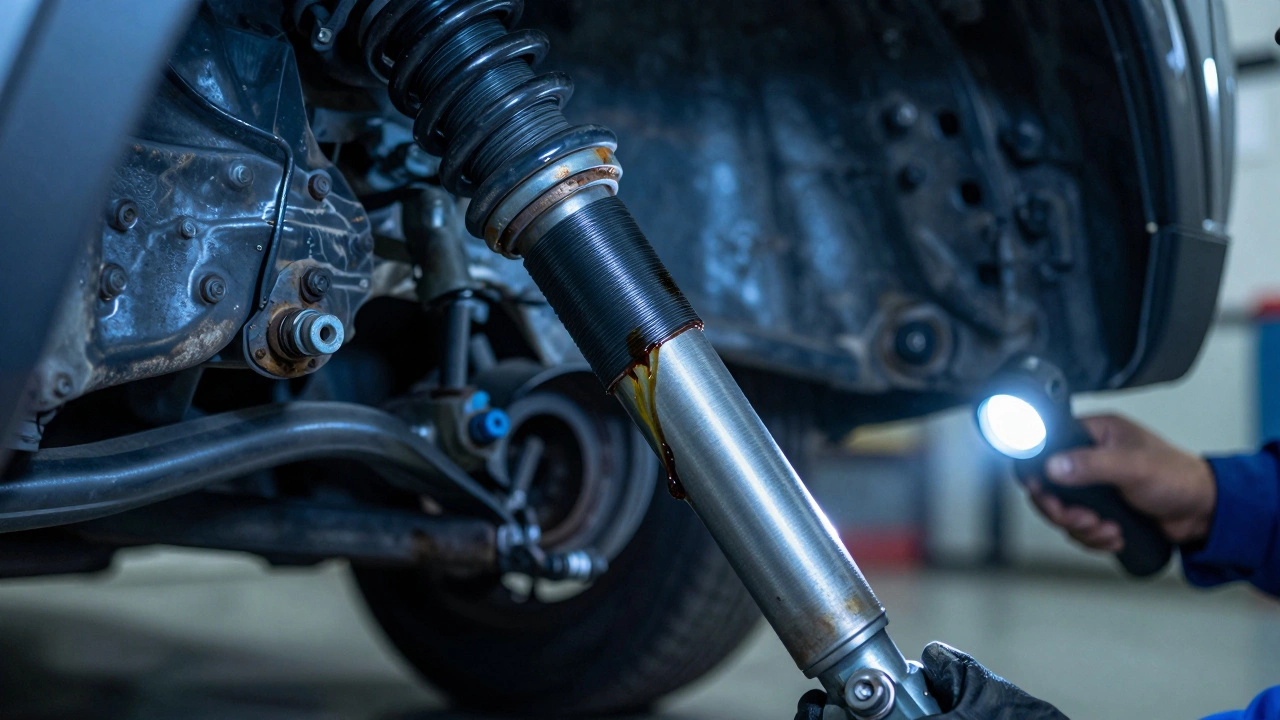
If your car goes "thud" or "clunk" when you drive over speed bumps, potholes, or even small dips in the road, the culprit is often your shock absorbers or struts. These components are designed to dampen the movement of the springs. Over time, the hydraulic fluid inside them leaks out, or the internal valves wear down. When this happens, the metal components inside the strut assembly have too much play. Instead of smoothly compressing, the parts slam into each other, creating that distinct hollow knocking sound.
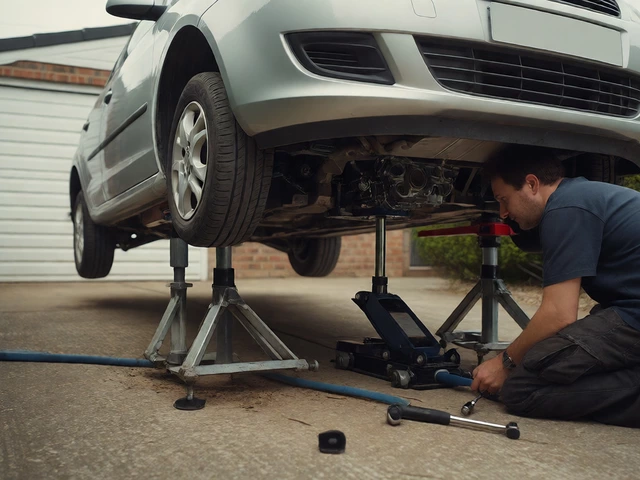
You might also notice this clunking when you first start driving after the car has been sitting for a while. As the seals dry out and lose their cushioning effect, the initial impact sends a jolt through the chassis. If you lift the front of the car (safely, using jack stands) and push down hard on the bumper, a healthy suspension will stop immediately. If it bounces more than once or twice with a audible thud, your shocks are done. In the UK, where our roads can be notoriously uneven, this wear happens faster than in countries with smoother highways.
The Squeaking Noise: Bushings and Control Arms
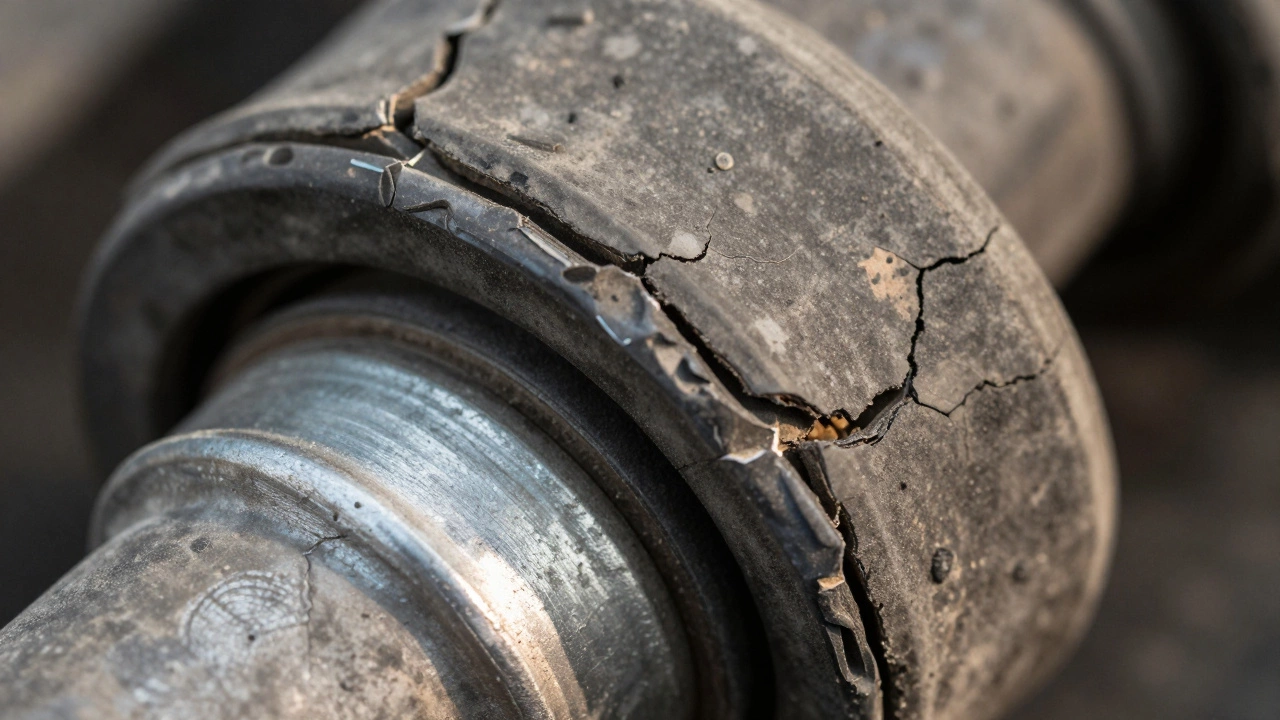
A high-pitched squeak or creak that occurs when you turn the steering wheel or go over bumps usually points to rubber bushings. Bushings are rubber or polyurethane cushions placed between metal parts of the suspension, such as the control arms and the frame. Their job is to absorb vibration and allow smooth movement. Rubber naturally degrades over time due to heat, ozone, and exposure to road salt. When the rubber cracks or dries out, metal rubs against metal, or the remaining rubber creates friction that results in a squeal.
This noise is particularly common in older vehicles or those frequently driven in winter conditions. You might hear it specifically when turning sharply at low speeds. Unlike the dangerous clunk of a failing strut, a squeaky bushing is more of an annoyance than an immediate safety risk, but ignoring it leads to accelerated wear on the ball joints and tie rods. Replacing worn bushings restores the quiet, smooth ride your car was built for.
The Grinding or Rattling: Ball Joints and Wheel Bearings
A grinding, growling, or rattling noise that changes pitch with vehicle speed is often mistaken for brake issues, but it can originate from the ball joints or wheel bearings. Ball joints connect the control arms to the steering knuckles, allowing the wheels to pivot for steering and move up and down for suspension travel. They are heavily loaded components. When the grease seal fails and dirt gets in, or the bearing surface wears down, the joint becomes loose. This looseness causes a metallic grinding or popping sound, especially when accelerating, braking, or cornering.
Wheel bearings support the weight of the vehicle and allow the wheels to rotate freely. A failing bearing typically produces a humming or roaring noise that gets louder as you speed up. While not strictly a "suspension" component in the damping sense, it is integral to the suspension geometry. If you feel a vibration in the steering wheel accompanied by a growl, check the bearings. A completely failed ball joint can cause the wheel to collapse, making it one of the most critical failures to address immediately.
The Creaking Coil Springs
Coil springs are simple steel bars wound into a spiral. They carry the weight of the vehicle. Sometimes, if the spring ends are dirty, rusted, or if the lubricant has dried out, they can produce a metallic creak or groan when compressed. This is less common than bushing squeaks but happens, especially in humid environments like the North West of England. If the spring itself is broken or sagging, you won't just hear a noise; you'll see a visible drop in ride height on one side of the car. A broken spring can also rattle loudly if the pieces are loose within the coil.
Diagnostic Table: Matching Sounds to Parts
| Noise Type | Likely Culprit | When It Happens | Urgency Level |
|---|---|---|---|
| Loud Clunk/Thud | Shock Absorbers / Struts | Over bumps, potholes, starting to drive | High (Safety Risk) |
| Squeak/Creak | Rubber Bushings | Turning, going over small bumps | Medium (Comfort Issue) |
| Grinding/Popping | Ball Joints | Cornering, accelerating, braking | Critical (Immediate Repair) |
| Humming/Roaring | Wheel Bearings | Constant, increases with speed | High (Wheel Failure Risk) |
| Metallic Rattle | Broken Spring / Loose Hardware | Continuous, over all surfaces | High (Structural Damage) |
Why Ignoring Suspension Noises Is Costly
It is tempting to ignore a little squeak or clunk, especially if the car still drives straight. However, suspension components work together as a system. When one part fails, it puts extra stress on the others. For example, worn shocks allow the tires to bounce excessively, which accelerates tread wear. Uneven tire wear means you buy new tires sooner. Furthermore, loose suspension parts can throw off your wheel alignment. Driving with bad alignment ruins your tires and makes the steering pull to one side, increasing driver fatigue and reducing fuel efficiency.
In severe cases, a failed ball joint or strut mount can lead to loss of vehicle control. Imagine taking a corner at 40 mph and having the wheel detach from the suspension arm. That is not a hypothetical scenario; it happens every year. The cost of replacing a set of shocks or bushings is significantly lower than the cost of a collision or replacing multiple damaged components after a breakdown.
How to Confirm the Diagnosis
While listening to the noise is the first step, physical inspection confirms it. Here is a simple checklist for a basic visual check:
- Check for Leaks: Look at your shock absorbers. If you see oil dripping down the shaft, the seal is broken, and the shock is ineffective.
- Inspect Rubber: Shine a flashlight on your control arm bushings. Look for cracks, tears, or gaps where the rubber has separated from the metal sleeve.
- Wiggle Test: With the car safely lifted, try to wiggle the tire at the 12 and 6 o'clock positions. Excessive play indicates worn ball joints or bearings.
- Visual Sag: Park on level ground. Measure the distance from the bottom of the wheel arch to the center of the wheel hub on both sides. A significant difference suggests a broken spring or collapsed strut.
If you are not comfortable lifting your car, take it to a trusted mechanic. Describe the exact noise and when it happens. A professional can use a stethoscope or listen for the noises while bouncing the car to pinpoint the issue quickly.
Prevention and Maintenance Tips
You cannot stop suspension parts from wearing out eventually, but you can extend their life. Avoid hitting curbs and large potholes whenever possible. Slow down over speed bumps. Regularly check your tire pressure; under-inflated tires put more strain on the suspension because they absorb less impact themselves. If you live in an area with heavy snow and salt, rinse the undercarriage of your car periodically to remove corrosive salts that eat away at bushings and ball joint seals.
Finally, pay attention to your car. If a new sound appears, investigate it immediately. Early detection turns a minor, inexpensive repair into a major, expensive headache. Your suspension is working hard every time you drive, so give it the respect and maintenance it deserves.
Is it safe to drive with a broken suspension?
It depends on the severity. A slight squeak from a bushing is generally safe for short trips to a repair shop. However, loud clunking, grinding, or popping noises indicate critical failure risks like worn ball joints or struts. Driving with these issues can lead to loss of vehicle control, especially during emergency maneuvers or on wet UK roads. It is best to avoid highway driving and get it inspected immediately.
How much does it cost to fix suspension noises?
Costs vary widely based on the vehicle and parts. Replacing rubber bushings might cost between £100 and £300 including labor. New shock absorbers or struts typically range from £200 to £600 per axle. Ball joint replacements are similar. Always get a quote from a reputable garage. Using aftermarket parts can save money compared to OEM (Original Equipment Manufacturer) parts, but quality varies.
Can I diagnose suspension problems myself?
You can perform basic visual inspections and listen for noises, but accurate diagnosis often requires lifting the vehicle and checking for mechanical play. If you lack the tools or experience, it is safer to visit a mechanic. Misdiagnosing a problem can lead to unnecessary part replacements or missing a critical safety hazard.
Does a broken suspension affect MOT tests in the UK?
Yes. During an MOT test, inspectors check the condition of suspension arms, links, and pivots. Excessive wear, corrosion, or damage that affects safety will result in a failure. Worn bushes that allow excessive movement are a common reason for suspension-related MOT failures.
Why does my car squeak only when turning?
Squeaking when turning is often caused by worn sway bar end links or control arm bushings. These components twist and flex during cornering. If the rubber is dry or cracked, it creates friction noise. It could also be a sign of a failing CV joint, though that usually clicks rather than squeaks. Have a mechanic inspect the front suspension assembly.