Clutch Wear & Damage Calculator
Estimate the potential damage to your clutch kit based on engagement style and frequency.
There is a persistent myth in the automotive world that "clutch kicking"-the aggressive act of revving the engine while disengaged and then slamming the clutch pedal to launch the car-is harmless if done occasionally. Many drivers believe that because they aren't holding the clutch at the bite point for long periods, they are saving their friction material. This belief is dangerously incorrect. In reality, clutch kicking is one of the fastest ways to destroy your clutch kit, which includes the pressure plate, release bearing, and friction disc. It subjects these components to thermal shock and mechanical stress far beyond normal driving conditions.
If you own a manual transmission vehicle, understanding how this specific abuse affects your drivetrain is crucial for avoiding costly repairs. This article breaks down exactly what happens inside your gearbox when you perform this maneuver, why it accelerates wear, and how to distinguish between acceptable performance driving and destructive misuse.
What Is Clutch Kicking and Why Do People Do It?
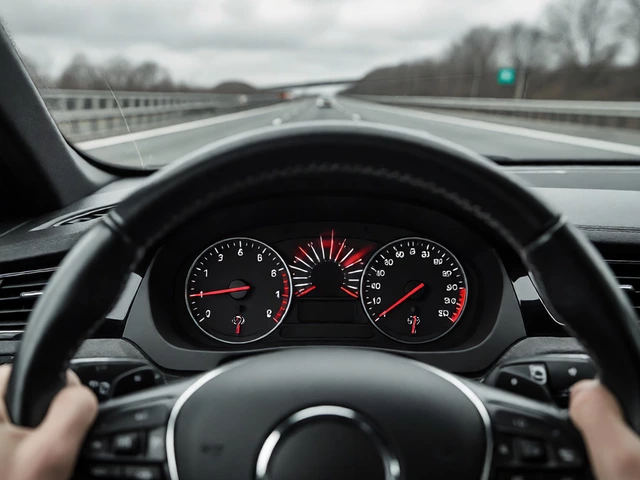
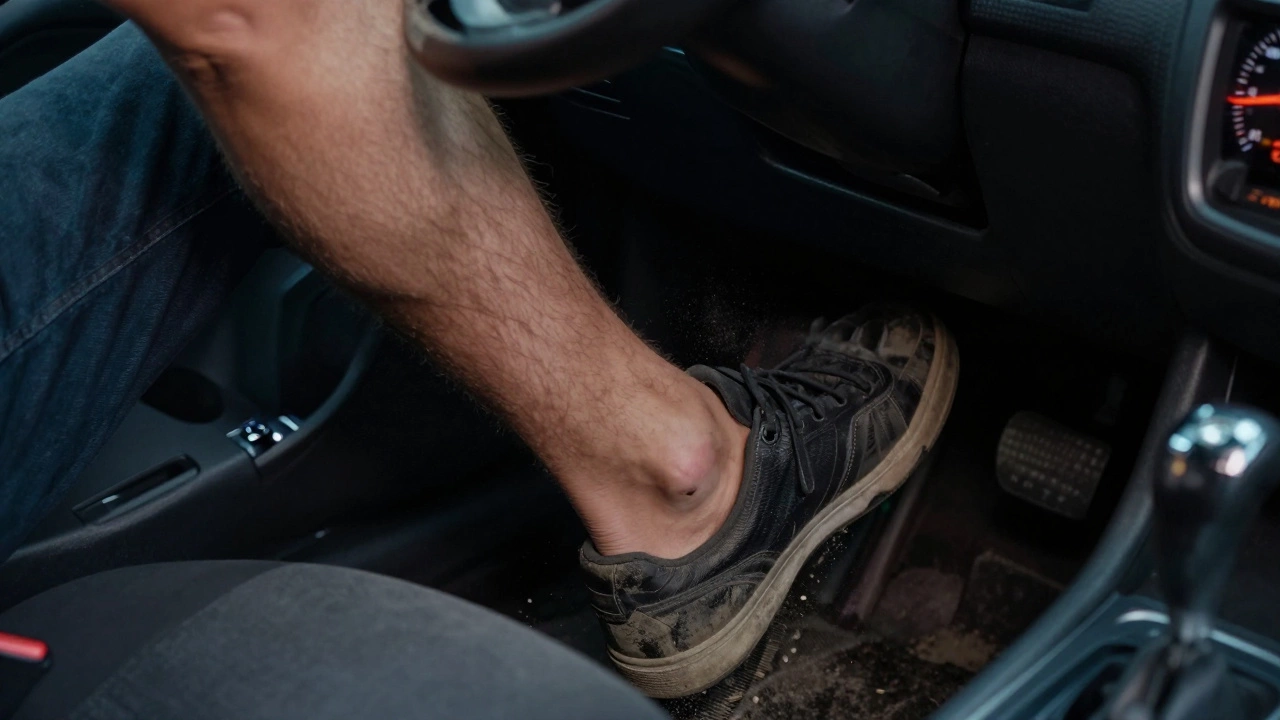
To understand the damage, we first need to define the action clearly. Clutch kicking involves depressing the clutch pedal fully, revving the engine to a high RPM (often near the redline), and then rapidly releasing the clutch pedal to engage the gears instantly. The goal is usually to maximize acceleration from a standstill or to induce wheel spin for traction purposes on loose surfaces like snow or dirt.
While some professional rally drivers use controlled versions of this technique to maintain momentum over crests, the average driver attempting this on public roads lacks the precision required to mitigate the risks. The human reaction time to modulate the clutch release smoothly is often too slow compared to the sudden torque transfer. This results in a violent engagement rather than a smooth power delivery.
| Factor | Normal Launch | Clutch Kicking |
|---|---|---|
| RPM at Engagement | 1,500 - 2,500 RPM | 4,000 - 7,000+ RPM |
| Engagement Speed | Gradual modulation | Instantaneous snap |
| Heat Generation | Low, dissipates easily | Extreme, concentrated spike |
| Torque Load | Within design limits | Exceeds peak torque capacity |
The Physics of Sudden Engagement
A manual transmission clutch works by using friction to transfer rotational energy from the engine flywheel to the transmission input shaft. When you press the pedal, the release bearing pushes against the diaphragm spring of the pressure plate, separating the friction disc from the flywheel. When you release the pedal, the pressure plate clamps the disc against the flywheel.
In a normal start, you find the "bite point" where the disc begins to rub against the flywheel. This slippage allows the rotating masses to synchronize speeds gradually. Energy is dissipated as heat, but slowly enough that the metal components can manage the temperature rise. Clutch kicking bypasses this synchronization phase entirely. You are forcing two masses moving at vastly different speeds-the stationary wheels and the high-speed engine-to lock together instantly.
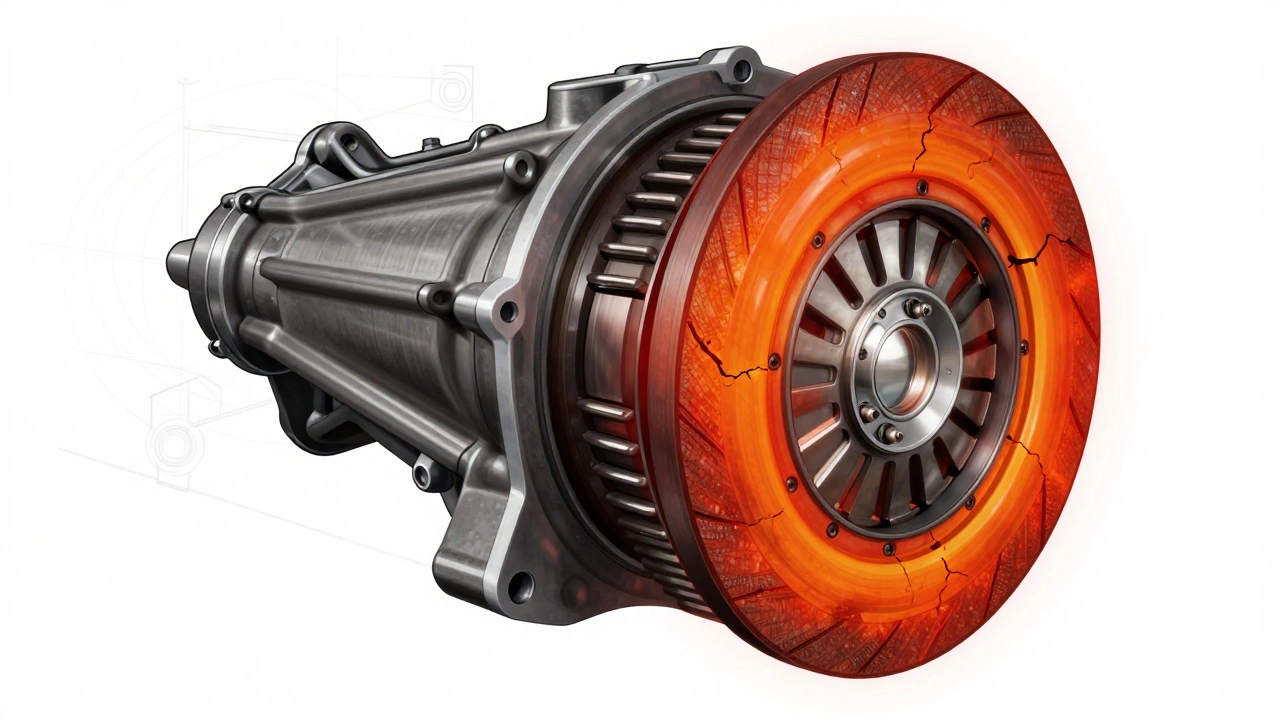
This creates a massive spike in shear force. The friction disc must absorb all the kinetic energy difference in a fraction of a second. Instead of gradual heating, you experience thermal shock. The outer edges of the clutch disc can reach temperatures exceeding 1,000 degrees Fahrenheit momentarily. This rapid expansion causes the organic friction material to glaze, crack, or even delaminate from the steel hub.
Impact on Specific Clutch Components
Understanding which parts fail helps diagnose early warning signs. A complete clutch assembly consists of several critical components that suffer under abusive conditions.
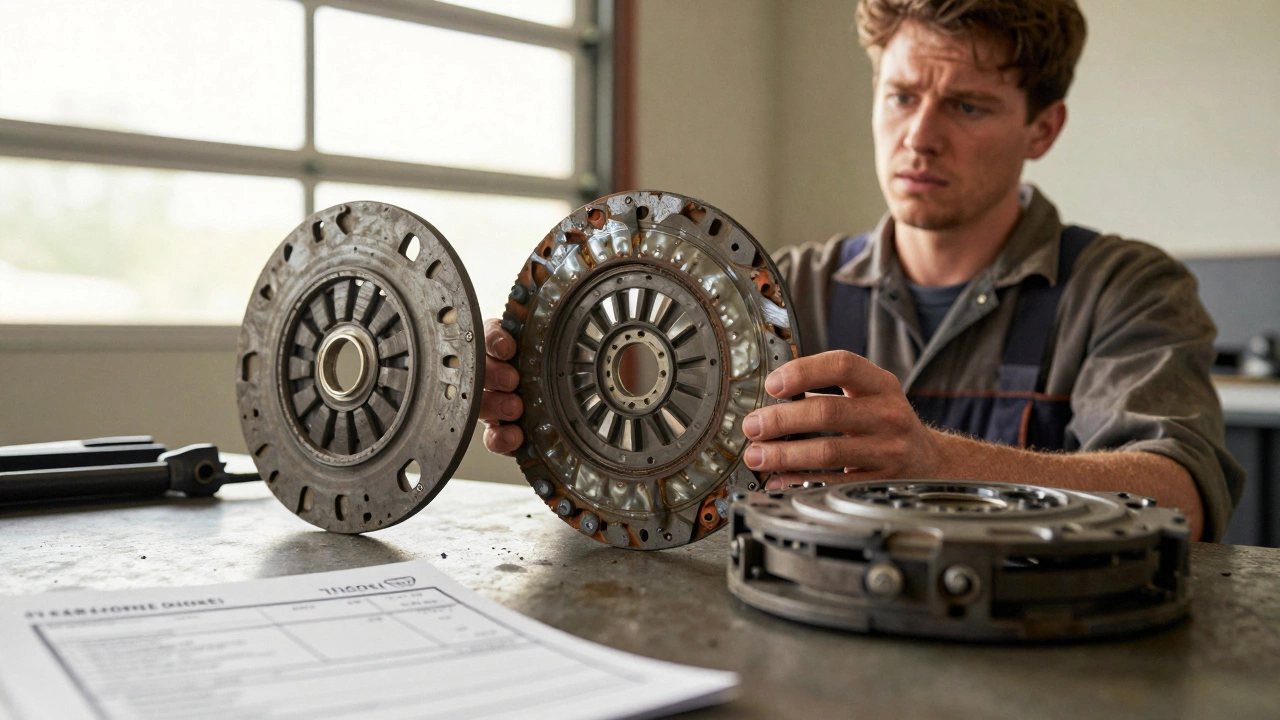
- The Friction Disc: This is the most vulnerable part. Repeated clutch kicking causes the friction lining to wear unevenly. You may notice vibrations during takeoff, known as "chatter," which indicates the surface has become glazed or warped due to heat spikes.
- The Pressure Plate: The diaphragm spring inside the pressure plate is designed for specific load cycles. Shock loading weakens the spring tension over time. If the spring loses its ability to clamp down hard enough, the clutch will slip even under normal driving conditions, requiring a full replacement.
- The Release Bearing: Also known as the throw-out bearing, this component spins when the clutch is engaged and stops when disengaged. Slamming the pedal forces the bearing into contact with the pressure plate fingers with excessive force. This can crush the internal rollers or cause premature failure, resulting in a grinding noise when the pedal is pressed.
- The Flywheel: While more durable than the disc, the flywheel can also suffer. Extreme heat can cause hot spots or warping. On dual-mass flywheels, which contain springs to dampen engine vibration, shock loads can break the internal springs, leading to severe rattling noises from the bell housing.
Signs Your Clutch Is Dying From Abuse
You don't need to wait for total failure to know if clutch kicking is taking its toll. Pay attention to these symptoms during your daily drives.
- Spongy Pedal Feel: If the clutch pedal feels less crisp or sinks further than usual before engaging, the hydraulic system or the release mechanism may be compromised by the increased strain.
- Slipping Under Load: If your RPMs climb without a corresponding increase in speed when accelerating normally, the friction material is worn thin or glazed. This is a direct result of overheating events.
- Vibration at Low Speeds: A shudder felt through the steering wheel or seat when pulling away from a stop suggests the friction surface is no longer flat or clean. This is often called "disc chatter."
- Difficulty Shifting Gears: If you find yourself double-clutching or grinding gears, the clutch may not be disengaging fully due to warping or hydraulic issues exacerbated by harsh usage.
When Is Aggressive Engagement Acceptable?
It is important to distinguish between street abuse and track necessity. On a race track, drivers often use higher RPM launches to minimize lap times. However, they do so with modified hardware. Racing clutches are built with carbon fiber or sintered metal discs that can withstand much higher temperatures and shear forces than standard organic street clutches.
Additionally, track cars often feature upgraded cooling systems and lighter flywheels to reduce rotational inertia. Using stock equipment on a track and repeatedly clutch-kicking will still destroy your clutch, just perhaps slightly slower than doing it on the street. For the average commuter vehicle, there is no scenario where clutch kicking is mechanically beneficial. Modern automatic transmissions with paddle shifters or dual-clutch systems handle rapid gear changes electronically without subjecting the hardware to the same physical shock.
How to Extend Clutch Life
Preserving your clutch kit requires mindful driving habits. Here are practical steps to ensure longevity:
- Find the Bite Point Smoothly: Take your time finding the engagement point. Avoid resting your foot on the pedal while stopped, as this keeps the release bearing under constant pressure.
- Use Lower Gears for Heavy Loads: If you are towing or carrying heavy cargo, use lower gears to reduce the torque demand on the clutch during launch.
- Avoid Riding the Clutch: Keep your left foot off the pedal unless you are actively shifting. Constant partial engagement generates unnecessary heat.
- Rev Match Downshifts: Blipping the throttle when downshifting reduces the load on the synchronizers and makes shifts smoother, reducing overall drivetrain stress.
Cost of Repair vs. Prevention
Replacing a clutch kit is a significant expense. Labor costs alone can range from $500 to $1,000 depending on your vehicle, plus the cost of parts which typically runs between $300 and $800 for quality OEM or aftermarket kits. If the flywheel needs resurfacing or replacement, add another $200 to $600 to that bill.
By avoiding clutch kicking, you are essentially saving thousands of dollars over the life of the vehicle. The convenience of a quick, aggressive launch is rarely worth the downtime and expense of a premature clutch replacement. Remember, a clutch is a wear item, but its lifespan should be measured in tens of thousands of miles, not hundreds of aggressive starts.
Can I fix a clutch damaged by kicking?
No, you cannot repair a worn or glazed clutch disc. Once the friction material is compromised by heat or uneven wear, the entire clutch kit must be replaced. Attempting to resurface a damaged disc is not effective and will lead to immediate failure again.
Is clutch kicking bad for automatic transmissions?
Automatic transmissions do not have a traditional clutch pedal, so you cannot "kick" them in the same way. However, aggressively flooring the gas pedal from a stop (launch control) puts immense stress on the torque converter and transmission fluid. Overheating the fluid can degrade its lubricating properties, leading to internal wear and potential transmission failure.
How many times can I clutch kick before it breaks?
There is no safe number. Some clutches might survive dozens of instances, while others could fail after just a few. It depends on the RPM used, the condition of the existing friction material, and the ambient temperature. Thermal shock is cumulative; each event weakens the materials further until catastrophic failure occurs.
Does clutch kicking damage the engine?
Indirectly, yes. When the clutch engages violently, the sudden stop in engine rotation sends a shockwave back through the crankshaft and bearings. While modern engines are robust, repeated shock loading can contribute to premature wear on main bearings, rod bearings, and potentially warp the crankshaft snout where the flywheel mounts.
What is the best way to launch a manual car quickly?
For the quickest safe launch, rev the engine to a moderate level (around 3,000-4,000 RPM for most street cars), then release the clutch pedal smoothly but decisively. Do not snap it open. The key is to keep the tires gripping the road. Wheel spin wastes energy and increases clutch wear. Practice finding the balance between speed and traction.