Engine Oil Specification Finder
Find Your Vehicle's Oil Specifications
Recommended Oil Specifications
These specifications are based on your vehicle's manufacturer recommendations. The viscosity grade (like 5W-30) tells you how the oil flows at different temperatures, while the performance standard (like API SP) ensures the oil meets modern engine requirements.
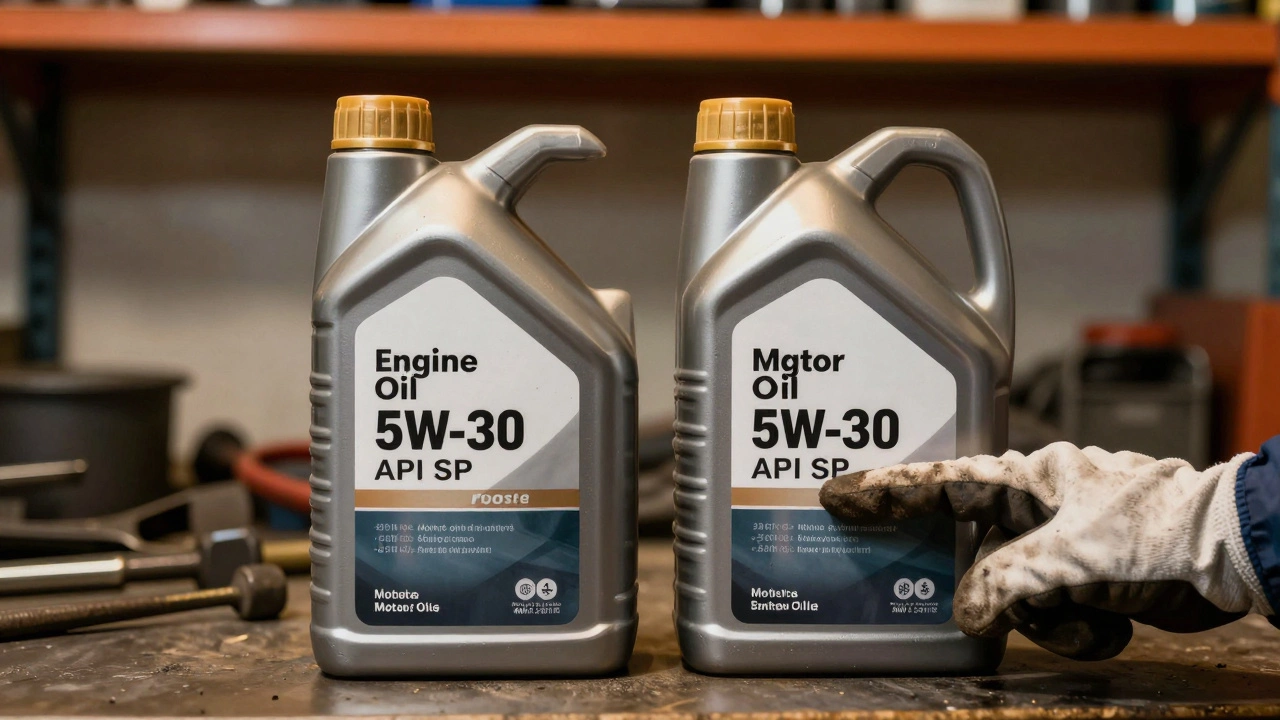
Remember: Whether the bottle says engine oil or motor oil, it's the same product. What matters is matching these specifications to your vehicle's needs.
How to Choose the Right Oil
Key Information
- Check your owner's manual for the exact specifications
- Ignore marketing terms like "high-mileage" or "premium"
- Make sure the oil matches your engine type (gasoline or diesel)
- API/ACEA ratings tell you if the oil meets industry standards
Ever looked at your car’s oil cap and wondered if engine oil and motor oil are the same thing? You’re not alone. Many drivers assume they’re different products, especially when they see both terms used on bottles, in manuals, or at the auto shop. The truth? There’s no real difference between engine oil and motor oil. They’re two names for the exact same product.
Why Do We Have Two Names for the Same Thing?
The confusion comes down to language, not chemistry. "Engine oil" is the more technical term used in manuals, repair guides, and engineering documents. It clearly describes what the oil does: lubricates the internal parts of an engine. "Motor oil" is the everyday phrase used by drivers, mechanics, and marketers. It’s simpler, more conversational, and has been around longer.
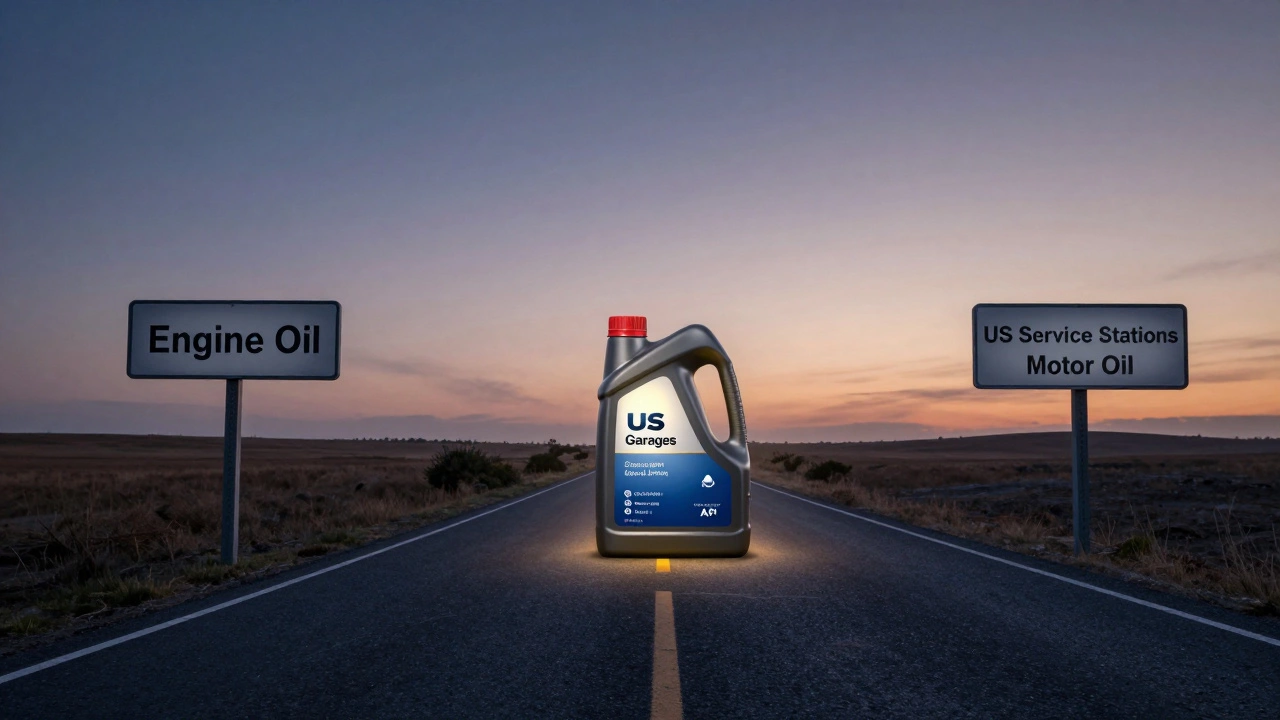
Think of it like "car" and "automobile." One’s casual, the other’s formal. Neither changes what’s under the hood. In the UK, you’ll hear "engine oil" more often in garages and service centers. In the US, "motor oil" dominates casual talk. But if you buy a 5W-30 bottle labeled "motor oil" in Manchester and another labeled "engine oil" in Birmingham, you’re getting identical fluid.
What’s Actually in the Bottle?
Modern engine/motor oil isn’t just plain oil. It’s a carefully engineered blend of base oils and additives. Base oils make up 70-80% of the mix. They come from either refined crude oil (mineral) or synthetic chemical compounds (full synthetic or synthetic blend). The rest? Additives that do critical jobs:
- Detergents - Keep sludge and carbon deposits from building up on pistons and valves.
- Dispersants - Hold tiny particles in suspension so they don’t clump and clog filters.
- Anti-wear agents - Like zinc dialkyldithiophosphate (ZDDP), they form a protective film on metal surfaces under high pressure.
- Viscosity modifiers - Help the oil flow properly when cold and stay thick enough when hot.
- Antioxidants - Slow down oil breakdown from heat and oxygen exposure.
These additives are standardized by the American Petroleum Institute (API) and the International Lubricant Standardization and Approval Committee (ILSAC). Whether the bottle says "engine oil" or "motor oil," it must meet the same specs-like API SN, SP, or ACEA A3/B4-to be sold in the UK or EU.
How Do You Know Which Oil to Use?
Forget the label name. What matters is the viscosity grade and performance standard listed on the bottle. Your car’s manual will tell you exactly what’s needed. For example:
- "Use 5W-30" means it flows easily at low temperatures (5W) but stays thick enough at high heat (30).
- "API SP rated" means it meets the latest performance standard for gasoline engines, introduced in 2020.
If your manual says "engine oil 5W-30 API SP," don’t panic if you only see "motor oil 5W-30 API SP" on the shelf. It’s the same thing. The only time you should worry is if the bottle lacks these key specs. Avoid anything that just says "for all cars" without an API or ACEA rating.

Common Misconceptions
Some people think "motor oil" is for older cars or "engine oil" is for high-performance engines. That’s not true. Synthetic motor oil isn’t better than synthetic engine oil-they’re identical. Some brands use "motor oil" on their budget lines and "engine oil" on premium ones, but the formulation isn’t necessarily different. The price gap usually reflects branding, packaging, or marketing, not quality.
Another myth: "Diesel engine oil" and "gasoline engine oil" are completely different. True. But that’s not because one’s called motor oil and the other engine oil. Diesel-specific oils have higher detergent levels and different additive packages to handle soot and higher combustion pressures. Always match the oil to your engine type-gasoline or diesel-not the label name.
What Happens If You Use the Wrong Oil?
Using oil with the wrong viscosity can cause serious problems. Too thin? It won’t protect bearings under load. Too thick? It won’t flow fast enough when cold, leading to dry starts and increased wear. Using oil that doesn’t meet the API or ACEA standard can void your warranty and damage emissions systems.
One mechanic in Manchester told me about a customer who bought a "high-mileage motor oil" because he thought it was specially for older engines. The bottle said 10W-40, but the manual required 5W-30. The engine started knocking after two oil changes. It wasn’t the brand-it was the wrong viscosity. He ended up paying £1,200 for a head gasket repair.
Real-World Advice
Here’s what you should do every time you change oil:
- Check your owner’s manual for the exact viscosity and specification (e.g., 5W-30, API SP).
- Ignore whether the bottle says "engine oil" or "motor oil." Look for the numbers and letters.
- Make sure it’s approved for your engine type-gasoline, diesel, or hybrid.
- Stick to reputable brands with clear API/ACEA ratings. Avoid generic store brands with no certification.
- Replace oil at the intervals your manual recommends. Synthetic oils last longer, but they still break down over time.
And remember: changing oil is one of the easiest ways to extend your engine’s life. You don’t need to spend more. You just need to get the right one.
Why This Confusion Persists
Marketing plays a big role. Oil companies use "motor oil" because it sounds familiar. Car manufacturers use "engine oil" because it’s precise. Retailers list both to cover all search terms. It’s not deception-it’s redundancy. But for drivers, it creates doubt.
Even in the UK, where technical terms are more common, you’ll see "Premium Motor Oil" on shelf labels at Halfords. The product underneath is identical to what’s sold as "Premium Engine Oil" at Euro Car Parts. The only difference? The label.
Final Takeaway
Engine oil and motor oil are not two different products. They’re the same fluid with two names. The real job isn’t choosing between them-it’s choosing the right viscosity and performance standard for your car. Always trust the manual over the label. If the specs match, it doesn’t matter if it says "motor" or "engine."
Next time you’re at the garage, ask for "5W-30 API SP" instead of "motor oil." You’ll sound smarter-and you’ll get the right product every time.
Are engine oil and motor oil the same thing?
Yes, engine oil and motor oil are the same product. The terms are used interchangeably. "Engine oil" is the technical term used in manuals and engineering contexts, while "motor oil" is the common term used in retail and casual conversation. Both refer to the lubricant designed to reduce friction, cool components, and protect internal engine parts.
Can I use motor oil in my car if the manual says engine oil?
Absolutely. If the viscosity grade (like 5W-30) and performance standard (like API SP or ACEA A3/B4) match what your manual requires, it doesn’t matter if the bottle says "motor oil" or "engine oil." The formulation is identical. Always check the specs on the label, not the name.
Is synthetic motor oil different from synthetic engine oil?
No. Synthetic motor oil and synthetic engine oil are the same thing. The term "synthetic" refers to how the base oil is made-chemically engineered for better performance and longevity. Whether it’s called synthetic motor oil or synthetic engine oil, the chemical composition and performance are identical. Branding, not chemistry, drives the naming.
What should I look for on an oil bottle to make sure it’s right for my car?
Look for two key things: the viscosity grade (e.g., 5W-30) and the performance standard (e.g., API SP, ACEA C3). These are printed clearly on the front or side of the bottle. Your car’s manual will specify exactly which ones to use. Ignore marketing terms like "high-mileage," "long-life," or "premium" unless they’re backed by these standards.
Does it matter if I use diesel engine oil in a gasoline engine?
Yes, it can. Diesel engine oils are formulated to handle soot, higher temperatures, and different combustion byproducts. They often contain higher levels of detergents and dispersants. Using diesel oil in a gasoline engine may cause issues with emissions systems, catalytic converters, or oxygen sensors. Always use oil rated for your engine type-gasoline or diesel.