Radiator Health Diagnostic Tool
Follow the steps below to identify if your car radiator needs attention. This tool helps distinguish between minor issues and critical failures.
🌡️Step 1: Temperature Behavior
How does your engine temperature gauge behave?
Diagnosis Complete
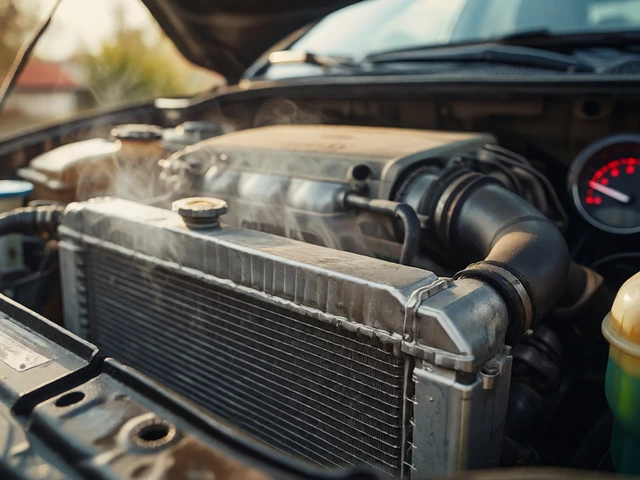
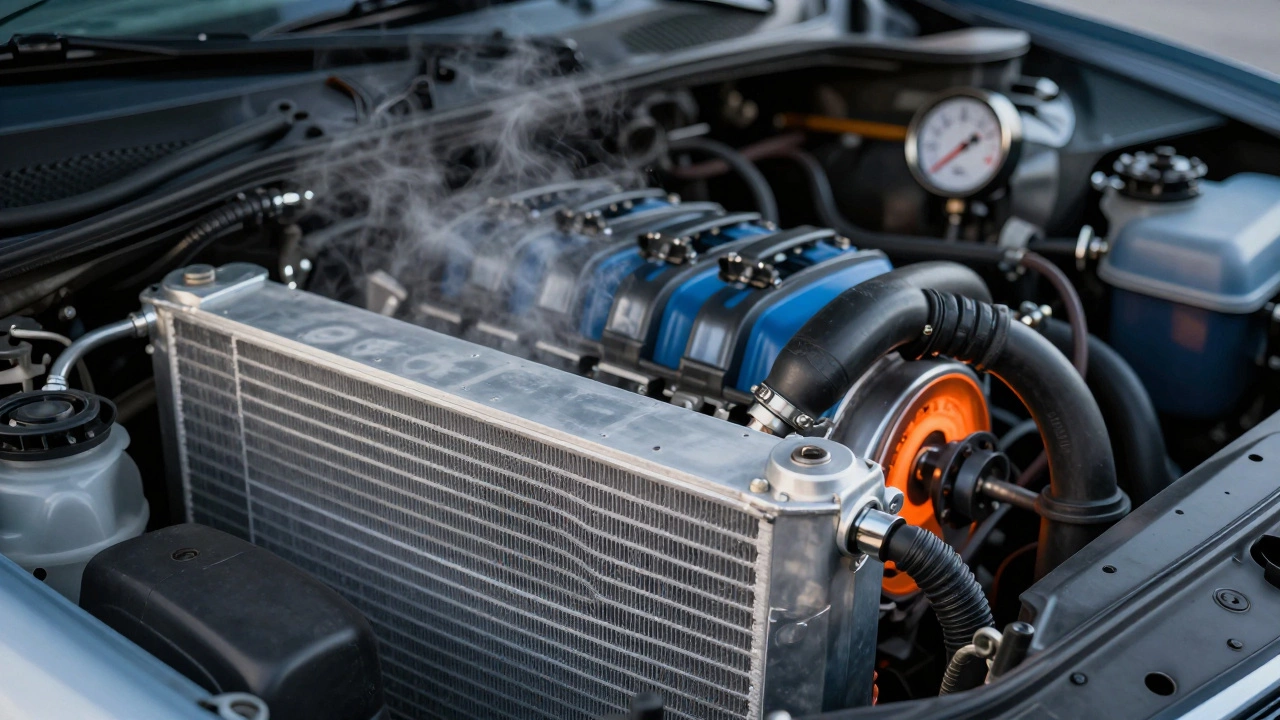
Your dashboard lights up red. Steam hisses from under the bonnet. The smell of sweet syrup fills your nose. If this sounds familiar, you aren't just dealing with a minor hiccup; your cooling system is failing. A bad car radiator is a critical component that dissipates heat from the engine coolant to prevent overheating can turn a simple drive into a stranded nightmare within minutes. But how do you know if it’s actually the radiator and not the thermostat or water pump? Ignoring early warning signs leads to warped cylinder heads and total engine failure.
Diagnosing a faulty radiator doesn't require a degree in mechanical engineering. It requires observation. By checking for specific visual cues, monitoring temperature gauges, and performing simple pressure tests, you can identify the problem before it destroys your engine. Here is exactly what to look for when suspecting a bad radiator.
The Silent Killer: Overheating Without Obvious Leaks
The most obvious sign of a bad radiator is an engine running hot, but many drivers miss the nuance. If your temperature gauge creeps into the red zone only during heavy traffic or steep climbs, but stays normal on the highway, you likely have a partial blockage or reduced flow efficiency inside the radiator core. This isn't always a catastrophic failure yet, but it is a ticking time bomb.
A healthy cooling system is a closed loop consisting of the radiator, water pump, hoses, and thermostat that regulates engine temperature maintains a steady operating temperature, typically between 85°C and 95°C (185°F - 203°F). When the radiator's internal tubes become clogged with sediment, rust, or mineral deposits, coolant cannot flow freely through them. Heat builds up because there is no surface area left to dissipate it into the air passing through the fins.
Check your thermostat next. A stuck-closed thermostat mimics a bad radiator by blocking flow entirely. However, if the upper radiator hose gets extremely hot while the lower hose remains cool, the blockage is likely inside the radiator itself. Conversely, if both hoses are hot but the engine is still overheating, the radiator is failing to shed that heat efficiently.
Visual Inspection: Coolant Leaks and Corrosion
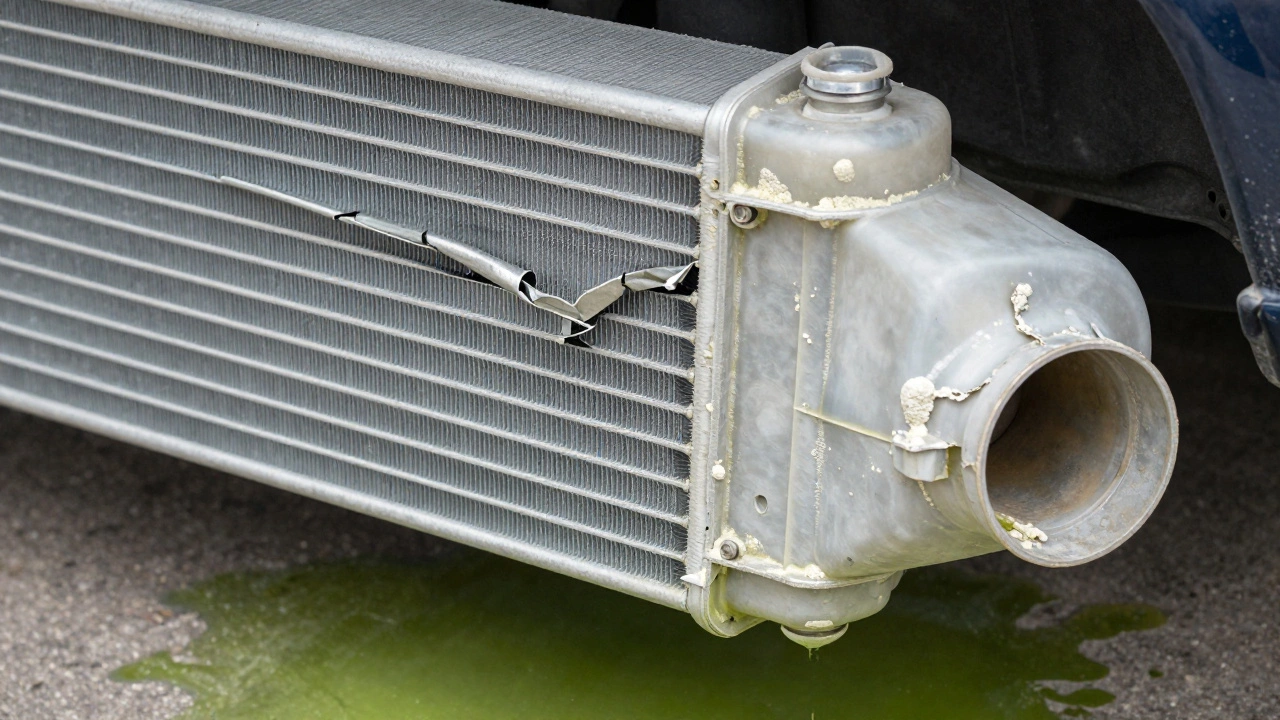
Radiators are made of aluminum or copper-brass alloys connected by plastic tanks. These materials degrade over time. Look underneath your car after it has been parked overnight. Do you see puddles of green, orange, or pink fluid? That is engine coolant is a mixture of water and antifreeze that transfers heat away from the engine. Even small drips indicate a breach in the system.
- Plastic Tank Cracks: Inspect the top and bottom corners of the radiator where the plastic end tanks meet the metal core. Heat cycling causes these plastics to become brittle. Hairline cracks here are common in vehicles older than five years.
- Fins Damage: Look at the thin metal fins between the tubes. Are they bent inward? Debris like stones or bugs can crush these fins, restricting airflow. You can sometimes straighten them with a soft brush, but severe damage means replacement.
- Corrosion Buildup: Check around the filler neck and drain plug. White or green crusty residue indicates past leaks and chemical breakdown of the sealants.
If you spot active leaking, do not drive the vehicle. Low coolant levels mean less liquid to absorb heat, causing rapid temperature spikes. A small leak today becomes a dry engine tomorrow.
Internal Contamination: The Milky Coolant Test
Not all radiator problems show up outside. Sometimes the enemy is inside. Open the radiator cap only when the engine is completely cold. Looking down into the reservoir, does the coolant look clean and translucent? Or does it look like chocolate milk?
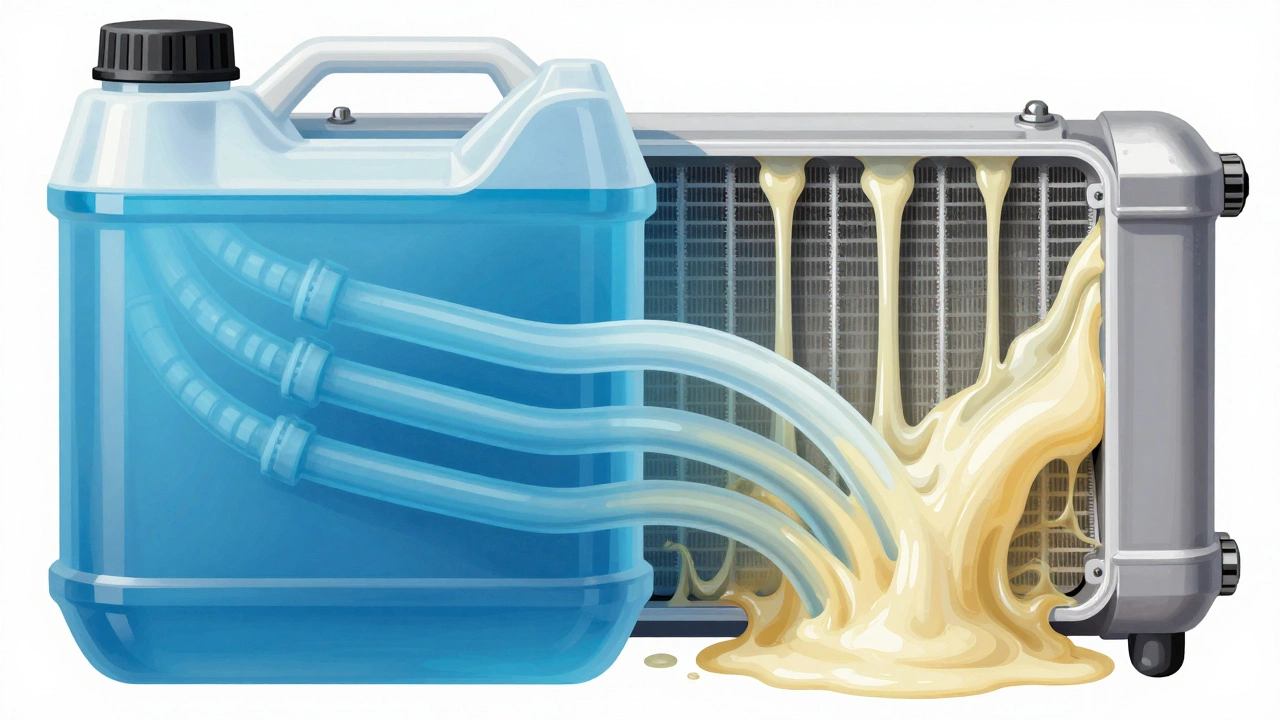
A milky, oily substance floating on top of the coolant usually signals a blown head gasket allowing oil to mix with the coolant. While this is technically a head gasket issue, the radiator suffers collateral damage. Oil coats the internal tubes, insulating them and preventing heat transfer. Furthermore, the sludge created by mixing oil and water clogs the narrow passages of the radiator core permanently. In this scenario, replacing the radiator without fixing the head gasket is a waste of money, as the new unit will get contaminated immediately.
Another internal sign is excessive rust particles. If your coolant looks brown or murky with suspended solids, the radiator is shedding its own internal lining. This debris circulates back to the water pump, accelerating wear there too.
Pressure Testing: Finding Hidden Breaches
You don't need to wait for a leak to appear. A professional mechanic uses a cooling system pressure tester is a hand-pump tool that pressurizes the cooling system to detect weak points to simulate operating conditions. You can rent these tools at most auto parts stores for a few pounds.
- Cold engine only. Remove the radiator cap.
- Attach the pressure tester nozzle to the radiator fill neck.
- Pump the handle until you reach the pressure rating listed on your radiator cap (usually 13-16 psi).
- Stop pumping and watch the gauge.
If the needle drops quickly, you have a leak. Listen for hissing sounds near the hoses, tank seams, or the heater core inside the cabin. If the gauge holds steady but the engine still overheats, the problem is likely internal blockage rather than a physical hole.
When to Repair vs. Replace
Can you fix a bad radiator? For minor external leaks in the plastic tanks, epoxy kits exist, but they are temporary fixes. Internal corrosion or clogging cannot be repaired effectively. Flushing the system helps remove loose debris, but it won't unclog fused mineral deposits.
| Symptom | Action | Estimated Cost (UK) |
|---|---|---|
| Minor external crack in plastic tank | Epoxy repair or clamp (temporary) | £10 - £30 |
| Bent fins blocking airflow | Brush out or replace fan shroud | £0 - £50 |
| Internal clogging / Overheating | Full radiator replacement | £150 - £400 + labor |
| Severe corrosion / Rusty coolant | Replace radiator + Flush entire system | £200 - £500 + labor |
Replacing a radiator is often more cost-effective than chasing phantom leaks. Modern radiators are lightweight and efficient. Ensure you buy one that matches your vehicle's make, model, and year precisely. An ill-fitting radiator may restrict airflow or fail to connect properly to the transmission cooler lines if applicable.
Maintenance Tips to Extend Radiator Life
Prevention is cheaper than replacement. Change your coolant every two to three years, or according to your manufacturer's schedule. Old coolant loses its anti-corrosive additives, turning acidic and eating away at the radiator's internal seals. Use distilled water if topping up, as tap water contains minerals that contribute to scaling.
Keep the exterior clean. Bug splatter and dirt act as insulation on the front of the radiator. Hose it down gently during regular washes. Also, check your cooling fans. If the electric fans aren't kicking in when the AC is on or the engine is hot, the radiator sits stagnant, absorbing heat instead of releasing it.
How much does it cost to replace a car radiator in the UK?
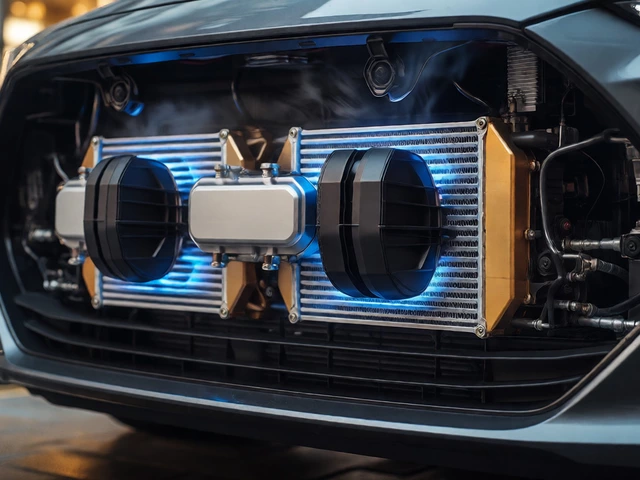
The cost varies by vehicle type. For a standard family car, parts range from £100 to £250. Labor adds another £100 to £200 depending on the garage rates. Luxury or performance cars may require radiators costing over £500 due to complex integration with transmission coolers and intercoolers.
Can I drive my car if the radiator is leaking?
No. Driving with a leaking radiator risks immediate engine overheating. As coolant levels drop, the engine loses its ability to regulate temperature. This can cause the cylinder head to warp or crack within minutes, leading to repairs costing thousands of pounds instead of hundreds.
What is the lifespan of a typical car radiator?
Most modern aluminum radiators last between 5 to 10 years or 80,000 to 100,000 miles. Plastic components tend to fail before the metal core corrodes. Regular maintenance and timely coolant changes can extend this life significantly.
Does a bad radiator affect fuel economy?
Yes. An overheating engine runs inefficiently. The computer may retard ignition timing to protect the engine, reducing power and increasing fuel consumption. Additionally, if the cooling fans run constantly due to poor heat dissipation, they draw extra electrical load, slightly impacting mileage.
How do I tell if my radiator is clogged internally?
Signs include the upper radiator hose being very hard and hot while the lower hose is cool, indicating blocked flow. You might also notice the engine overheating rapidly under load but cooling down quickly when idling. A pressure test combined with a flow test by a mechanic confirms internal blockages.