Suspension Noise Diagnostic Tool
Follow the steps below to diagnose your suspension issue
🔊 What type of noise do you hear?
You’re driving down the road, maybe taking a slight dip or going over a speed bump, and suddenly you hear it. A loud clunk, a sharp squeak, or a dull thud that seems to come from nowhere and everywhere at once. It’s unsettling. You might ignore it for a few days, hoping it goes away, but that sound is your car’s way of telling you something is wrong with its suspension system. The suspension doesn’t just make your ride comfortable; it keeps your tires on the road and your vehicle stable. When it starts making noise, it’s usually a sign of wear, damage, or loose components.
Identifying these sounds early can save you from expensive repairs later and, more importantly, keep you safe. In this guide, we’ll break down exactly what bad suspension sounds like, where those noises come from, and what you should do about them.
The Loud Clunk: Shock Absorbers and Struts Giving Up
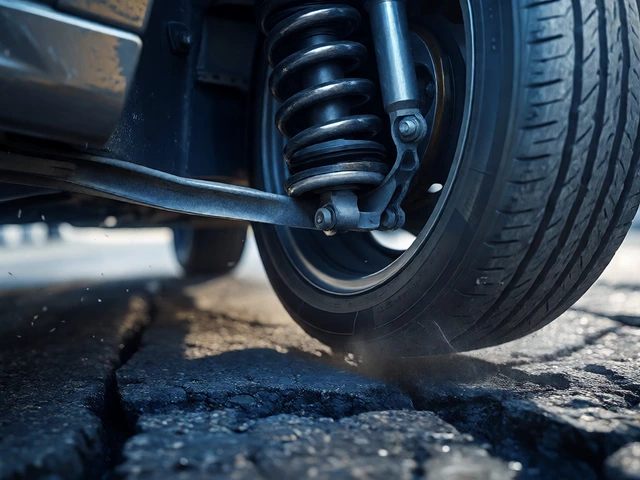
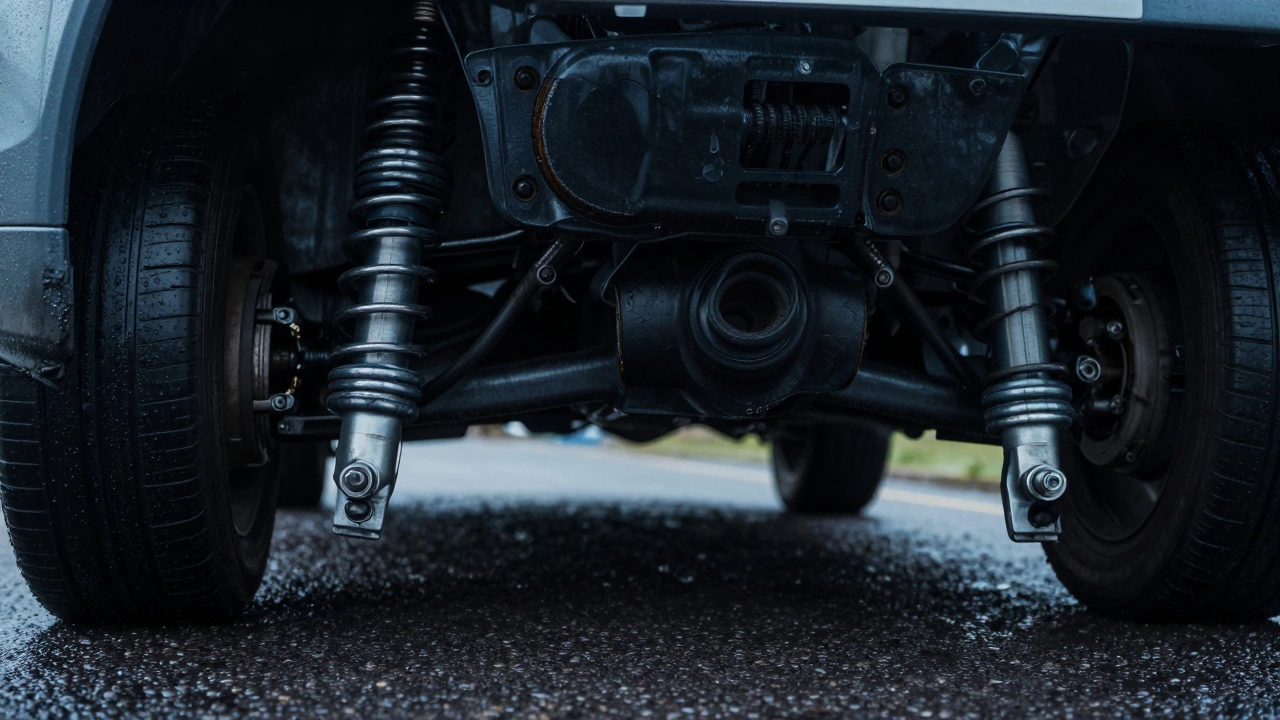
If you hear a distinct, heavy clunk when you go over bumps, potholes, or even just turn the steering wheel sharply, your first suspect should be the shock absorbers or struts. These components are designed to dampen the movement of the springs. Over time, the hydraulic fluid inside them leaks out, or the internal seals wear down. When they fail, they lose their ability to control the spring’s motion.
Think of it like this: a healthy strut is like a firm handshake-solid and controlled. A worn-out strut is like a limp hand-loose and floppy. When you hit a bump, the wheel bounces up and down excessively because there’s nothing stopping it. That uncontrolled movement causes metal parts to slam into each other, creating that audible clunk. You might also notice that the front of your car dives forward when you brake or squats backward when you accelerate. This isn’t just annoying; it reduces your traction and increases stopping distances.
- Sign: Loud clunking over small imperfections in the road.
- Cause: Worn shock absorber mounts, broken bushings, or failed shock internals.
- Action: Inspect the shocks for oil leaks (they should be dry). If they’re leaking or making noise, replace them in pairs.
The Squeak: Rubber Bushings Drying Out
A high-pitched squeak or creak that occurs when you drive over rough surfaces is often caused by rubber bushings. Bushings are the silent connectors between metal parts in your suspension. They absorb vibration and allow parts to move slightly without grinding against each other. Common locations include the control arm bushings, sway bar links, and subframe mounts.
Rubber degrades over time due to heat, moisture, and exposure to road salts. As it dries out, it cracks and loses its flexibility. When two metal parts press against a hardened, cracked bushing, friction creates that squeaking noise. It’s similar to the sound of old leather shoes rubbing together. While it might not seem dangerous immediately, cracked bushings can eventually tear completely. This leads to excessive play in your suspension, causing uneven tire wear and poor handling.
If you hear this squeak, check the bushings visually. Look for cracks, tears, or gaps where the metal inserts pull away from the rubber. Replacing bushings is often cheaper than replacing entire control arms, so catching it early saves money.
The Rattle: Loose Sway Bar Links and Ball Joints
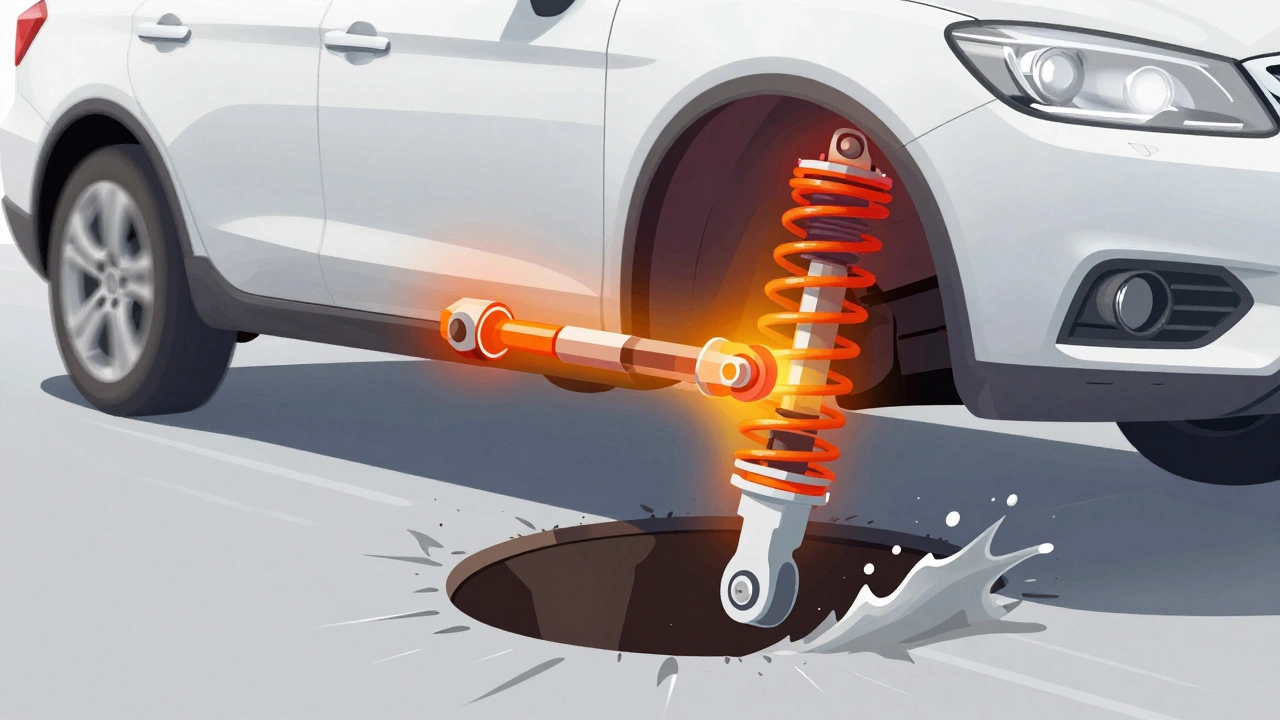
A metallic rattling or clicking sound that comes specifically when turning corners or driving over uneven pavement usually points to the sway bar links or ball joints. The sway bar (or anti-roll bar) helps reduce body roll during turns. It connects to the rest of the suspension via small links with ball joints at both ends. These joints are subject to constant stress and movement.
When the rubber boots on these links tear, dirt and water get inside, accelerating wear. Once the joint wears out, it develops slack. Every time you turn or hit a bump, that loose joint slaps back and forth, creating a rattle. Similarly, ball joints connect the control arms to the steering knuckles. If they wear out, you’ll hear a clunk or rattle, and worse, your wheel could potentially separate from the vehicle in extreme cases.
To test this, have someone bounce the front of your car while you listen for rattles. Alternatively, lift the car safely and try to wiggle the wheels. Any noticeable play indicates worn ball joints or tie rod ends. Don’t delay repair here-these are critical safety components.
The Groan: Worn Coil Springs and Mounts
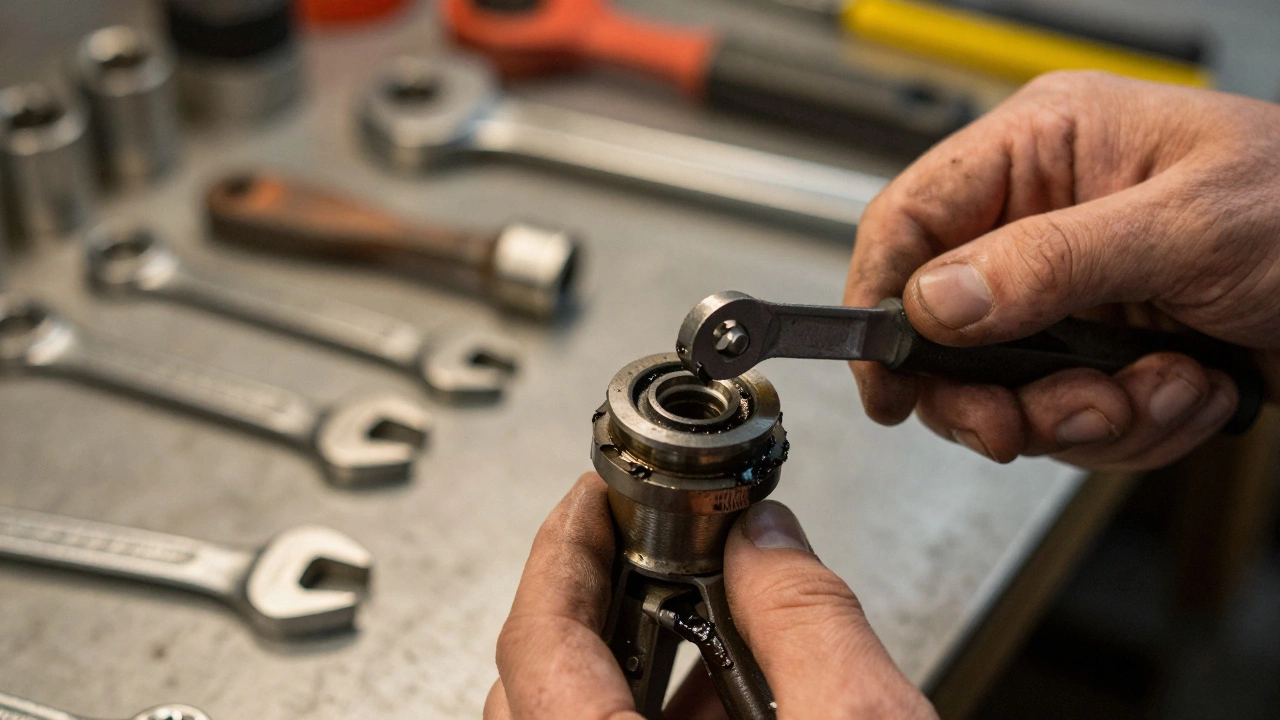
A deep groaning or creaking noise, especially when the car is fully loaded or parked on an incline, can indicate issues with the coil springs themselves or their mounting points. Springs bear the weight of the vehicle and compress under load. Over time, metal fatigue can set in, though springs rarely “break” in modern cars unless they’ve been overloaded or corroded.
More commonly, the noise comes from the spring seats or perches. These are the metal pads where the spring rests on the chassis and control arms. If the rubber insulators between the spring and the perch wear out, metal-on-metal contact occurs. This creates a harsh groan or squeal as the spring twists and compresses. In some vehicles, particularly those with complex multi-link suspensions, worn strut tower bearings can also cause a groaning noise when turning the steering wheel at low speeds.
If you suspect spring-related noise, inspect the areas where the springs sit. Look for rust, deformation, or missing insulators. Replacing worn insulators is a quick fix that restores quiet operation.
Comparison Table: Identifying Your Suspension Noise
| Noise Type | Likely Component | When It Happens | Safety Risk |
|---|---|---|---|
| Clunk | Shock Absorbers / Struts | Over bumps, braking, accelerating | High (handling loss) |
| Squeak / Creak | Rubber Bushings | Rough roads, slow maneuvers | Medium (progressive failure) |
| Rattle / Click | Sway Bar Links / Ball Joints | Turning, uneven surfaces | Very High (wheel separation risk) |
| Groan | Coil Spring Seats / Bearings | Loading/unloading, turning slowly | Low to Medium |
| Humming / Whining | Wheel Bearings | Constant speed, changes with direction | High (bearing seizure) |
Don’t Ignore the Wheel Bearings
While technically part of the drivetrain, wheel bearings are closely tied to suspension health. A failing bearing often produces a humming, growling, or whining noise that increases with speed. Unlike suspension noises, which are triggered by bumps or turns, bearing noise is constant and may change pitch when you turn left or right (as weight shifts off the bad bearing).
Ignoring a bad wheel bearing can lead to catastrophic failure. The bearing can seize, locking the wheel, or separate entirely, causing the wheel to collapse. Always rule out wheel bearings if you hear continuous noise while driving.
What Should You Do Next?
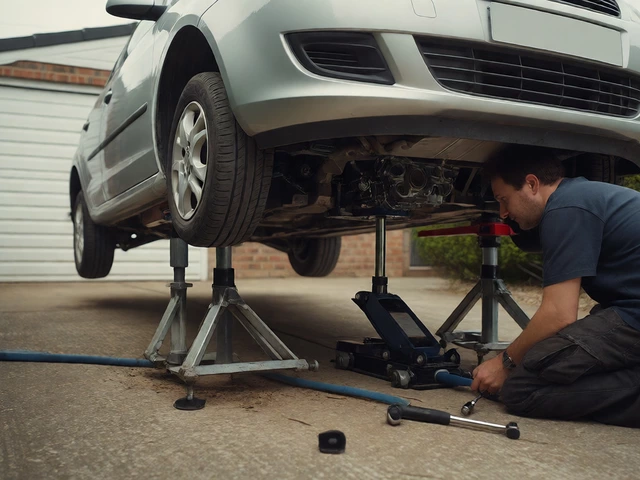
If you recognize any of these sounds, don’t panic, but don’t ignore them either. Start by parking your car on a flat surface and visually inspecting the suspension components. Look for obvious signs of damage: leaking shocks, cracked rubber, or loose bolts. If you’re not comfortable doing this yourself, visit a trusted mechanic.
Explain the specific noise you heard and when it happens. Mechanics can perform a bounce test, shake down the suspension, and use diagnostic tools to pinpoint the issue. Remember, suspension parts wear out gradually. Addressing minor squeaks today prevents major clunks-and costly accidents-tomorrow.
Your car’s suspension works hard every day. Listening to its cues is one of the easiest ways to maintain reliability and safety. Stay alert, stay informed, and keep your ride smooth.
Can bad suspension affect my fuel economy?
Yes. Worn suspension components can cause improper wheel alignment and increased rolling resistance. If your tires aren’t tracking straight due to loose bushings or ball joints, your engine works harder to maintain speed, leading to higher fuel consumption.
How long can I drive with a clunking suspension?
It depends on the severity. A minor clunk from a worn bushing might be tolerable for a short trip to the shop. However, loud clunks from failed shocks or loose ball joints pose significant safety risks. Avoid highway driving and heavy loads until repaired.
Is it cheaper to replace bushings or entire control arms?
Replacing just the bushings is usually cheaper if the control arm itself is undamaged. However, labor costs can vary. Some mechanics prefer replacing the whole assembly for reliability and warranty purposes. Get quotes for both options before deciding.
Can weather conditions worsen suspension noises?
Absolutely. Cold temperatures make rubber bushings stiffer and more prone to cracking. Rain and road salt accelerate corrosion in metal components like sway bar links and ball joints. Seasonal changes often highlight existing wear.
Do all suspension noises require immediate repair?
Not necessarily. Mild squeaks from dry bushings can sometimes be resolved with lubrication as a temporary measure. However, clunks, rattles, and grinding noises indicate structural wear that needs professional attention to prevent further damage or safety hazards.