AC Filter Maintenance Calculator
Select your filter type to get personalized maintenance recommendations.
Maintenance Recommendations
Estimated Energy Savings: Up to 15% efficiency increase with proper filter maintenance
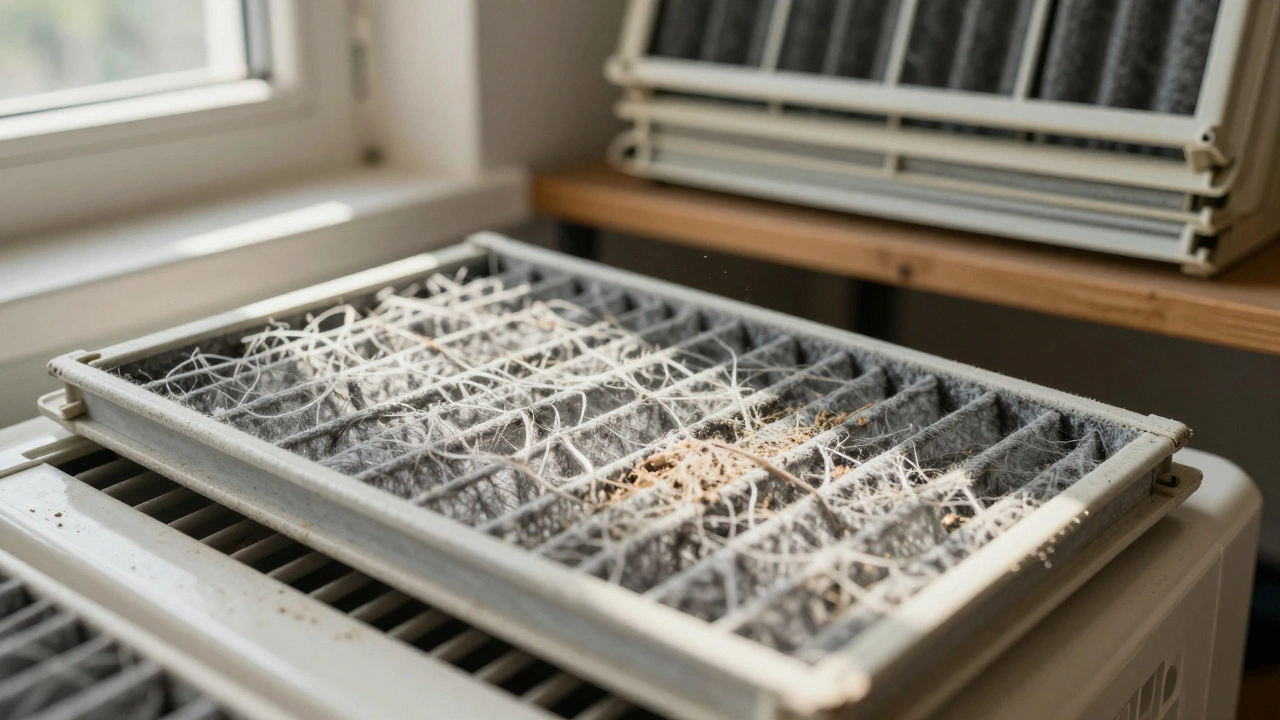
Ever opened up your air conditioner and seen a dusty, gray filter that looks like it hasn’t been touched in years? You might be wondering: can I clean my AC filter instead of replacing it? It’s a smart question - and the answer isn’t as simple as yes or no. The truth is, it depends on the type of filter you have, how dirty it is, and how often you use your system. In Manchester, where winters are damp and summers can get surprisingly warm, keeping your AC running efficiently matters more than you think.
Not All AC Filters Are the Same
Most homes in the UK use one of three types of air filters: disposable fiberglass, pleated polyester, or reusable washable filters. Each behaves differently when it gets dirty.Disposable filters - the cheap, thin ones that come in a box - are designed for one-time use. They’re made of fiberglass mesh and trap big particles like dust and pet hair. But they clog fast. If you try to wash one, you’ll just tear it apart or leave fibers behind. These filters should be replaced every 30 to 90 days, depending on how much you run your AC or heating system.
Pleated filters are thicker and more efficient. They’re made of folded synthetic material and can capture smaller particles like pollen and mold spores. These last longer - often 3 to 6 months - but they also can’t be cleaned. Washing them damages the pleats, which reduces airflow and makes your system work harder. You’ll notice your energy bills creeping up if you try to reuse these.
Then there are washable filters. These are usually metal or plastic frames with a mesh or foam layer. They’re marketed as reusable and can last for years if cleaned properly. These are the only filters you should ever consider cleaning. If you’ve got one of these, great - you’re already ahead of the game. If not, you might want to consider switching to one.
How to Clean a Reusable AC Filter (Step by Step)
If you’ve got a washable filter, cleaning it is straightforward. Here’s how to do it right:
- Turn off your AC or heating system before removing the filter. Safety first.
- Take the filter out carefully. Shake off loose dust over a trash can or outside.
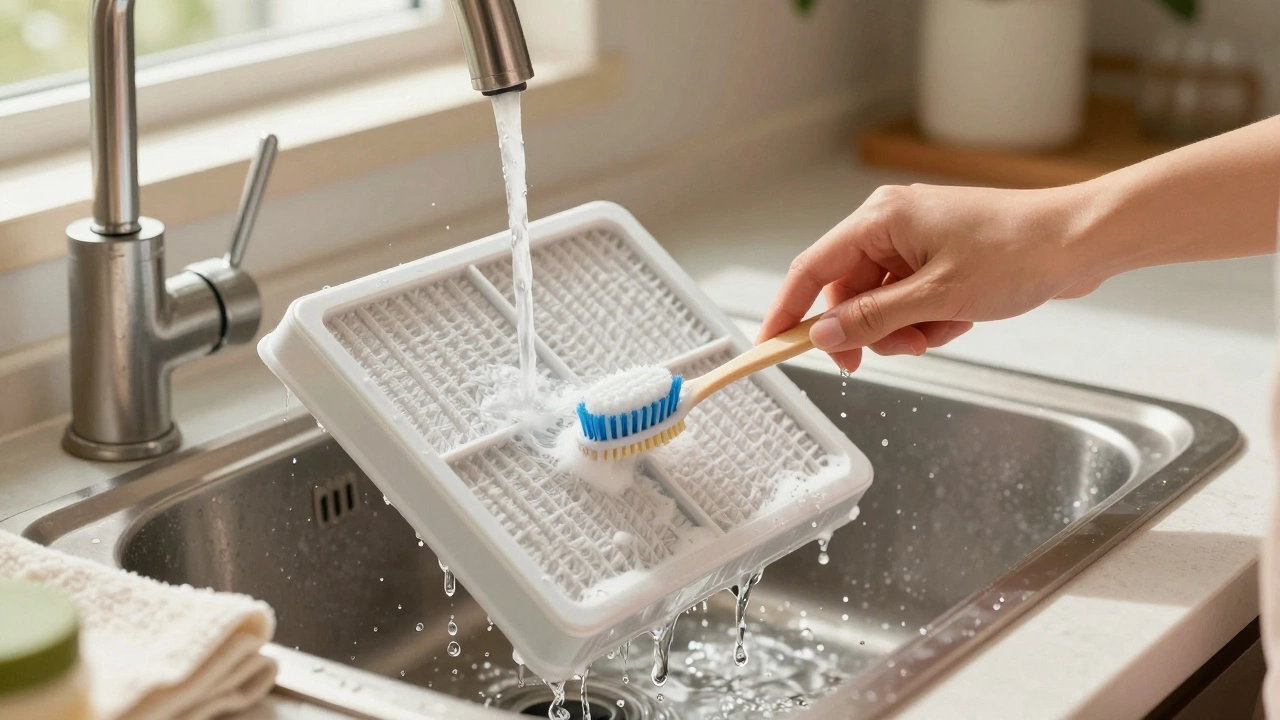
- Rinse it under lukewarm water. Don’t use hot water - it can warp plastic frames. Don’t use soap unless the manufacturer says it’s okay. Most foam filters just need water.
- Gently scrub stubborn dirt with a soft brush - like an old toothbrush. Don’t scrub hard. You’re not cleaning a floor.
- Let it air dry completely. This is critical. A wet filter can grow mold or cause your system to short-circuit. Leave it in a well-ventilated area for at least 24 hours. Don’t rush it.
- Put it back in once it’s bone dry. If it’s still damp, wait another day.
Do this every 30 days during heavy use - like summer or when you’re running the heat constantly. If you have pets or live near a busy road, you might need to clean it more often.
Why Cleaning Matters - Even If You Don’t Replace
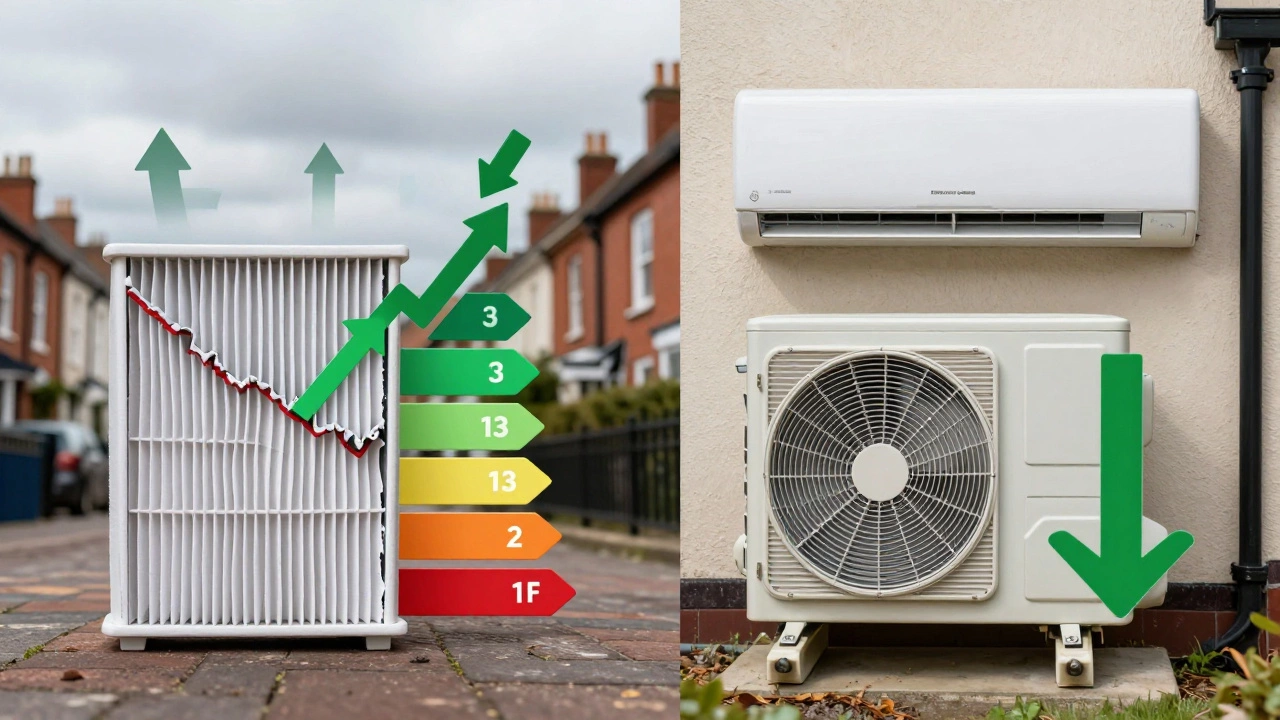
A dirty filter doesn’t just make your AC run louder. It makes it less efficient. When airflow is blocked, your system has to work harder to push air through. That means higher energy bills. In Manchester, where electricity prices have stayed high since 2023, even a 10% drop in efficiency can add £30-£50 a year to your bill.
Also, a clogged filter can cause your evaporator coil to freeze up. That’s a repair job you don’t want. And if dust gets past the filter, it settles in your ducts and on your vents. That’s not just dirt - it’s allergens, mold spores, and pet dander circulating in your home. People with asthma or allergies notice the difference.
Studies from the UK’s Energy Saving Trust show that homes with clean filters use up to 15% less energy than those with dirty ones. That’s not a myth - it’s measurable.
When Cleaning Isn’t Enough
Even if you clean your filter religiously, there are signs it’s time to replace it:
- The filter looks worn, frayed, or cracked.
- It’s been more than 3 years since you installed it - even if it looks okay.
- Water stains or mold spots won’t come off after cleaning.
- Your AC blows less air than it used to, even after cleaning.
- You hear rattling or buzzing when the system turns on - that’s often a sign the filter isn’t fitting right anymore.
If you’ve got a reusable filter and it’s showing any of these signs, replace it. They’re not indestructible. The foam or mesh degrades over time. It loses its ability to trap particles. And once that happens, cleaning won’t fix it.
What About Those “Washable” Filters Sold Online?
There’s a flood of cheap washable filters on Amazon and eBay. Some are legit. Others? Not so much. Many are just plastic frames with flimsy foam that falls apart after two cleanings. They’re marketed as “lifetime filters” - but that’s misleading.
Look for filters that are clearly labeled as “reusable” and come from HVAC brands like Filtrete, Honeywell, or Nordic Pure. Avoid anything that doesn’t list the MERV rating (Minimum Efficiency Reporting Value). A good reusable filter should have a MERV rating between 8 and 11. Anything below 6 won’t catch much. Anything above 13 can restrict airflow too much.
Real-World Tip from a Manchester Homeowner
I’ve lived in my terraced house in Withington for 12 years. My AC unit is a 2018 model, and I’ve used the same washable filter since day one. I clean it every 4 weeks during summer. I’ve never had a repair. My energy bills? Lower than my neighbor’s by about 18%. I keep a small notebook next to the filter box - I write the date each time I clean it. That way, I don’t forget. Simple. No tech. Just habits.
What to Do If You’re Not Sure
If you’re not sure what kind of filter you have, take it out and look at the label. Most have a model number or material info printed on the side. If it says “disposable,” don’t wash it. If it says “washable” or “reusable,” go ahead.
Still unsure? Take a photo and show it to a local HVAC technician. Most will give you a free opinion. Or check your owner’s manual - it should say what filter type your system needs.
Bottom Line: Clean, Don’t Replace - But Only If It’s Designed for It
You can absolutely clean your AC filter instead of replacing it - but only if it’s made to be cleaned. Disposable filters? Replace them. Pleated filters? Replace them. Washable filters? Clean them every month or two. Doing it right saves money, cuts energy use, and keeps your air cleaner.
And if you’re still using those flimsy fiberglass filters from 2020? It’s time to upgrade. A good reusable filter costs £20-£30 upfront. It lasts 5+ years. You’ll save more than that in replacement filters alone - not to mention the energy savings.
Can I wash a disposable AC filter with water?
No. Disposable filters are made of fiberglass or paper-thin material that disintegrates when wet. Washing one will damage it, reduce airflow, and let more dust into your system. Always replace them instead.
How often should I clean my reusable AC filter?
Clean it every 30 days during peak usage - summer and winter. If you have pets, smoke indoors, or live near a busy road, clean it every 20 days. Always let it dry completely before reinstalling.
Do washable filters cost more upfront?
Yes, they usually cost £20-£30 compared to £5-£10 for disposable ones. But since they last 5-10 years, you’ll save money over time. You’ll also cut down on waste and energy use.
Can cleaning my filter prevent AC breakdowns?
Yes. A dirty filter forces your system to work harder, which can lead to overheating, frozen coils, or motor failure. Regular cleaning reduces strain and extends the life of your unit.
What’s the best MERV rating for a reusable filter?
A MERV rating between 8 and 11 is ideal for most homes. It catches dust, pollen, and mold without restricting airflow too much. Avoid MERV 13+ unless your system is designed for it - it can reduce efficiency.