Pleated vs. Flat Air Filter Advisor
Answer a few questions about your car and driving conditions to get a personalized recommendation.
Your Recommendation
Why this choice?
Estimated Annual Cost Impact
Flat Filter: £0/year
Pleated Filter: £0/year
*Based on average UK mileage (10k miles/year) and fuel efficiency gains from better airflow.
Installation Tip
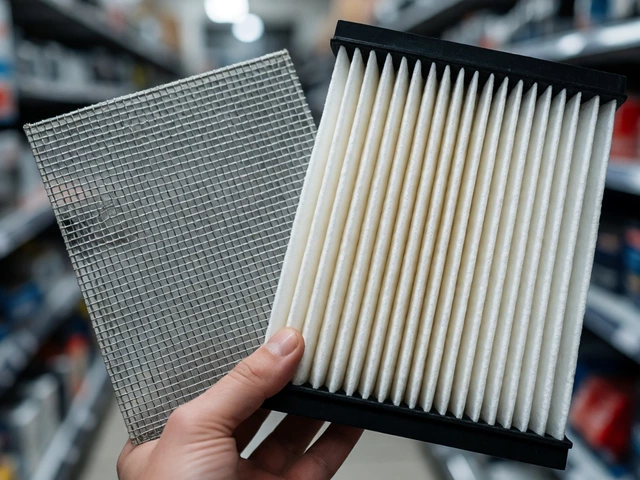
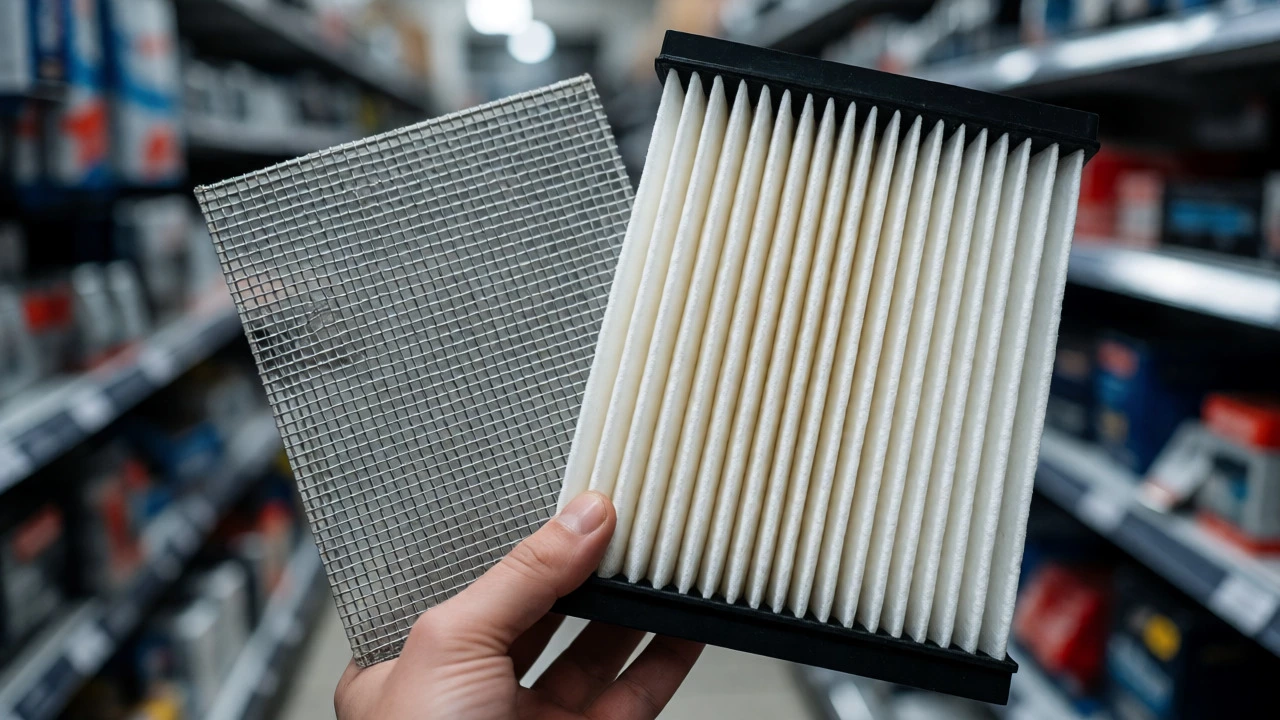
You’re standing in the auto parts aisle, holding two boxes. One has a flat, wire-mesh screen that looks like it belongs on a window. The other is a thick, accordion-folded block of paper. Your mechanic said to change them, but he didn’t say which one actually keeps your engine alive longer or stops you from sneezing during your commute. It’s a fair question: are pleated air filters better? The short answer is yes, but not for the reasons most people think. It’s not just about looking fancier; it’s about physics, surface area, and how much dust your lungs have to process before you hit the motorway.
The Physics of Surface Area
Think about how you dry your hands. If you rub them together flat, they stay wet. If you spread your fingers wide, more air hits the skin, and they dry faster. That’s exactly what happens with pleated air filters. These are air filtration devices featuring folded media that increase surface area without increasing physical dimensions. A standard flat panel filter might have only a few hundred square centimeters of actual filtering material. By folding that same material into hundreds of tiny V-shapes, manufacturers can pack up to ten times more surface area into the same-sized housing.
Why does this matter? Because dirt doesn’t disappear; it gets trapped. On a flat filter, particles clog the available holes quickly. Once those holes are blocked, airflow drops. On a pleated filter, the dirt has miles of paper to travel across. This means the filter stays clean longer, allowing consistent airflow to your engine or cabin. In the UK, where we deal with everything from pollen in spring to road grit in winter, this capacity difference is huge.
Engine Health vs. Cabin Comfort
We need to split this conversation because "air filter" means two different things depending on where it sits. There is the engine air filter, which protects your car’s heart, and the cabin air filter, which protects you.
For the engine, the stakes are mechanical. Modern engines are tight tolerances. If a grain of sand gets past the filter, it acts like sandpaper on your cylinder walls. Internal Combustion Engines rely on precise air-to-fuel ratios. Disrupted airflow messes with fuel economy and power. Older cars often used oil-bath or simple mesh filters because they were less sensitive. Today’s turbocharged direct-injection engines are picky. They need clean, unrestricted air. A high-quality pleated engine filter captures particles as small as 10 microns while maintaining low restriction. A cheap flat filter might catch big rocks but let fine dust through, or worse, choke the engine when dirty.
For the cabin, the stakes are health-related. Have you ever noticed a musty smell when you turn on the AC? Or do you get headaches after driving in London traffic? That’s likely a failing cabin filter. Standard flat filters often stop at catching leaves and bugs. Pleated cabin filters, especially those with activated carbon layers, trap pollen, exhaust fumes, and brake dust. Given that UK allergy sufferers report higher symptoms in urban areas, the extra filtration capacity isn't a luxury; it's a necessity for clear breathing.
Cost vs. Longevity: The Real Math
People hesitate to buy pleated filters because they cost more upfront. Let’s look at the numbers. A basic flat cabin filter might cost £5-£8. A decent pleated version costs £12-£20. Is it worth double? Yes, if you consider replacement frequency.
A flat filter typically needs changing every 15,000 miles or once a year. A high-quality pleated filter can last 30,000 miles or two years under normal conditions. You aren’t paying more per mile; you’re paying for convenience and consistent performance. Plus, there’s the hidden cost of poor filtration. Reduced fuel efficiency due to restricted airflow can cost you £50-£100 a year in petrol. If your pleated filter saves even 2% on fuel consumption, it pays for itself within six months.
| Feature | Flat Panel Filter | Pleated Air Filter |
|---|---|---|
| Surface Area | Low (Single layer) | High (Folded layers) |
| Dust Holding Capacity | Low | High |
| Airflow Restriction | Increases rapidly as dirt accumulates | Stays stable longer |
| Lifespan | Shorter (approx. 15k miles) | Longer (approx. 30k miles) |
| Initial Cost | Lower (£5-£10) | Moderate (£12-£25) |
| Best For | Older vehicles, light use | Modern engines, heavy traffic, allergies |

When Flat Filters Still Make Sense
It’s not always black and white. Are there scenarios where a flat filter wins? Sure. If you drive a classic car from the 1970s, the original design might rely on a specific resistance level that a modern dense pleated filter disrupts. Some vintage restorers prefer period-correct flat elements to maintain the factory feel of the throttle response.
Also, budget constraints are real. If you’re fixing up an old beater that you plan to sell in three months, spending £20 on a premium filter might not yield a return. In these cases, a standard OEM flat filter is perfectly adequate. It does the job of keeping large debris out, which is enough for short-term survival. But for daily drivers, especially those doing school runs or commuting, the compromise isn’t worth it.
How to Spot a Quality Pleated Filter
Not all pleats are created equal. I’ve seen cheap knock-offs where the pleats are glued poorly, causing them to collapse under suction. When the pleats collapse, the surface area drops to zero, and the filter becomes useless. Here’s what to check:
- Media Material: Look for synthetic non-woven materials rather than just treated paper. Synthetic media resists moisture better, which is crucial in our damp UK climate.
- Adhesive Lines: Check the edges where the media meets the frame. You want continuous adhesive lines, not dots. Dots allow unfiltered air to bypass the filter entirely.
- Rigidity: Squeeze the filter gently. It should spring back. If it feels floppy, the pleats will crush inside the housing.
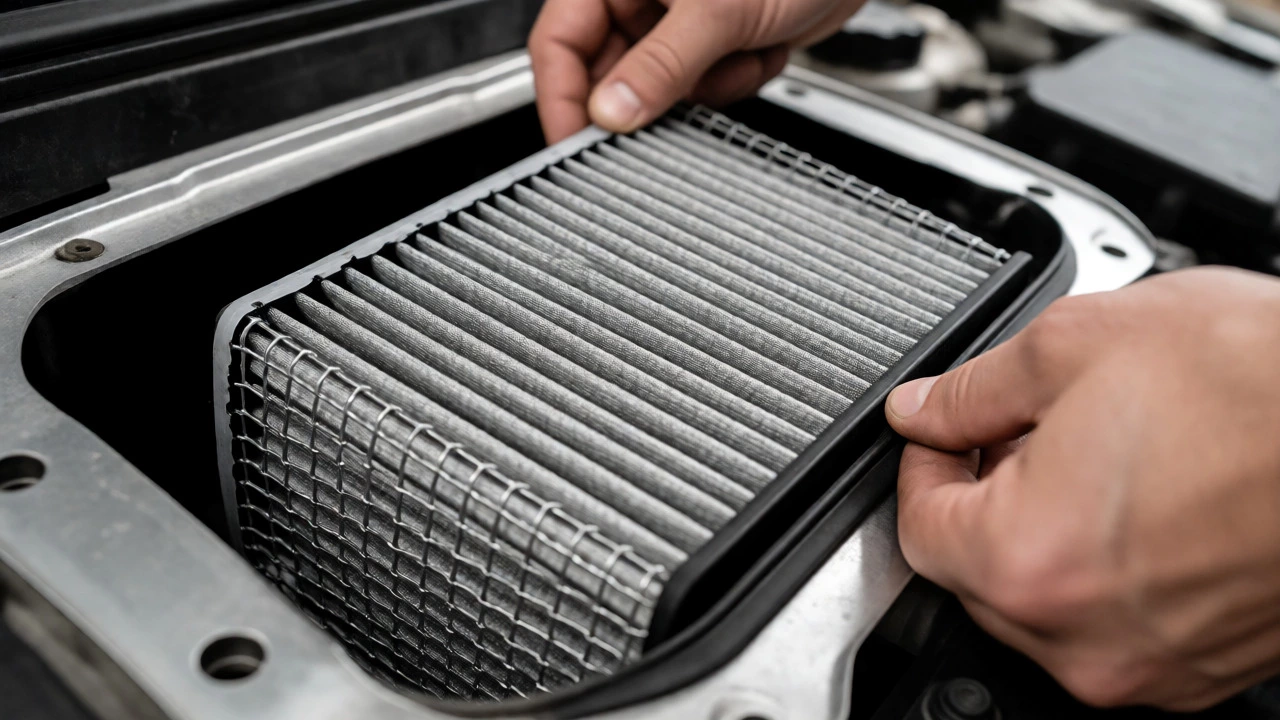
- Mesh Protection: Good filters have a stiff wire mesh on both sides to protect the pleats from deformation.
Installation Tips to Avoid Bypass
Even the best filter fails if installed incorrectly. The biggest mistake I see DIYers make is forcing a filter into a slot that’s slightly too small. This buckles the pleats. Instead of expanding to catch dirt, they bunch up, creating gaps. Unfiltered air rushes through these gaps, carrying dust straight into your engine or vents.
Always clean the housing first. Wipe out any old dirt or leaves. If the housing is warped, no filter will seal properly. Ensure the rubber gasket (if present) is intact and seated correctly. If your car uses a foam seal, make sure it’s not compressed permanently from previous installs. A good seal is 50% of the battle.
Environmental Impact
There’s another angle here: waste. Because pleated filters last twice as long, you throw away half as many filters over the life of your car. While filters aren’t easily recyclable due to the mixed materials (paper, plastic, metal), reducing the volume of landfill waste is still a win. Additionally, cleaner combustion from a well-filtered engine produces fewer particulate emissions, helping keep the air around us breathable.
Can I wash and reuse pleated air filters?
Generally, no. Most standard pleated filters are disposable. Washing them destroys the microscopic structure of the paper, rendering them ineffective. However, some high-performance aftermarket brands offer reusable cotton-gauze filters that can be cleaned and oiled. Check the manufacturer instructions before attempting to wash any filter.
Do pleated filters reduce engine power?
No, high-quality pleated filters are designed to minimize airflow restriction. In fact, because they hold more dirt without clogging, they often provide better sustained airflow than a dirty flat filter. Poorly made pleated filters might restrict flow initially, but reputable brands engineer them to meet or exceed OEM specifications.
How often should I replace my pleated cabin filter?
Every 15,000 to 30,000 miles, or annually. If you drive in dusty areas, construction zones, or suffer from severe allergies, replace it every 6 months. Visual inspection is key-if it looks grey or black, it’s done.
Is a HEPA filter better than a standard pleated filter?
HEPA filters capture smaller particles but create significant airflow resistance. In cars, using a true HEPA filter without upgrading the blower motor can strain the fan and reduce ventilation speed. Standard pleated filters strike a better balance between filtration efficiency and airflow for automotive applications.
What happens if I put the wrong size filter in?
If it’s too small, air bypasses the filter, letting dirt into the engine or cabin. If it’s too big, it won’t seal, leading to rattling noises and potential damage to the housing clips. Always match the part number exactly.