Exhaust System Cost Estimator
Select your specific repair needs to get a realistic price range for parts and labor.
Estimated Total Cost
$0 - $0
Parts Cost:
$0 - $0
Labor Cost:
$0 - $0
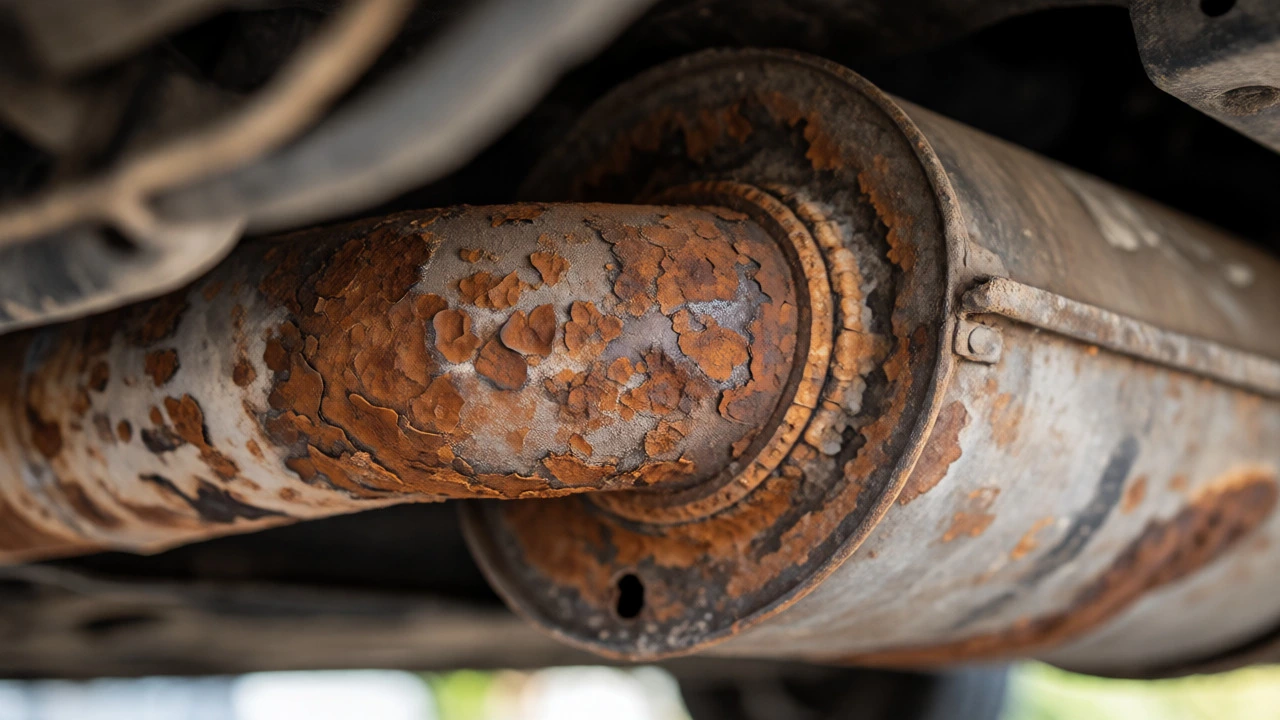
You’re driving along, and suddenly your car sounds like a lawnmower having a bad day. Or maybe you just noticed that rusted hole in the back of your car where a pipe used to be. Now you’re staring at search results for "exhaust system cost," and everything from $150 to $3,000 is popping up. Why such a huge gap? It’s not because mechanics are trying to trick you. It’s because exhaust systems are complex assemblies made of different materials, serving different purposes, and varying wildly by vehicle type.
Before you hand over your credit card, you need to know what you’re actually buying. Are you fixing a leaky gasket or replacing a stolen catalytic converter? The answer changes the price tag by thousands. Let’s break down exactly how much you should spend, why costs vary, and when it’s worth paying more (or less).
The Real Cost Breakdown: What Are You Paying For?
An exhaust system isn’t just one part; it’s a chain of components working together to move gases away from your engine and reduce noise and pollution. When people ask "how much should I spend," they often mean one specific part, but sometimes the whole system needs attention. Here is the typical price range for common repairs in the US market as of late 2026:
| Component | Low-End Cost | High-End Cost | Why It Varies |
|---|---|---|---|
| Muffler Replacement | $150 | $400 | Material (steel vs. aluminum), brand reputation, labor complexity. |
| Catalytic Converter | $400 | $2,500+ | Precious metal content (platinum, palladium), theft risk, OEM vs. aftermarket. |
| Oxygen Sensor | $100 | $350 | Sensor type (upstream vs. downstream), brand quality. |
| Full Exhaust System | $800 | $3,500 | Vehicle make/model, material (aluminized steel vs. stainless steel). |
| Minor Repairs (Clamps/Hangers) | $50 | $150 | Accessibility of the part, number of hangers needed. |
Notice the spread on the catalytic converter. This single component can cost more than your entire old muffler did. That’s because it contains precious metals like platinum and rhodium. If your converter was stolen (a common issue in cities), you aren’t just paying for a part; you’re paying for insurance against future theft and compliance with strict emissions laws.
Factors That Swing Your Bill
Two identical cars can have vastly different exhaust bills. Why? Three main factors drive the price up or down.
1. Material Quality
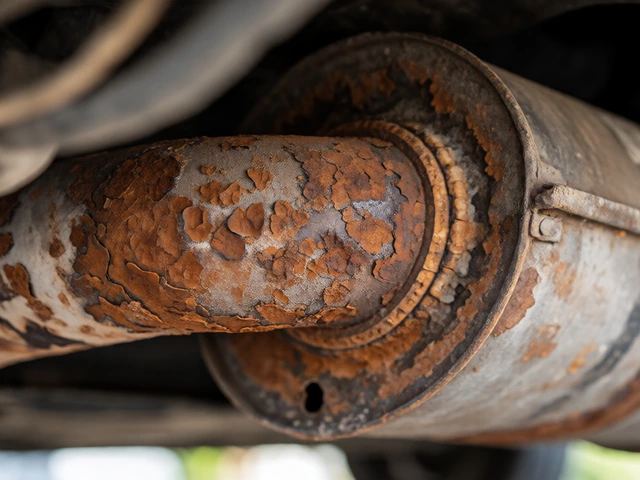
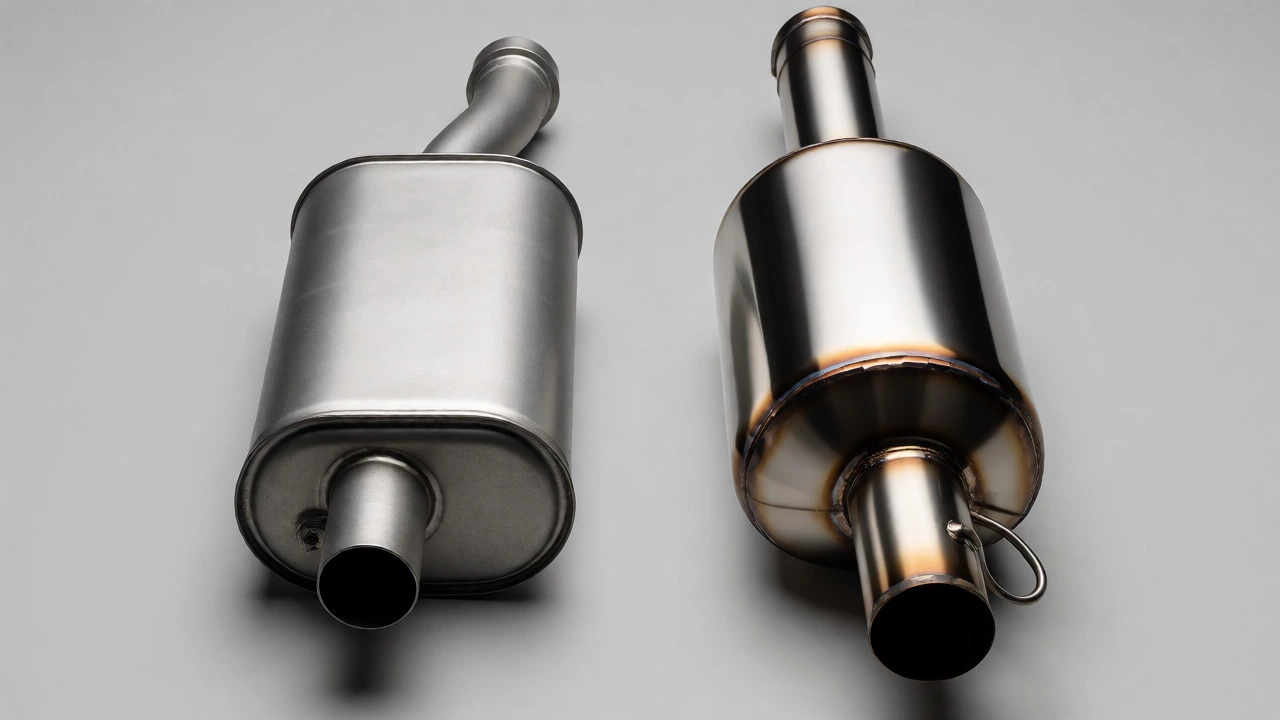
The cheapest exhausts use aluminized steel. It’s affordable but rusts quickly if you live in a snowy area where roads get salted. Stainless steel exhausts cost 30-50% more upfront but last twice as long. If you plan to keep your car for another five years, stainless is usually the smarter financial move. Aluminum tips are mostly cosmetic, so don’t pay extra for them unless you care about looks.
2. Labor Complexity
Replacing a rear muffler might take an hour. Replacing a front pipe near the engine bay could take three hours because you have to remove heat shields and other parts to reach it. Always ask for a breakdown of parts vs. labor. If labor is 70% of the bill, ask if the shop can access the part more easily or if you’re being charged for unnecessary disassembly.
3. Vehicle Type
A Honda Civic exhaust is cheap and easy to find. A BMW X5 or a lifted truck with custom piping? Not so much. Luxury and performance vehicles often require proprietary parts that only fit their specific chassis. These parts are manufactured in smaller quantities, driving up the unit cost.
When to Spend More (and When to Save)
Not every repair requires premium parts. Here’s a simple rule of thumb based on your situation:
- Spend More If: You own the car long-term (5+ years). You live in a region with harsh winters (salt corrosion). Your car has a high-performance engine that relies on precise exhaust flow. You need to pass a strict emissions test (OEM parts are safer bets here).
- Save Money If: You’re selling the car soon. The damage is minor (a loose clamp or small hole). You drive an older economy car where the exhaust doesn’t affect resale value significantly. You can do DIY repairs-buying parts online and installing them yourself can cut costs by 40%.
For example, if you hear a rattling sound but no smoke comes out, it’s likely a broken internal baffle in the muffler. A universal-fit muffler ($80) welded onto your existing pipes ($50 labor) solves this for under $150 total. No need to replace the whole system.
Beware of the "Cheap Fix" Trap
We’ve all seen those quick-lube shops advertising "Mufflers for $99!" Sounds great, right? But read the fine print. Often, that price covers only the cheapest possible part, installed with basic clamps rather than welding. Clamps vibrate loose over time, leading to leaks within months. Then you’re back at the shop paying again.
Welding is stronger and lasts longer. If a shop quotes a low price, ask: "Is this welded or clamped?" If it’s clamped, factor in potential re-repair costs. Conversely, don’t let a dealer scare you into replacing the entire exhaust system if only one section is damaged. Ask for photos of the rust or holes. If the mid-pipe and resonator look solid, leave them alone.
DIY vs. Professional Installation: Is It Worth It?
Can you save money by doing it yourself? Yes, but only if you have the right tools. An angle grinder, penetrating oil (like PB Blaster), and a jack stand set are essential. Exhaust bolts seize due to heat cycles, so removing them without breaking them requires patience and skill.
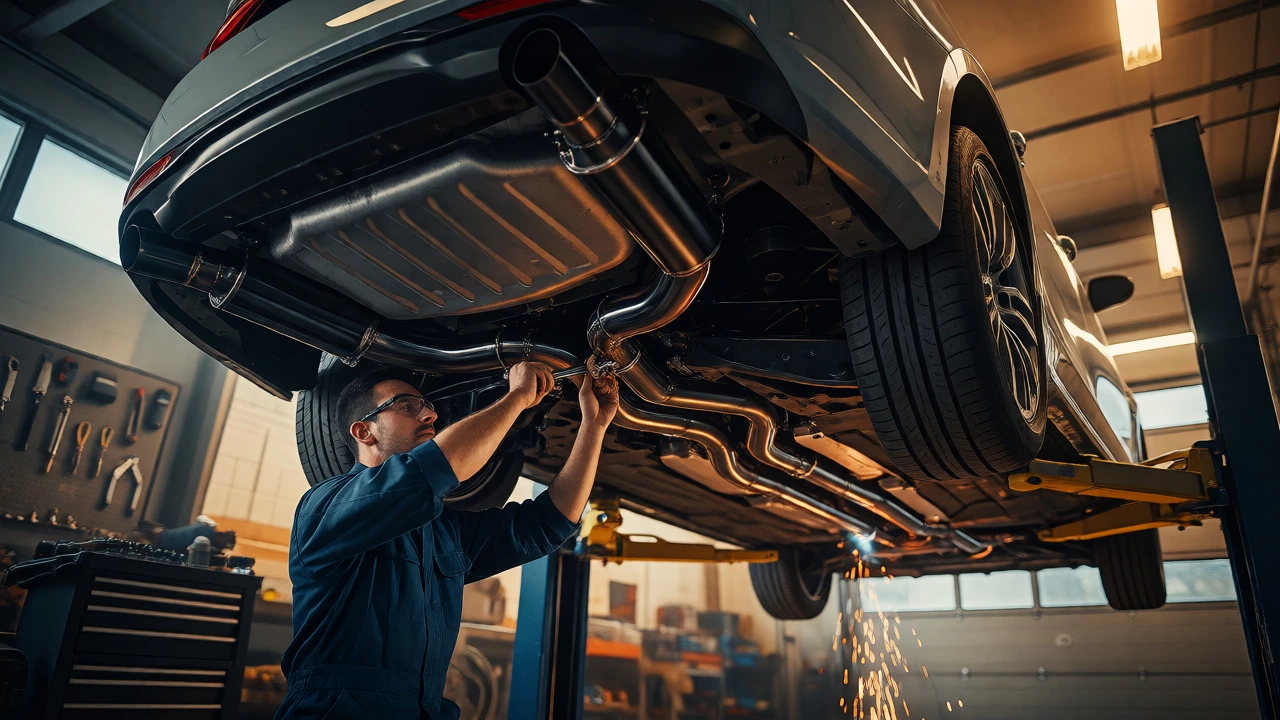
If you’re handy, you can buy a direct-fit exhaust kit online for $300-$600 and install it in an afternoon. Compare that to a $1,200 shop quote. However, if you strip a bolt or crack a flange during removal, you’ll end up calling a tow truck anyway. Weigh your confidence level carefully. For simple muffler swaps, DIY is feasible. For catalytic converters or full system replacements, professional help is usually worth the fee to ensure proper alignment and leak-free seals.
Final Verdict: What’s a Fair Price?
So, how much should you spend? For a standard sedan needing a new muffler and tailpipe, expect to pay between $200 and $400. If you need a catalytic converter, budget $500 to $1,500 depending on whether you go aftermarket or OEM. For a complete system replacement on a regular car, $800 to $1,500 is reasonable.
Get at least two quotes. Check if the shop offers a warranty on both parts and labor-a reputable shop will offer 12 months or 12,000 miles minimum. Remember, the goal isn’t just to silence the noise; it’s to maintain engine efficiency and meet environmental standards. Spending a bit more on durable materials now saves you from repeated headaches later.
How long does an exhaust system last?
Typically, an exhaust system lasts 5 to 10 years or 50,000 to 100,000 miles. Lifespan depends heavily on climate (road salt accelerates rust), driving habits (short trips cause condensation buildup), and material quality (stainless steel lasts longer than aluminized steel).
Is it safe to drive with a broken exhaust?
It depends on the location of the leak. A small hole in the rear muffler is mostly a noise nuisance. However, a leak near the engine manifold can allow toxic carbon monoxide fumes to enter the cabin, which is dangerous. Additionally, a detached pipe can drag on the ground and cause fire hazards or further damage.
Why are catalytic converters so expensive?
Catalytic converters contain precious metals like platinum, palladium, and rhodium, which act as catalysts to convert harmful pollutants into less toxic gases. The market price of these metals fluctuates, and theft rates have increased demand for replacements, driving prices up significantly.
Can I replace just the muffler?
Yes, if the rest of the system (pipes, catalytic converter, resonator) is intact and free of major rust. A mechanic can cut off the old muffler and weld or clamp on a new one. This is a common and cost-effective repair for noise issues.
Does a loud exhaust improve performance?
Not necessarily. While some aftermarket exhausts reduce backpressure slightly, potentially freeing up a few horsepower, many "loud" exhausts are purely cosmetic. In fact, poorly designed straight-pipes can hurt low-end torque. Significant performance gains require matching intake and tuning modifications, not just louder pipes.