Windshield Wiper Size Calculator
Find the precise wiper blade sizes for your vehicle. Most cars require different sizes for driver and passenger sides.
Ever bought a new set of windshield wipers only to find they don’t fit your car? You’re not alone. Thousands of drivers do it every year-grabbing the cheapest pack off the shelf, assuming all wipers are the same. Spoiler: they’re not. Windshield wipers don’t fit all cars. Not even close.
Why Wiper Blades Aren’t One-Size-Fits-All
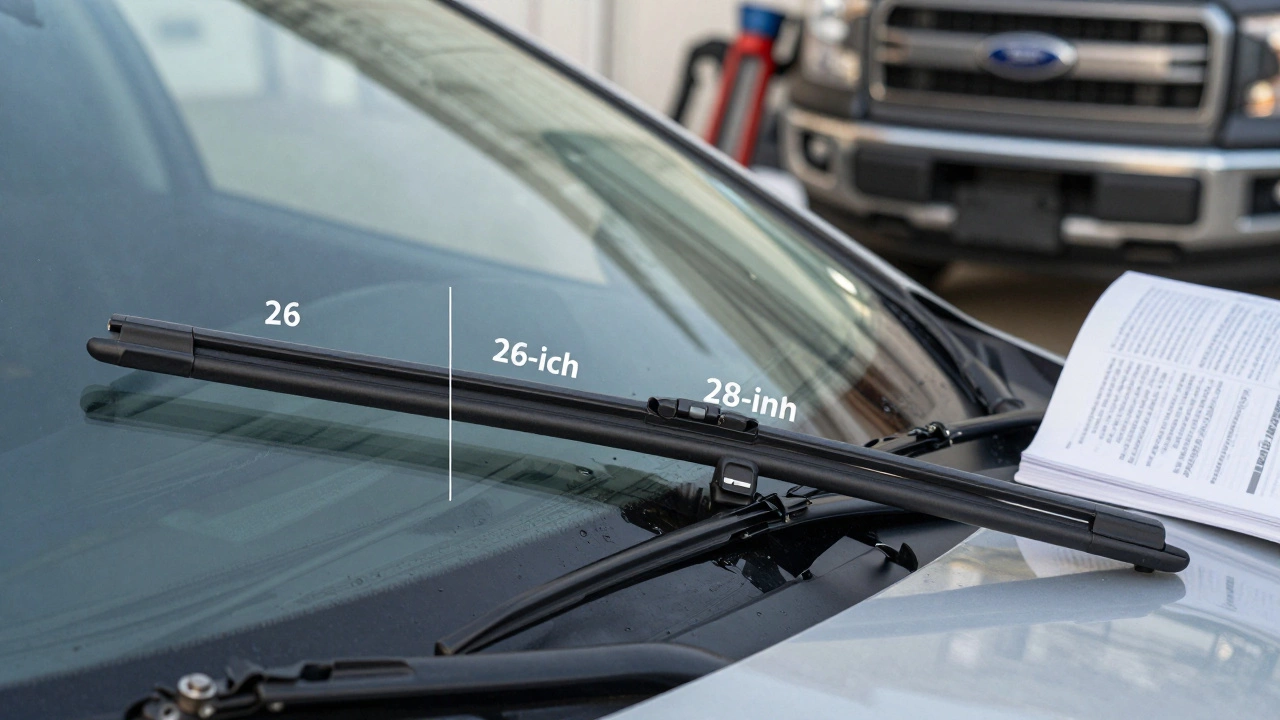
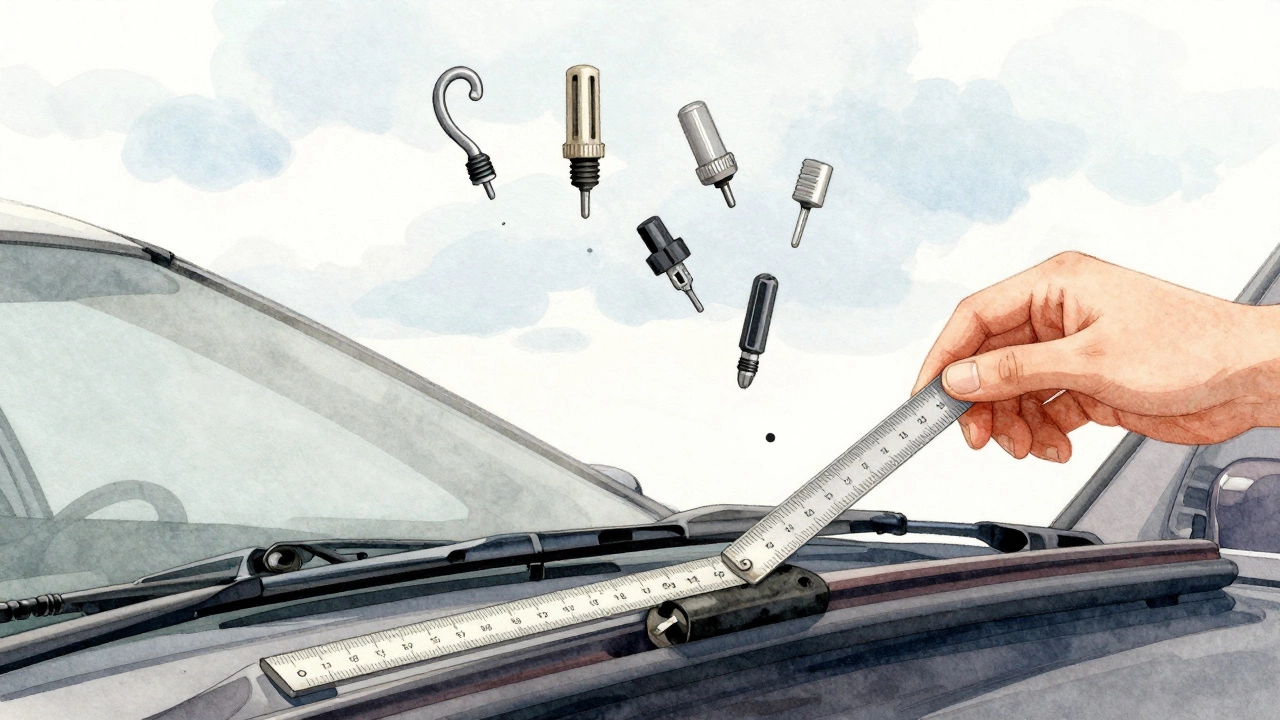
Every car has a unique wiper system. The left and right blades are often different lengths. Some cars use a single blade that swings side to side. Others have a rear wiper, or even a third blade for the rear window. Even the mounting system varies-there are at least six common types of connectors: hook, pin, side-pin, bayonet, flat-blade adapter, and proprietary clips.Take a 2020 Toyota Corolla. It needs a 26-inch driver-side blade and a 16-inch passenger-side blade. A 2023 Ford F-150 uses a 28-inch driver-side and a 22-inch passenger-side. Swap them? They won’t reach the edge of the glass. Install the wrong connector type? The wiper arm won’t lock in place. You’ll end up with a blade that flies off at 60 mph-or worse, doesn’t move at all.
How to Find the Right Wiper Size for Your Car
You don’t need to guess. There are three reliable ways to get the exact size:- Check your owner’s manual. Most manuals list wiper blade sizes in the maintenance section. Look under “Windshield Wipers” or “Maintenance Specifications.”
- Measure your current blades. Pull off the old wiper and lay it flat. Measure from the end of the metal arm to the tip of the rubber. Round to the nearest inch. Don’t measure the rubber alone-include the metal connector.
- Use an online wiper size guide. Websites like AutoZone, Advance Auto Parts, and Rain-X have free lookup tools. Just enter your car’s year, make, and model. They’ll show you the exact sizes for front and rear blades.
Pro tip: Don’t trust the box. Wiper packages often say “fits most cars.” That’s marketing speak. It means they fit a few common models-not yours.
Wiper Blade Types and Their Compatibility
Not only do sizes vary, but so do the types of blades. There are three main kinds:- Conventional blades-the old-school style with a metal frame and multiple pressure points. Common on older cars and budget replacements.
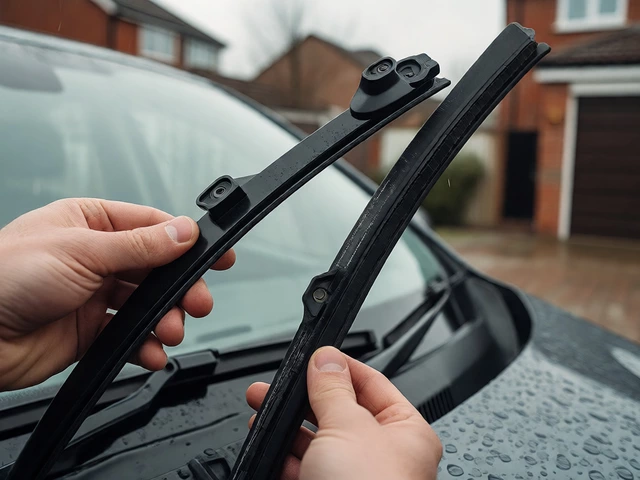
- Beam blades-a single, curved spine with no visible frame. Better aerodynamics, more even pressure, and less prone to lifting in wind. Used on most new cars since 2015.
- Hybrid blades-a mix of beam and conventional. Reinforced frame with a streamlined cover. Offers durability and performance.
Most modern cars require beam or hybrid blades. If you install a conventional blade on a car designed for beam blades, it might not sit flush. That leads to streaking, chattering, or even damage to the windshield.
What Happens When You Use the Wrong Wiper
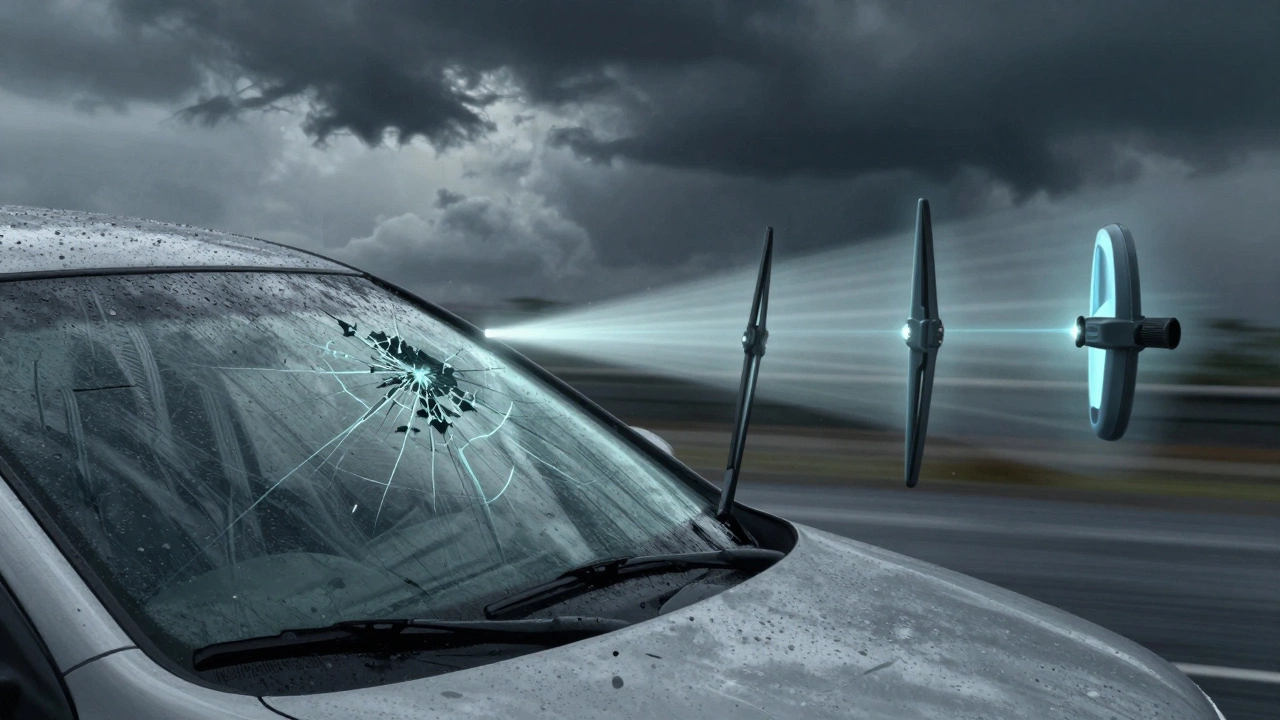
Using the wrong size or type isn’t just annoying-it’s dangerous. Here’s what can go wrong:- Streaking and smearing-blades don’t make full contact with the glass. Rain or snow leaves blurry patches.
- Chattering-the blade jumps or vibrates across the glass. Sounds like a squeaky door, but it’s your vision going blurry at 70 mph.
- Windshield scratches-a misaligned blade can drag dirt or debris across the glass. A single scratch from a bad wiper can cost $300 to repair.
- Wiper arm damage-if the blade doesn’t fit the connector properly, the arm can bend or break under stress.
- Reduced visibility in storms-you’re not just inconvenienced. You’re at risk.
A 2022 study by the National Highway Traffic Safety Administration found that 12% of weather-related crashes involved drivers with poor windshield visibility. In many of those cases, worn or mismatched wipers were a contributing factor.
How to Install Wipers Correctly
Once you’ve got the right blades, installation is simple-but only if you know how:- Turn off the car. Never install wipers while the engine is running. The motor can activate unexpectedly.
- Lift the wiper arm away from the glass. Gently pull it up until it locks in place. Don’t let it snap back.
- Press the release tab. On most blades, there’s a small plastic tab on the connector. Press it while sliding the old blade off.
- Slide the new blade on. Align the connector with the wiper arm. Push until you hear a click. Give it a gentle tug to make sure it’s locked.
- Lower the arm slowly. Let it rest back on the glass. Don’t drop it.
Test them with a quick spray of washer fluid. If they’re quiet and clean the glass completely, you’re good. If they chatter or miss spots, double-check the fit.
When to Replace Your Wipers
Wipers don’t last forever. Even if they look fine, they degrade over time. Rubber hardens, cracks form, and the frame bends. Most manufacturers recommend replacing them every 6 to 12 months.Signs it’s time for new blades:
- Streaks or smears when you use the washer fluid
- Chattering or skipping across the glass
- Cracked or split rubber
- Missing pieces of rubber
- Wipers lift off the glass in high wind
Don’t wait until they fail in a downpour. Replace them in the spring or fall-before the rainy or snowy season hits.
What About Universal Wiper Blades?
You’ll see ads for “universal” or “one-size-fits-all” wipers. They usually come with cut-to-fit rubber strips and multiple adapters. They can work in a pinch, but they’re not ideal.Universal blades often:
- Don’t seal properly against curved windshields
- Have inconsistent pressure distribution
- Are louder and less durable
- Require extra setup time
If you’re driving in heavy rain, snow, or high winds, stick with manufacturer-recommended blades. They’re engineered for your car’s exact windshield shape and wiper arm pressure.
Final Advice: Don’t Guess, Check
It takes less than 5 minutes to look up your wiper size. Use your owner’s manual, measure the old blade, or visit a parts store’s online tool. It’s the difference between seeing clearly and risking your safety.Wiper blades are one of the cheapest and easiest parts to replace. But they’re also one of the most overlooked. A $15 pair of correctly sized blades can save you from a $2,000 windshield repair-or worse.
Can I use the same wiper blade on both sides of my car?
Usually not. Most cars have different-sized blades for the driver and passenger sides. Even if they look similar, the lengths are often mismatched. Always check your owner’s manual or use a wiper size lookup tool to confirm.
Do I need to replace both wiper blades at the same time?
Yes. Even if only one is worn out, the other is likely close behind. Using mismatched blades causes uneven wiping, streaking, and extra strain on the wiper motor. Replace them as a pair for consistent performance.
Are expensive wiper blades worth it?
If you drive in heavy rain, snow, or high winds, yes. Premium blades like Bosch Icon, Rain-X Latitude, or Michelin Stealth have better rubber compounds, aerodynamic designs, and longer life. Budget blades may work for a few months, but they fade faster and perform poorly in extreme weather.
Can I install wiper blades myself?
Absolutely. Wiper blade replacement takes under 10 minutes and requires no tools. Most blades snap on with a simple click. Follow the instructions on the box, and you’ll be fine. If you’re unsure, watch a 2-minute YouTube video for your exact car model.
Why do some cars have a rear wiper and others don’t?
Rear wipers are common on SUVs, hatchbacks, and wagons because their steep rear windows trap dirt and water. Sedans and coupes usually don’t need them-the shape of the glass lets water flow off naturally. Always check if your car has a rear wiper before buying blades.