Windshield Wiper Health Calculator
Check Your Wipers Now
This tool helps you determine if you should replace both windshield wipers based on safety factors from the article.
Your Windshield Safety Assessment
Low Risk
Safety Tips
According to the article: "Wiper blades are your first line of defense in bad weather. They don't just improve visibility—they save lives."
Always replace wipers in pairs. Even if one looks okay, the other is likely failing. Replacing only one creates uneven wiping, reduces visibility, and can scratch your windshield.
Ever stared at your windshield wipers and wondered if you really need to buy two? You’re not alone. Many people think one worn-out blade is enough to justify a replacement-and maybe they can just swap that one and save a few bucks. But here’s the truth: windshield wipers almost always need to be replaced in pairs. Not because manufacturers want you to spend more. Not because it’s a trick. But because driving safely demands it.
Why One Wiper Isn’t Enough
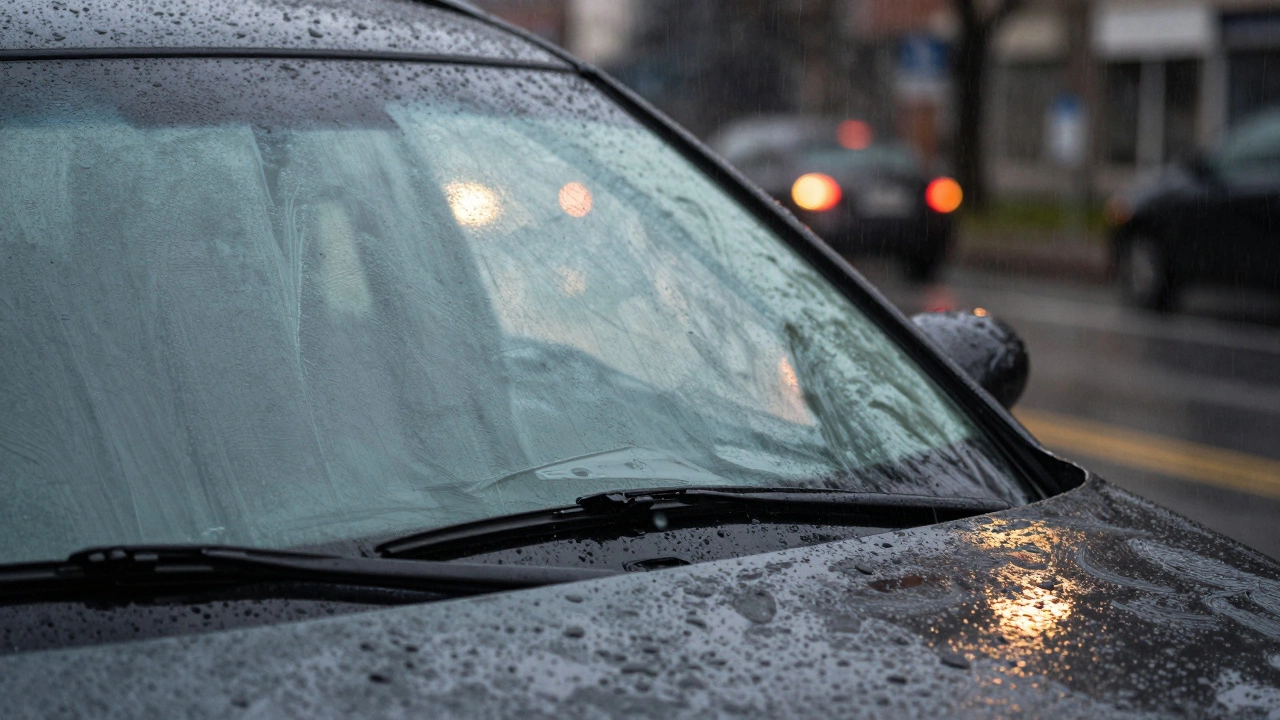
Imagine driving in heavy rain. One wiper is new, clean, and clears the glass perfectly. The other is old, cracked, and leaves streaks. What happens? Your vision becomes uneven. One side of the windshield is clear. The other is blurry, smeared, and distracting. That’s not just annoying-it’s dangerous. Your brain expects both sides to look the same. When they don’t, your reaction time slows. Studies show drivers with uneven wiper performance take 0.5 to 1.2 seconds longer to respond to hazards on the blurred side. That’s enough time to hit a pedestrian, swerve into another lane, or miss a stop sign.Even if only one blade is visibly worn, the other is likely close behind. Wiper blades degrade at similar rates. Sun exposure, temperature swings, road salt, and dust wear them down evenly. If one’s failing after three years, the other isn’t magically in perfect shape. It’s just a few months behind.
How Wiper Blades Degrade Over Time
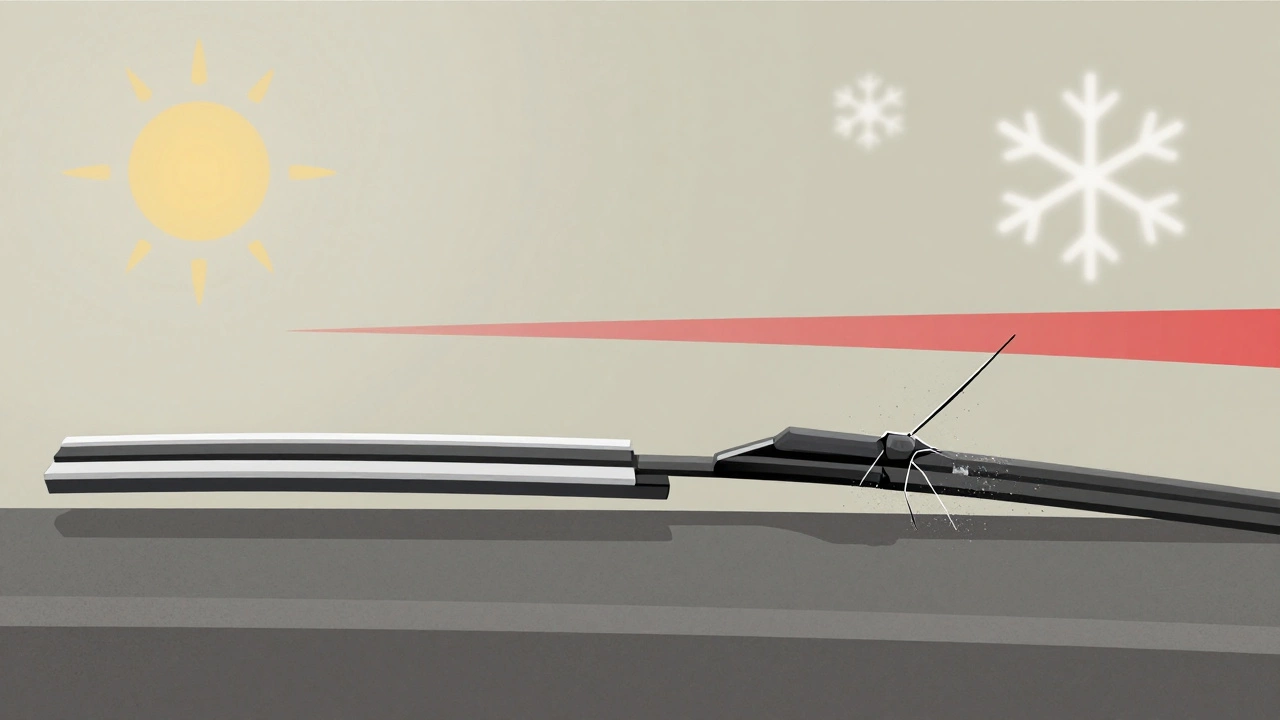
Most people think wiper blades last forever until they stop working completely. That’s not how it works. Degradation is gradual and often invisible until it’s too late.- Rubber hardens: UV rays from the sun make the rubber brittle. After 6-12 months, it loses flexibility and starts skipping across the glass.
- Frame warps: Metal frames expand and contract with heat. Over time, they lose their perfect curve, pressing unevenly on the windshield.
- Contaminants build up: Tree sap, bug residue, and road grime stick to the rubber edge. Even after cleaning, microscopic damage remains.
- Spring tension weakens: The springs that hold the blade against the glass lose strength. You won’t feel it, but the pressure drops by 20-30% after two years.
By the time you notice streaking or chattering, the damage is already done. Replacing only one blade means you’re still driving with compromised performance on the other side. You’re not saving money-you’re risking safety.
What Happens When You Replace Just One
Some drivers replace just one wiper because they’re trying to stretch a budget. Maybe they think the other blade still looks fine. But here’s what actually happens:- Uneven wiping: The new blade presses harder than the old one. This causes the old blade to bounce or lift, creating more streaks.
- Scratches on the windshield: A worn blade often has tiny cracks or debris embedded. When paired with a new one, it drags across the glass and leaves fine scratches-permanent damage you can’t undo.
- Motor strain: The wiper motor works harder to move two blades with mismatched resistance. Over time, this can wear out the motor or fuse.
- False confidence: You think you’re safe because one side is clear. But your peripheral vision is still compromised. You don’t realize how much you’re missing.
A 2023 study by the Auto Care Association found that 68% of drivers who replaced only one wiper reported increased glare and reduced visibility within 30 days. Nearly 1 in 5 said they’d nearly had an accident because of poor wiping performance.
When You Might Get Away With One
There’s one rare exception: if you’re replacing a wiper blade that’s been damaged by an accident or physical impact-like a tree branch or a car wash mishap-and the other blade is brand new (under 6 months old). In that case, replacing just the damaged one makes sense.But even then, check the other blade closely. Look for:
- Any cracking along the rubber edge
- Streaking during light rain
- Chattering or skipping
- Visible gaps between the blade and glass
If you see any of these signs, replace both. Don’t gamble.
How Often Should You Replace Windshield Wipers?
Most manufacturers recommend replacing wiper blades every 6 to 12 months. But that’s just a baseline. Your environment matters more.- Hot, sunny climates (like Arizona or Florida): Replace every 6 months. UV damage is brutal.
- Cold, snowy regions (like Minnesota or Canada): Replace every 8-10 months. Ice and salt accelerate rubber wear.
- Coastal areas: Salt spray corrodes frames and gums up rubber. Replace every 8 months.
- Urban driving: Pollution, exhaust, and road grime build up fast. Check every 6 months.
Don’t wait for the rain to start. Check your blades in early spring and early fall. A quick test: spray water on the windshield and run the wipers. If they leave smears, chatter, or lift off the glass, it’s time.
What to Look for When Buying New Wipers
Not all wiper blades are the same. The cheapest ones might save you $5, but they’ll cost you in performance.- Beam-style blades: These have a frameless design that presses evenly across the glass. They’re more durable and quieter. Best for most cars.
- Traditional framed blades: Older design. More prone to warping. Only choose if your car doesn’t support beam blades.
- Hybrid blades: Combine frame and beam features. Good balance of price and performance.
- Winter blades: Encased in rubber to prevent ice buildup. Essential if you get snow.
Match the size exactly. Your owner’s manual lists the correct length for each side. Front wipers are often different sizes. Rear wipers (on SUVs or hatchbacks) are usually smaller and separate. Don’t assume they’re the same.
Cost Breakdown: One vs. Two
Let’s say you buy a standard beam-style wiper blade for $18 each.- Replace one: $18 + risk of damage, reduced visibility, potential accident.
- Replace both: $36 + peace of mind, even wiping, longer windshield life, better safety.
That’s less than $3 per month over a year. Compare that to the cost of a single traffic ticket, a cracked windshield repair ($200+), or worse-medical bills from a preventable crash.
How to Install Them Yourself
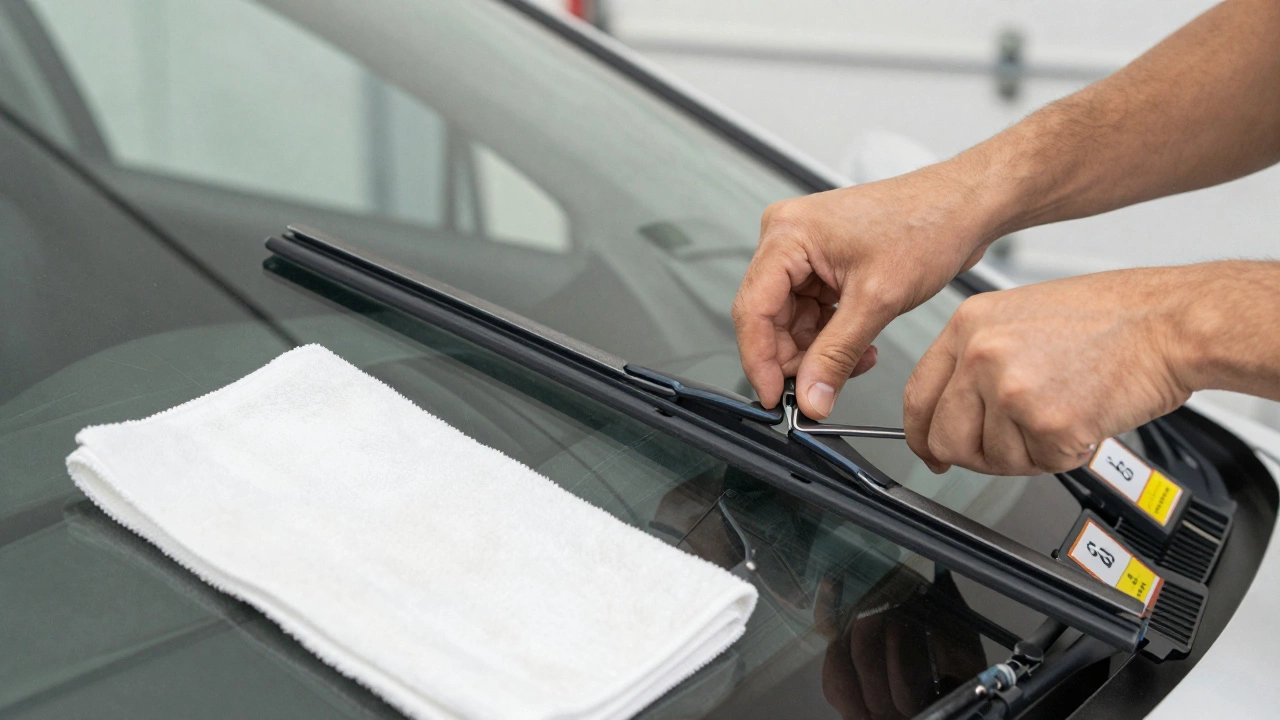
Replacing wipers takes 10 minutes. No tools needed.- Pull the wiper arm away from the windshield until it locks in place.
- Find the release tab on the old blade and press it while sliding the blade off the hook.
- Align the new blade with the hook and slide it on until you hear a click.
- Gently lower the arm back onto the windshield.
- Turn on the wipers and spray washer fluid to test.
Pro tip: Place a towel on the windshield before lowering the arm. It prevents scratches if the blade slips.
Final Verdict: Always Replace in Pairs
Buying two windshield wipers isn’t a luxury. It’s basic car maintenance. You wouldn’t replace only one brake pad and expect to stop safely. You wouldn’t change only one tire. Wiper blades are no different.They’re your first line of defense in bad weather. They don’t just improve visibility-they save lives. Don’t risk it. Replace both. Even if one still looks okay. Even if you’re tight on cash. $36 is the cheapest safety feature you’ll ever buy.
Do I need to replace both windshield wipers at the same time?
Yes, you should always replace both windshield wipers together. Even if only one looks worn, the other is likely close to failing. Replacing just one creates uneven wiping, reduces visibility, and can scratch your windshield. Safety isn’t optional-pairing them ensures consistent performance.
Can I use different brands for each wiper blade?
It’s not recommended. Different brands have different rubber formulas, frame tensions, and mounting designs. Mixing them can cause uneven pressure, chattering, or poor contact with the glass. Stick with the same brand and model for both blades to ensure smooth, consistent wiping.
Why do my new wipers still streak?
Streaking after installing new blades usually means your windshield is dirty or scratched. Clean the glass with rubbing alcohol and a microfiber cloth to remove grease and residue. If streaking continues, the wiper arms may be bent or the spring tension is weak. In rare cases, the blade size might be wrong. Double-check your owner’s manual for exact dimensions.
How do I know if my wiper blades are worn out?
Look for these signs: streaking across the glass, chattering or skipping sounds, rubber cracking or peeling, smearing after using washer fluid, or the blade lifting off the windshield during use. If you notice any of these, replace both blades-even if one seems fine.
Are expensive wiper blades worth it?
Yes, if you drive often in rain, snow, or sunny conditions. Premium blades (like Bosch Icon or Rain-X Latitude) use advanced rubber compounds and aerodynamic designs that last longer, wipe quieter, and resist freezing. Cheaper blades may cost half as much but wear out faster and perform poorly in extreme weather. For safety, it’s better to invest in quality.
Can I replace just the rubber insert instead of the whole blade?
Some older wiper models allow you to replace just the rubber insert, which saves money. But most modern blades are designed as single units. Even if your blade accepts inserts, the metal frame may be warped or worn. Replacing the entire blade ensures full performance. For safety and reliability, it’s better to replace the whole unit.
If you drive in any kind of weather, your windshield wipers are more important than you think. They’re not just accessories-they’re critical safety equipment. Don’t wait for a storm to realize you made the wrong choice. Replace both blades now. It’s the smartest $36 you’ll spend on your car this year.