Replacing a clutch isn’t like changing your oil. You can’t just grab the first one you see at the auto parts store and call it a day. If you pick the wrong clutch kit, you’ll end up with a pedal that feels like a brick, grinding gears, or worse - a clutch that fails before you even make it home. So how do you actually know what clutch kit to buy? It’s not magic. It’s about matching the right parts to your car, your driving, and your budget.
Start with Your Car’s Exact Specs
You can’t pick a clutch kit without knowing your vehicle inside and out. That means you need the year, make, model, and trim level. But that’s not enough. You also need the transmission type - manual or automatic - and the engine size. A 2018 Honda Civic with a 2.0L engine and a 6-speed manual needs a completely different clutch than the same model with a CVT. Even the same model year can have different clutch setups depending on whether it’s a base model or a sport package.
Look up your VIN. Most OEM parts websites let you enter your VIN and pull up the exact clutch kit that came from the factory. That’s your baseline. If you’re replacing the clutch because it’s worn out, you’re usually safest sticking with the factory-spec part. But if you’re upgrading, you need to know what you’re upgrading from.
What Kind of Driver Are You?
Clutch kits aren’t one-size-fits-all. They’re built for different driving styles. Think of them like tires: a street tire, a track tire, and a mud tire all serve different purposes. Here’s how to match your clutch to your habits:
- Daily driver - You drive to work, run errands, and maybe take a weekend road trip. You want smooth engagement, low pedal effort, and quiet operation. Go for a standard organic clutch. These are the same as the factory part. They last 80,000-100,000 miles and don’t chatter or vibrate.
- Performance driver - You like spirited driving, occasional track days, or towing a trailer. You need more grip and heat resistance. A ceramic or metallic clutch is better. These handle more torque and don’t slip under hard acceleration. But they’re harsher at low speeds. You’ll feel a bit of chatter when pulling away from a stop.
- Street racer or drag enthusiast - You launch hard, rev high, and want maximum grip. You need a racing clutch with multi-plate discs and heavy-duty pressure plates. These are not for daily use. They’re loud, hard to modulate, and wear out fast - maybe 10,000 miles or less.
Most people who upgrade to a performance clutch regret it because they didn’t realize how rough it feels in traffic. If you’re not sure, stick with the factory type. It’s not sexy, but it works.
Know What’s Inside the Kit
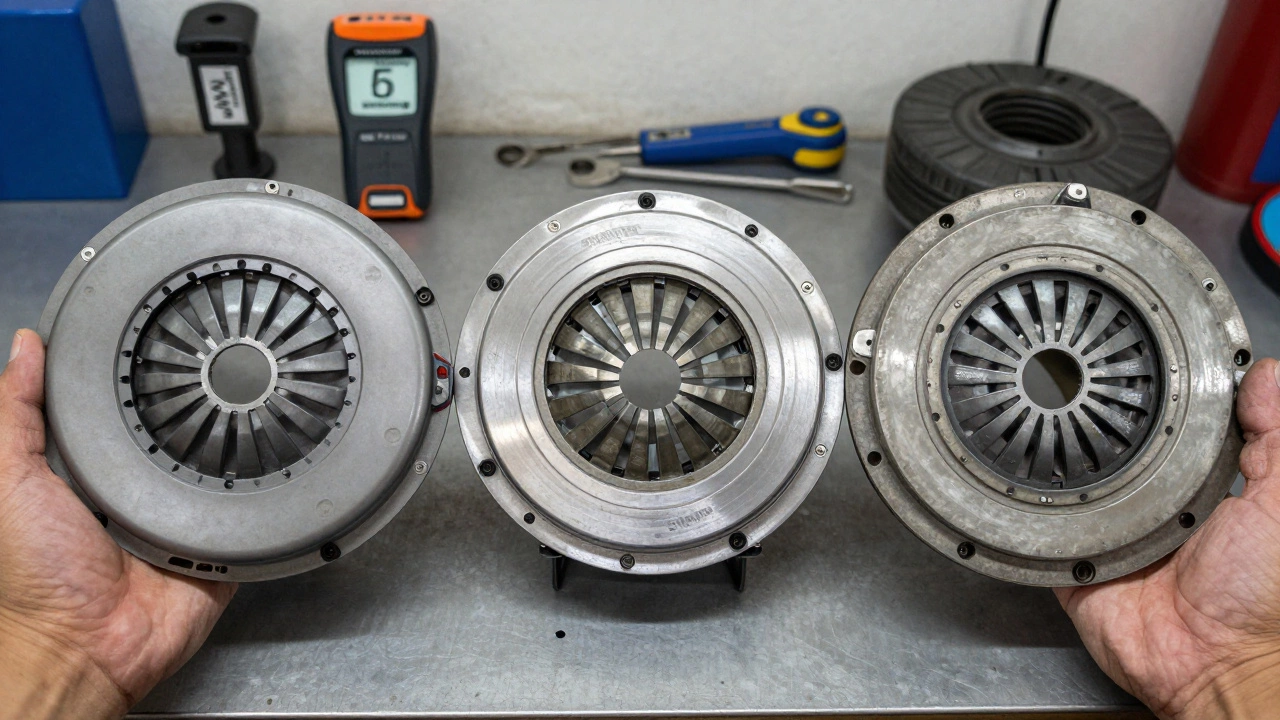
A clutch kit isn’t just the disc. It’s a package. A full clutch kit includes:
- Clutch disc (the friction material that contacts the flywheel)
- Pressure plate (the spring-loaded clamp that holds the disc)
- Release bearing (also called the throw-out bearing)
- Alignment tool (to center the disc during installation)
- Sometimes a pilot bearing or bushing (for the input shaft)
Some cheaper kits leave out the release bearing or alignment tool. Don’t fall for it. Replacing the release bearing is almost always necessary - it’s a wear item just like the clutch. If you skip it, you’ll be back in the shop in six months.
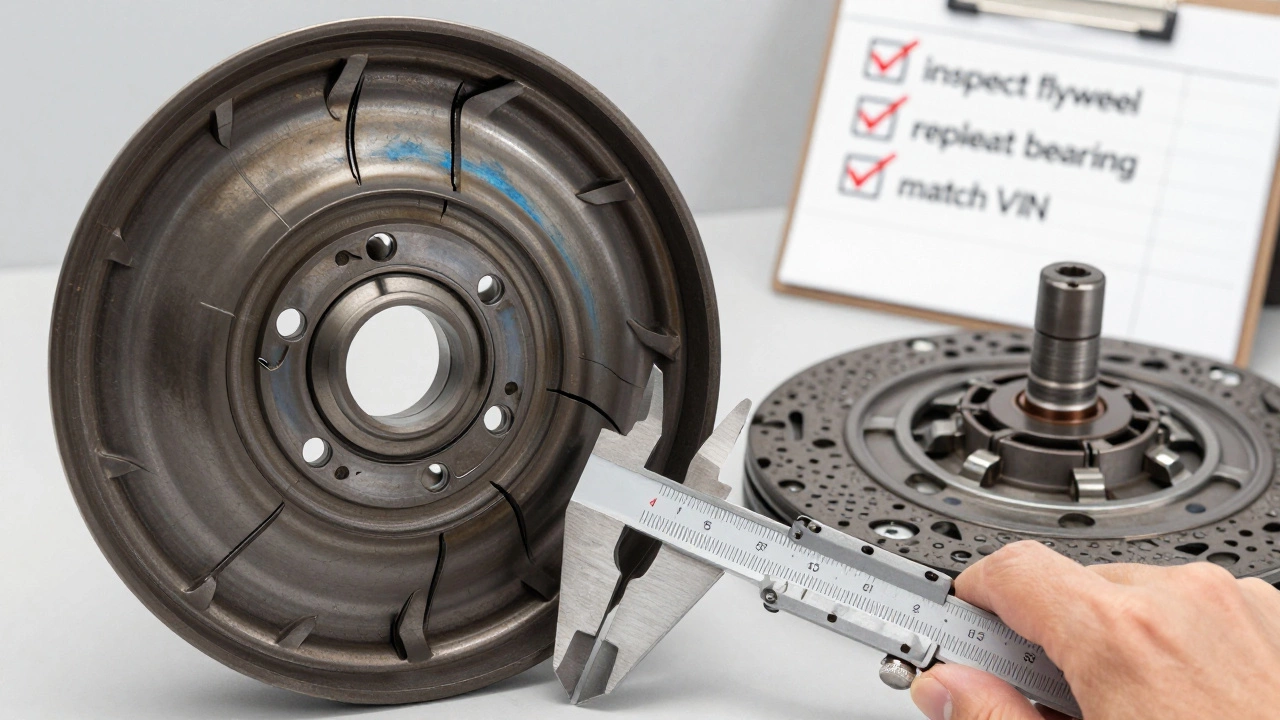
Also check if the kit includes a new flywheel. Most kits don’t. If your flywheel is scored, cracked, or warped, you need to resurface or replace it. A bad flywheel ruins a new clutch in days. Look for signs of heat damage - bluing, deep grooves, or cracks. If you’re not sure, take it to a shop. A mechanic can check it in minutes.

Brand Matters - But Not How You Think
There are dozens of clutch brands out there. Some are OEM suppliers. Others are performance aftermarket. Here’s what to look for:
- OEM brands - Sachs, Luk, Aisin, Valeo. These make the parts for Toyota, VW, Ford, etc. They’re reliable, quiet, and designed for longevity. Best for daily drivers.
- Performance brands - Centerforce, Exedy, SPEC, Clutchmasters. These build clutches for racing and tuning. They’re durable under stress but often noisier and harder to drive in traffic.
- Generic no-name kits - Avoid these. They’re cheap, but they use low-grade friction material and thin pressure plates. They fail early and can damage your flywheel or transmission.
Don’t assume a name-brand clutch is better just because it’s expensive. A $400 Sachs clutch for a daily driver is better than a $600 racing clutch that’s too aggressive for your needs.
Check the Warranty and Return Policy
Clutch kits are expensive. A good one costs $300-$800. If something goes wrong, you want protection. Look for:
- A warranty of at least 12 months or 12,000 miles
- A clear return policy - some sellers won’t take back a used clutch, even if it’s defective
- Proof of purchase and installation records - some warranties require proof that the clutch was installed by a professional
Some online retailers sell used or refurbished clutches as new. Read the fine print. If it says "refurbished" or "reconditioned," it’s not new. And if the price seems too good to be true, it probably is.
What to Avoid
Here are the biggest mistakes people make when buying a clutch kit:
- Buying based on price alone - A $150 kit might save you money now, but you’ll pay twice when it fails.
- Ignoring the flywheel - A worn flywheel will destroy a new clutch. Always inspect it.
- Choosing a performance clutch for daily use - You’ll hate the pedal feel and the noise.
- Not replacing the release bearing - It’s cheap and easy to replace while the transmission is out.
- Buying from unverified sellers - Amazon, eBay, and random online shops often sell fake or counterfeit parts.
Stick to reputable auto parts stores like RockAuto, NAPA, or Summit Racing. They have real product photos, detailed specs, and customer reviews with real mileage data.
Final Checklist Before You Buy
Before you click "Add to Cart," run through this quick checklist:
- Do I have the correct year, make, model, engine, and transmission type?
- Am I replacing the clutch because of wear - or because I want more performance?
- Does the kit include the pressure plate, disc, release bearing, and alignment tool?
- Is the flywheel in good condition? If not, will I resurface or replace it?
- Is the brand known for reliability (Sachs, Luk, Aisin) or performance (Centerforce, SPEC)?
- Does the seller offer a warranty and easy returns?
- Are the reviews from real owners who drove it for 10,000+ miles?
If you answered "yes" to all of these, you’re ready to buy. If even one answer is "no," stop and research more.
What Happens If You Get It Wrong?
Choosing the wrong clutch kit doesn’t just cost money - it costs time, stress, and sometimes transmission damage. A clutch that’s too aggressive for daily driving will make your commute miserable. A clutch that’s too weak for your engine will slip under load and overheat. And if you install a clutch without replacing the release bearing, you’ll hear a grinding noise within weeks.
One driver bought a racing clutch for his 2015 Toyota Corolla, thinking it would "make it faster." He ended up with a pedal that required two feet to press. He couldn’t drive in stop-and-go traffic without burning out the clutch. He had to replace it again - this time with the factory part - and paid $1,200 in labor and parts.
Don’t be that person. Know your car. Know your driving. Choose wisely.
Can I use a clutch kit from a different car model?
No. Clutch kits are designed for specific engine torque, transmission input shaft size, and flywheel diameter. Even cars from the same brand with similar engines often have different clutch setups. Using the wrong kit can damage your transmission, cause slippage, or make the pedal impossible to operate. Always match the part number to your VIN.
Do I need to replace the flywheel when replacing the clutch?
Not always, but you should inspect it. If the flywheel has deep grooves, cracks, or bluing (a heat discoloration), it needs to be resurfaced or replaced. A damaged flywheel will ruin a new clutch within a few hundred miles. Most mechanics recommend resurfacing the flywheel during a clutch job - it’s cheaper than replacing the clutch twice.
How long does a clutch kit last?
A standard organic clutch lasts 80,000 to 100,000 miles under normal driving. Performance clutches (ceramic or metallic) last 30,000 to 60,000 miles because they’re designed for high heat and torque. Racing clutches may only last 10,000 miles. Driving style matters - aggressive launches and riding the clutch shorten lifespan dramatically.
Is it worth buying a performance clutch for a daily driver?
Almost never. Performance clutches are designed for high torque, racing, or towing. They have a harsh engagement, require more pedal pressure, and chatter at low speeds. For a daily driver, they make commuting unpleasant and can cause premature wear on the transmission. Stick with the factory-spec clutch unless you’re modifying your engine for more power.
What’s the difference between organic, ceramic, and metallic clutch discs?
Organic discs are made from fiber and resin - smooth, quiet, and ideal for daily driving. Ceramic discs handle more heat and torque, making them good for light performance use, but they’re noisier and less forgiving. Metallic discs use steel fibers - they grip extremely hard, last longer under stress, but are very harsh at low speeds and require a strong pedal effort. Choose based on how you drive, not what sounds cool.