Spark Plug Savings Calculator
Estimate Your Savings
Calculate potential fuel savings after replacing worn spark plugs based on 2024 industry studies.
Your Savings
Based on 2024 Auto Care Association studies showing 7-30% fuel efficiency improvements. Typical plug replacement cost: $20-$60 parts + $100-$200 labor.
Ever noticed your car sputtering on cold mornings, or feeling like it’s lost a bit of pep after a few years? You might blame the fuel, the battery, or even the weather-but the real culprit could be hiding in your engine: worn-out spark plugs.
Spark plugs aren’t just small parts-they’re the heartbeat of your engine
Every time you turn the key, your engine relies on spark plugs to ignite the air-fuel mixture inside the cylinders. That tiny electric spark-lasting less than a millisecond-is what makes your car move. Without it, nothing happens. No spark, no combustion, no motion.
Modern spark plugs are designed to last 30,000 to 100,000 miles, depending on the material. Copper plugs wear out faster, around 30,000 miles. Platinum and iridium plugs? They can go 60,000 to 100,000 miles. But “last” doesn’t mean “perform perfectly.” Even before they fail completely, they start to degrade.
Here’s what happens when spark plugs get old:
- Ignition becomes inconsistent-some cylinders fire weakly or not at all
- Engine misfires, especially under load or at idle
- Fuel efficiency drops by 7% to 30%
- Hard starts, especially in cold weather
- Increased emissions-your car might fail an emissions test
A 2023 study by the Society of Automotive Engineers found that vehicles with spark plugs past 80,000 miles showed a measurable drop in torque output-up to 12%-even when no check engine light was on. That’s not a small difference. That’s like driving a car with one cylinder missing.
Not all spark plugs are created equal
There’s a reason automakers specify certain types of spark plugs for each engine. It’s not just about cost-it’s about performance and longevity.
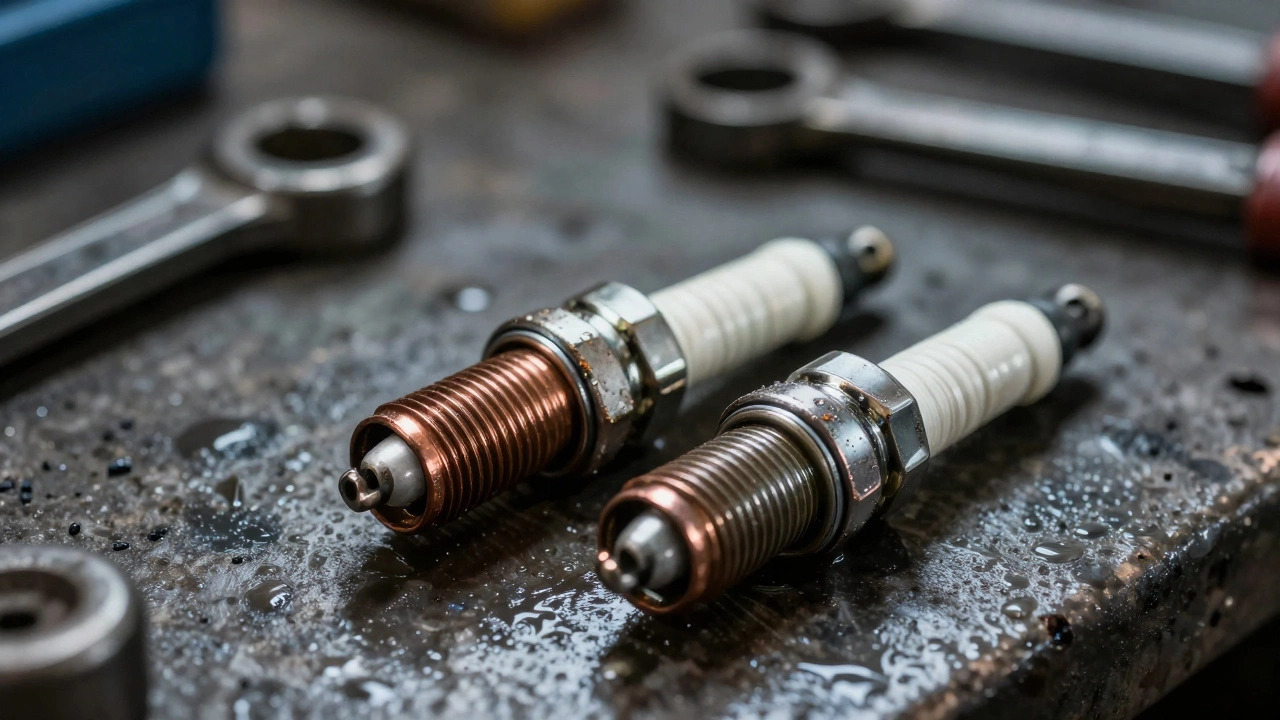
Copper spark plugs are the cheapest. They conduct heat well, which helps prevent overheating. But they wear out fast. You’ll find them in older cars or budget models. They’re fine for short-term use, but if you want reliability, don’t rely on them long-term.
Platinum plugs last longer and resist fouling better than copper. They’re a solid upgrade for daily drivers. Most manufacturers switched to platinum in the 2000s for a reason.
Iridium plugs are the gold standard. They have a finer electrode, which means they require less voltage to spark. That translates to better ignition, smoother idle, and improved throttle response. They’re more expensive upfront, but they can last up to 120,000 miles in ideal conditions.
Using the wrong type? That’s a mistake. Installing copper plugs in an engine designed for iridium can cause misfires and damage the ignition coils. Always check your owner’s manual-or look up the correct part number for your make, model, and year.
What happens if you ignore worn spark plugs?
Some drivers wait until the engine light comes on. Others wait until the car won’t start. Both are too late.
Continuing to drive with bad spark plugs doesn’t just hurt performance-it can damage other parts:
- Ignition coils work harder to fire weak plugs, leading to premature failure. Replacing a coil costs $150-$300 per unit.
- Catalytic converters can overheat from unburned fuel entering the exhaust. A new catalytic converter? That’s $1,000+.
- Engine cylinders can develop carbon buildup from incomplete combustion, leading to compression loss.
One mechanic in Ohio reported fixing 17 catalytic converters in six months-all linked to neglected spark plugs. None of those drivers had any idea their spark plugs were the root cause.
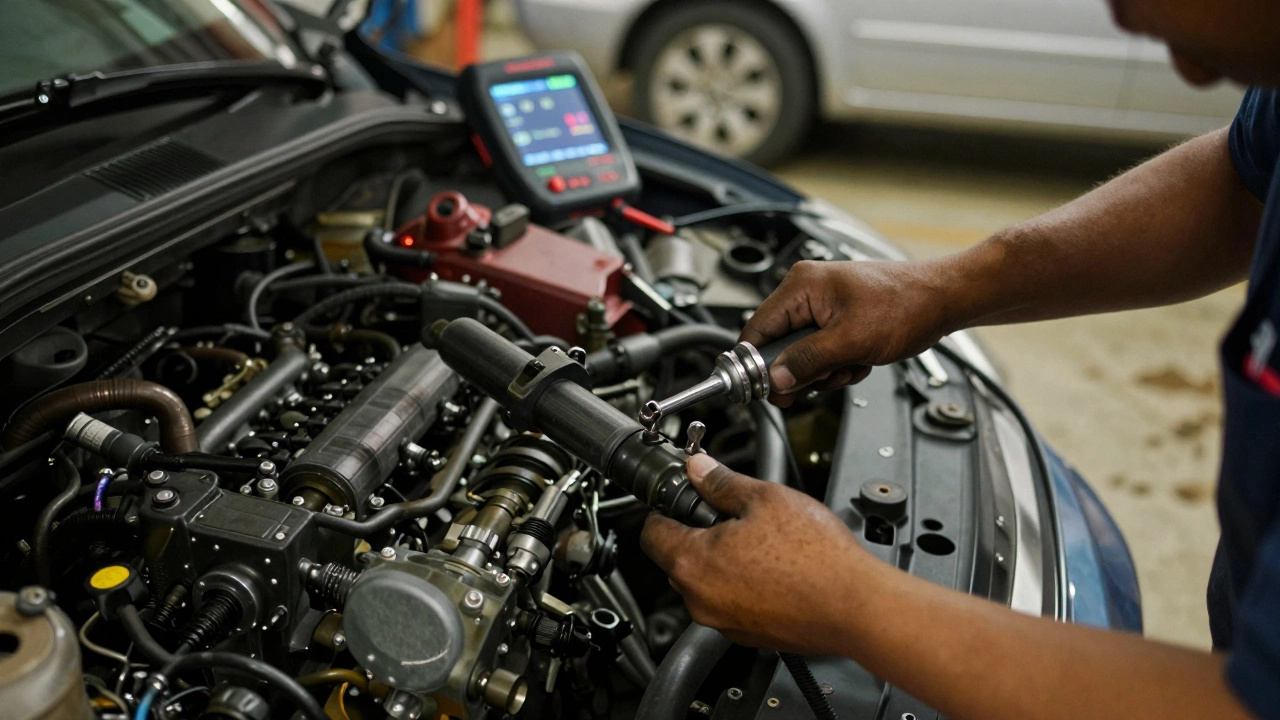
Real-world impact: Does replacing spark plugs actually help?
Yes. And not just a little.
A 2024 test by Car and Driver compared a 2019 Honda Civic with 95,000 miles on original iridium plugs versus the same car with brand-new iridium plugs. Results:
- 0-60 mph time improved from 9.8 seconds to 9.1 seconds
- City fuel economy jumped from 28 mpg to 31 mpg
- Idle smoothness improved noticeably-no more shaking at stoplights
- Throttle response felt crisper, especially when accelerating from low speeds
That’s a 10% performance gain from replacing a $20-$60 part.
Another test by the Auto Care Association showed that drivers who replaced spark plugs at recommended intervals saved an average of $140 per year in fuel costs alone-more than enough to cover the cost of the plugs and labor.
When should you replace spark plugs?
Don’t guess. Don’t wait for symptoms. Follow the manufacturer’s schedule-but be smart about it.
Here’s a simple guide:
- Every 30,000 miles: Copper plugs
- Every 60,000-80,000 miles: Platinum plugs
- Every 90,000-120,000 miles: Iridium plugs
But mileage isn’t the only factor. If you drive mostly short trips (under 5 miles), your engine never fully warms up. That causes carbon buildup on the plugs. In that case, replace them 10,000-15,000 miles earlier than recommended.
Also, if you live in a humid or salty climate, corrosion can shorten plug life. Check them at 50,000 miles if you’re in a coastal area.
How to tell if your spark plugs need replacing
You don’t need a diagnostic tool to spot trouble. Here are five clear signs:
- Engine misfires-you feel a jerking or hesitation, especially when accelerating
- Hard starting-the car turns over but takes longer than usual to fire up
- Reduced fuel economy-you’re filling up more often without changing your driving habits
- Rough idle-the car shakes at a stoplight or when idling in neutral
- Check engine light-codes like P0300 (random misfire) or P0301-P0308 (cylinder-specific misfire) point to spark issues
Even if none of these happen, if your car is over 60,000 miles and you’ve never changed the plugs, it’s time to check them. A mechanic can pull one out in five minutes and tell you if they’re worn.

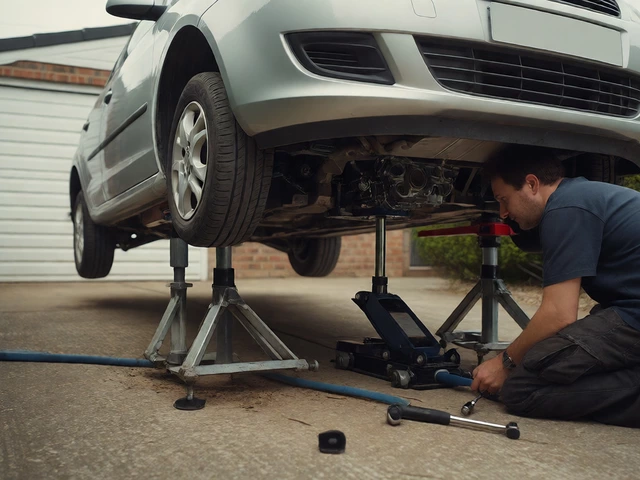
Can you install spark plugs yourself?
Yes-and it’s one of the easiest DIY repairs you can do.
Here’s what you need:
- New spark plugs (correct type and gap)
- Spark plug socket (usually 5/8” or 13/16”)
- Extension and ratchet
- Torque wrench (recommended)
- Compressed air or a brush (to clean around the plug wells)
Steps:
- Disconnect the battery for safety
- Remove the ignition coils or spark plug wires one at a time
- Use compressed air to blow debris out of the well-don’t let dirt fall into the cylinder
- Unthread the old plug with the socket
- Check the gap on the new plug with a feeler gauge (if not pre-gapped)
- Hand-thread the new plug in to avoid cross-threading
- Torque to spec (usually 15-20 ft-lbs-check your manual)
- Reattach the coil or wire and repeat for each cylinder
Most people can do this in under an hour. Skip the labor cost. Save $100-$200.
What about “performance” or “racing” spark plugs?
Ads promise “more power,” “faster acceleration,” or “better fuel economy” with high-end aftermarket plugs. Most of the time, it’s marketing.
Unless you’ve modified your engine for racing or high-performance use, sticking with OEM-recommended plugs is the smart move. Racing plugs often have different heat ranges and gap settings that can cause problems in stock engines.
One enthusiast in Texas spent $400 on a set of “performance iridium” plugs for his 2017 Toyota Camry. His fuel economy dropped 1.5 mpg. The mechanic told him the gap was too wide for his stock ignition system. He went back to OEM and got his mileage back.
Don’t overcomplicate it. Use the right plug for your car-not the flashiest one.
Final verdict: Do spark plugs make a difference?
Yes-big time.
They’re not just a part you replace on schedule. They’re the key to smooth operation, fuel efficiency, and long-term engine health. Ignoring them saves you money now but costs you more later.
Replacing spark plugs is one of the most cost-effective maintenance tasks you can do. For under $100, you can restore lost power, improve fuel economy, and avoid expensive repairs down the road.
If your car is older than 5 years or has more than 50,000 miles, and you don’t know when the plugs were last changed-it’s time. Don’t wait for it to fail. Do it now. Your wallet, your engine, and your conscience will thank you.