Front Suspension Diagnostic Tool
Select the symptoms you are experiencing with your vehicle below. This tool will analyze your inputs to suggest likely causes and recommend next steps.
- Knocking/Clunking over bumps Common
- Squeaking/Creaking when turning Lubrication
- Grinding noise while turning Urgent
- No unusual noises Quiet
- Pulls to one side Alignment
- Vibration in steering wheel Wear
- Loose or sloppy steering Control
- Steering feels normal Good
- Cupping/Scalloping tread Shocks
- Uneven inner edge wear Camber
- Feathering (smooth/sharp edges) Toe
- Tires look even OK
- Car bounces after push test Dampers
- Visible oil leaks on shocks Seal Fail
- Play in wheels (12/6 or 3/9) Joints
- No visible leaks/play Stable
Recommended Next Steps
You’re driving down the motorway, and suddenly your steering feels vague. Or maybe you hit a pothole in Manchester and heard a loud clunk that made you wince. These aren’t just annoying noises; they are your car screaming for help. The front suspension is one of the most critical systems on your vehicle. It handles steering, braking stability, and ride comfort. When it starts to fail, you don’t just lose comfort-you lose control.
Figuring out if you need a new front suspension is the system of springs, shocks, and linkages that connects the front wheels to the chassis isn’t always obvious. Symptoms can mimic other issues like tire wear or brake problems. But there are specific signs that point directly to worn-out components. Let’s break down exactly what to look for, listen for, and feel so you can diagnose the problem before it becomes dangerous.
Listen for Unusual Noises
Your ears are your best diagnostic tool when it comes to suspension health. A healthy suspension is quiet. It absorbs bumps silently. If you start hearing things, something is loose, broken, or worn out.
The most common noise is a knocking or clunking sound when you go over bumps. This usually indicates worn shock absorbers or struts that have lost their damping ability. When these parts fail, the metal-on-metal contact between components creates that distinct knock. Another culprit could be worn ball joints or tie rod ends. If the noise happens specifically when turning the steering wheel, check your CV joints or ball joints first.
Squeaking or creaking sounds are another red flag. These often come from dry bushings or ball joints that have lost their lubrication. In older cars, this might mean the rubber has hardened and cracked. If you hear a grinding noise while turning, it could be worse-possibly a failing wheel bearing or severe lack of grease in the joints. Don’t ignore these sounds. They rarely fix themselves and usually get louder as the component deteriorates.
Check Your Steering Feel
How does your car handle? The steering wheel is an extension of your hands, and it tells you a lot about the state of your front end. If your car pulls to one side while driving straight on a flat road, your alignment might be off, but it often points to uneven suspension wear. One side of the suspension might be sagging more than the other, pulling the car toward the weaker side.
Vibration through the steering wheel is another major indicator. While unbalanced tires cause vibration at high speeds, suspension-related vibration often happens at lower speeds or during braking. If the steering wheel shakes when you apply the brakes, it could be warped rotors, but if it shakes constantly, suspect worn control arm bushings or bad wheel bearings. These components hold the wheel in precise alignment. When they wear out, the wheel moves excessively, causing that shaky feeling.
Loose or sloppy steering is a classic sign of worn linkage. If you have to turn the wheel significantly before the car responds, or if the car wanders around on the highway without you making input, your tie rods or rack-and-pinion gears might be worn. This is particularly dangerous because it reduces your ability to make quick corrections in emergencies.
Inspect Tire Wear Patterns
Your tires are the only part of your car touching the road. If your suspension is compromised, your tires will show it. Walk around your car and look closely at the tread. You aren’t looking for general wear; you are looking for irregular patterns.
Cupping or scalloping is a dead giveaway for bad shock absorbers. This looks like small dips or scoops worn into the tire surface, spaced evenly around the circumference. It happens because the tire bounces excessively against the road instead of staying planted. If you run your hand over the tread and it feels rough in patches rather than smooth, your shocks are likely shot.
| Wear Pattern | Appearance | Likely Cause |
|---|---|---|
| Cupping | Scalloped dips around the tread | Worn Shocks/Struts |
| Inner Edge Wear | Tread worn heavily on inside edge | Negative Camber/Bad Ball Joint |
| Outer Edge Wear | Tread worn heavily on outside edge | Positive Camber/Suspension Sag |
| Feathering | Smooth on one side, sharp on the other | Toe Misalignment/Worn Tie Rods |
Uneven wear on just one side of the tire often points to alignment issues caused by bent suspension components. If you recently had an accident or hit a deep pothole, a control arm might be bent. This changes the geometry of the wheel, forcing it to scrub across the pavement rather than roll smoothly. Replacing tires won’t fix this; the underlying suspension damage must be addressed first.

Perform the Bounce Test
You don’t need fancy tools to check your shocks. The bounce test is a simple, effective way to assess their condition. Park your car on a flat, level surface. Push down firmly on the front corner of the car (above the wheel) with your body weight, then release abruptly.
A healthy suspension should compress once and return to its normal position immediately. It should not bounce up and down multiple times. If the car continues to oscillate-bouncing two, three, or four times-your dampers are no longer controlling the spring movement effectively. This means the springs are doing all the work, and the shocks are merely along for the ride. This leads to poor tire contact and reduced braking efficiency.
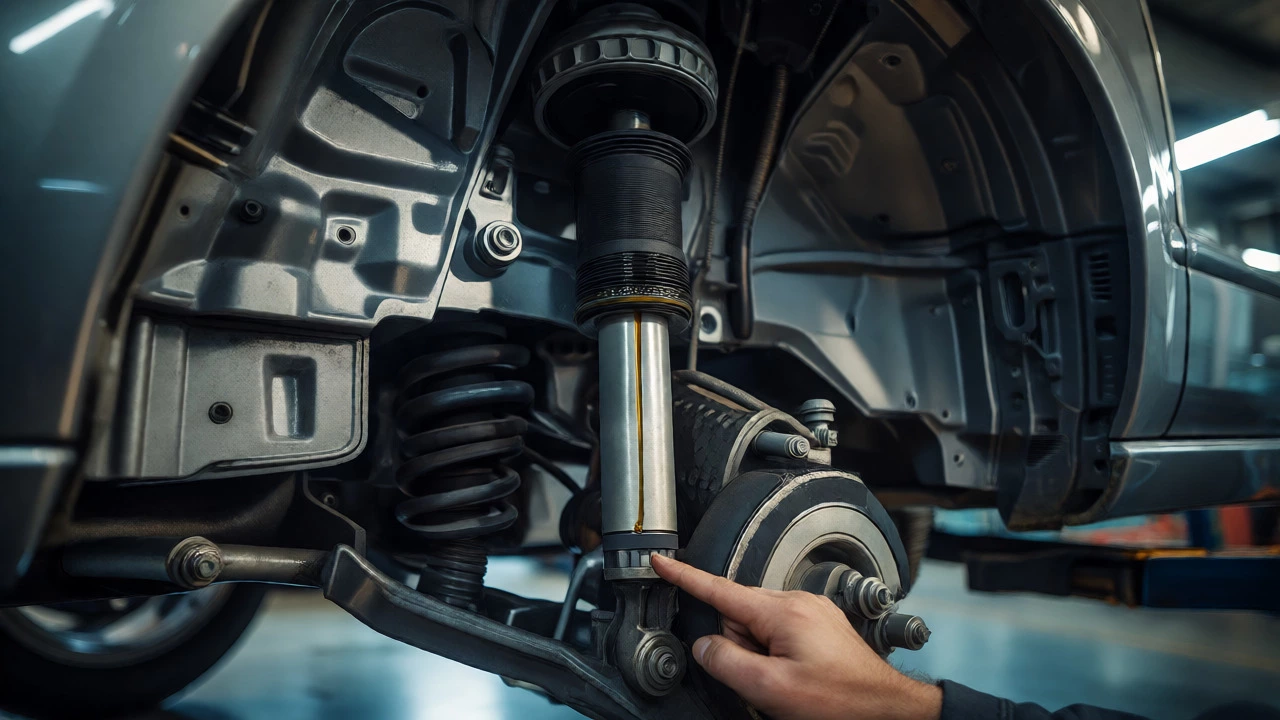
While you are at it, look at the shock absorbers themselves. Are they leaking oil? Most shocks have a slight sheen of dust or dirt, which is normal. But if you see fresh, wet oil dripping down the shaft or pooling at the bottom, the seal has failed. A leaking shock is a useless shock. It cannot provide hydraulic resistance, leading to a bouncy, unstable ride.
Examine Bushings and Control Arms
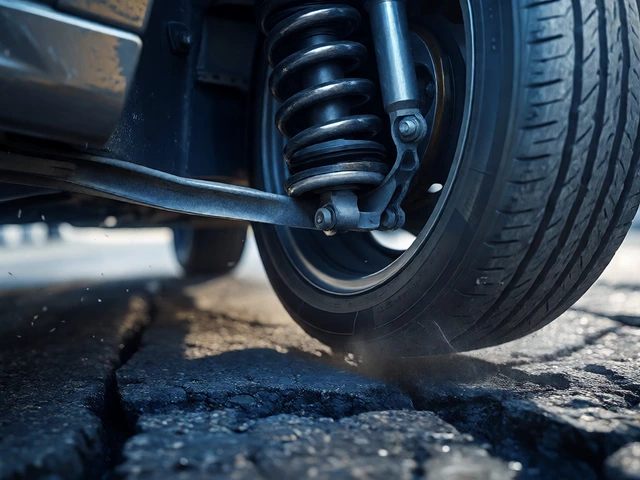
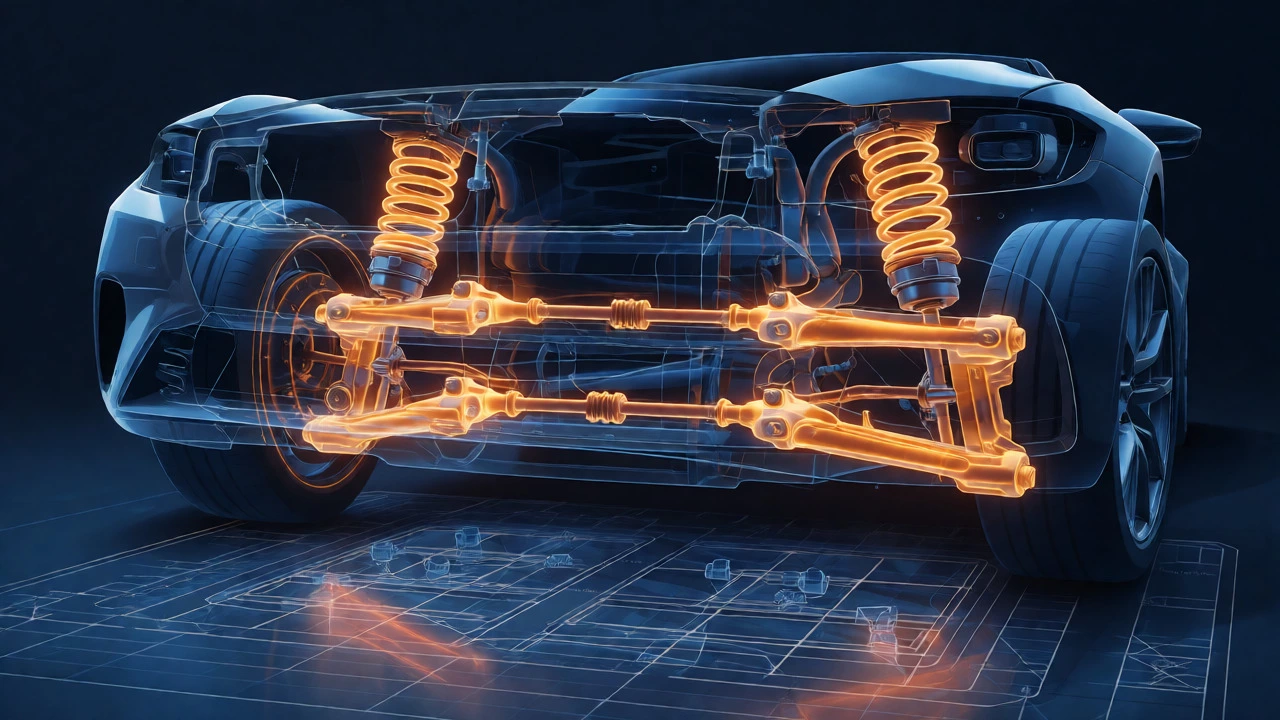
Control arms are A-shaped metal links that connect the chassis to the wheel hub assembly. They pivot on rubber bushings that isolate vibrations and allow movement. Over time, rubber hardens, cracks, and tears due to exposure to weather, road salt, and age. In the UK, where winters are wet and salty, this degradation happens faster than in drier climates.
To inspect them, you need to get under the car. Look for visible cracks in the rubber. If the rubber is missing chunks or completely separated from the metal sleeve, it’s gone. Worn bushings cause a lot of the noises mentioned earlier, especially clunks over bumps and wandering steering. They also affect alignment settings dynamically, meaning your alignment might be perfect when the car is static but wrong when the wheels move.
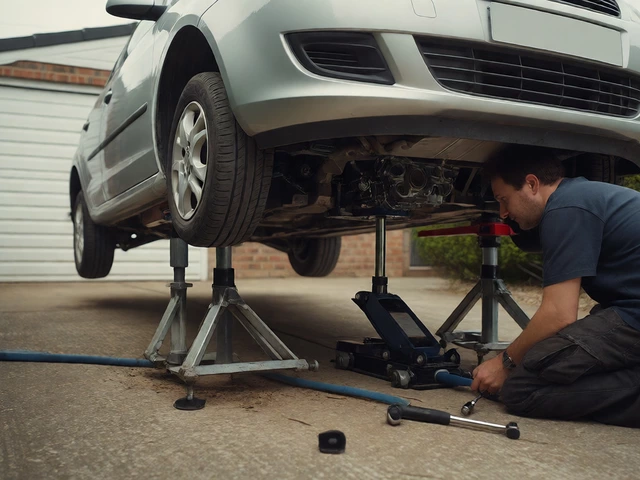
Ball joints are another critical component. They act as the knee joint of your suspension, allowing the wheel to move up and down and steer left and right simultaneously. If a ball joint fails completely, the wheel can detach from the suspension. To check for play, jack up the front of the car so the wheel is off the ground. Grab the tire at the 12 o’clock and 6 o’clock positions and try to rock it in and out. Excessive play suggests worn ball joints. Then grab it at 3 and 9 o’clock; excessive play here usually indicates tie rod issues.
Consider Age and Mileage
Even if you haven’t noticed dramatic symptoms, time and distance take their toll. Most original equipment manufacturer (OEM) suspension components are designed to last between 50,000 and 100,000 miles. However, aggressive driving, poor road conditions, and heavy loads shorten this lifespan significantly.
If your car is over ten years old, even with low mileage, rubber parts degrade naturally. UV rays and ozone break down the polymers in bushings and mounts. Metal fatigue can also occur in coil springs, though this is less common. If you are buying a used car, ask for the service history regarding suspension work. If it hasn’t been touched in 80,000 miles, budget for replacement soon.
It’s also worth noting that replacing suspension parts is often best done in pairs. If the left shock absorber is worn, the right one is likely at a similar stage of life. Replacing only one side can lead to uneven handling and premature failure of the new part. Always replace struts, shocks, and control arms in axle sets (both left and right) to maintain balanced performance.
When to Seek Professional Help
Some checks are easy to do at home, but others require specialized equipment. If you notice any of the following, book an appointment with a mechanic immediately:
- Pulling during braking: This can indicate stuck calipers or collapsed hoses, but also severe suspension binding.
- Visible damage: A bent control arm or cracked spring needs immediate attention.
- Steering wheel vibration: Persistent shaking can destroy other components if ignored.
- Car sits unevenly: If one corner is noticeably lower, a spring may have snapped.
A professional inspection includes putting the car on a lift, checking for play in all joints with pry bars, and using an alignment machine to measure camber, caster, and toe angles. These measurements reveal hidden wear that visual inspections miss. For example, a slightly bent control arm might not look damaged but will throw off alignment specs by several degrees, causing rapid tire wear.
Can I drive with a bad front suspension?
You can drive short distances, but it is risky. Worn suspension increases stopping distances and reduces grip in corners. If a component like a ball joint is severely worn, it could fail suddenly, causing loss of control. Limit speed and avoid highways until repairs are made.
How much does it cost to replace front suspension?
Costs vary widely based on vehicle make and model. Basic shock absorber replacement might cost £200-£400 per pair. Full control arm and ball joint replacements can range from £500 to £1,500+ including labor. Luxury or complex multi-link suspensions cost more due to parts and labor intensity.
Do I need an alignment after suspension repair?
Yes, almost always. Replacing suspension components changes the geometry of the wheel assembly. An alignment ensures the wheels are parallel and perpendicular to the ground, preventing uneven tire wear and ensuring straight-line tracking.
What is the difference between shocks and struts?
Shocks are standalone dampers that control spring oscillation. Struts are structural components that integrate the shock absorber and the upper mount, serving as part of the suspension linkage and holding the wheel in place. Struts are more complex and expensive to replace.
Why does my car squeak when I turn?
Squeaking during turns usually points to dry or worn ball joints, tie rod ends, or sway bar links. The friction between metal surfaces without proper lubrication causes the noise. Applying grease may help temporarily, but replacement is often necessary for a permanent fix.