
Engine Oil Compatibility Checker
Step 1: Your Car's Requirements
Enter the specifications found in your owner's manual or on the dipstick cap.
Step 2: Select Oil Bottle
Click on the oil bottle you are considering buying.
Viscosity Match
Oil Type Quality
Certification Status
Final Verdict
Staring at a wall of engine oil bottles in an auto shop can feel like trying to read a foreign language. You see numbers like 5W-30, letters like API SN Plus, and terms like "full synthetic" or "high mileage." It’s easy to grab whatever is on sale or ask a mechanic who might recommend their favorite brand. But putting the wrong oil in your car isn’t just a minor mistake-it can lead to increased wear, reduced fuel economy, or even serious engine damage over time.
The good news is that figuring out what oil you need doesn’t require a degree in mechanical engineering. Your car already has the answer written down in plain sight. By understanding a few key codes and checking two specific places, you can confidently pick the right lubricant every single time.
Where to Find Your Car's Oil Specification
Before you head to the store or click "buy" online, you need to know exactly what your vehicle manufacturer recommends. This information is non-negotiable because modern engines are built with tight tolerances that require specific lubrication properties.
| Location | What to Look For | Reliability |
|---|---|---|
| Owner’s Manual | Check the "Maintenance" or "Fluids" section. Look for viscosity grade (e.g., 5W-30) and API/ACEA standards. | Highest - The definitive source from the manufacturer. |
| Dipstick Cap | Many cars have the recommended viscosity printed directly on the yellow or black cap of the oil dipstick under the hood. | High - Quick reference, but verify with manual if unsure. |
| Oil Filler Cap | Sometimes the filler cap on top of the engine block also displays the required weight and type. | Medium - Can be worn off or hard to read. |
| Service Sticker | If you buy a used car, check the sticker inside the driver’s door jamb or glovebox for previous service records. | Low - Previous owners may have used incorrect oil. |
If you don’t have the physical manual handy, most manufacturers provide digital copies online. Simply search for "[Year] [Make] [Model] owner's manual PDF" and look for the fluid specifications page. Never guess based on what your neighbor uses in their similar-looking car; a 2018 Honda Civic and a 2018 Toyota Corolla might look alike but often require different oil viscosities and additives.
Decoding Viscosity Grades (The Numbers)
You’ve probably seen labels like 0W-20, 5W-30, or 10W-40. These numbers describe the oil’s viscosity, which is essentially its thickness or resistance to flow. Getting this right is critical for protecting your engine during cold starts and high-temperature operation.
The rating consists of two parts separated by a "W":
- The First Number (Before W): This indicates how thick the oil is at freezing temperatures. The "W" stands for Winter. A lower number means the oil flows more easily when it’s cold. For example, 0W-20 will pump faster than 5W-30 on a frosty morning. This ensures your engine gets lubricated quickly upon startup, reducing wear during those crucial first few seconds.
- The Second Number (After W): This represents the oil’s thickness at normal operating temperature (around 100°C or 212°F). Higher numbers mean thicker oil. Thicker oil creates a stronger protective film between moving metal parts but can increase drag, potentially lowering fuel efficiency.
Why does this matter? If you use oil that is too thick (like 10W-40 in a car designed for 0W-20), your engine has to work harder to push it around, leading to higher fuel consumption and slower oil circulation. Conversely, using oil that is too thin might not provide enough cushioning for the bearings and camshafts, especially in older engines with wider clearances.
In the UK, where winters can be damp and chilly but rarely extreme, the "W" rating still matters. Even if you never drive in snow, cold starts happen frequently in the morning. Using the manufacturer-recommended low-W grade helps ensure smooth starts year-round.
Understanding Certification Standards (The Letters)
Viscosity tells you how the oil flows, but certifications tell you what the oil contains and what it protects against. Modern engines face challenges like soot buildup from direct injection, pre-ignition risks, and extended drain intervals. Oil manufacturers add specific additive packages to handle these issues, and industry bodies certify them.
The two main standards you’ll encounter are:
- API (American Petroleum Institute): Look for the "Starburst" seal on the bottle. For gasoline engines, you want the letter "S" followed by a second letter indicating the performance level. As of 2026, API SP is the latest standard, offering improved protection against low-speed pre-ignition (LSPI) and timing chain wear. Older standards like API SN or SM are generally acceptable if they meet other criteria, but SP is preferred for newer vehicles.
- ACEA (European Automobile Manufacturers’ Association): Common in Europe and for European cars. ACEA categories include A/B for petrol/diesel passenger cars, C for catalyst-compatible oils (often low SAPS), and E for heavy-duty diesels. For instance, ACEA C3 is common in many German brands requiring low-ash formulations to protect diesel particulate filters (DPFs).
If your manual specifies API SP or ACEA C2/C3, do not substitute with an oil that only meets older standards unless explicitly stated as backward compatible. Ignoring these specs can void warranties and harm emissions systems.

Synthetic vs. Semi-Synthetic vs. Conventional
This is where marketing often confuses buyers. Let’s break down the base stocks:
- Conventional Oil: Refined from crude petroleum. It works fine for older, simpler engines but breaks down faster under heat and stress. It contains more impurities that can form sludge.
- Semi-Synthetic (Blend): A mix of conventional and synthetic oils. It offers better protection than conventional oil at a moderate price point. Good for daily drivers that aren’t pushed hard.
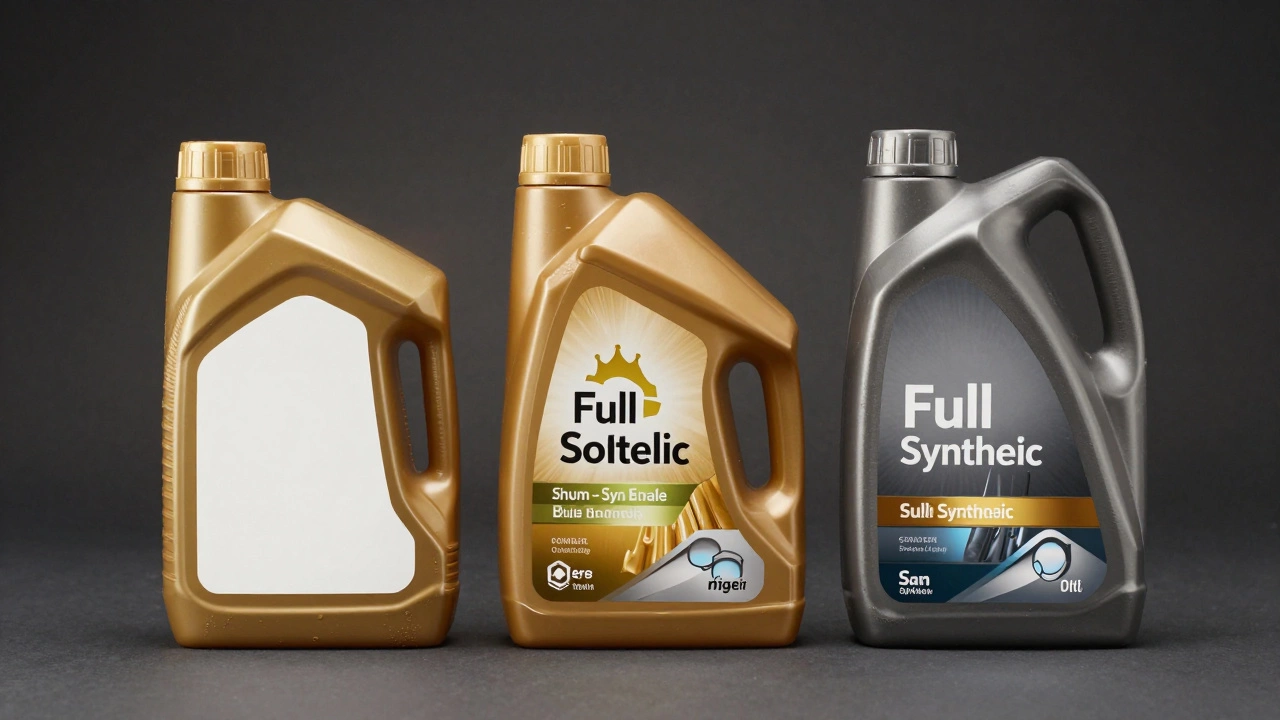
- Full Synthetic: Chemically engineered molecules designed for uniformity and stability. They resist breakdown, flow better in cold weather, and keep engines cleaner longer. Most modern cars, especially turbocharged ones, require full synthetic.
Here’s the rule of thumb: Always follow your owner’s manual. If it says "synthetic blend," you can use full synthetic (it’s an upgrade). If it says "full synthetic," do not downgrade to conventional or semi-synthetic unless you’re willing to change it much more frequently and accept potential warranty risks. In 2026, the price difference between synthetic and conventional has narrowed significantly, making full synthetic the default choice for most drivers due to its superior longevity and protection.
Special Cases: High Mileage and Turbo Engines
Some vehicles have unique needs that go beyond standard viscosity and API ratings.
High Mileage Oils: If your car has over 75,000 miles (120,000 km), you might consider "High Mileage" oil. These oils contain extra detergents to clean out accumulated sludge and conditioners to swell aging seals, preventing leaks. However, check the viscosity first-ensure the High Mileage oil matches your required weight (e.g., 5W-30). Don’t switch to a heavier oil just because the car is old; modern engines still benefit from lighter weights for fuel economy.
Turbocharged Engines: Turbos spin at incredibly high speeds and generate intense heat. They demand oils with high thermal stability and anti-wear additives. Almost all turbo cars require full synthetic oil meeting specific OEM approvals (like VW 504.00/507.00 or MB 229.5). Using cheap conventional oil in a turbo engine is a fast track to premature failure.
Common Mistakes to Avoid
Even experienced DIYers make errors when buying oil. Here are the pitfalls to watch out for:
- Ignoring OEM Specifications: Brands like BMW, Mercedes, and Ford have proprietary approval numbers (e.g., BMW Longlife-04). An oil might meet API SP but fail BMW’s specific tests. Always cross-reference the bottle’s label with your manual’s list of approved numbers.
- Buying Based on Price Alone: Cheap oil often lacks the necessary additive package. Remember, oil is the blood of your engine. Saving £5 now could cost hundreds in repairs later.
- Mixing Different Types: While occasionally mixing synthetic and conventional won’t cause immediate disaster, it dilutes the benefits of the premium oil. Stick to one type for consistency.
- Overfilling: Adding too much oil causes foaming, which reduces lubrication effectiveness and can damage seals. Check the dipstick carefully after adding oil.
When to Consult a Professional
If your owner’s manual is lost, damaged, or unclear, don’t guess. Visit a trusted mechanic or dealership. They can look up your Vehicle Identification Number (VIN) in their system to pull the exact factory specification. Alternatively, many major oil brands (like Castrol, Mobil, Shell) have online lookup tools where you enter your car details to get a recommended product.
Using the correct engine oil is one of the simplest yet most impactful maintenance tasks you can perform. It extends engine life, improves fuel efficiency, and keeps your car running smoothly through Manchester’s rainy days and beyond. Take ten minutes to check your manual, decode the viscosity, and verify the certifications-you’ll thank yourself at every oil change.
Can I use 5W-30 instead of 5W-40?
It depends on your manufacturer’s recommendation. Generally, 5W-30 is thinner than 5W-40 at operating temperatures. If your car requires 5W-40, using 5W-30 might reduce fuel consumption slightly but could compromise bearing protection under high load or heat. Always consult your owner’s manual before switching viscosities.
Is synthetic oil better for my car?
Yes, full synthetic oil offers superior protection against wear, better performance in extreme temperatures, and longer drain intervals compared to conventional oil. Most modern vehicles, especially those with turbochargers, benefit significantly from synthetic oil.
What does the 'W' in 5W-30 stand for?
The 'W' stands for Winter. It indicates the oil’s viscosity rating at cold temperatures. The lower the number before the W, the easier the oil flows in cold weather, ensuring quicker lubrication during startup.
How often should I change my engine oil?
Follow your manufacturer’s guidelines, typically every 6 months to 1 year or 5,000 to 10,000 miles. Synthetic oils often allow for longer intervals, but severe driving conditions (short trips, towing, stop-and-go traffic) may require more frequent changes.
Can I mix different brands of engine oil?
While occasional mixing of same-viscosity oils from different brands usually won’t cause immediate harm, it’s best to avoid it. Different brands use unique additive packages that might interact unpredictably. Consistency ensures optimal performance.