Suspension Noise Diagnostic Tool
Diagnose Your Suspension Noise
Identify the likely cause of your suspension noise and recommended repair options
No diagnosis results yet
Enter your symptoms above and click "Diagnose Noise" to see potential causes
Important: Some suspension issues require professional repair. If you experience severe vibrations, steering issues, or the noise worsens, seek professional help immediately.
When your suspension system starts making odd noises, it’s more than just a nuisance. It’s a warning sign that parts may be worn out, affecting your car’s handling and safety. In this guide, you’ll learn how to fix noisy suspension yourself. We’ll cover common causes, simple diagnostics, and fixes you can do with basic tools. No need to panic-most issues are fixable without a mechanic.
Common Causes of Suspension Noise
Not all suspension noises are the same. The sound tells you which part is failing. Here’s what to look for:
- Clunking over bumps: Usually worn control arm bushings. These rubber pieces connect the control arm to the car’s frame. When they crack or dry out, metal parts bang together.
- Squeaking when turning: Often dry or worn ball joints. These connect the steering knuckle to the control arm. Without lubrication, they make high-pitched squeaks during steering.
- Rattling at low speeds: Loose sway bar links. The sway bar keeps the car stable during turns. If the links are loose, they rattle over small bumps.
- Thumping or knocking: Failed shock absorbers or struts. These dampen road impacts. When worn, the car bounces excessively, causing thumping noises.
- Grinding during turns: Worn wheel bearings. These let wheels spin smoothly. When they fail, you hear grinding or humming sounds, especially when turning.
Quick Reference: Noise Types and Fixes
| Noise Type | Likely Cause | DIY Fix? |
|---|---|---|
| Clunking over bumps | Worn control arm bushings | Yes, replace bushings |
| Squeaking when turning | Worn or dry ball joints | Yes, lubricate or replace |
| Rattling at low speeds | Loose sway bar links | Yes, tighten or replace |
| Thumping or knocking | Failed shock absorbers or struts | Usually requires professional help |
| Grinding during turns | Worn wheel bearings | Professional repair only |
Step-by-Step Troubleshooting Guide
Before replacing parts, confirm the issue. Here’s how to diagnose:
Start by listening carefully. Drive slowly over a bumpy road and note where the noise comes from. Is it front or rear? Left or right? This helps narrow down the problem.
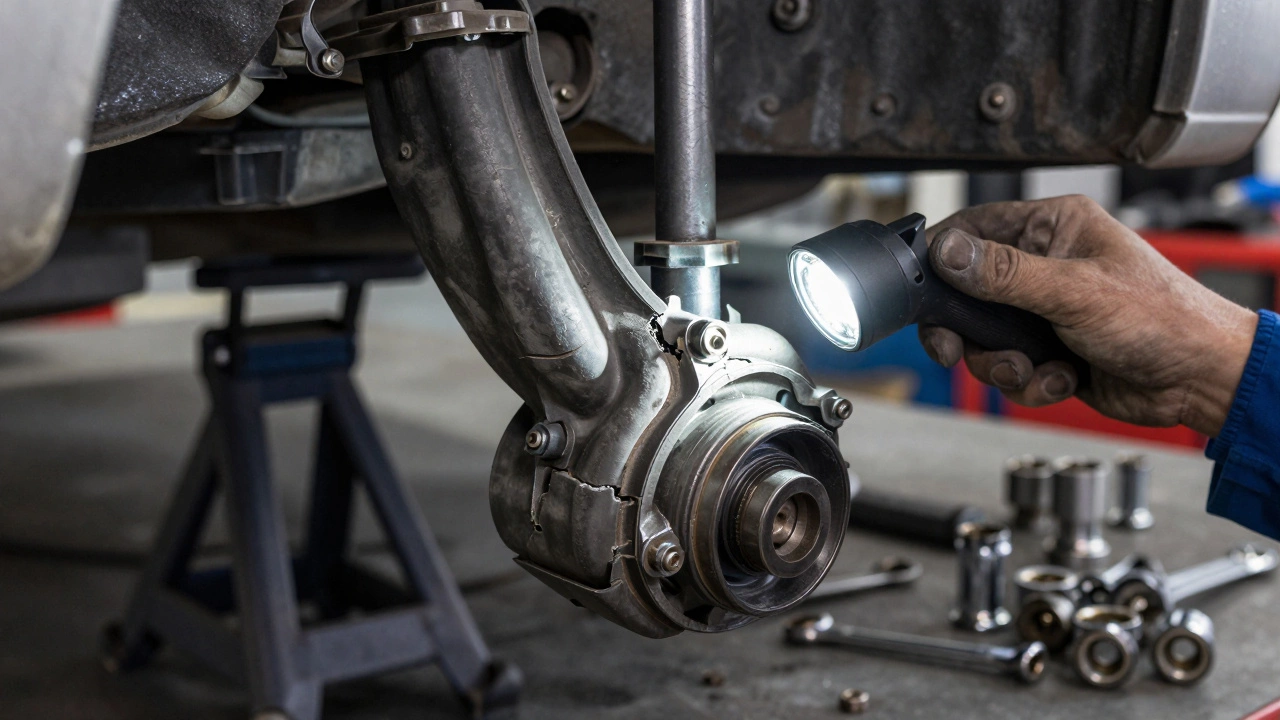
Next, check for visible damage. Jack up the car (use jack stands for safety) and inspect suspension components. Look for:
- Cracks or splits in rubber bushings
- Excessive grease leaking from joints
- Loose bolts or missing hardware
For ball joints and tie rod ends, grab the tire at 3 and 9 o’clock and try to move it side-to-side. If there’s play or a clunk, the joint is worn.
For shocks and struts, push down on each corner of the car. If it bounces more than once, the shock is worn out.
Check sway bar links by moving them by hand. If they feel loose or make noise, they need replacing.
DIY Fixes You Can Do Yourself
Many suspension issues can be fixed with basic tools. Here’s how:
Replacing Control Arm Bushings
Control arm bushings are common culprits for clunking noises. Replacing them is manageable with a hydraulic press or bushing removal tool.
- Jack up the car and secure it on jack stands.
- Remove the wheel and disconnect the control arm from the steering knuckle and frame.
- Press out the old bushings using a press or specialized tool. Many auto parts stores offer this service for $20-$50 if you don’t have the equipment.
- Install new bushings and reassemble the control arm.
- Torque all bolts to the manufacturer’s specifications.
Cost: $50-$150 for parts and tools. DIY saves about $300 compared to professional labor.
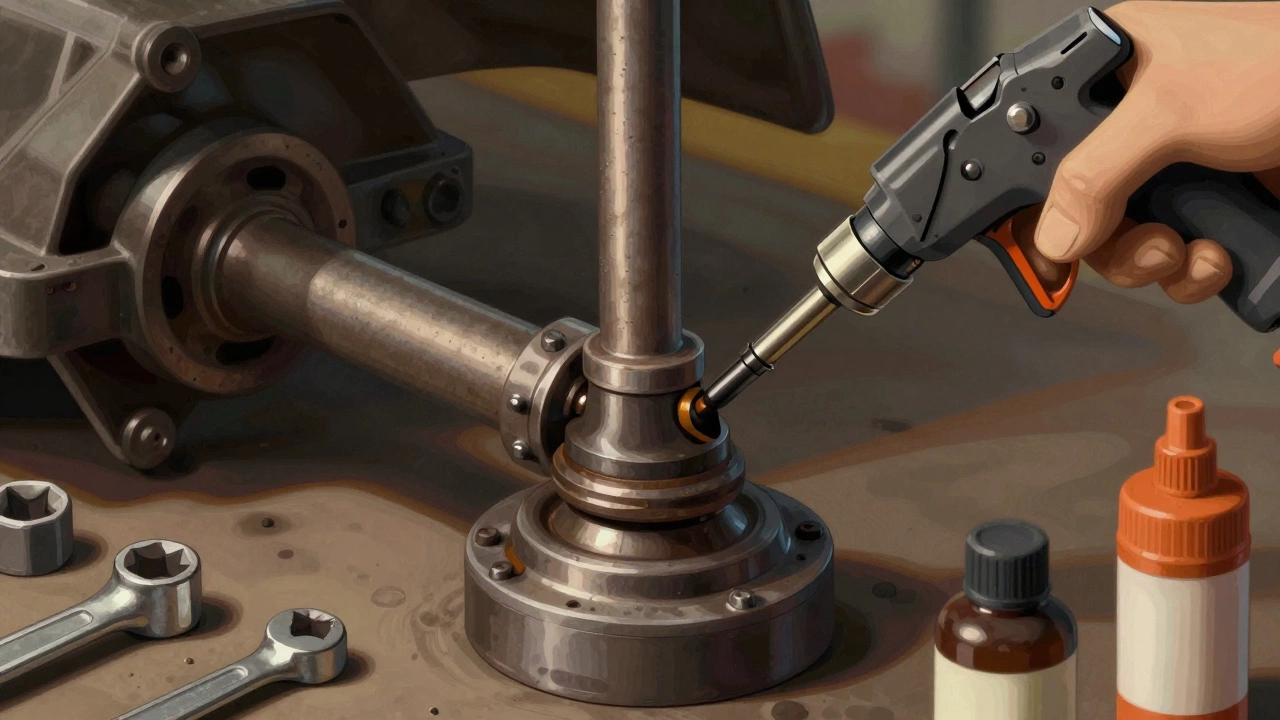
Lubricating Ball Joints
If your ball joints are squeaking but not worn out, lubrication can help. Not all ball joints are serviceable, so check your vehicle’s manual.
- Locate the grease fitting on the ball joint (if present).
- Use a grease gun to apply high-quality suspension grease.
- Wipe off excess grease to prevent dirt buildup.
Cost: $10 for grease. If the ball joint is worn, replacement costs $100-$200 per side.
Tightening Sway Bar Links
Loose sway bar links cause rattling. Tightening them often solves the issue.
- Jack up the car and secure it on jack stands.
- Locate the sway bar links (usually near the control arms).
- Tighten the bolts to the recommended torque.
- Test drive to see if the noise is gone.
Cost: $0 if you have the tools. New links cost $20-$50 if needed.
When to Call a Professional
Some suspension repairs are too dangerous or complex for DIY. Always call a pro for:
- Strut replacement: Requires special tools to compress the spring. Incorrect installation can cause accidents.
- Wheel bearing replacement: Needs precise torque and alignment. A mistake can lead to wheel detachment.
- Severe damage: If the control arm is bent or the frame is damaged, it needs welding or replacement by a shop.
- Uncertain diagnosis: If you can’t pinpoint the noise, a mechanic has diagnostic tools to find the root cause.
Ignoring these issues can lead to accidents. Safety first!
Preventing Future Suspension Issues
Regular maintenance keeps your suspension quiet and safe:
- Check suspension components during every oil change-typically every 3,000-5,000 miles. Look for cracks, leaks, or loose bolts.
- Avoid potholes and rough roads when possible. They accelerate wear.
- Keep tires properly inflated. Underinflated tires put extra stress on suspension parts.
- Replace shocks and struts every 50,000-100,000 miles. They wear out gradually.
- Use high-quality replacement parts. Cheap parts fail faster and cost more long-term.
Small habits now prevent big repairs later.
Frequently Asked Questions
Can I drive with a noisy suspension?
It depends. Minor squeaks might be safe short-term, but clunks or rattles often signal worn parts that affect steering and braking. If the noise is loud, worsening, or accompanied by poor handling, get it checked immediately. Driving with damaged suspension risks accidents and further damage to your car.
How much does it cost to fix suspension noise?
DIY fixes for bushings or sway bar links cost $20-$100 in parts. Professional repairs for struts or ball joints range from $300-$800 per side. Always get multiple quotes. Remember, delaying repairs usually increases costs due to additional damage.
What tools do I need for DIY suspension repairs?
Basic tools include a jack, jack stands, socket set, torque wrench, and grease gun. For bushings, you’ll need a hydraulic press or bushing removal tool. Many auto parts stores rent tools like presses for a small fee. Always prioritize safety-never work under a car supported only by a jack.
How often should I check my suspension components?
Inspect suspension parts during every oil change-typically every 3,000-5,000 miles. Pay special attention after driving on rough roads or hitting potholes. Early detection of wear prevents costly repairs and keeps your car safe.
What’s the difference between shocks and struts?
Shocks and struts both dampen suspension movement, but struts are structural parts of the suspension system. Struts support the car’s weight and are part of the steering mechanism. Shocks only control spring movement and don’t support weight. Most cars use struts on the front and shocks on the rear, but some use all struts or all shocks. Replacing struts is more complex because they involve spring compression.