Engine Oil Top-Up Calculator
Calculate how much oil to add safely without overfilling your engine.
It happens to the best of us. You pull over for a routine check, dip your finger into the oil filler cap or pull out the dipstick, and see that the level is sitting right at-or just below-the minimum mark. Your immediate thought is simple: "I'll just add more oil." It feels like the obvious fix. After all, if the tank is low, you fill it up, right?
But an engine isn't a fuel tank. Adding oil blindly can lead to catastrophic failure, while ignoring a slightly low level can cause premature wear. So, can you just add more oil? Yes, but only if you follow strict rules about viscosity, quantity, and timing. Getting this wrong doesn't just void warranties; it can turn your reliable daily driver into a paperweight.
The Dipstick Truth: Is It Actually Low?
Before you buy a quart of synthetic blend, you need to be sure the oil is actually low. A common mistake drivers make is checking the oil immediately after turning off the engine. When the engine is hot, oil rushes back down from the upper galleries, but it hasn't fully settled in the sump yet. This gives you a false reading.
To get an accurate measurement:
- Park the car on perfectly level ground. Slopes distort the oil pool in the sump.
- If the engine is cold, start it and let it run for two minutes. This circulates fresh oil and warms it slightly for better flow.
- Turn off the engine and wait five to ten minutes. This allows gravity to do its work, letting the oil drain completely back into the sump.
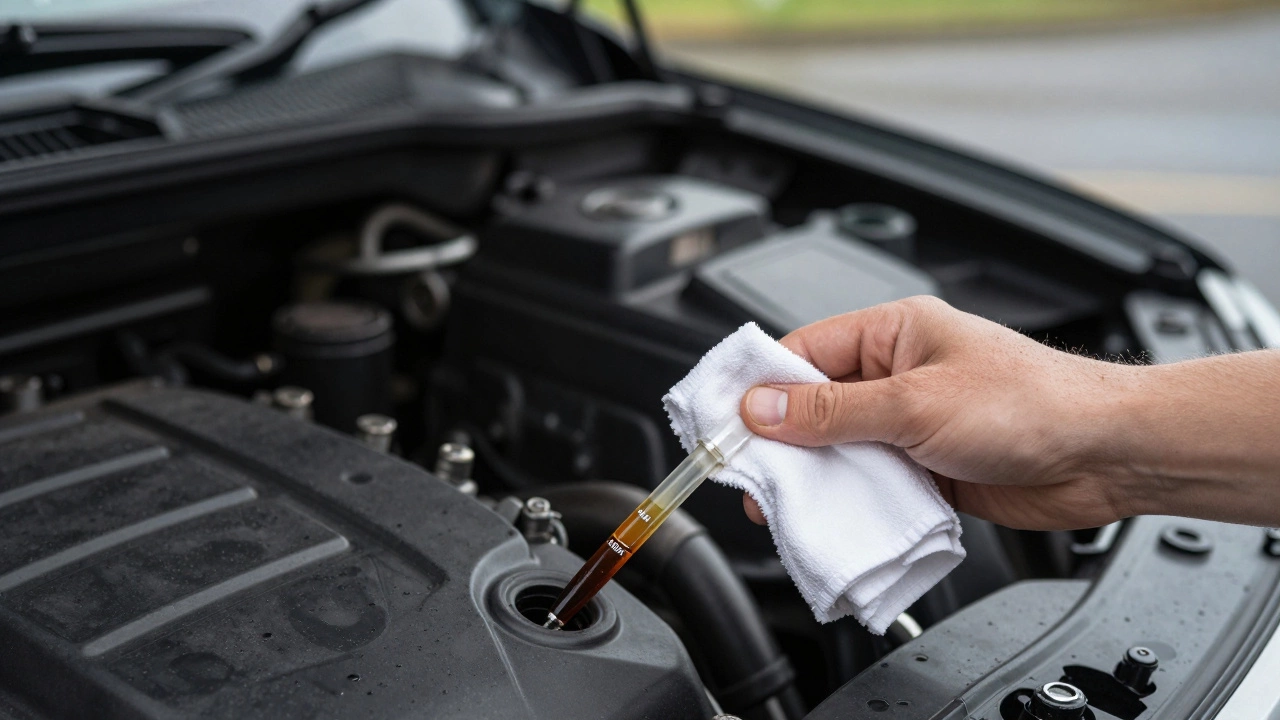
- Pull the dipstick, wipe it clean with a rag (don't use your fingers-you'll contaminate the reading), reinsert it fully, and pull it out again.
Look at the marks. Most modern cars have two holes or cross-hatched areas marked 'Min' and 'Max'. If the oil film is between these marks, you are fine. Do not add oil. If it is at or below the 'Min' mark, you need to top up. If it is above the 'Max' mark, you have a different problem entirely-overfilling.
The Golden Rule: Match the Viscosity Exactly
You cannot simply grab any bottle of oil from the shelf. Mixing oils with different viscosities changes the lubricant's chemical structure and performance characteristics. Think of viscosity as the thickness of the oil. It determines how well the oil protects metal parts under heat and pressure.
Your owner's manual specifies a grade, such as 5W-30 or 0W-20. That first number (the 'W') stands for Winter and indicates flow at cold temperatures. The second number indicates thickness at operating temperature (100°C). If your car requires 5W-30, adding 10W-40 might seem close enough, but it isn't. In a Manchester winter, 10W-40 will be thicker when cold, making it harder for the oil pump to circulate lubrication during startup-the moment when most engine wear occurs.
| Viscosity Grade | Cold Flow Rating | Hot Thickness | Typical Use Case |
|---|---|---|---|
| 0W-20 | Excellent (-35°C) | Thin | Modern hybrids, small turbo engines, high fuel economy focus |
| 5W-30 | Very Good (-30°C) | Medium | Most standard petrol and diesel engines produced after 2010 |
| 5W-40 | Very Good (-30°C) | Thicker | European diesels, high-performance engines, older vehicles |
| 10W-40 | Moderate (-25°C) | Thick | Older engines, high-mileage vehicles, warm climates |
Always check the sticker on the filler cap or your handbook. If you must mix oils because you're stranded, ensure the API service category (like SN Plus or SP) matches, but treat this as a temporary emergency measure, not a habit.
Synthetic vs. Mineral: Can You Mix Them?
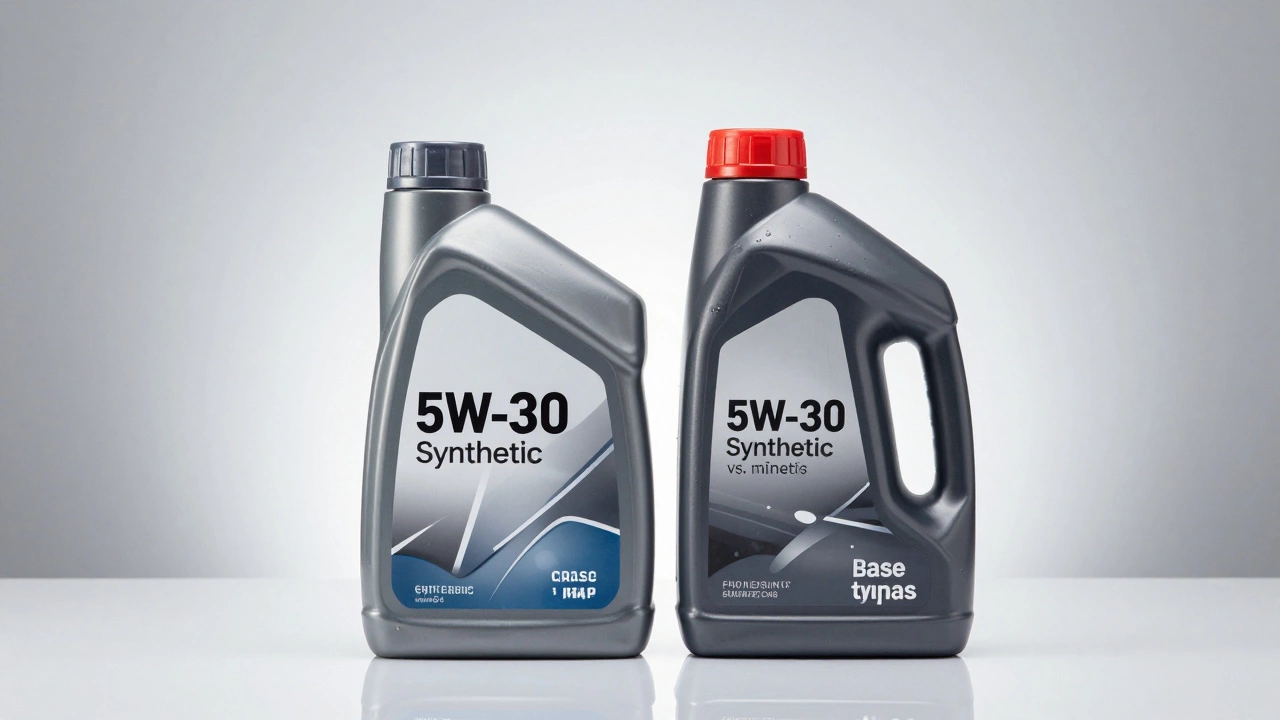
This is where confusion sets in. Many drivers believe mixing synthetic and conventional mineral oil causes sludge or separation. Technically, modern synthetics are backward compatible. You *can* add a half-quart of mineral oil to a synthetic-filled engine in a pinch. However, you dilute the benefits of the synthetic.
Synthetic Oil is chemically engineered to provide superior stability, resistance to breakdown, and protection against extreme temperatures compared to conventional oil. It maintains its viscosity better under stress. If you top up a synthetic engine with cheap mineral oil, you lower the overall quality of the lubricant bath. It won't destroy your engine instantly, but it reduces the interval until your next full change. For a proper top-up, always match the base type: synthetic to synthetic, mineral to mineral.
How Much Should You Add?
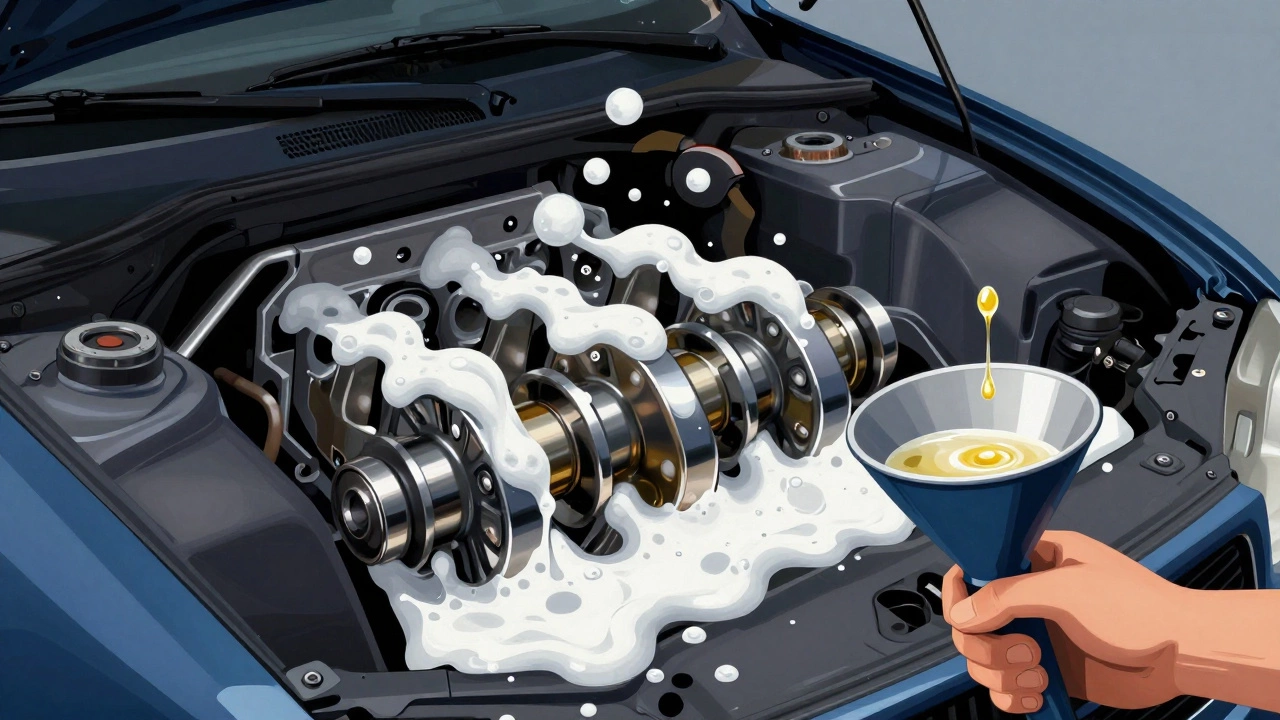
Overfilling is just as dangerous as underfilling. When the oil level exceeds the maximum mark, the spinning crankshaft dips into the liquid oil. This creates foam. Foamed oil does not lubricate; it aerates. The oil pump sucks air bubbles instead of liquid, leading to a loss of oil pressure. Without proper pressure, bearings starve, and metal grinds against metal.
Start by adding no more than 0.5 liters (or roughly half a quart) at a time. Wait a minute for it to settle, then recheck the dipstick. It takes very little oil to move the needle from Min to Max. Most engines hold between 4 to 6 liters total, so the gap between Min and Max is often only 0.5 to 0.8 liters. Slow and steady wins the race here.
Why Is the Oil Low in the First Place?
If you find yourself topping up oil every 1,000 miles, something is wrong. Engines are sealed systems; they don't consume oil unless there is a leak or combustion issue.
- External Leaks: Check underneath the car for puddles. Common culprits include the oil filter housing gasket, valve cover gasket, or oil pan seal. These degrade over time due to heat cycles.
- Burning Oil: Look at your exhaust. Blue-ish smoke indicates oil is entering the combustion chamber. This could be worn piston rings, valve seals, or PCV (Positive Crankcase Ventilation) system failure. Turbocharged engines are particularly prone to consuming oil through the turbocharger seals.
- Vapor Lock/Evaporation: Short trips prevent the engine from reaching optimal operating temperature, causing condensation and fuel dilution in the oil, which can alter levels temporarily.
If you are burning more than 0.5 liters per 1,000 miles, schedule a diagnostic check. Ignoring this leads to carbon buildup, clogged catalytic converters, and eventually, engine seizure.
The Cost of Cutting Corners
Adding the wrong oil or ignoring the level seems like a minor task, but the stakes are high. A full engine rebuild costs thousands of pounds. A bottle of correct oil costs less than £20. The time investment is minimal if you keep a spare quart of the correct specification in your glovebox or trunk.
In the UK climate, where temperatures fluctuate significantly, maintaining correct oil viscosity is crucial for cold starts. Using a heavier oil in winter increases drag on the starter motor and delays lubrication. Using a lighter oil in summer might reduce protection under heavy load. Stick to the manufacturer's recommendation. It is calculated based on tolerances specific to your engine block.
What happens if I add too much engine oil?
Overfilling causes the crankshaft to whip the oil into a frothy foam. This foam cannot be pumped effectively, leading to a drop in oil pressure. Components like camshafts and bearings may suffer from lack of lubrication, resulting in overheating and severe mechanical damage. Additionally, excessive pressure can blow out seals and gaskets, creating leaks.
Can I mix different brands of engine oil?
Yes, provided the viscosity grade (e.g., 5W-30) and API service classification match. Modern oils adhere to strict industry standards, so mixing Castrol with Mobil 1, for example, is generally safe for a top-up. However, avoid mixing synthetic and conventional oils regularly, as this dilutes the performance benefits of the synthetic formulation.
How often should I check my oil level?
Ideally, once a month or before long journeys. For older vehicles or those known to burn oil, check every other week. Always perform the check on level ground with the engine at operating temperature but turned off for several minutes to allow the oil to settle in the sump.
Is it bad to drive with low oil?
Driving with critically low oil is extremely dangerous. Even being slightly below the minimum mark increases friction and heat generation within the engine. While short-term slight deficits may not cause immediate failure, prolonged operation with low oil accelerates wear on pistons, cylinders, and bearings, potentially leading to catastrophic engine failure.
Does oil color matter when topping up?
The color of used oil varies from amber to black depending on contaminants and age. When topping up, you are adding fresh, clean oil. It is normal for the mixture to look murky immediately after adding new oil to old. Focus on the viscosity and specification rather than the color, unless the oil looks milky (indicating coolant leakage) or smells like gasoline (fuel dilution).