Engine Oil Advisor
Answer a few questions about your car and driving habits to get a personalized recommendation.
Your Recommendation
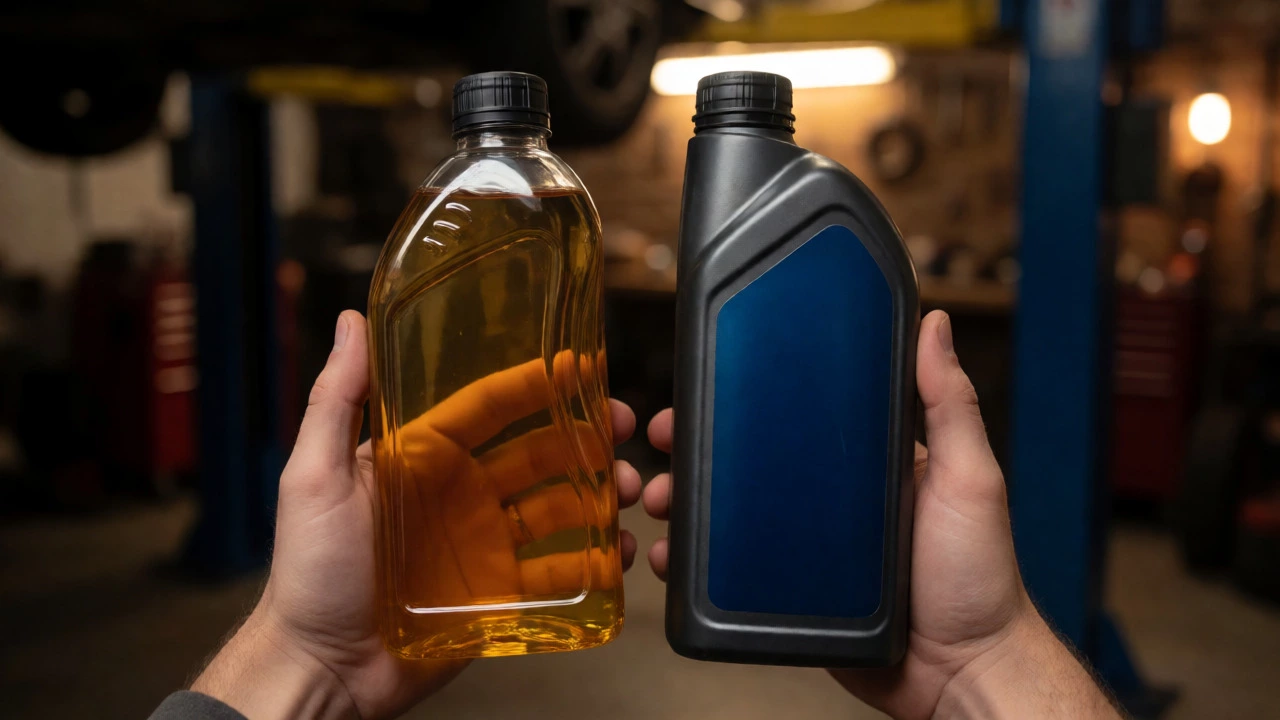
--You’re standing in the garage, holding two bottles of oil. One says "Conventional," the other says "Full Synthetic." Your manual is vague, your mechanic is busy, and you’re wondering if using the cheaper stuff will actually hurt your car. It’s a common dilemma, especially when budgets are tight. The short answer? For most modern cars, skipping synthetic oil isn’t just about saving a few pounds; it’s about protecting an engine designed to run on higher-performance fluids.
But here’s the twist: putting regular oil in a car that asks for synthetic won’t instantly destroy your engine. It’s not like pouring sugar into a diesel tank. However, it changes how your engine behaves, ages, and responds to stress. Let’s break down exactly what happens inside those metal walls when you choose conventional over synthetic, and whether you can safely switch back later.
The Chemistry Difference: Why It Matters
To understand the consequences, you have to look at the molecules. Conventional oil comes directly from crude oil. Refiners strip out impurities, but they can’t remove everything. The result is a mix of hydrocarbon chains with varying lengths and shapes. Think of them as tangled balls of yarn. They flow okay, but under high heat or pressure, they break down faster and create sludge.
Synthetic oil, on the other hand, is engineered in a lab. Scientists build uniform molecules from scratch. These molecules are consistent in size and shape, which means they slide past each other more smoothly. This uniformity gives synthetic oil better resistance to heat, oxidation, and viscosity breakdown. When you use regular oil in a high-stress environment, those irregular molecules shear apart, losing their ability to lubricate effectively.
Short-Term Effects: The First Few Thousand Miles
If you put regular oil in a new turbocharged engine, nothing dramatic happens immediately. The car starts fine. It idles normally. You might not notice any difference in sound or feel for the first 1,000 miles. Why? Because modern engines have tight tolerances and efficient cooling systems that keep temperatures within safe ranges for short periods.
However, subtle changes occur. Regular oil has a lower flash point-the temperature at which it begins to vaporize. In high-revving engines, this can lead to increased oil consumption. You might find yourself topping up the dipstick more often than usual. Also, because conventional oil doesn’t flow as freely in cold weather, startup wear increases slightly. Every time you start a cold engine, metal-on-metal contact occurs before the oil fully circulates. Synthetic oil’s superior cold-flow properties minimize this window of vulnerability.
Long-Term Consequences: Sludge and Wear
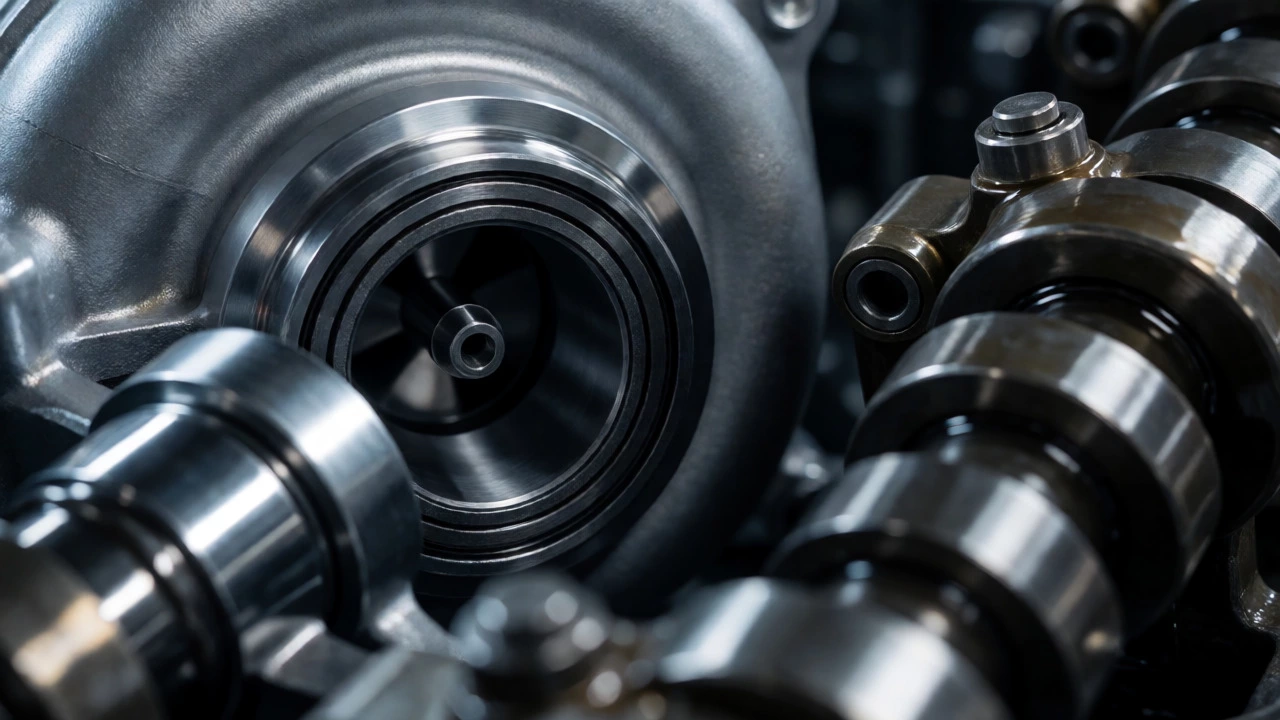
The real trouble starts after several months or years of using regular oil in an engine designed for synthetic. Heat is the enemy. Over time, conventional oil oxidizes, forming varnish and sludge. Sludge is a thick, tar-like substance that clogs oil passages. Once these passages are blocked, critical components like camshafts and bearings don’t get enough lubrication.
Consider a turbocharger. It spins at over 100,000 RPM and relies on oil for both lubrication and cooling. If the oil breaks down due to heat, the turbo’s bearings wear out prematurely. Replacing a turbo costs hundreds of pounds. Using the wrong oil to save £20 per service is a false economy.
Additionally, regular oil lacks the advanced additive packages found in synthetics. These additives neutralize acids, prevent corrosion, and suspend dirt particles so they can be filtered out. Without them, contaminants settle on engine surfaces, accelerating abrasive wear.
| Feature | Conventional (Regular) Oil | Full Synthetic Oil |
|---|---|---|
| Viscosity Stability | Breaks down faster under high heat | Maintains thickness longer |
| Cold Start Protection | Thicker in cold, slower flow | Flows quickly even in freezing temps |
| Change Interval | Every 3,000-5,000 miles | Every 7,500-10,000+ miles |
| Cost Per Quart | $4-$6 | $8-$12 |
| Sludge Resistance | Lower | Higher |
Can You Switch Back to Synthetic Later?
A persistent myth claims that once you use regular oil, you can never go back to synthetic. Some say synthetic will "leak" through seals conditioned by regular oil. This was true decades ago when seal materials were different. Today, elastomers used in gaskets and seals are compatible with both types.
You can absolutely switch back to synthetic. In fact, many mechanics recommend doing so if you’ve been using regular oil and want to extend protection. Just ensure you do a complete oil change, replacing the filter as well. There’s no need for a special flush unless the engine is heavily sludged. If your car runs smoothly on regular oil, switching to synthetic won’t cause leaks. It will simply provide better protection going forward.
When Is Regular Oil Actually Fine?
Not every car needs synthetic. Older vehicles with loose tolerances-say, a 1990s sedan with 150,000 miles on the clock-often benefit from thicker conventional oil. These engines have worn gaps where oil needs to fill space rather than just lubricate. Synthetic’s thinness might lead to more noise or minor leaks in these older setups.
Also, if you drive short distances in mild climates and change your oil frequently (every 3,000 miles), conventional oil works perfectly. The key factor is maintenance discipline. Regular oil requires stricter adherence to change intervals. Skip a change, and you risk sludge buildup much faster than with synthetic.

How to Choose the Right Oil for Your Car
Don’t guess. Check your owner’s manual. Look for the API (American Petroleum Institute) certification label on the bottle. Modern engines require specific standards, such as SP or SN Plus. Both conventional and synthetic oils can meet these, but synthetics usually offer a wider margin of safety.
Consider your driving habits. Do you tow heavy loads? Drive in stop-and-go traffic? Live in extreme heat or cold? These conditions stress oil more. Synthetic handles thermal cycling better. If your car sits idle for weeks, synthetic resists oxidation while stored.
- Check Viscosity: Match the grade (e.g., 5W-30) specified by the manufacturer.
- Look for Certifications: Ensure the oil meets or exceeds OEM specs.
- Evaluate Driving Style: High stress demands synthetic.
- Budget Reality: Synthetic lasts longer, potentially offsetting higher upfront cost.
The Bottom Line
Using regular oil instead of synthetic won’t blow up your engine tomorrow. But it accelerates wear, reduces efficiency, and shortens the lifespan of critical components. For modern, high-tech engines, synthetic is the default choice for good reason. It’s cheaper in the long run because it allows for longer drain intervals and prevents costly repairs. If you’re unsure, ask your mechanic to check the oil condition during your next service. If it looks dark and gritty, consider upgrading.
Can I mix regular and synthetic oil?
Yes, you can mix them. There is no chemical reaction that causes harm. However, mixing dilutes the performance benefits of the synthetic oil. It’s best to stick to one type for optimal protection, but in an emergency, topping up with whatever is available is better than running low on oil.
Will regular oil void my warranty?
It depends on the manufacturer. Many modern warranties specify synthetic oil requirements. If you use conventional oil that meets the correct viscosity and API standards, it may still be acceptable, but always check your vehicle’s warranty booklet. Failure to follow specifications could lead to denied claims for engine-related issues.
Is synthetic oil worth the extra cost?
For most drivers, yes. While the initial cost is higher, synthetic oil lasts twice as long as conventional oil. This means fewer oil changes per year, saving money on labor and filters. Additionally, it provides better protection against engine wear, potentially avoiding expensive repairs down the road.
What happens if I forget to change my synthetic oil?
Even synthetic oil eventually breaks down. If you exceed the recommended interval significantly, additives deplete, and sludge forms. While synthetic resists sludge better than conventional, it is not immune. Prolonged neglect leads to reduced lubrication, increased friction, and potential engine damage.
Does synthetic oil leak more than regular oil?
This is largely a myth. Synthetic oil does not cause new leaks. However, because it flows more easily, it might seep through existing weak seals that were previously plugged by thicker conventional oil deposits. If your engine is healthy, synthetic should not leak more than regular oil.