Suspension Symptom Checker
Select the symptoms you are experiencing with your vehicle to see likely causes and severity levels.
Select a symptom on the left to analyze your suspension health.
Diagnosis & Recommendations
Ever feel like your car is floating on a cloud when you hit a bump? Or maybe the steering feels loose, like it’s disconnected from the road? That isn’t just bad luck or poor driving conditions. It’s usually your suspension system crying for help. Most drivers ignore these cues until something snaps, but catching them early saves money and keeps you safe.
The suspension isn’t just about comfort. It’s what keeps your tires glued to the asphalt. When it wears out, braking distances increase, cornering becomes scary, and uneven tire wear eats up your budget. You don’t need to be a mechanic to spot the trouble. Here are the clear, undeniable signs that your suspension parts are past their prime.
Excessive Bouncing After Hitting a Bump
This is the classic symptom. If you push down on the front of your car and it bounces more than once or twice before settling, your shock absorbers or struts are likely shot. These components are designed to dampen the movement of the springs. When they lose their hydraulic pressure or gas charge, they can’t control the spring’s energy. The result is a floaty ride where every dip sends the car into a series of oscillations.
You might notice this most on highway off-ramps or rough backroads. If the car continues to sway after you’ve corrected the steering, the damping force is gone. This isn’t just annoying; it reduces tire contact with the road, which means less grip during emergency maneuvers.
Uneven Tire Wear Patterns
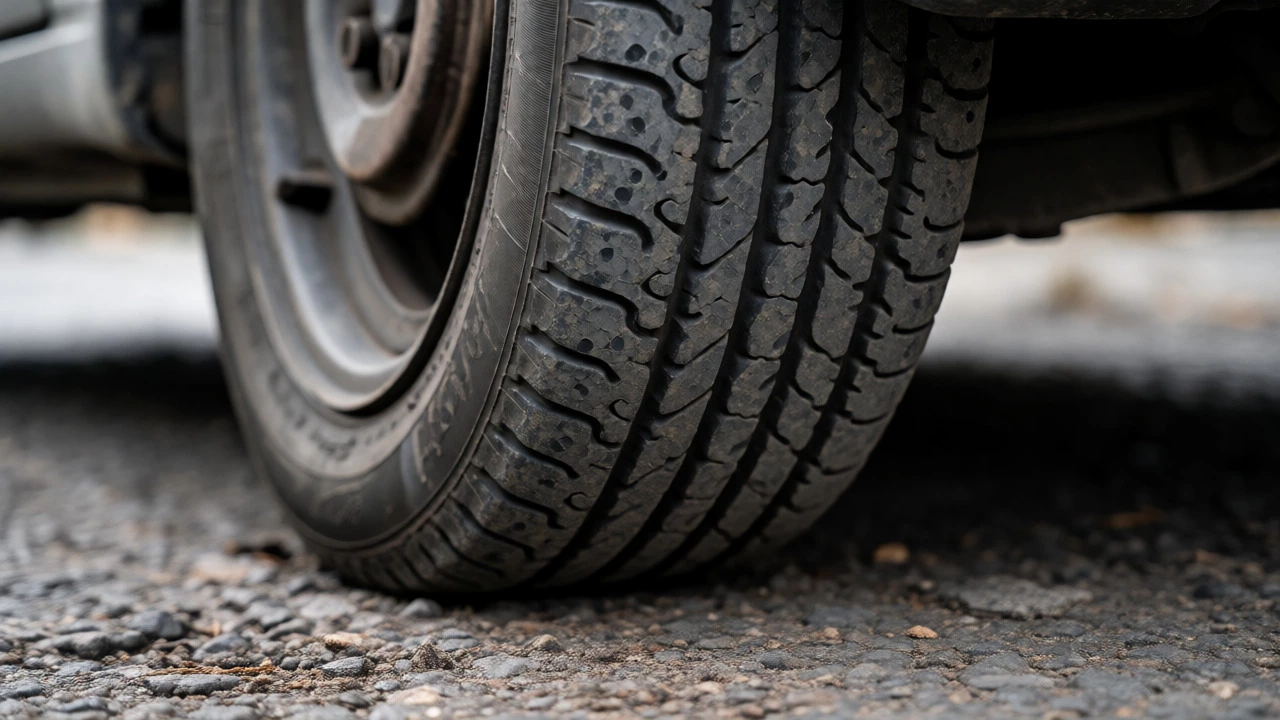
Your tires tell a story about your suspension. Walk around your car and look at the tread. Do you see scalloping or cupping? That’s when patches of rubber wear down faster than others, creating a wavy surface. This happens because a worn strut allows the tire to hop slightly as it rotates, wearing specific spots prematurely.
Another common sign is excessive inner or outer edge wear. While alignment issues cause this too, if you just had an alignment done and the wear returns quickly, suspect worn control arm bushings. These rubber mounts hold the control arms in place. When they crack or tear, the wheel moves independently of the rest of the chassis, throwing off the geometry constantly.
Knocking or Clunking Noises Over Bumps
Silence is golden in a healthy suspension. Loud knocks, clunks, or rattles when going over speed bumps or potholes indicate metal-on-metal contact or loose components. Often, this points to failed ball joints or tie rod ends. These joints connect the steering and suspension links to the wheels. They rely on grease-packed boots to stay lubricated. If those boots rip, dirt gets in, water washes out the grease, and the joint wears out.
A deep thud might suggest broken coil springs. Springs can snap near the bottom mount due to rust or fatigue. A broken spring loses its ability to support weight, causing the suspension to bottom out violently. Listen carefully: a sharp metallic ping often means a broken spring, while a dull thud suggests worn mounts or bushings.
Dipping Nose During Braking and Squatting Under Acceleration
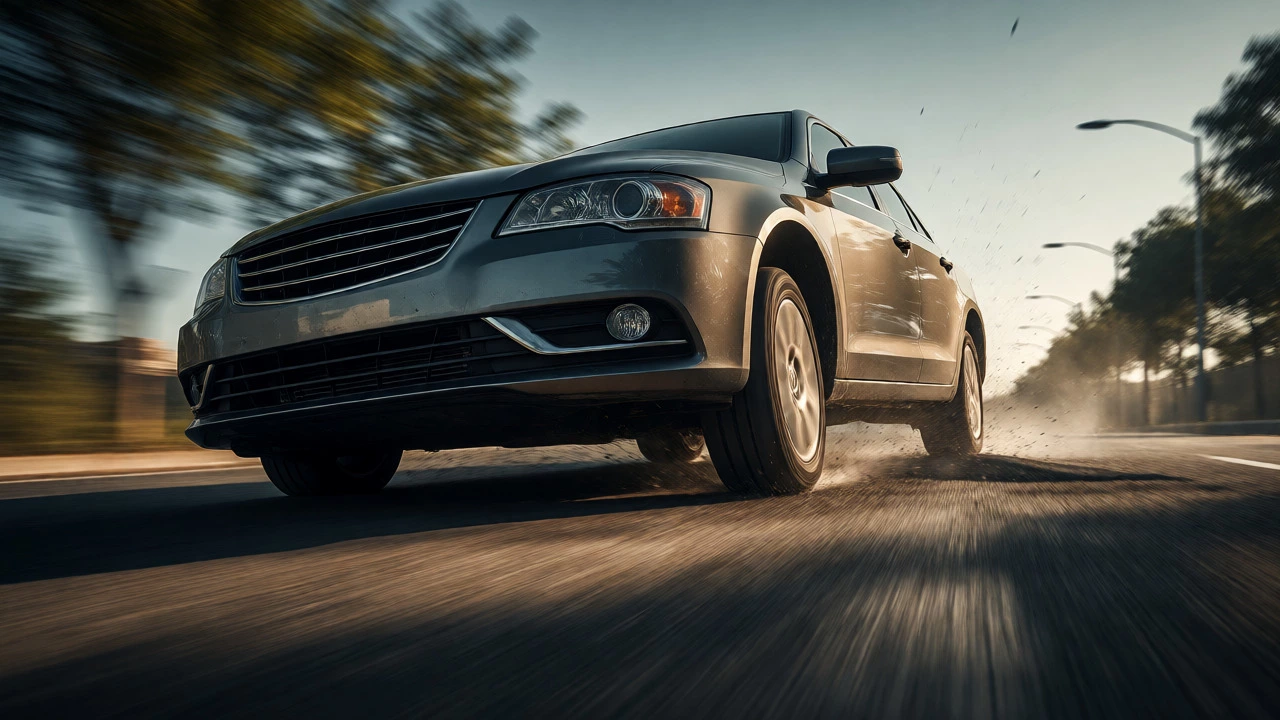
Think about how your car behaves when you slam on the brakes. Does the front end dive significantly? This "nose dive" indicates weak front shocks. Similarly, if the rear end squats heavily when you accelerate hard, the rear shocks aren’t doing their job. Properly functioning shocks keep the body level, ensuring weight transfer happens smoothly rather than abruptly.
This instability affects stability control systems. Modern cars rely on sensors to detect slip, but if the body is pitching wildly, the electronics struggle to compensate. You might find yourself correcting the steering more often than usual, which leads to driver fatigue on long trips.
Fluid Leaks on Shock Absorbers
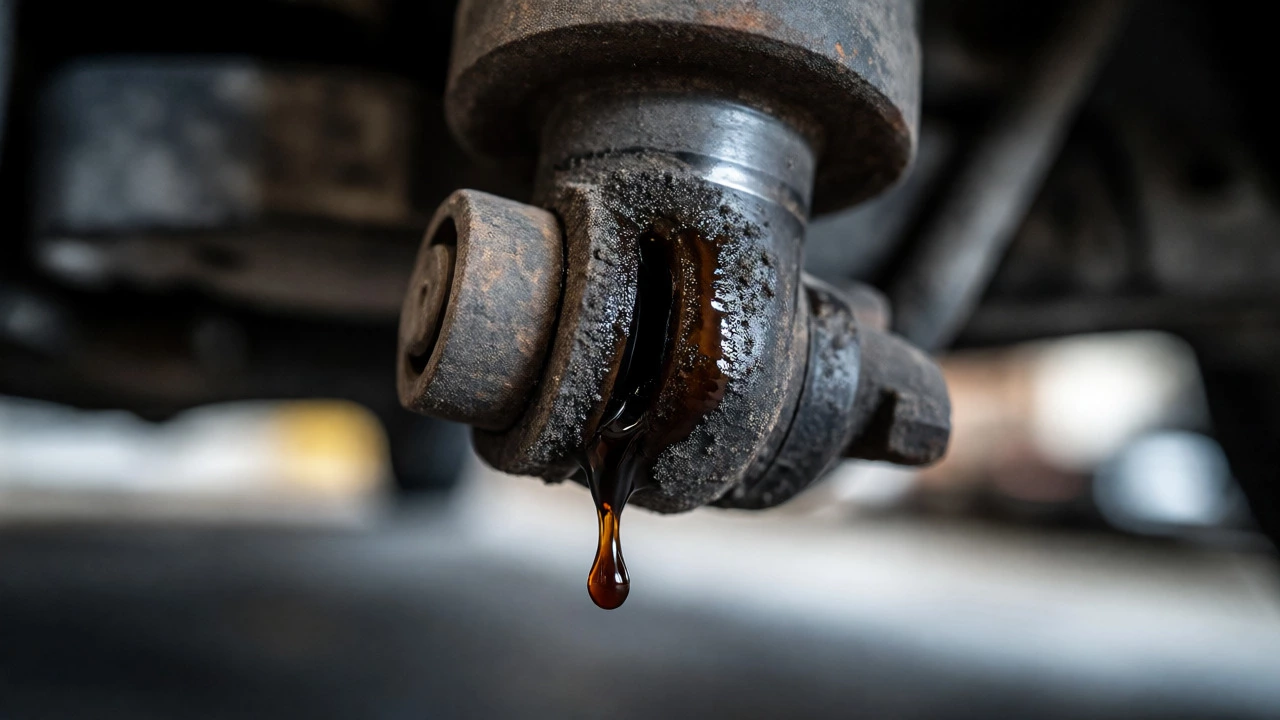
If you’re comfortable looking under the wheel well, check the shock absorbers. Are they covered in oily residue? Shocks contain hydraulic fluid that creates resistance. When seals fail, this fluid leaks out. Once the fluid is gone, the shock has no damping capability. You’ll often see dust caked onto the wet area, forming a distinct ring or streak.
Note: A tiny bit of moisture on a new shock is normal (it’s called "weeping"). But heavy, dripping oil means replacement is overdue. Don’t confuse this with brake fluid or power steering leaks-check the location relative to the wheel hub and axle.
| Symptom | Likely Worn Part | Severity Level |
|---|---|---|
| Car bounces repeatedly after a bump | Shock Absorbers / Struts | Moderate (Safety risk) |
| Cupped or scalloped tire tread | Struts / Control Arm Bushings | Moderate (Costly tire replacement) |
| Clunking noise over small bumps | Ball Joints / Sway Bar Links | High (Potential wheel loss) |
| Nose dives when braking | Front Shocks | Moderate (Increased stopping distance) |
| Steering pulls to one side | Tie Rod Ends / Ball Joints | High (Loss of control) |
Why Ignoring These Signs Costs More
Replacing shocks is expensive, but ignoring them is worse. Worn suspension doesn’t just hurt your wallet through premature tire replacements. It stresses other components. Bad ball joints can damage the CV boot. Failed struts put extra load on the wheel bearings. Eventually, a seized ball joint could separate, causing the wheel to fold under the car. That’s not a repair bill; that’s a tow truck and a potential accident.
Also, consider insurance. If you crash because your brakes didn’t work right due to poor weight distribution, insurers might question maintenance records. Keeping your suspension in check is part of basic vehicle upkeep, just like changing oil.
How to Check Your Suspension Yourself
You don’t need a lift. Try the bounce test. Park on flat ground. Push firmly on each corner of the car and release. Count the bounces. One or two is fine. Three or more means replace that corner’s damper. Next, turn the steering wheel lock-to-lock while listening for grinding or popping sounds. That often points to worn strut mounts or tie rods.
Finally, inspect visually. Look for cracked rubber bushings. If the rubber looks dry, cracked, or missing chunks, it’s compromised. Grease leakage from ball joints or tie rods is another red flag. If you see any of these, get a professional inspection soon. Suspension failure rarely gives you weeks of warning-it often goes from "slightly noisy" to "dangerous" very quickly.
How long do suspension parts typically last?
Most manufacturers recommend replacing shock absorbers and struts between 50,000 and 100,000 miles. However, this varies heavily by driving conditions. Pothole-ridden city streets wear them out much faster than smooth highways. Always check your owner's manual for specific intervals.
Can I drive with a broken ball joint?
It is highly unsafe. A ball joint connects the steering knuckle to the control arm. If it fails completely, the wheel can detach or fold inward, causing immediate loss of control. If you hear clunking, limit driving to low speeds and get it fixed immediately.
Do worn struts affect fuel economy?
Indirectly, yes. Poor suspension increases rolling resistance and causes the engine to work harder to maintain stability. Additionally, misaligned wheels due to worn suspension create drag, reducing efficiency by 1-2%.
Is it cheaper to replace shocks in pairs or all four?
Always replace them in pairs (both fronts or both rears) to maintain balance. Replacing all four is ideal for consistent handling and ride height, especially if the car has high mileage. Mixing new and old shocks can lead to unpredictable handling.
What does a worn sway bar link sound like?
A rattling or knocking noise when turning or going over small bumps. Unlike ball joints, sway bar links are cheaper and easier to replace. The noise is often louder at low speeds and diminishes as the car gains momentum.