Exhaust System Calculator
Your Riding Profile
Your Budget
Legal Requirements
Your Recommendation
When you’re thinking about upgrading your motorcycle’s exhaust, the first big decision is simple: slip-on or full system? It sounds like a straightforward choice, but the answer isn’t just about looks or noise. It’s about power, weight, cost, and how you actually ride. Let’s cut through the marketing hype and show you exactly what each system does - and doesn’t - deliver.
What Is a Slip-On Exhaust?
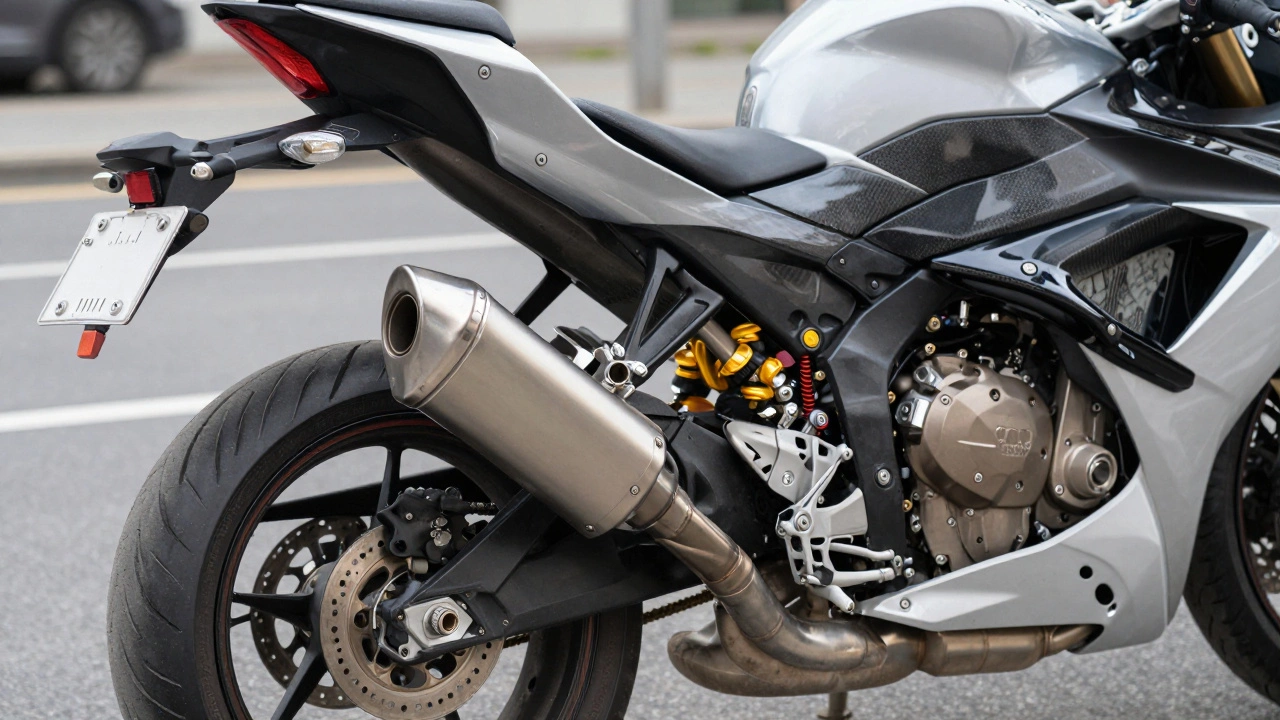
A slip-on exhaust, also called a muffler-only upgrade, replaces just the rear section of your stock exhaust - the part that ends in the muffler. It bolts right onto the existing header pipes. You don’t touch the factory headers, catalytic converters, or mid-pipe. That’s why installation usually takes under an hour with basic tools.
Most slip-ons are made from stainless steel, titanium, or carbon fiber. They’re lighter than stock, and they often have a more aggressive tone. Brands like Akrapovič, Vance & Hines, and SC Project make slip-ons that sound meaner without being obnoxious. But here’s the truth: slip-on exhausts rarely add more than 2-5 horsepower. That’s it. On a stock engine, you’re not getting a major power bump. The real gain? Weight reduction - often 4 to 8 pounds - and a noticeable change in sound.
Think of a slip-on like new shoes. You’re not changing your whole body, just improving what’s on the outside. It’s a good first step if you’re new to tuning or just want a better sound without messing with your bike’s fuel map.
What Is a Full Exhaust System?
A full exhaust system replaces everything from the header pipes all the way to the muffler. That means removing the factory headers, catalytic converter (if legal), mid-pipe, and muffler. You’re starting from scratch. This is a full rebuild.
Because you’re replacing the entire flow path, a full system lets engineers optimize the length, diameter, and routing of the pipes. That’s where real performance gains happen. On most sportbikes, a properly tuned full system can add 10-18 horsepower at the wheel. On larger cruisers or touring bikes, gains are smaller - around 5-10 hp - but torque improves noticeably in the mid-range.
Full systems also let you eliminate the stock catalytic converter. That’s a big deal. Catalytic converters restrict exhaust flow. Removing them (where legal) reduces backpressure and lets the engine breathe easier. But here’s the catch: you’ll need to remap the ECU. Stock fuel maps are tuned for the stock exhaust and emissions equipment. Without a tune, your bike will run lean, run hot, and might even misfire.
Power Comparison: Slip-on vs Full System
Let’s look at real numbers. A 2025 Yamaha R7 with a stock exhaust makes 71 hp at the rear wheel. Add a high-end slip-on? You might hit 73 hp. Add a full system with a custom tune? You’re looking at 83 hp. That’s a 17% increase. Not bad.
On a 2024 Harley-Davidson Sportster S, the stock exhaust delivers 98 hp. A slip-on gets you to 101 hp. A full system with ECU tuning? 112 hp. Again, the difference is clear. The slip-on gives you a hint of performance. The full system gives you a real upgrade.
But power isn’t everything. Torque matters more for street riding. A full system improves mid-range torque - the power you feel when accelerating out of corners or merging onto highways. A slip-on barely touches it.
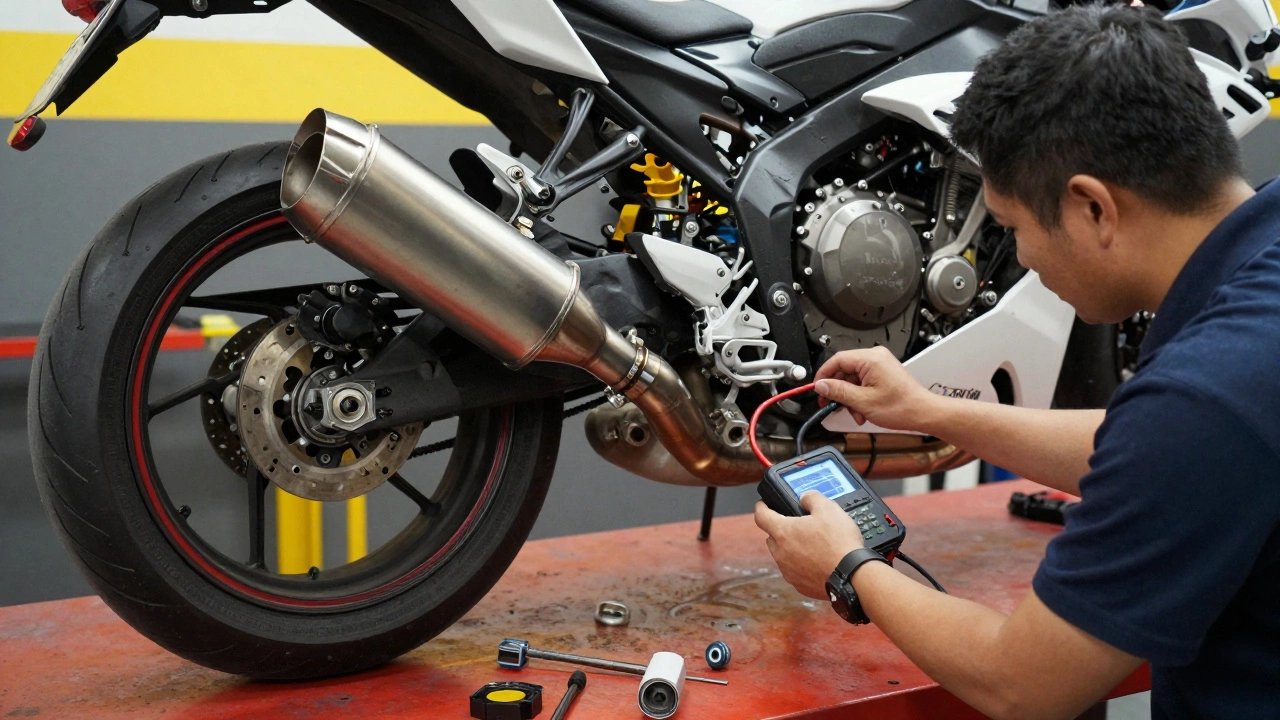
Sound and Tone: What You’ll Actually Hear
Everyone wants that deep, throaty rumble. But not all exhausts sound the same. Slip-ons change the muffler’s internal baffles, which alters the tone slightly. You’ll get a bit louder, maybe a bit more metallic. But the core sound is still shaped by the headers and catalytic converter - which you didn’t change.
A full system changes the entire acoustic signature. The headers are designed to work with the muffler. That means better scavenging, cleaner pulses, and a richer, more resonant sound. A well-designed full system doesn’t just get louder - it gets better. It sounds more like a race bike, not just a modified street bike.
Also, note this: slip-ons often require adding extra baffles to meet noise regulations. Full systems are built from the ground up to meet legal limits without sounding dull.
Cost and Installation
Slip-ons range from $300 to $1,200. Full systems? $800 to $2,500. But that’s just the part cost. A slip-on usually doesn’t need tuning. You can install it yourself. A full system almost always requires a tune - which costs $200-$500 depending on your bike and tuner. You also need more tools and time. Most people pay a shop $150-$300 to install a full system.
So if you’re on a budget, slip-on wins. But if you’re serious about performance, the full system’s cost includes the tune - which is mandatory. Skipping the tune on a full system is like putting premium gas in a car with a clogged fuel filter. It won’t help.
Weight Savings and Handling
Slip-ons save a few pounds. Full systems save 15-25 pounds. That’s huge on a sportbike. Less weight near the rear end improves turn-in, reduces rear-end heaviness, and makes the bike feel more agile. On a heavy cruiser, it won’t transform handling - but it does reduce fatigue on long rides.
Titanium full systems are lighter than aluminum slip-ons. And lighter components mean less unsprung weight - which helps suspension performance. That’s why pro racers use full systems, not slip-ons.
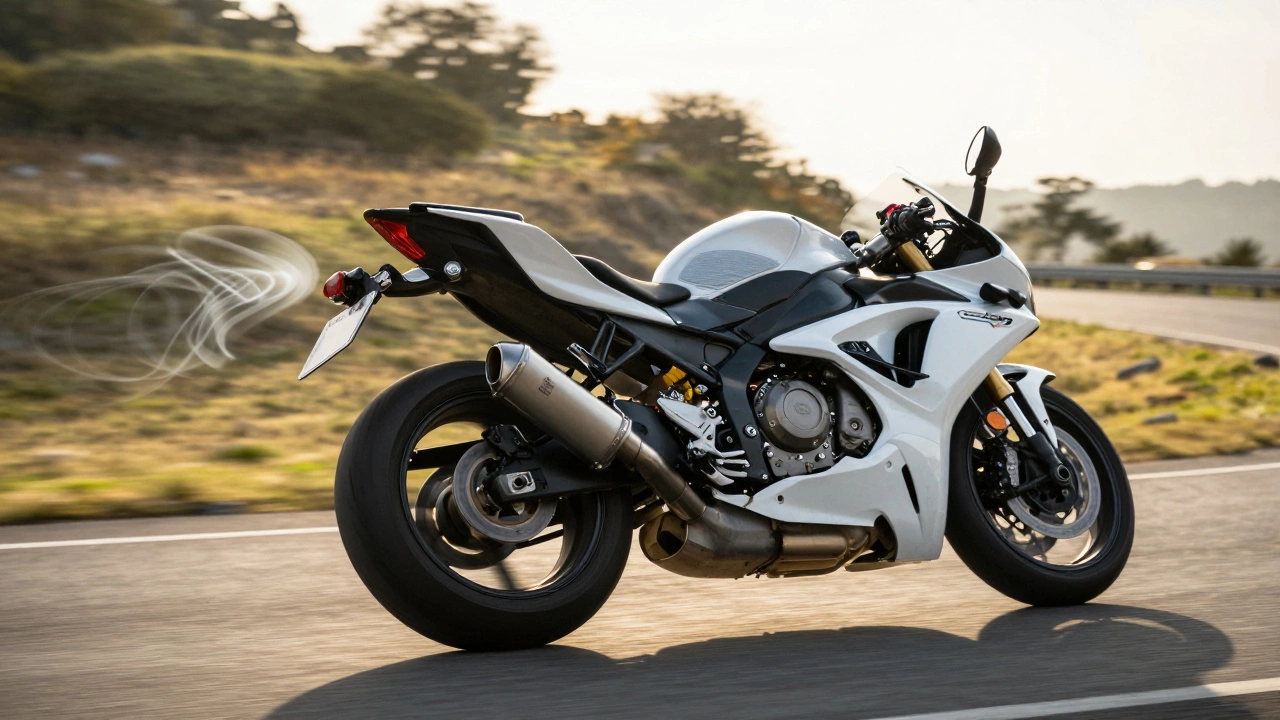
Legal and Emissions Issues
Slip-ons usually keep the stock catalytic converter. That means they’re almost always street legal. Full systems? Not always. If you remove the catalytic converter, you’re no longer emissions-compliant in most states and countries. You can’t register the bike in California, New York, or the EU. Even if you don’t care about registration, police in some areas will pull you over for a loud exhaust - and a removed cat is an automatic ticket.
Some full systems are sold as “off-road only.” That’s a red flag. If you’re riding on public roads, you need a system with a catalytic converter or one that’s CARB-certified. Look for the label: “EPA compliant” or “CARB EO number.”
Which One Should You Choose?
Here’s the breakdown:
- Choose a slip-on exhaust if: You want a better sound, minor weight savings, and you’re not looking to spend more than $1,000. You ride casually, don’t track your bike, and don’t want to deal with tuning.
- Choose a full exhaust system if: You want real power gains, better torque, improved handling, and you’re willing to spend $1,500+ including tuning. You ride aggressively, track occasionally, or plan to upgrade other parts like air filters and fuel injectors.
Here’s one more thing: if you’re planning to add a high-flow air filter or upgrade your fuel injectors later, start with the full system now. Installing a slip-on first means you’ll have to replace it anyway. That’s double the cost.
And if you’re on a tight budget? Go slip-on. But don’t expect miracles. It’s a cosmetic upgrade with minor performance benefits. The full system is the real performance upgrade.
Common Mistakes to Avoid
- Buying a full system and not tuning the ECU - you’ll lose power and risk engine damage.
- Choosing a slip-on that’s too loud - it might get you pulled over or banned from group rides.
- Ignoring emissions laws - you can’t ride legally everywhere with a removed catalytic converter.
- Thinking a carbon fiber slip-on is faster - material doesn’t affect power. Design does.
Don’t let flashy ads fool you. The best exhaust isn’t the one that looks the coolest. It’s the one that works with your bike, your riding style, and your budget.