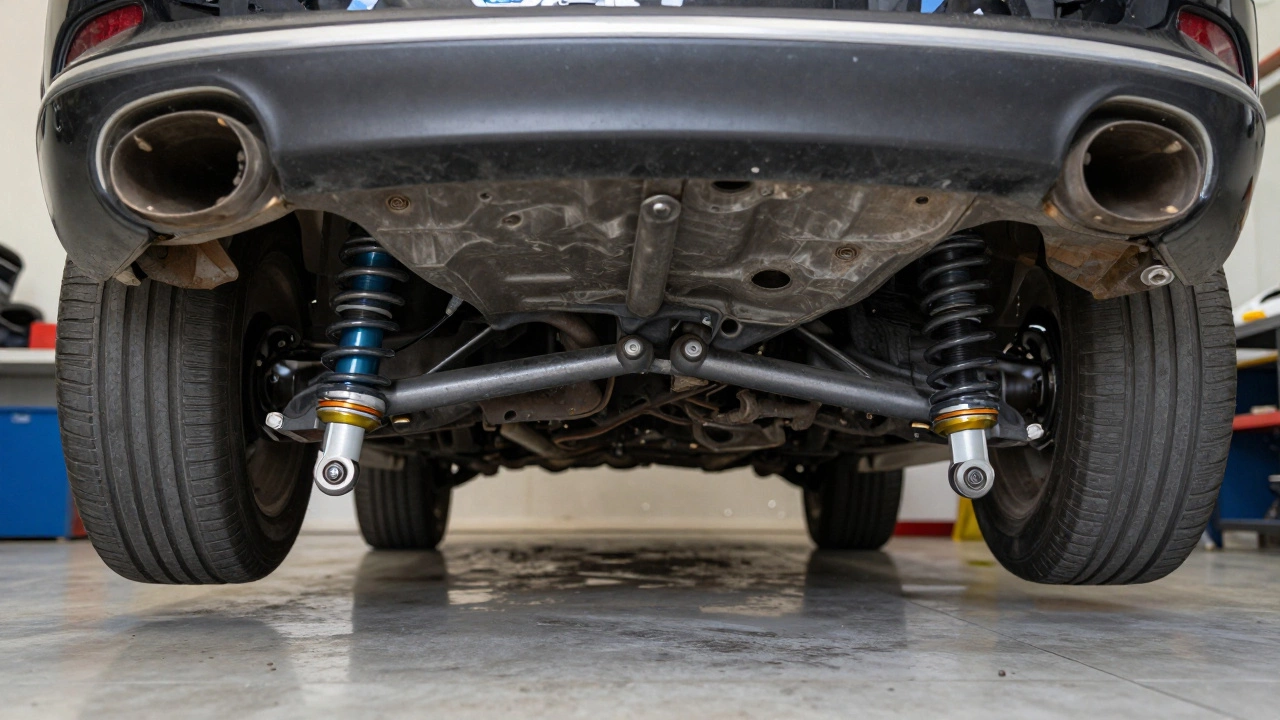
Ever hit a pothole and felt your car jump like it’s trying to leave the road? That’s your suspension working - or failing to work - right then and there. Most drivers don’t think about suspension parts until something starts rattling, squeaking, or making the ride feel like a washing machine on spin cycle. But understanding what’s under your car isn’t just for mechanics. Knowing the basics helps you spot trouble early, save money, and stay safe.
Why Suspension Parts Matter
Your car’s suspension isn’t just there to make the ride smooth. It’s the system that keeps your tires in contact with the road, no matter how bumpy it gets. That’s critical for steering, braking, and overall control. A worn-out suspension doesn’t just feel bad - it can increase stopping distances, make your car harder to handle in rain or snow, and even cause uneven tire wear that costs you hundreds in replacements.
Think of it like shoes. If your soles are worn down, you slip. Same with suspension. When parts wear out, your tires lose grip. And in a panic stop or sharp turn, that’s when you’ll notice.
The Core Suspension Parts You Need to Know
Modern cars use a mix of components to handle bumps, weight shifts, and road forces. Here are the five main parts you’ll find under most vehicles:
- Shock absorbers - These are the most recognizable part. They don’t support the car’s weight - they control how fast the springs bounce back after hitting a bump. If your car bounces three times after driving over a speed bump, your shocks are done.
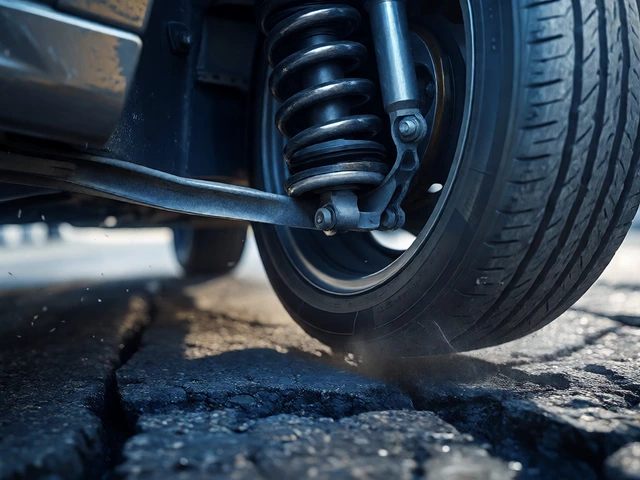
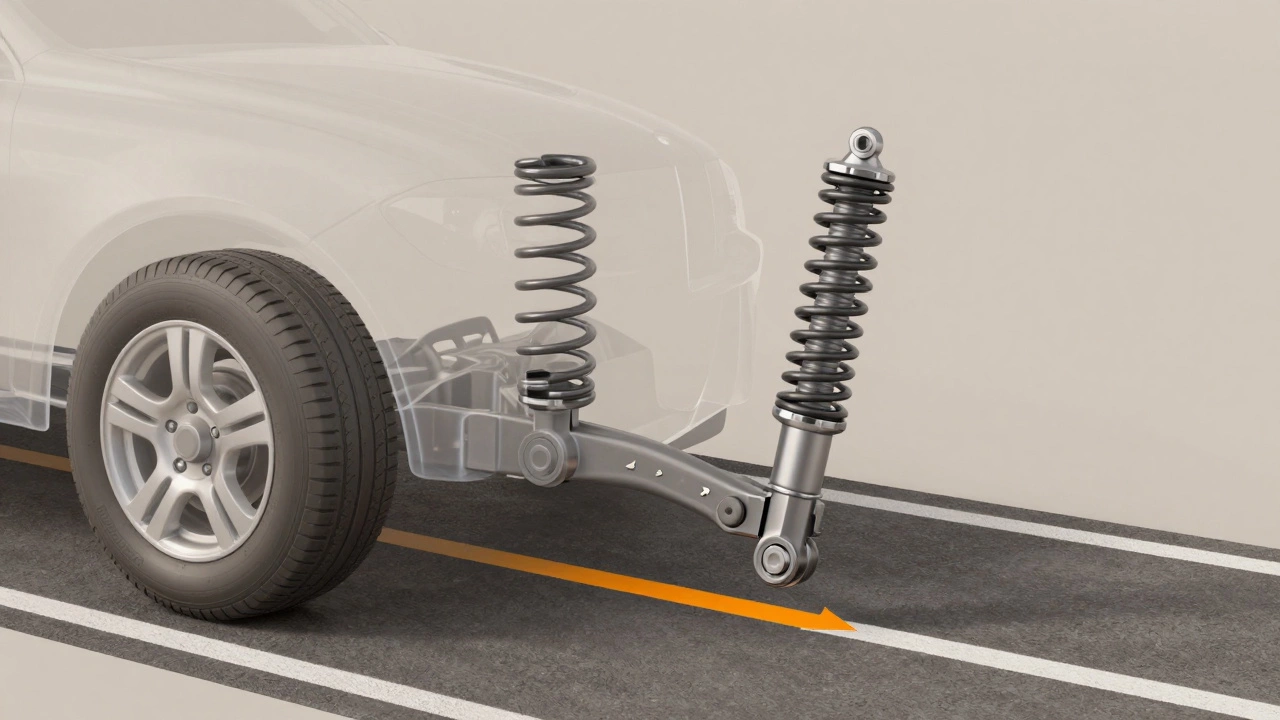
- Struts - These combine a shock absorber and a coil spring into one unit. They’re also structural parts of the steering and suspension system. Many compact cars and SUVs use struts in the front. Replacing them often means a full alignment afterward.
- Control arms - These are the metal arms that connect the wheels to the car’s frame. They let the wheels move up and down while keeping them aligned. Ball joints at the ends let them pivot. Worn ball joints can cause clunking noises and steering that feels loose.
- Stabilizer bars (sway bars) - These thin metal rods connect the left and right sides of the suspension. They reduce body roll when you turn. If your car leans too much in corners, the sway bar links or bushings may be worn.
- Coil springs - These are the heavy coils you see wrapped around struts or under control arms. They carry the weight of the car. Springs don’t wear out like shocks, but they can sag over time - especially on older cars or ones that carry heavy loads often.
What Happens When These Parts Fail?
Each part has its own warning signs:
- Shocks and struts: Uneven tire wear, nose-diving when braking, bouncing over small bumps, oil leaking from the shock body.
- Control arms and ball joints: Clunking over bumps, steering that wanders, uneven tire wear on the inside or outside edges.
- Sway bar links: Rattling or clunking when turning, more body roll than usual.
- Coil springs: One corner of the car sitting lower than the others, or a noticeably rougher ride.
These signs don’t always show up at once. A bad ball joint might only clunk when you go over a curb. A worn shock might make your car feel floaty on highways. That’s why regular checks matter - not just when something breaks.
How Long Do Suspension Parts Last?
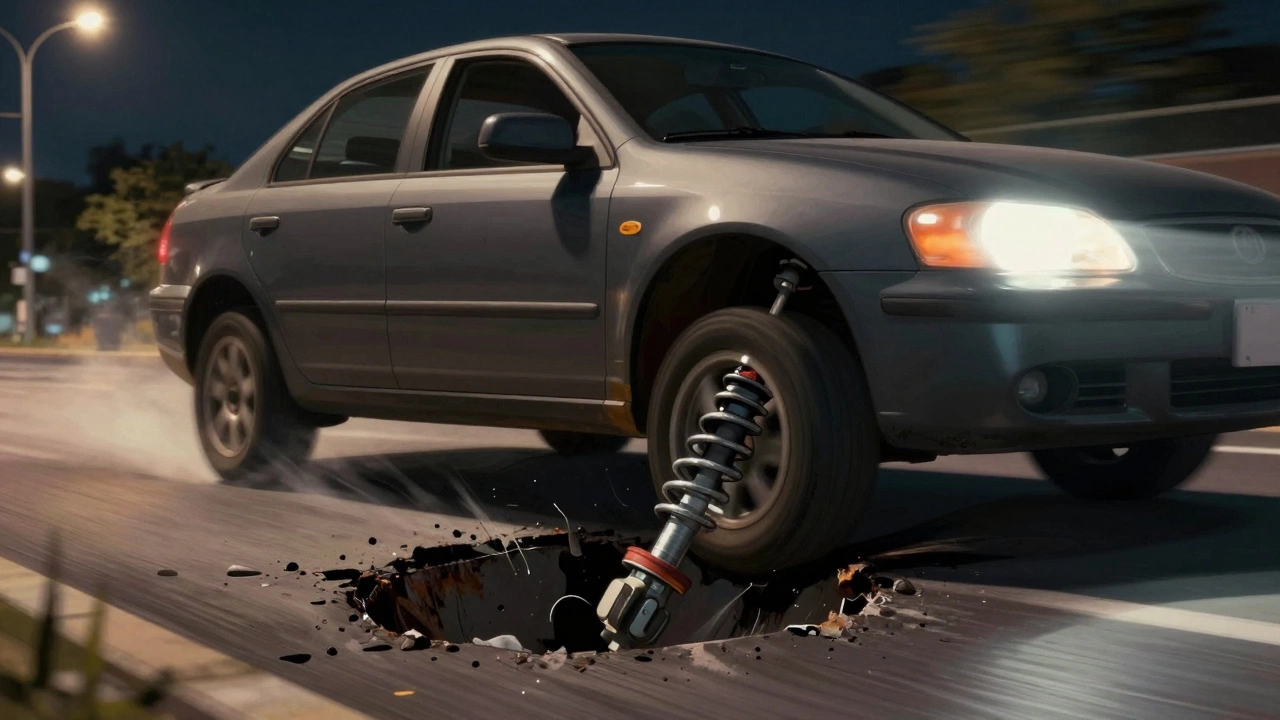
There’s no universal timeline. It depends on your driving habits, road conditions, and climate. In the UK, where roads are full of potholes and wet weather is common, most drivers should check their suspension every 20,000 to 30,000 miles.
Shock absorbers and struts typically last 50,000 to 100,000 miles. But if you drive mostly on rough roads, they may need replacing at 40,000 miles. Control arms and bushings often last longer - sometimes over 100,000 miles - but rubber bushings dry out and crack in cold weather, especially in northern regions like Manchester.
Don’t wait for a loud noise. If your car feels less stable, or if you notice the ride changing over a few months, get it checked. Suspension wear is gradual. You don’t wake up one day with a broken part - you slowly lose control without realizing it.
What to Do When Parts Need Replacing
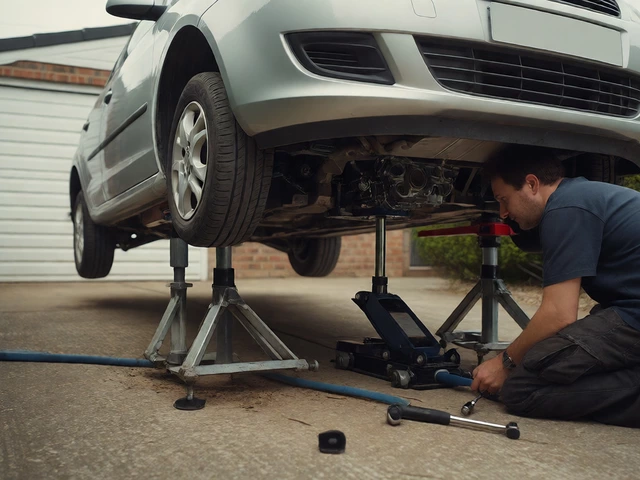
Replacing suspension parts isn’t always a DIY job. Struts, for example, require spring compressors and alignment tools. But you can do some prep work:
- Check your owner’s manual for recommended service intervals.
- Look for visible damage: Cracked rubber bushings, rusted arms, or leaking fluid on shocks.
- Do the bounce test: Push down hard on each corner of the car. If it bounces more than once or twice, the shocks are likely worn.
- Get a professional inspection if you notice any of the warning signs above.
When replacing parts, match OEM specs. Aftermarket parts can be cheaper, but low-quality shocks or control arms can make your ride worse than the originals. Stick with brands like Monroe, KYB, or Sachs if you’re replacing shocks or struts.
Common Myths About Suspension
There’s a lot of misinformation out there:
- Myth: You only need to replace shocks if they’re leaking. Truth: Shocks wear out from constant use, not just fluid leaks. A dry shock can be just as worn as a leaking one.
- Myth: Upgrading to sport shocks makes your ride better. Truth: Sport shocks are stiffer. They improve handling on track days but make daily driving jarring on UK roads.
- Myth: If one shock is bad, you only need to replace one. Truth: Always replace shocks or struts in pairs (front or rear). Mismatched parts cause uneven handling and premature wear on other components.
What Happens If You Ignore Bad Suspension?
Ignoring worn suspension doesn’t just make the ride uncomfortable - it’s a safety risk.
Worn shocks mean longer stopping distances. In wet conditions, your car can hydroplane more easily because the tires aren’t staying flat on the road. Worn control arms can lead to sudden wheel misalignment, causing you to lose control at high speeds. And if a ball joint breaks while you’re driving? That’s not a repair - that’s a crash waiting to happen.
Insurance companies in the UK have seen a rise in claims linked to suspension failure after winter. Potholes and salt on roads accelerate wear. A £300 repair for shocks can save you £2,000 in tire replacement or worse.
Final Tip: Listen to Your Car
Your car talks to you. If the ride feels different - heavier, bouncier, noisier - don’t brush it off. Suspension parts are like the skeleton of your vehicle. When they weaken, everything else suffers.
Check them every two years. Pay attention to how your car behaves on rough roads. And if you’re unsure, get a second opinion from a trusted mechanic. A 15-minute inspection can prevent a dangerous, expensive problem down the line.
What are the most common suspension parts that wear out first?
Shock absorbers and struts are usually the first to go because they work constantly to control spring movement. Ball joints and sway bar links follow closely, especially on cars driven on rough roads or in areas with lots of potholes. Rubber bushings also dry out and crack over time, leading to clunks and loose steering.
Can I drive with a broken suspension part?
You might be able to drive short distances, but it’s unsafe. A broken shock or strut makes your car harder to control, especially in emergencies. A failed ball joint can cause the wheel to detach. Even if the car seems to drive fine, damaged suspension increases the risk of losing control or damaging other parts like tires and brakes.
Do I need an alignment after replacing suspension parts?
Yes, especially if you replace struts, control arms, or any part that connects to the steering system. Even a slight misalignment causes uneven tire wear and poor handling. Most shops include alignment in the price when replacing major suspension components.
How much does it cost to replace suspension parts?
Shock absorbers cost £80-£150 each, with labor around £100-£180 per pair. Struts are more expensive - £150-£300 each plus £200-£400 in labor. Control arms range from £100-£250 per side, depending on the car. Always get quotes from two local mechanics. Some offer package deals for front or rear suspension jobs.
Are aftermarket suspension parts reliable?
Some are, but many aren’t. Stick to reputable brands like Monroe, KYB, Sachs, or Bilstein. Cheap no-name parts may look the same but use lower-grade materials. They can wear out in under 20,000 miles or make your ride worse than the original parts. Don’t save £50 if it costs you £500 in tire wear or safety risk.