Suspension Stiffness Analyzer
Enter your vehicle details and current spring setup to determine if your suspension is optimized for street driving or if it risks causing wheel hop and component wear.
Good Balance
Your spring rate appears appropriate for the given conditions.
Why This Matters
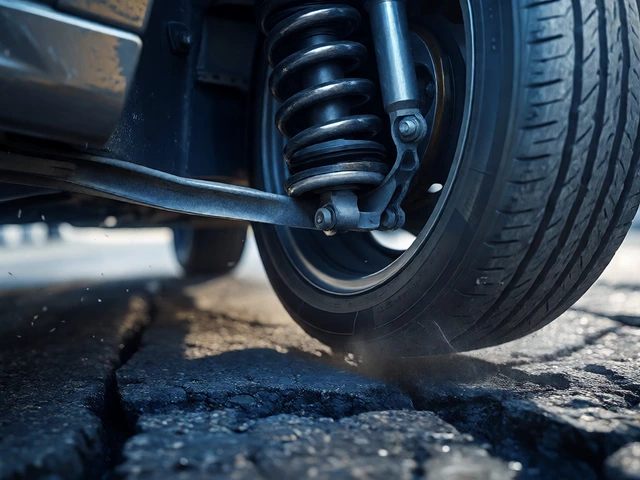
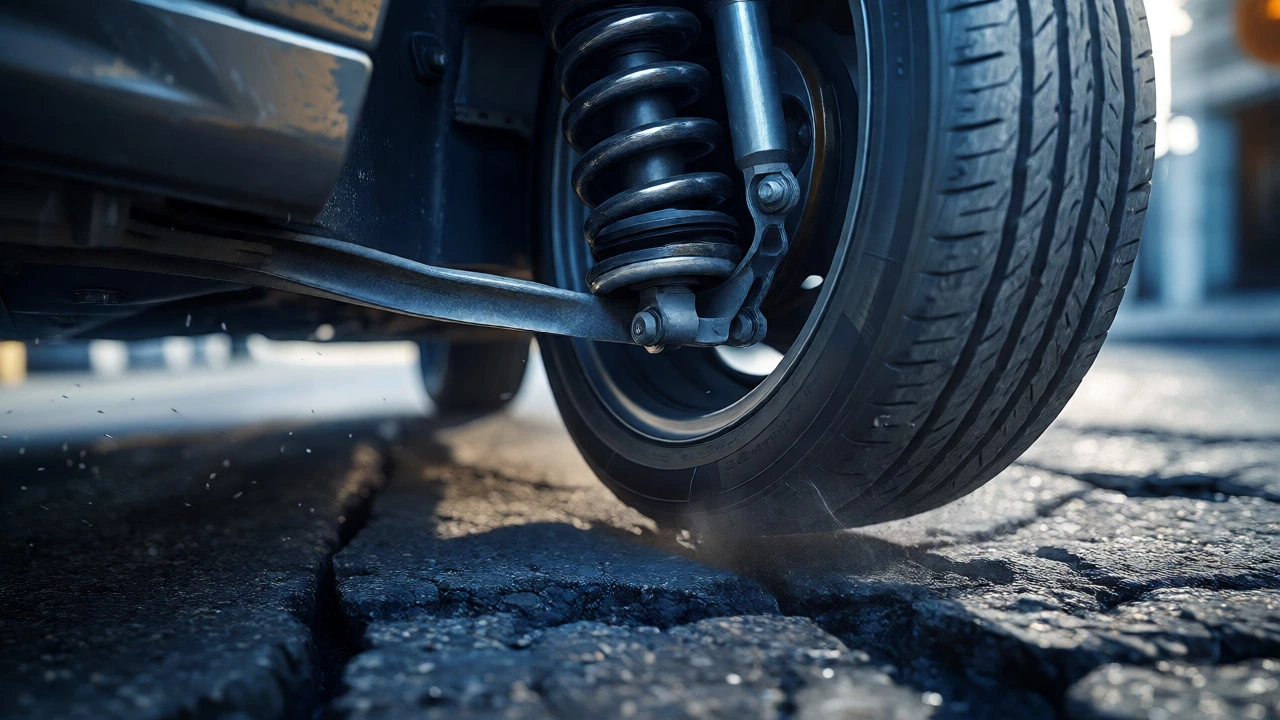
Wheel Hop: If springs are too stiff for the road surface, tires lose contact with the ground during bumps, reducing braking and cornering grip.
Damper Mismatch: Stiff springs require significantly stiffer dampers (approx. 15-20% more damping force per 10% increase in spring rate). Stock shocks often fail under high-rate springs, leading to uncontrolled oscillation.
You just swapped out your old, sagging coil springs for a set of fresh, aggressive upgrades. The car sits lower, the stance looks meaner, and you’re ready to hit the road. But ten minutes in, you feel it. Every crack in the pavement sends a jolt up your spine. Your rear end skips over bumps like a stone on water. You might think, "Hey, sporty cars are supposed to be stiff," but there’s a line between firm and punishing.
When suspension springs are too stiff, they stop doing their primary job: keeping the tires planted on the ground. Instead of absorbing energy, they reflect it back into the chassis. This isn't just about comfort; it fundamentally changes how your vehicle handles, brakes, and wears down its components. If you're experiencing a ride that feels more like a go-kart than a car, this guide breaks down exactly what happens mechanically, why it matters for safety, and how to fix it without selling your soul (or your wallet).
The Physics of Over-Sprung Suspension
To understand the problem, you have to look at what a spring actually does. It’s not just a metal coil holding the car up. It’s an energy storage device. When you hit a bump, the spring compresses, storing kinetic energy. Then, as the wheel moves back down, it releases that energy. Ideally, the shock absorber (or damper) controls the speed of this release, turning that energy into heat.
If the spring is too stiff-meaning it has a high spring rate measured in pounds per inch or newtons per millimeter-it resists compression too aggressively. A standard factory spring might need 150 lbs of force to compress one inch. A track-focused race spring might need 600 lbs. If you put those 600-lb springs on a street car with stock dampers, the damper can’t keep up. The spring snaps back too fast. The result? The wheel loses contact with the road surface.
| Spring Type | Typical Rate (lbs/in) | Primary Use Case | Street Ride Quality |
|---|---|---|---|
| Stock OEM | 80 - 150 | Daily Commuting | Soft, Comfortable |
| Sport / Lowering | 150 - 300 | Canyon Carving | Firm, Communicative |
| Track Day | 300 - 500 | Circuit Racing | Harsh, Requires Smooth Tarmac |
| Race / Drag | 500+ | High Speed Stability | Punishing on Public Roads |
Immediate Symptoms: What You’ll Feel Behind the Wheel
The first sign is usually discomfort. But don’t dismiss it as just "being soft." Your body is giving you data. If your teeth chatter when you drive over a manhole cover, your suspension is working against you, not with you. Here are the specific mechanical symptoms you’ll notice:
- Wheel Hop: This is the most dangerous symptom. On uneven roads, the tire bounces rapidly against the asphalt. You lose traction because the rubber isn't staying in constant contact with the surface.
- Harsh Impact Transmission: Sharp jolts travel directly through the seat mounts and steering column. There is no gradual absorption; it’s an instant shock.
- Understeer at Entry: Paradoxically, stiffer front springs can make the car push wide when entering corners. Why? Because the inside front wheel lifts off the ground too easily during load transfer, reducing grip.
- Oversteer on Bumps: In the rear, a stiff spring can cause the tail to step out if the outside rear wheel unloads suddenly while cornering.
Think about driving a Formula 1 car on a gravel road. It works great on smooth tarmac because the aerodynamics and tires do the work. But on rough surfaces, the lack of compliance makes it uncontrollable. Street cars face similar physics, just at lower speeds.

Why Your Shocks Can’t Save You
A common misconception is that you can "fix" stiff springs by simply upgrading to better shocks. While high-quality bilstein or koni dampers help, they cannot compensate for a fundamental mismatch in spring rates. Dampers control velocity; springs control displacement.
If the spring is too strong, the damper valve opens fully trying to let fluid pass, but the physical force of the spring rebounding is still too high. This leads to two outcomes:
- Blown Shocks: The internal seals fail prematurely because they are being hammered beyond their design limits. You might find yourself replacing shocks every year instead of every five years.
- Uncontrolled Oscillation: After hitting a bump, the car doesn't settle quickly. It bounces multiple times. This is called "ringing." It unsettles the driver and reduces confidence in emergency maneuvers.
Matching spring rates to damper valving is critical. A general rule of thumb used by suspension tuners is that for every 10% increase in spring rate, you need approximately a 15-20% increase in damping force to maintain proper control. If you skipped this math, your handling will suffer.
The Hidden Costs: Component Wear and Safety Risks
Beyond the headache, stiff springs attack your wallet and your safety margins. When the suspension is too rigid, the chassis absorbs impacts that should have been dissipated by the springs. Where does that energy go?
- Tire Cupping: Uneven wear patterns develop on the tread. Instead of smooth wear, you get scalloped edges. This creates noise and vibration that mimics wheel balance issues, leading to unnecessary alignments and balancing costs.
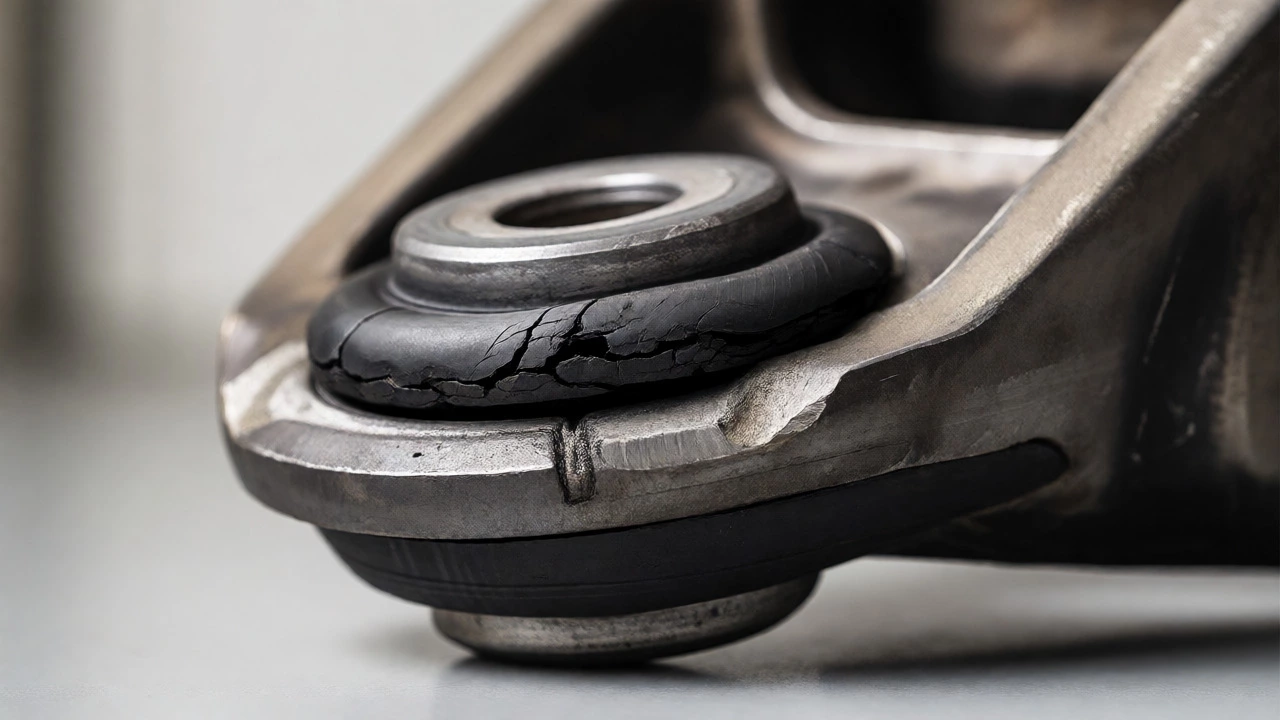
- Bushing Failure: Rubber bushings in the control arms and subframes are designed to flex slightly. Constant high-frequency vibrations from a stiff setup tear these bushings apart faster. Replacing control arm bushings becomes a frequent maintenance item.
- Steering Looseness: Over time, the constant pounding loosens tie rod ends and ball joints. You’ll notice play in the steering wheel before you even see visible damage.
Safety-wise, consider braking distances. Studies on vehicle dynamics show that on broken pavement, a softer, well-damped suspension often stops shorter than a stiff, undamped one. Why? Because the tires stay on the ground. If your wheel hops during hard braking, you lose friction. Friction is the only thing stopping your car. No contact equals no stopping power.
How to Diagnose and Fix the Problem
So, you’ve confirmed your springs are too stiff. What now? You have three main paths, depending on your budget and goals.
Option 1: Downgrade the Springs
This is the most direct fix. Swap the current springs for a set with a lower rate. Look for "progressive" springs if you want a compromise. Progressive springs have varying coil pitches-they start soft for small bumps and get stiffer under heavy loads. They offer a better daily-driver experience than linear springs.
Option 2: Upgrade the Dampers Properly
If you want to keep the low stance and stiff look, you must upgrade the dampers to match. Adjustable coilovers are ideal here. Turn the damping stiffness up to slow down the rebound. This won't make the ride soft, but it will stop the bouncing. Note: You cannot adjust the spring rate itself, only how quickly it returns.
Option 3: Adjust Tire Pressure and Wheels
Sometimes, the issue is amplified by other factors. Running very low-profile tires (e.g., 35-series sidewall) transmits more impact than taller tires. Increasing tire pressure slightly can help prevent rim strikes, but lowering it might improve compliance. Also, ensure your wheels aren't too heavy. Heavy wheels increase unsprung mass, making the suspension work harder to keep them in contact with the road.
When Is Stiff Actually Good?
Don’t demonize stiffness entirely. It has its place. If you track your car regularly, stiff springs reduce body roll, allowing for sharper turn-in and better stability at high speeds. On smooth circuit tracks, the lack of bumps means the downsides disappear. The key context is the road surface.
In Manchester, where potholes are practically part of the landscape, a super-stiff setup is rarely worth it unless you’re building a dedicated weekend toy. For a daily driver, aim for a spring rate that is no more than 20-30% stiffer than stock. Anything beyond that requires a professional suspension tune to remain usable.
Do stiff springs make the car faster?
Not necessarily. Stiff springs reduce body roll, which can improve lap times on smooth tracks by keeping the tires flat. However, on public roads or rough circuits, they often make the car slower because the tires lose traction due to wheel hop. Grip comes from tire contact patch consistency, not just chassis rigidity.
Can I cut my springs to soften them?
Yes, cutting a coil off a spring lowers the ride height and effectively increases the spring rate (makes it stiffer), not softer. Wait, correction: Cutting a spring shortens it, which raises the natural frequency, making it act stiffer relative to the available travel. To soften a spring, you generally need to replace it with a lower-rate unit. Cutting is mostly for lowering, not softening.
Will stiff springs damage my car frame?
It’s rare to damage the main frame rails, but stiff springs accelerate wear on mounting points, subframes, and bushings. Cracks can appear in welds near spring perches if the suspension is constantly bottoming out or ringing violently. Regular inspection of these areas is recommended.
How much stiffer is 'too' stiff?
For street use, anything above 300-400 lbs/inch is typically considered very stiff for standard passenger cars. If you feel sharp impacts through the steering wheel and hear clunking noises over minor bumps, your setup is likely too aggressive for the road conditions you drive on.
Does weight distribution affect spring choice?
Absolutely. Front-heavy cars (like many V8 muscle cars) need stronger front springs to prevent nose dive and maintain balance. Rear-wheel-drive cars may need different rear rates to manage traction. Always choose spring rates based on your specific vehicle's static weight distribution, not just generic recommendations.