Radiator Health Symptom Checker
Select the symptom you are experiencing to find the most likely cause and recommended next step:
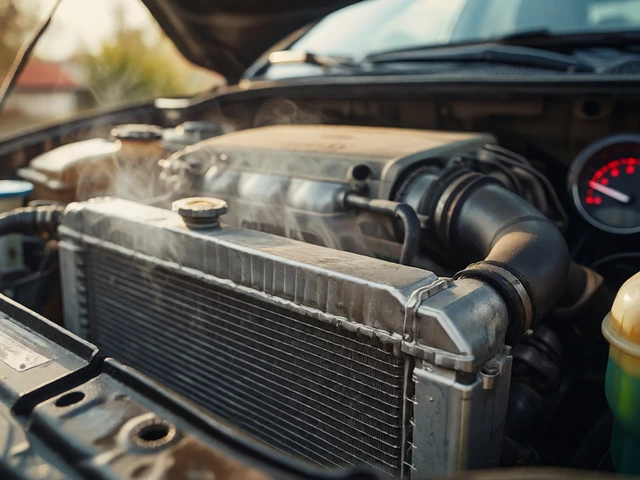
The good news is that radiators rarely fail without warning. If you know what to look for, you can catch a problem while it's still a simple leak rather than a full-blown engine meltdown. Most failures boil down to three main culprits: leaks, internal corrosion, and mechanical blockages. Understanding these will help you keep your car on the road and out of the garage.
Quick Summary: Why Radiators Fail
- Leaks: Physical damage or worn-out seals let coolant escape, causing the engine to overheat.
- Corrosion: Rust and scale build up inside the tubes, blocking flow and eating through the metal.
- Blockages: Debris from the outside or sludge from the inside stops the cooling process.
The Silent Killer: Internal Corrosion and Scale
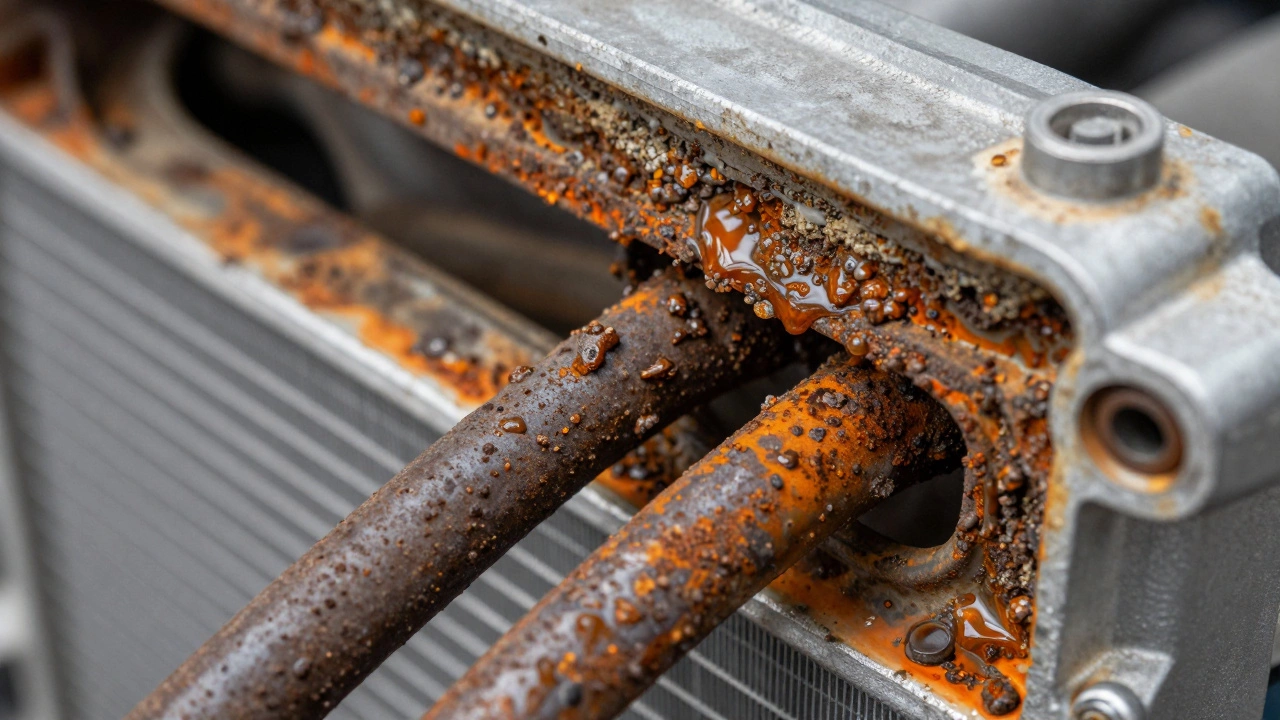
You can't always see this one until it's too late. Corrosion is the chemical breakdown of the radiator's metal components, usually aluminum or copper, caused by oxidation. When you use plain water instead of the correct Engine Coolant (which contains corrosion inhibitors), the inside of your radiator starts to rust.
Over time, this creates a buildup of "scale"-hard mineral deposits that act like cholesterol in an artery. This scale narrows the pathways that the liquid must flow through. When the coolant can't move fast enough to carry heat away from the Internal Combustion Engine, the temperature spikes. You might notice your car stays cool at highway speeds (where airflow is high) but starts to overheat the moment you hit stop-and-go traffic in the city.
A common mistake is ignoring the color of your coolant. If it looks like muddy water or has brown flakes floating in it, your radiator is already rotting from the inside. This chemical decay eventually creates "pinhole leaks," where the metal becomes so thin that the pressure of the system simply punches a hole through the wall.
Physical Leaks and Seal Failure
This is the most obvious cause of radiator failure, but it's often ignored until a puddle appears on the driveway. Radiators are under immense pressure to keep the boiling point of the coolant high. Any weak point in the system will eventually give way.
Leaks usually happen in three places. First, the Radiator Hose. These rubber tubes degrade over time due to heat cycles, becoming brittle or soft. A small crack in a hose can spray coolant onto a hot engine, where it evaporates instantly, leaving you wondering why your coolant level is dropping but you see no puddle.
Second, the plastic end tanks. Many modern radiators use aluminum cores with plastic caps on the ends. Over years of heating and cooling, the plastic expands and contracts. Eventually, the seal between the plastic and metal fails, or the plastic itself cracks. Third, external impact. A pebble flying up from the road at 70mph can puncture the thin aluminum fins, creating a slow drip that eventually becomes a torrent.
| Location | Typical Cause | Visual Signal |
|---|---|---|
| Hoses | Dry rot / Heat fatigue | Cracks or "bulging" rubber |
| End Tanks | Thermal expansion / Plastic fatigue | Green/Pink crust around edges |
| Core Fins | Road debris / Stones | Wet spots on the aluminum grid |
Blockages: External and Internal
Your radiator is essentially a giant heat exchanger. It relies on two things: the flow of liquid inside and the flow of air outside. If either is blocked, the system fails.
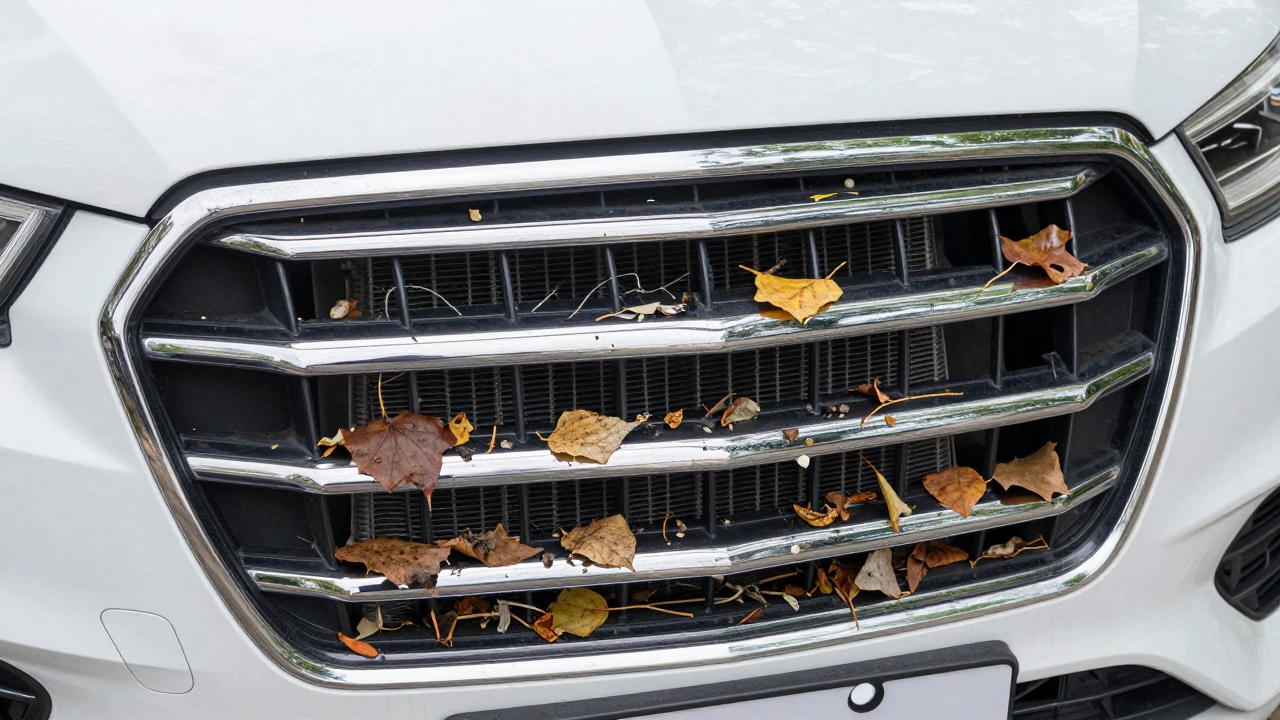
External blockages are the most common. Think of your radiator as a screen; if it's covered in dead bugs, dried mud, or fallen leaves, the air cannot pass through the fins to cool the liquid. In the UK, autumn leaves are a major culprit, getting sucked into the grille and forming a "blanket" over the radiator. This restricts airflow, forcing the Radiator Fan to work overtime, which can eventually burn out the fan motor.
Internal blockages are more sinister. This usually happens when someone mixes different types of Antifreeze formulas. Some coolants are IAT (Inorganic Additive Technology) and others are OAT (Organic Acid Technology). When mixed, they can react chemically to form a thick, gel-like sludge. This sludge settles in the narrowest parts of the radiator, completely blocking the flow of coolant. It's like trying to push toothpaste through a straw-the pump can't move the liquid, and the engine overheats within minutes.
How to Diagnose a Failing Radiator
You don't need a professional mechanic to spot the early warning signs. Start by checking your coolant reservoir when the engine is cold. If you're topping it up every week, you have a leak. Look for "crusty" residue around the edges of the radiator; coolant is designed to leave a brightly colored residue (usually neon green, orange, or pink) when it dries, which acts like a trail of breadcrumbs leading you to the leak.
Another trick is the "hand test" (carefully!). Once the car has been running for a bit, feel the radiator hoses. The top hose should be hot, and the bottom hose should be slightly cooler. If the top hose is scorching but the bottom one is cold, you have a blockage. The coolant isn't circulating through the core, meaning the heat is trapped at the engine side.
Finally, listen for the fan. If your radiator fan is running constantly even at low speeds, or if it's not kicking in at all when the gauge rises, your system is struggling to shed heat. This could be a sign of a clogged core or a failing Thermostat, which is the valve that tells the coolant when to flow into the radiator.
Preventing Future Failures
The best way to avoid a tow truck is a bit of proactive maintenance. First, never use 100% tap water in your cooling system. Tap water contains minerals like calcium and magnesium that cause the scale buildup mentioned earlier. Always use a 50/50 mix of distilled water and the specific coolant recommended in your owner's manual.
Every two to five years, perform a Coolant Flush. This involves draining the old, degraded fluid and rinsing the system to remove sludge and rust before adding fresh inhibitors. It's a cheap insurance policy against a total radiator collapse.
Lastly, keep your radiator clean. Every spring, use a garden hose to gently spray the radiator fins from the back (engine side) toward the front. This pushes out the winter's worth of bugs and debris, ensuring maximum airflow for the summer heat.
Can I just patch a radiator leak with a stop-leak product?
Stop-leak additives are a temporary emergency fix, not a permanent solution. While they can seal a tiny pinhole, the particles in these products can also clog the narrow passages of your radiator and potentially damage your heater core. If you use one, plan to replace the radiator soon.
Why is my car overheating but the radiator feels cold?
This is usually a sign of a failed thermostat or a severe internal blockage. If the thermostat is stuck closed, the coolant cannot leave the engine to enter the radiator. Consequently, the engine boils over while the radiator remains cool because the liquid never reached it.
Does the type of coolant actually matter?
Yes, absolutely. Modern engines use different metals (like aluminum alloys) that require specific inhibitors. Using the wrong coolant can lead to chemical reactions that create sludge or accelerate the corrosion of the radiator walls.
How often should I replace my radiator hoses?
Most hoses should be inspected annually and typically replaced every 5 to 10 years, or whenever they feel spongy, show visible cracks, or have bulges. Replacing them preventatively is much cheaper than dealing with a roadside breakdown.
Can a bad radiator cause white smoke from the exhaust?
A bad radiator itself doesn't cause exhaust smoke, but the result of a failed radiator (overheating) can blow the head gasket. Once the head gasket fails, coolant leaks into the combustion chamber and burns, creating thick white smoke from the exhaust pipe.
Next Steps for Car Owners
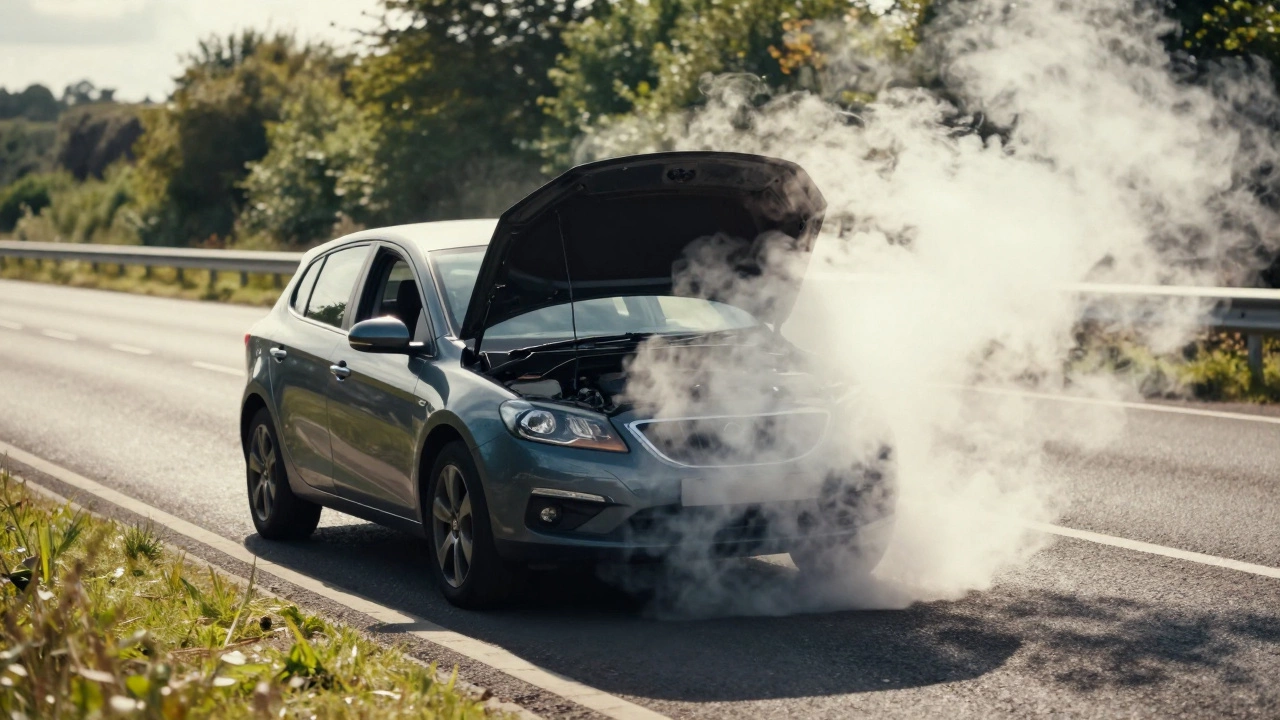
If you suspect your radiator is failing, don't keep driving. Heat is the enemy of the engine; once you warp a cylinder head, the cost of repair jumps from a few hundred pounds for a radiator to over a thousand for an engine rebuild.
- If you see a leak: Top up the coolant (only when the engine is cold!) and get to a garage immediately.
- If you see sludge: Schedule a full system flush and refill with the correct OEM coolant.
- If you notice debris: Gently clean your radiator fins with water and a soft brush.