Clutch Lifespan Estimator
Your Estimated Lifespan
Enter your details and click calculate to see your clutch health projection.
Key Takeaways
- While rare, a clutch can reach 200k miles with perfect driving habits and low-stress environments.
- Average lifespan typically falls between 50,000 and 150,000 miles.
- Driving style, specifically "riding the clutch," is the biggest factor in premature wear.
- Replacing a full clutch kit is usually better than swapping just the disc to ensure long-term reliability.
- Warning signs like slipping or a high pedal height usually appear long before total failure.
The Mechanics of Friction and Wear
To understand if a clutch can survive 200k miles, we first need to look at what is actually happening inside your bell housing. A Clutch is a mechanical device that engages and disengages power transmission from the engine to the gearbox. It relies on friction between a rotating pressure plate and a friction disc. Every time you press the pedal, you're separating these components; every time you release it, you're smashing them back together.
Think of the friction material on your clutch disc like a giant brake pad. Every time you slip the clutch to get moving from a stop, a tiny amount of that material is sanded off. If you live in a flat area and drive mostly on highways, you shift far fewer times per mile. In that scenario, the 200k mark is plausible. However, if you spend your mornings in stop-and-go traffic in a city like London or New York, you're putting thousands of extra "cycles" on the system, which eats through the material much faster.
What Actually Determines Your Clutch Lifespan?
Not all manual cars are created equal. The materials used in different Clutch Kits play a huge role. A standard organic friction material is great for smooth daily driving but wears down faster under heat. Ceramic materials, often found in performance kits, can handle way more heat but are jerky and can actually wear out the flywheel faster because they are so abrasive.
Then there's the weight of the vehicle. A lightweight hatchback doesn't need nearly as much force to get moving as a heavy 4x4 pickup truck. If you're towing a trailer or hauling heavy loads, your clutch is working overtime. The heat generated during these high-load transitions can cause "glazing," where the friction material becomes smooth and hard, losing its grip long before the disc is actually worn thin. This is why a delivery van might need a new clutch at 80k miles, while a commuter car might make it to 180k.
| Driving Profile | Estimated Lifespan | Primary Wear Factor |
|---|---|---|
| Highway Commuter | 150,000 - 200,000+ miles | Low cycle count |
| City Stop-and-Go | 60,000 - 100,000 miles | Frequent engagement |
| Towing/Heavy Loads | 40,000 - 80,000 miles | Heat and friction load |
| Performance/Track Use | 20,000 - 50,000 miles | Extreme thermal stress |
Bad Habits That Kill Your Clutch
If you want your car to reach 200k miles on one set of plates, you have to stop "riding the clutch." This is the most common mistake drivers make. Riding the clutch means keeping your foot resting lightly on the pedal while driving. Even a tiny amount of pressure can prevent the disc from fully clamping against the flywheel, causing it to slip. This slip creates intense heat, which cooks the friction material and kills the clutch's life in a fraction of the time it should take.
Another silent killer is staying in the wrong gear. If you're lugging the engine in 5th gear at 30 mph, you'll likely slip the clutch more than necessary to keep the car from stalling. Instead, downshift. Let the Transmission handle the torque. Using the engine's power band correctly reduces the amount of work the clutch has to do during transitions.
Finally, avoid "launching" your car. Those aggressive starts from a red light to beat the other guy might feel great, but they are essentially sanding papers on your clutch disc. One high-RPM slip can do more damage than a month of gentle city driving.
When to Stop Hoping and Start Replacing
You can't always see your clutch, but you can definitely feel it. The most obvious sign of wear is "slipping." If you're in 4th gear and you step on the gas, but the RPMs jump up while the car doesn't actually accelerate faster, your clutch is slipping. It's no longer gripping the flywheel tightly enough to transfer all the power to the wheels.
Pay attention to your pedal feel. Over time, the "bite point"-the spot where the car starts to move as you release the pedal-will move higher. If you find yourself releasing the pedal almost all the way to the top before the car engages, you're nearing the end of the disc's thickness. Some drivers also notice a "chatter" or vibration when pulling away from a stop, which often indicates a warped Flywheel or contaminated friction material.
The Value of a Complete Clutch Kit
When you finally do reach the limit, you'll be tempted to just replace the friction disc because it's the cheapest part. Don't do it. A proper Clutch Kit includes the disc, the pressure plate, and often the release bearing (throw-out bearing). Replacing only the disc is a gamble. The pressure plate's diaphragm spring loses its tension over 100k miles; if you put a brand new disc against an old, tired pressure plate, you won't get the full clamping force, and your new disc will wear out prematurely.
Furthermore, the Flywheel should be inspected. In many modern cars, you'll find a dual-mass flywheel designed to dampen engine vibrations. These have internal springs that can fail. If the flywheel is scored or the internal springs are shot, a new clutch kit will either feel rough or fail within a few thousand miles. Resurfacing the flywheel or replacing it entirely is the only way to truly reset the clock toward another 100k or 200k miles.
Pro Tips for Maximum Longevity
- Shift Decisively: Get the pedal down and get it back up. Avoid lingering in the "gray area" where the clutch is partially engaged.
- Neutral at Lights: If you're stopped at a light, put the car in neutral and let go of the clutch. Keeping it pressed puts unnecessary wear on the release bearing.
- Avoid Over-Revving: Shift at the appropriate RPMs. Pushing the engine too hard before shifting increases the shock load on the clutch disc.
- Check Fluid: Ensure your clutch hydraulic fluid is clean. Air in the lines or old fluid can lead to an inconsistent bite point, causing you to slip the clutch more than you realize.
Does a 200k mile clutch mean it's still performing at 100%?
Not necessarily. While a clutch can physically last 200k miles without totally failing, it will likely have a different "feel" than it did when new. The bite point will be higher, and it may not engage as crisply. However, if it isn't slipping and the pedal feel is consistent, it is still doing its job.
Can I upgrade to a heavy-duty clutch to ensure it lasts 200k?
It's a trade-off. Heavy-duty or stage-kits often use harder materials that resist wear better, but they transmit more vibration and shock to the rest of the drivetrain. For a daily driver, a high-quality OEM-spec kit is usually the best balance. Extreme upgrades can actually cause your flywheel to wear out faster due to increased friction.
Is it a sign of a bad clutch if the pedal feels soft?
A soft pedal is usually a hydraulic issue rather than a friction material issue. It typically means there is air in the clutch master or slave cylinder. While this doesn't mean your clutch disc is worn out, it can lead to poor shifting habits that eventually wear the disc down faster.
Why do some cars have clutches that last way longer than others?
It comes down to the engineering of the friction material and the torque of the engine. Low-torque engines are easier on the clutch. Additionally, some manufacturers use thicker discs or more robust pressure plates that simply have more "meat" to lose before they start slipping.
Can you "burn out" a clutch in a single day?
Yes. Extreme situations-like trying to hold a car on a steep hill using only the clutch or attempting to pull a stuck vehicle out of deep mud with high RPMs-can glaze the friction material in minutes. Once the material is glazed (burnt), it loses its grip, and you'll experience slipping even if the disc is still thick.
Next Steps and Troubleshooting
If you suspect your clutch is starting to fade, start by checking your fluid levels and bleeding the system. Sometimes a perceived "slip" is actually just a hydraulic failure preventing the clutch from fully engaging. If the slip is real, start tracking your driving habits. Try to shift slightly earlier and be more mindful of your foot placement at stoplights.
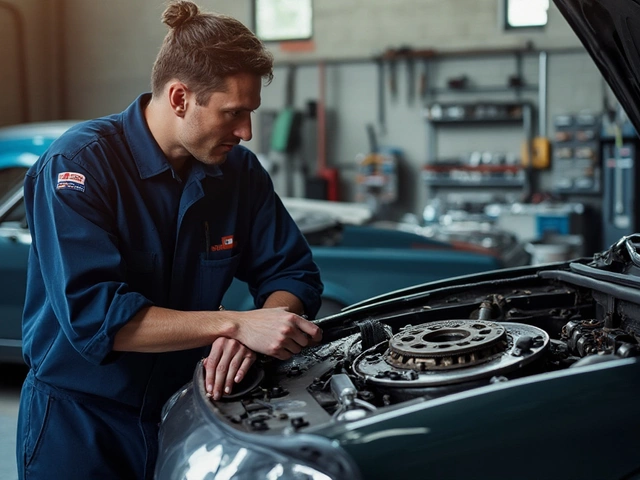
For those planning a replacement, always buy a kit from a reputable manufacturer. Avoid the cheapest options you find online; the quality of the spring steel in the pressure plate is critical. If you have a high-mileage vehicle, assume the flywheel needs attention. A technician can measure the flywheel's flatness and thickness to tell you if it can be resurfaced or if it needs a total replacement to ensure your next clutch lasts another 100k miles.