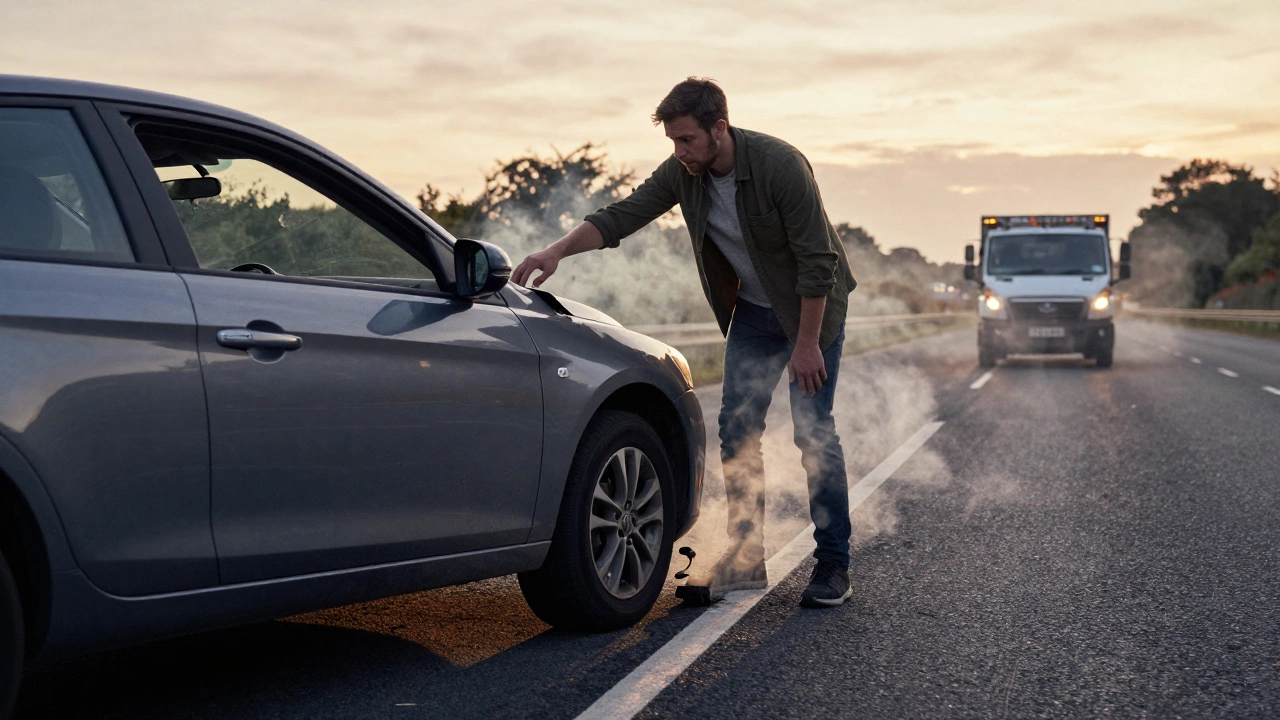
You hear it-the grinding, the slipping, the smell of burning friction material. Your clutch is giving out. You’re stuck in traffic, running late, and the thought crosses your mind: Can I drive with a burnt clutch? The short answer? Maybe, for a little while. But you’re not just risking your car-you’re risking your safety and spending way more money than you need to.
What Does a Burnt Clutch Actually Mean?
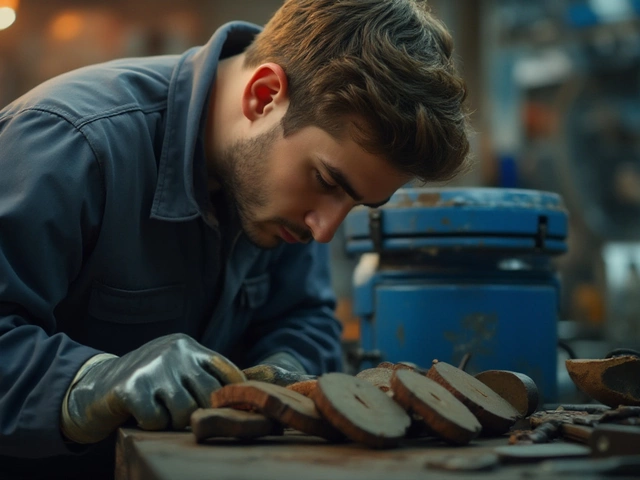
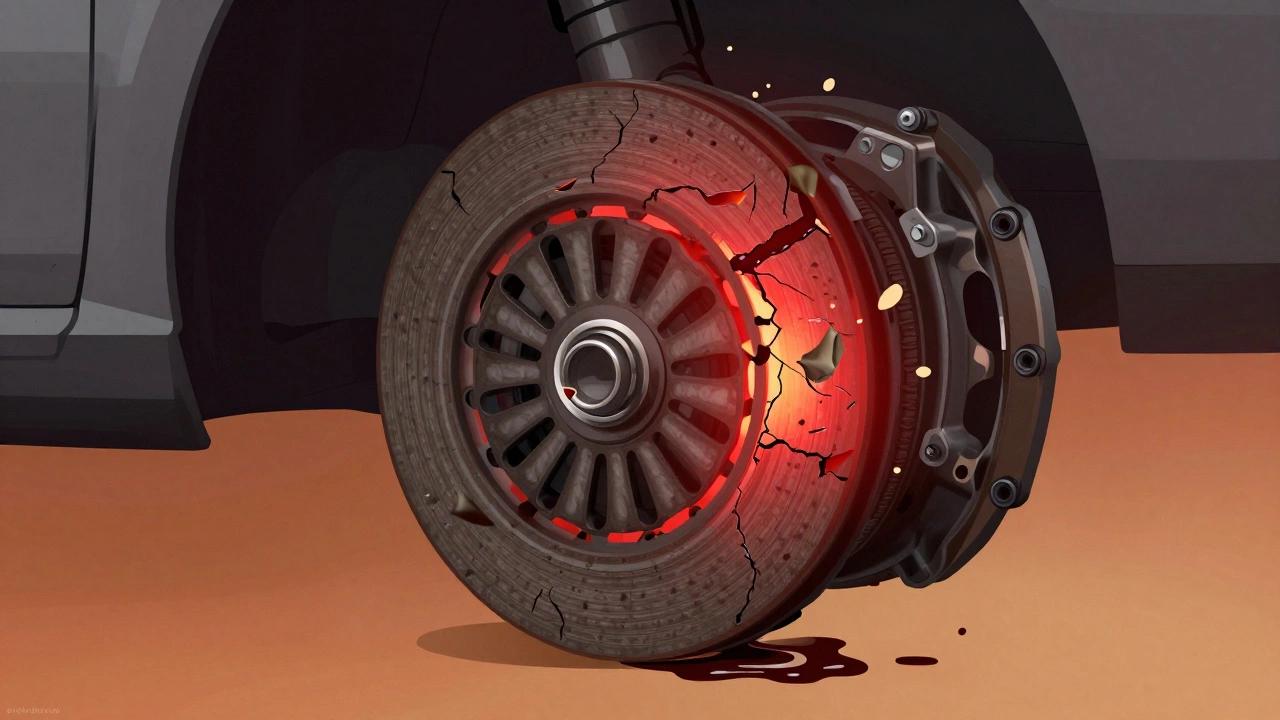
A burnt clutch isn’t just worn out. It’s overheated. When the clutch disc slips too much-usually because you’re riding the pedal, starting too fast, or towing too heavy-a lot of heat builds up. That heat breaks down the friction material on the disc. It starts to glaze over, then cracks, then flakes off. You’ll smell it: like hot plastic or burnt toast. That’s the clutch lining burning.The clutch’s job is to connect the engine to the transmission. When it’s burnt, that connection gets sloppy. The engine revs up, but the car doesn’t move the same way. You’re not just losing power-you’re wearing out the pressure plate, the flywheel, and even the transmission input shaft.
What Happens When You Drive with a Burnt Clutch?
Driving with a burnt clutch is like trying to push a car with one foot on the gas and one foot on the brake. It doesn’t work well, and it destroys everything in the process.- Slipping gears: The clutch can’t hold the engine’s torque. You press the pedal, release it, and the car hesitates before moving. In higher gears, it might slip even under light acceleration.
- Hard shifting: The clutch doesn’t disengage fully. You’ll hear grinding when you try to shift. Sometimes you can’t get into gear at all.
- Overheating transmission: Slipping clutch = extra load on the gearbox. Transmission fluid gets hotter than it should. That leads to seal leaks, gear wear, and eventually, transmission failure.
- Damage to the flywheel: The flywheel’s surface gets warped or scored from the slipping disc. You can’t just replace the clutch-you’ll need a new flywheel too.
- Stalling or sudden loss of power: Especially on hills or when accelerating hard. You might lose drive completely mid-turn.
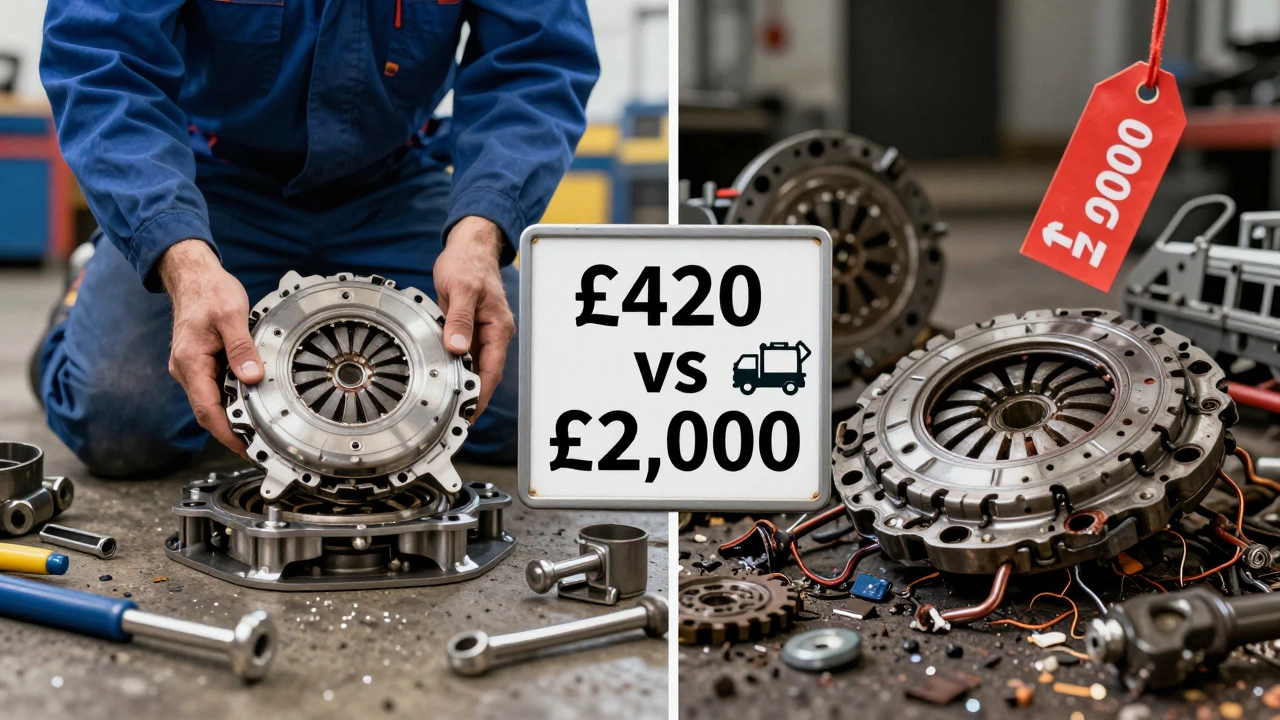
One driver in Manchester reported driving for three days with a slipping clutch after a long motorway trip. He made it home, but the next morning, the car wouldn’t move in first gear. The clutch was gone. The flywheel was scored. The transmission needed a flush. Total repair cost: £980. A simple clutch kit replacement would’ve been £420.
How Far Can You Drive with a Burnt Clutch?
There’s no magic number. Some people limp a few miles. Others make it to the next town. But here’s the truth: every mile you drive with a burnt clutch adds cost to your repair bill.If the clutch is only slightly slipping-maybe it slips only when you accelerate hard from a stop-you might get 50 to 100 miles before it gets worse. But if you’re smelling burning, hearing grinding, or losing power on hills, you’re already in danger zone.
Think of it like driving on a flat tire. You can go a bit, but you’re ruining the rim. Same here. The clutch isn’t just a part-it’s the link between your engine and your wheels. Once it’s burnt, everything else starts to pay the price.
Signs Your Clutch Is Burnt (Beyond the Smell)
You don’t need to wait for the smell to act. Here’s what to look for:- Engine revs rise but speed doesn’t: You’re in 3rd gear, engine hits 4,000 RPM, but you’re only doing 40 mph. That’s clutch slip.
- Clutch pedal feels softer or higher: If you have to press it closer to the floor to get engagement, the disc is worn thin.
- Clutch chatter or vibration: When you let the pedal out, the car jerks or shakes. That’s uneven contact between disc and flywheel.
- Difficulty shifting into reverse: Reverse is often the first gear to go when the clutch is failing.
- Clutch pedal stays down: If the pedal doesn’t return fully, the hydraulic system might be leaking or the clutch master cylinder is failing.
These aren’t vague warnings. They’re clear signals your clutch is failing. Ignoring them doesn’t save money-it multiplies your repair costs.
What Should You Do If Your Clutch Is Burnt?
Stop driving it. Seriously.Here’s what to do next:
- Turn off the engine and call a tow truck. Don’t risk it. Even a short drive can ruin the flywheel or damage the transmission.
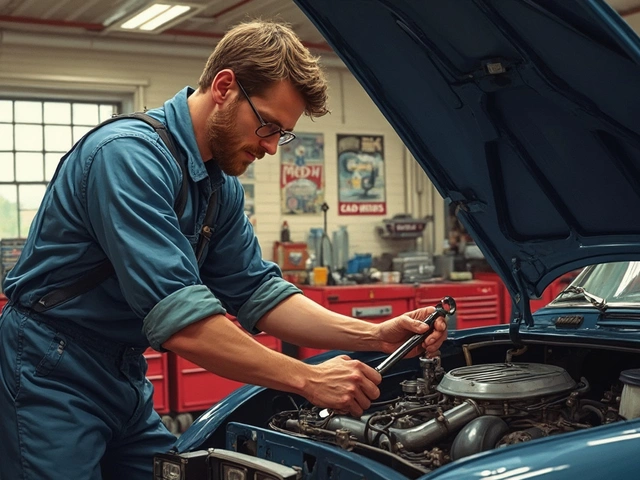
- Get it checked by a mechanic who specializes in clutches. Not every garage knows the difference between a worn clutch and a burnt one. Ask if they’ve replaced clutch kits in the last month. If they say yes, they’ve seen this before.
- Ask for a full inspection. A burnt clutch often means the flywheel is damaged. The release bearing and pilot bearing might be worn too. Get a quote that includes all three: clutch kit, flywheel, and pressure plate.
- Don’t buy cheap clutch kits. You’ll regret it. A £120 clutch kit from a no-name brand might fail in 10,000 miles. A £280 OEM-spec kit lasts 100,000. The labor’s the same-so spend on quality.
- Replace the entire kit. Never just swap the disc. The pressure plate and release bearing wear out at the same rate. Replacing only one part is like changing one brake pad on an axle.
Most reputable garages in Manchester offer a 12-month warranty on clutch kits. That’s how confident they are in the parts-if they’re good ones.
How to Avoid a Burnt Clutch in the First Place
Prevention is cheaper than repair. Here’s how to keep your clutch alive:- Don’t ride the clutch. Keep your foot off the pedal unless you’re shifting. Resting your foot on it causes constant light slipping.
- Don’t use the clutch to hold the car on hills. Use the handbrake. Letting the clutch slip to hold your car on a slope cooks the friction material.
- Shift smoothly. Don’t race the engine and dump the clutch. Ease into gear.
- Don’t tow beyond your car’s limit. Your clutch wasn’t designed to pull a trailer that’s 80% heavier than your car.
- Check your clutch fluid. If your car has a hydraulic clutch, low fluid means air in the system-and that causes poor disengagement.
One mechanic in Salford told me he sees the same mistake over and over: people driving manual cars like automatics. They don’t know how to use the clutch properly. The result? A burnt clutch in under 40,000 miles. A well-treated clutch can last 120,000.
How Much Does a Clutch Kit Replacement Cost?
In the UK, prices vary based on the car. Here’s what you can expect in early 2026:| Vehicle Type | Clutch Kit Only | Full Replacement (Parts + Labour) |
|---|---|---|
| Small hatchback (e.g., Ford Fiesta) | £120-£180 | £400-£550 |
| Mid-size sedan (e.g., Volkswagen Golf) | £180-£280 | £550-£750 |
| Performance car (e.g., BMW 3 Series) | £250-£400 | £800-£1,200 |
| Heavy-duty van (e.g., Ford Transit) | £300-£450 | £900-£1,400 |
Remember: flywheel replacement adds £150-£300 if it’s damaged. Always get it checked.
What Happens If You Ignore It?
If you keep driving with a burnt clutch, you’re not just replacing a clutch. You’re replacing:- Clutch disc
- Pressure plate
- Release bearing
- Flywheel
- Transmission input shaft (if warped)
- Transmission fluid and seals (if overheated)
That’s not a £500 job anymore. That’s a £2,000+ repair. And if the transmission fails? You’re looking at a used gearbox from a scrapyard-£1,500, plus fitting. Or a new one: £3,500.
One man in Oldham drove his diesel van for two weeks with a slipping clutch because he couldn’t afford the repair. He got stranded on the M62. The transmission seized. He lost the van. Insurance didn’t cover it because the damage was deemed preventable.
Final Answer: Can You Drive with a Burnt Clutch?
Technically, yes. You might get 10 miles. Maybe 50. But you’re not saving money-you’re gambling with your wallet, your safety, and your car’s future.The moment you smell burning, hear grinding, or feel the car slip under acceleration, stop driving. Call a tow. Get it checked. Replace the whole kit with quality parts. Don’t wait for it to fail completely. The cost of waiting is always higher.
Clutches aren’t cheap. But they’re cheaper than transmissions. And your time? It’s worth more than a risky drive.
Can I drive my car if the clutch is slipping?
You can drive it for a short time, but it’s not safe or smart. Slipping means the clutch isn’t transferring power properly. This puts extra strain on the transmission and can cause permanent damage. The longer you drive, the more expensive the repair becomes. Stop driving and get it towed to a mechanic.
How do I know if my clutch is burnt or just worn?
A worn clutch slips gradually and loses pedal feel over time. A burnt clutch smells like burning plastic, slips suddenly under load, and may vibrate or chatter. If you smell burning or notice a sudden loss of power, it’s burnt-not just worn. Burnt clutches often damage the flywheel too.
Will a burnt clutch damage the transmission?
Yes. A slipping clutch generates heat and forces the transmission to work harder. This can overheat the transmission fluid, warp the input shaft, and wear out gears. Many transmission failures start with a neglected burnt clutch.
Can I replace just the clutch disc and not the whole kit?
You can, but you shouldn’t. The pressure plate and release bearing wear out at the same rate. Replacing only the disc means you’ll likely need another repair in 10,000 miles. Always replace the full clutch kit for long-term reliability.
How long does a clutch replacement take?
Most clutch replacements take 4 to 8 hours, depending on the car. Some models, like older Audis or Volkswagens, take longer because the engine has to be partially removed. A skilled mechanic can usually finish it in one day.
Is it worth repairing a clutch on an old car?
If the rest of the car is in good shape, yes. A clutch replacement is one of the most cost-effective repairs you can make. Even on a 10-year-old car, a new clutch can add 50,000+ miles of reliable life. If the car has other major issues, like engine or transmission problems, then it might not be worth it.
If you’ve noticed any of these signs, don’t wait. A burnt clutch doesn’t fix itself. And the longer you ignore it, the more it costs.