Modern Cooling System Diagnostic Tool
Select your vehicle type to customize the diagnostic advice:
Diagnostic Report
Likely Cause
...
Immediate Action
...
Specific Advice for Your Vehicle
You pop the hood of your shiny new electric or hybrid vehicle, expecting to see the familiar metal grid that has kept engines from melting down for a century. But wait-is it gone? It’s a question popping up more often as cars change under our feet. The short answer is yes, most cars still have radiators. But the story gets way more interesting when you look at what they are cooling and how they do it in 2026.
If you’re worried about your current ride or shopping for something new, understanding this component is crucial. It’s not just about keeping the engine cool anymore; it’s about battery life, cabin comfort, and efficiency. Let’s break down exactly where these radiators hide, why some seem to vanish, and what happens if yours fails.
The Short Answer: Yes, They Are Still There
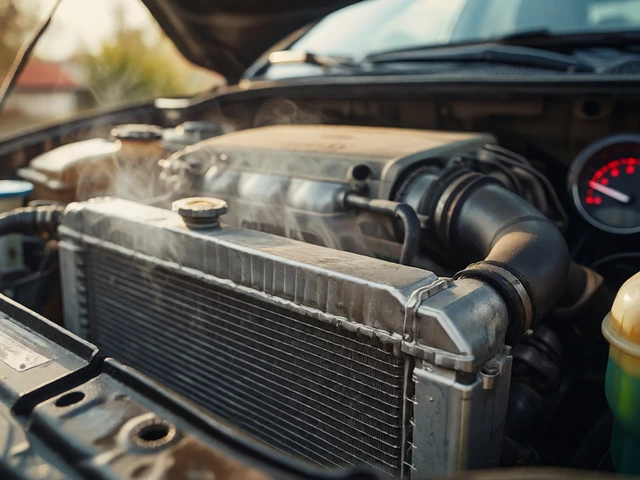
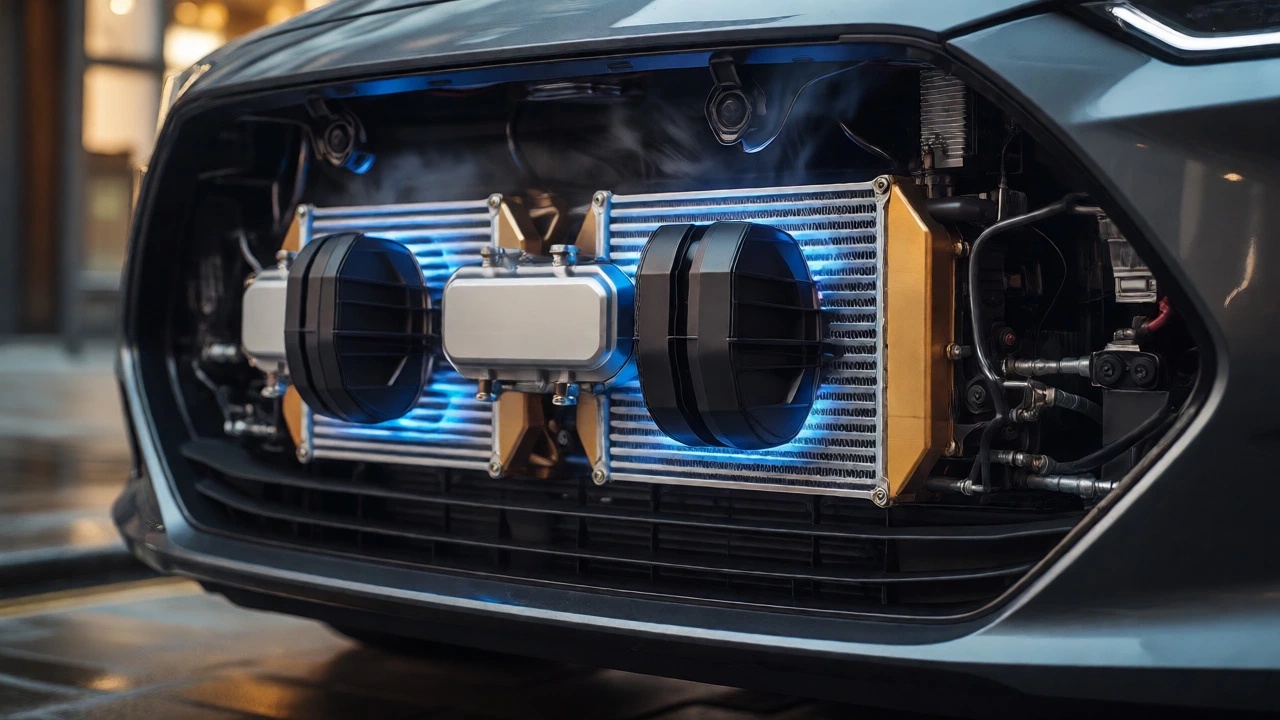
Despite the hype around solid-state batteries and air-cooled designs, the vast majority of vehicles on UK roads today rely on liquid cooling systems. This means a radiator is a heat exchanger used to transfer thermal energy from one medium to another for the purpose of cooling and heating. In cars, it cools hot coolant by exposing it to ambient air. If you drive a petrol, diesel, or even a standard hybrid, there is almost certainly a radiator sitting behind your front grille.
Why haven’t we ditched them? Simple physics. Internal combustion engines generate massive amounts of waste heat-about 30% of the fuel energy goes out as heat. Without a radiator to dump this heat into the atmosphere, your engine would warp its pistons and seize up within minutes. Even in modern efficient engines, temperatures can exceed 100°C (212°F). Liquid is an excellent carrier of heat, but it needs a place to release it. That’s the radiator’s job.
Where Did the Radiator Go in Electric Vehicles?
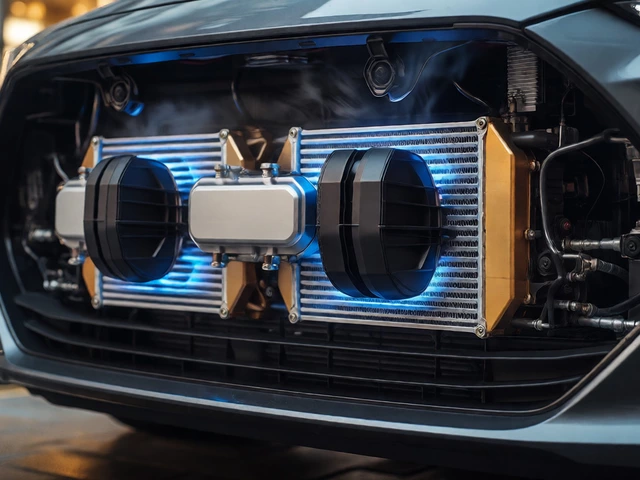
This is where confusion starts. Many EVs don’t have a giant, single-block radiator like older Fords or Vauxhalls. Instead, they use smaller, specialized units. For example, the Tesla Model 3 doesn’t have one big radiator; it has multiple small heat exchangers integrated into a complex thermal management loop.
In an EV, the radiator isn’t primarily cooling an internal combustion engine. It’s cooling two things:
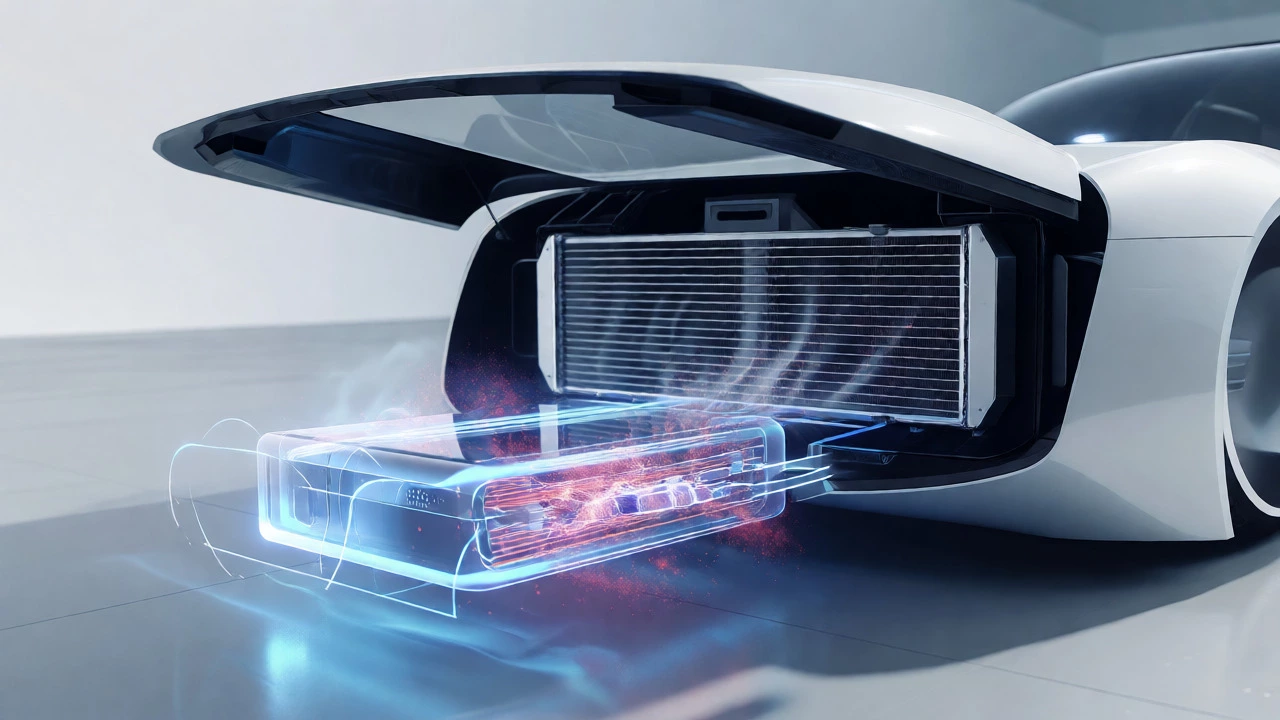
- The Battery Pack: Lithium-ion batteries hate extreme heat. If they get too hot, they degrade faster and lose range. A dedicated coolant circuit keeps them between 20-40°C.
- The Power Electronics: The inverters and motors generate significant heat during acceleration and high-speed driving.
Some entry-level EVs, like the early Nissan Leaf, used passive air cooling or simple fans with no traditional liquid radiator initially. However, newer models almost universally adopt active liquid cooling because it’s far more efficient. So, while you might not see a large brass or aluminium block, the function remains. The technology has just miniaturized and multiplied.
Hybrids: The Best of Both Worlds (and Problems)
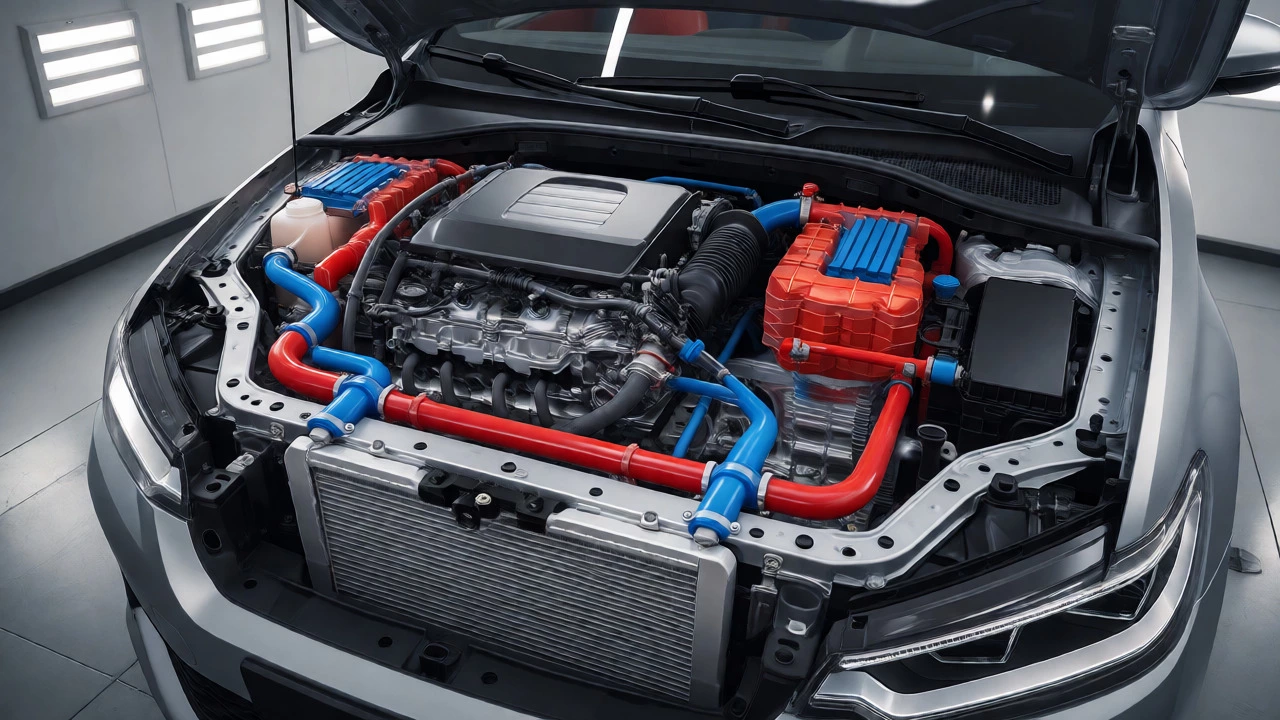
Hybrid cars are the trickiest category. Because they have both an engine and a battery, they often need multiple cooling loops. You might find a primary radiator for the engine, a secondary cooler for the transmission, and a third unit specifically for the high-voltage battery.
Taking care of a hybrid requires extra vigilance. If the battery cooling radiator gets blocked by road grime or bugs, the battery won’t charge efficiently. You’ll notice your regenerative braking feels weaker, and the car might switch to petrol mode more often than usual. Mechanics in Manchester report seeing more hybrid-specific cooling issues now that the first generation of hybrids is hitting 10-15 years old. These units are often tucked away behind bumpers, making them harder to clean than the easy-to-reach radiators of the past.
Why Do Some People Think Radiators Are Gone?
A few factors contribute to this myth. First, modern radiators are made of plastic and aluminium, not heavy copper and brass. They blend into the black plastic shrouds behind the bumper, making them invisible to the casual observer. Second, some performance cars use advanced intercoolers that look similar but serve a different purpose. Third, marketing materials for EVs often highlight "air conditioning" or "thermal management" without mentioning the humble radiator.
Also, consider the rise of turbocharged engines. Turbos make engines hotter, requiring more robust cooling. Paradoxically, this makes radiators more important, not less. You’ll often see larger core sizes or dual-radiator setups in modern compact cars compared to their predecessors from the 1990s.
Signs Your Radiator Is Failing in 2026
Whether you drive a 20-year-old hatchback or a brand-new SUV, radiator failure looks similar. Here is what to watch for:
| Symptom | Likely Cause | Urgency |
|---|---|---|
| Temperature gauge rising | Clogged fins or stuck thermostat preventing flow | High - Stop driving immediately |
| Sweet smell inside cabin | Leak from heater core or cracked radiator hose | Medium - Schedule repair soon |
| Green/orange puddles | Physical crack in plastic tank or corroded core | High - Check fluid levels daily |
| Air conditioning blows warm | Radiator fan failure or low coolant affecting AC condenser | Low - Comfort issue, check fan relay |
One specific issue in modern cars is "cold climate" problems. In colder UK winters, if the thermostat sticks open, the engine never reaches optimal temperature. This increases wear and reduces fuel economy. Conversely, in summer traffic jams, if the electric fan fails, the radiator can’t shed heat fast enough, leading to rapid overheating. Unlike old mechanical fans, modern electric fans are controlled by the ECU and can fail silently until it’s too late.
Maintenance Tips for Modern Radiators
Don’t ignore your cooling system. It’s cheap to maintain but expensive to fix if ignored. Here is how to keep your radiator healthy:
- Check Coolant Level Monthly: Use the correct specification coolant. Mixing types can cause gelling, which blocks narrow radiator channels. Never open a hot cap!
- Keep Fins Clean: Dirt, pollen, and bugs clog the external fins. Use a garden hose (low pressure) to spray from the inside out. Avoid high-pressure washers, which bend fins and restrict airflow.
- Inspect Hoses: Squeeze rubber hoses. If they feel crunchy or spongy, replace them. Burst hoses are the #1 cause of sudden overheating.
- Flush Every 5 Years: Old coolant becomes acidic and eats away at the radiator’s internal solder joints. A professional flush removes rust and scale.
If you live in a dusty area or drive off-road, cleaning the exterior fins every six months is a smart move. It improves efficiency and extends the life of the unit. Remember, a dirty radiator forces the fan to work harder, draining your battery and increasing noise.
The Future: Will Radiators Disappear Completely?
Not anytime soon. Even hydrogen fuel cell vehicles need radiators to manage the heat from the fuel stack. Solid-state batteries, which promise better thermal stability, are still years away from mass adoption. Until then, liquid cooling remains the gold standard for managing heat in dense powertrains.
We might see changes in design. Some concepts explore "active aero" shutters that close the radiator grille when cold to improve aerodynamics. Others integrate radiators into the body panels themselves. But the fundamental principle-moving heat from a hot source to cooler air via a liquid intermediary-remains unchanged. So, rest assured, your mechanic will still be dealing with radiators for decades to come.
Can I drive my car without a radiator?
Technically, yes, for very short distances at low speeds, but it is risky. Without a radiator, the coolant heats up rapidly. You risk warping the cylinder head or blowing a head gasket. If you must drive, turn off the AC and run the heater on max to help dissipate heat into the cabin.
How much does it cost to replace a radiator in the UK?
Costs vary widely based on the vehicle model. Parts typically range from £80 to £300. Labour adds another £100-£200. Complex installations, such as those in transversely mounted engines where you must remove other components, can push the total bill over £500.
Do all electric cars have radiators?
Most modern EVs do, but they may not look like traditional radiators. They often use smaller heat exchangers for the battery and motor. Some budget EVs rely solely on air cooling or heat pumps without a large frontal radiator, but this is becoming rare due to efficiency demands.
What is the difference between a radiator and an intercooler?
A radiator cools engine coolant (liquid), while an intercooler cools compressed intake air (gas) from a turbocharger or supercharger. Intercoolers are usually located lower on the front bumper. Both help manage heat, but they handle different mediums.
Why does my AC stop working when the engine overheats?
Many modern cars automatically disable the air conditioning compressor when the engine temperature rises critically. This reduces the load on the engine, allowing it to cool down slightly. Once the temperature normalizes, the AC should resume functioning.