Brake Rotor Condition Checker
Rotor Condition Assessment
Determine if your rotors need replacement based on measurements and condition. Use this tool to avoid unnecessary repairs or dangerous oversights.
Enter your measurements to see if your rotors need replacement
Most people hear "replace your brake pads" and assume the rotors come along for the ride. But that’s not always true. You don’t need to change rotors every time you swap brake pads - but you might need to. It depends on how worn they are, how your brakes have been treated, and what kind of driving you do.
Why people think rotors must be replaced with brake pads
The idea that rotors and pads always go together comes from mechanics who want to avoid callbacks. If you replace pads on worn rotors, the new pads won’t grip properly. They’ll squeal, feel spongy, or wear out fast. So, many shops just replace both - it’s faster, safer, and more profitable. But that doesn’t mean it’s always necessary.
Brake pads are consumable parts. They’re made of softer material to protect the harder rotor. That’s by design. Rotors are supposed to last longer. In fact, many cars go through two or even three sets of brake pads before the rotors need replacing.
How to tell if your rotors are still good
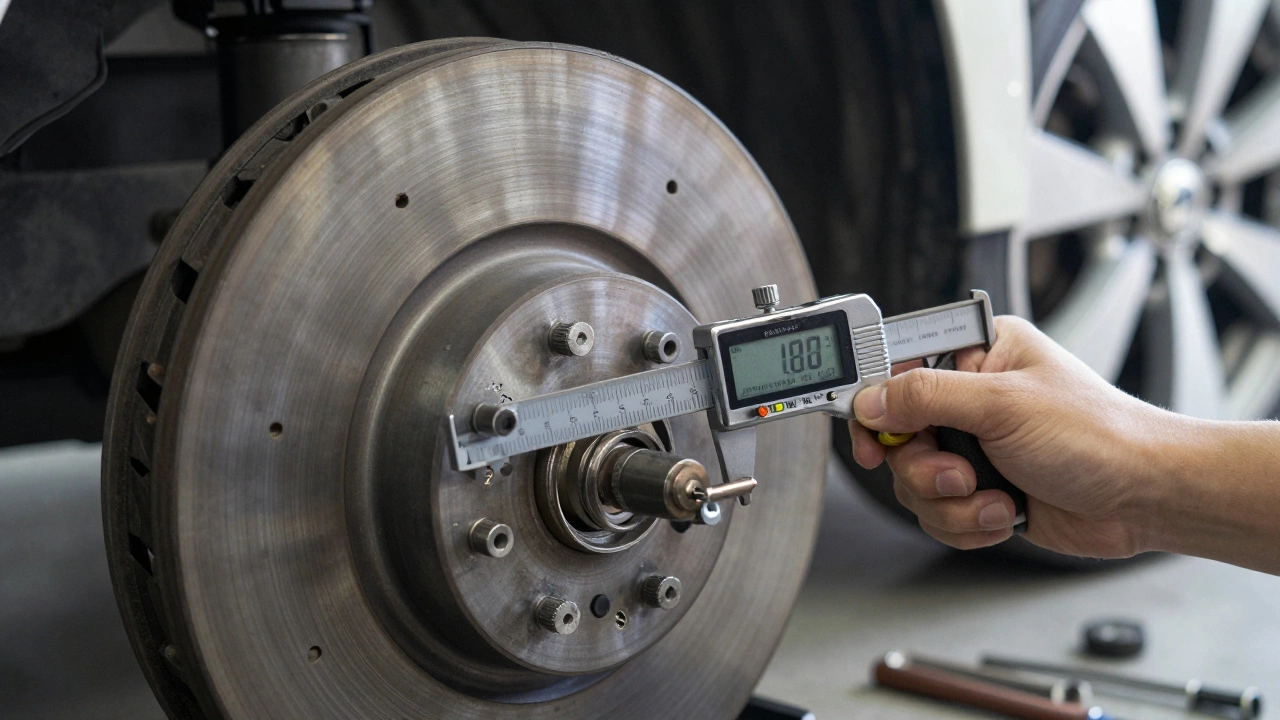
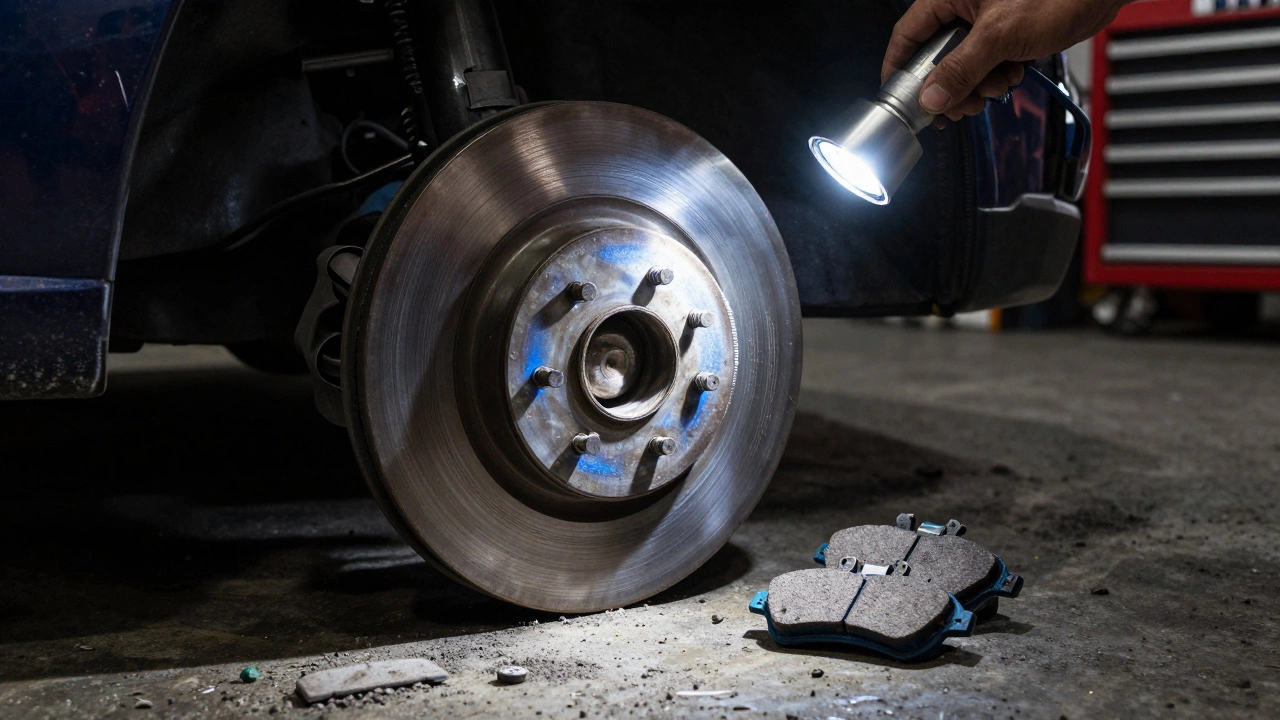
Don’t guess. Check them. You need three things: a micrometer, a flashlight, and a few minutes.
- Look for grooves or ridges on the surface. Deep scoring means the rotor is worn unevenly.
- Check for blue spots or discoloration. That’s heat damage - signs the rotor has been overheated, maybe from riding the brakes.
- Measure the thickness. Every rotor has a minimum thickness stamped on the edge (usually around 2mm less than new). If you’re within 0.1mm of that limit, replace it.
- Feel for vibrations when braking. If the steering wheel shakes or the pedal pulses, the rotor is warped.
For example, a 2020 Honda Civic has new rotors at 25.4mm thickness. The minimum safe thickness is 23.4mm. If yours measures 23.8mm? You’re fine. If it’s 23.3mm? Replace it.
When you absolutely must replace the rotors
There are three clear cases where you can’t skip rotor replacement:
- Thickness below minimum - This isn’t optional. A thin rotor can crack under heat and pressure. That’s a safety risk.
- Warped or uneven surface - Even if the thickness is okay, a warped rotor will ruin new pads in weeks. No amount of resurfacing fixes deep warping.
- Cracks or heavy scoring - If you see cracks, especially near the hub or cooling vents, replace it immediately. No exceptions.
One real-world example: A customer in Manchester brought in a 2018 Ford Focus. The pads were at 2mm - time to replace. The rotors measured 23.6mm (well above the 22.4mm minimum). Surface looked smooth. No vibrations. We replaced only the pads. Two years later, the same rotors are still working fine.
When you can save money by keeping the rotors
If your rotors are in good shape, you can save £100-£200 by not replacing them. That’s the cost difference between a pad-only job and a full brake job.
Here’s when to keep them:
- Thickness is above 85% of new
- No visible damage, warping, or heat cracks
- No brake pedal pulsation or steering wheel shake
- You drive mostly on quiet roads, not mountain passes or heavy traffic
City drivers in Manchester often go 60,000-80,000 miles on original rotors. Highway drivers with smooth braking habits can stretch it even longer.
What about resurfacing rotors?
Some shops still offer rotor resurfacing - grinding them smooth again. It sounds like a good idea, but it’s rarely worth it anymore.
Here’s why:
- Modern rotors are thinner than older ones. Resurfacing removes more material, pushing them closer to the minimum thickness.
- Most rotors are made of low-cost cast iron. Once resurfaced, they wear faster and warp more easily.
- The cost of resurfacing is often close to buying new rotors - especially when you factor in labor and time.
In 2025, it’s cheaper and more reliable to just replace rotors if they’re even slightly questionable. New rotors come pre-bedded and balanced. Resurfaced ones don’t.
What happens if you skip replacing bad rotors?
Replacing pads on worn rotors isn’t just a waste of money - it’s dangerous.
- New pads won’t seat properly. They’ll glaze over, reducing stopping power by up to 30%.
- Uneven contact causes hot spots. That leads to warping, even faster than before.
- Brake noise becomes constant. Squealing, grinding, or chirping won’t go away.
- Brake pedal travel increases. You have to press harder to stop. That’s a red flag.
A 2024 study by the UK’s Institute of Advanced Motorists found that 17% of brake-related accidents involved mismatched pads and rotors. Not because of worn pads alone - because of worn rotors that were ignored.

Best practice: Always inspect rotors when replacing pads
You don’t need to replace rotors every time. But you do need to inspect them every time.
Here’s a simple checklist to follow:
- Remove the wheel and clean the rotor surface with brake cleaner.
- Run your finger along the surface. Feel for ridges or grooves.
- Measure thickness with a micrometer. Compare to manufacturer specs.
- Look for cracks, blue spots, or deep scoring.
- Spin the rotor by hand. If it wobbles or feels uneven, it’s warped.
If all checks pass, install new pads and bed them in properly. If any check fails, replace the rotor.
How long do rotors really last?
There’s no fixed number. It depends on:
- Driving style - Aggressive braking? Rotors wear faster.
- Vehicle weight - SUVs and trucks wear rotors quicker than compact cars.
- Brake pad material - Ceramic pads are gentler on rotors than semi-metallic.
- Climate - Salted roads in winter accelerate corrosion.
On average:
- City driving: 30,000-70,000 miles
- Highway driving: 50,000-100,000 miles
- Performance vehicles: 20,000-40,000 miles
But again - mileage doesn’t matter if the rotor is damaged. Always inspect.
Final advice: Don’t assume. Check.
Changing rotors with brake pads isn’t a rule. It’s a precaution. Some cars need it. Some don’t. Your car’s condition matters more than the odometer.
If you’re unsure, get a professional inspection. A good mechanic will show you the measurements, point out the damage, and explain why they recommend replacement - or why they don’t.
Don’t let fear of cost make you skip the check. Bad brakes aren’t just expensive to fix later - they’re dangerous. And in the UK, a failed brake inspection means an automatic MOT failure. That’s more expensive than new rotors.
When in doubt, replace the rotors. But don’t replace them just because someone told you to. Replace them because the numbers and the wear say so.