Fuel Pump Failure Diagnostic Tool
| Symptom | Likely Cause |
|---|---|
| Engine Cranks but Won't Start | Mechanical |
| Loss of Power Under Load (Highway/Acceleration) | Mechanical |
| Hissing Noise from Tank Area | Mixed |
| Stalling at Idle Only | Software |
| OBD-II Code P0230 (Fuel Pump Circuit) | Mechanical |
| Runs Rough When Cold, Smooth After Warming Up | Software |
| Intermittent Check Engine Light (After Water/Rough Roads) | Software |
Diagnostic Analysis
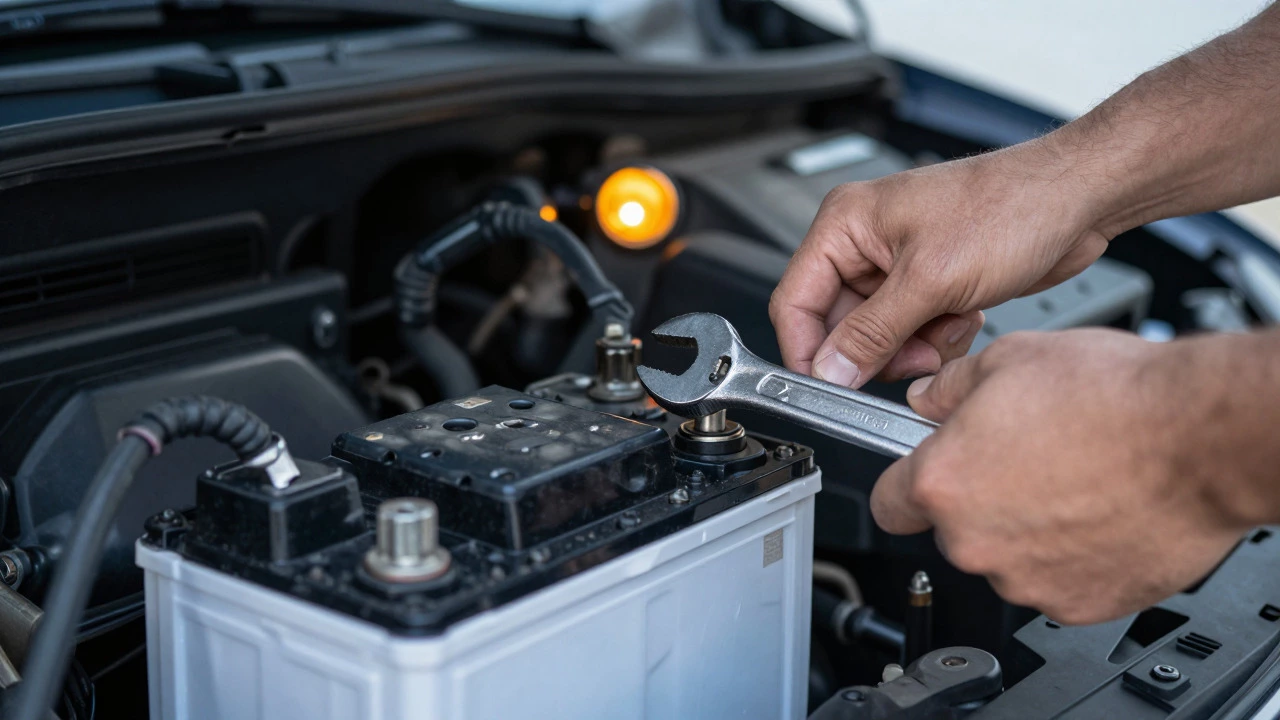
You pull over because your car sputters and stalls. The dashboard lights up with a check engine light. You’ve heard that disconnecting the battery is a simple DIY fix for electrical glitches in modern vehicles might clear the code. But does this actually fix a dying fuel pump is the component responsible for moving gasoline from the tank to the engine at high pressure? The short answer is: usually no. While a battery reset can clear temporary sensor errors, it rarely cures mechanical or electrical failures within the fuel delivery system itself.
The Reality of Battery Resets vs. Hardware Failure
To understand why a reset often fails, you need to look at how the car’s computer, known as the ECU is the central processing unit that monitors and controls vehicle systems including fuel injection timing, interacts with the fuel system. When you disconnect the battery, you cut power to the ECU. This wipes out stored trouble codes and resets learned adaptation values. If your fuel pump issue was caused by a random software glitch or a false reading from a fuel level sensor is a float-based device inside the tank that measures fuel quantity and sends voltage signals to the gauge, the reset might make the warning light disappear temporarily. However, if the physical pump motor is burned out, the wiring harness is chafed, or the fuel pressure regulator is a valve that maintains consistent fuel pressure by returning excess fuel to the tank is stuck, no amount of resetting will bring it back to life.
Think of it like a washing machine. If the drum won’t spin because the motor fuse blew, resetting the breaker won’t fix the broken motor. It only works if the machine simply froze due to a software hang. In cars, fuel pump failures are predominantly mechanical or electrical hardware issues, not software bugs.
When a Reset Actually Helps
There are specific scenarios where pulling the battery terminal is a valid first step before spending money on parts. You should consider a reset if:
- The Check Engine Light is new and intermittent: If the light came on once after driving through deep water or a rough patch, it could be a transient signal interruption. A reset clears the history so you can see if the code returns immediately upon restarting.
- After a recent jump start: Sometimes, voltage spikes during a jump start can confuse the ECU’s memory. Resetting allows the computer to relearn idle parameters and fuel trims from scratch.
- Suspected ECU Glitch: Rarely, the ECU may misinterpret data from the oxygen sensor is a device that measures unburned oxygen in exhaust gases to adjust air-fuel mixture or mass airflow sensor, leading to incorrect fuel delivery commands. A reset forces a fresh calibration cycle.
If you choose to perform a reset, wait at least 15 minutes after disconnecting the negative terminal. This ensures all capacitors in the ECU fully discharge. Reconnect the battery, turn the ignition key to the "On" position (without starting) for 30 seconds to let the fuel pump prime, then start the engine. Listen closely. If you hear a hum from the tank area for two to three seconds, the pump is electrically alive. If silence follows, the problem is likely the pump motor, relay, or fuse.
Common Symptoms That Indicate a True Fuel Pump Failure
Distinguishing between a software error and a hardware failure is critical. Here is a comparison table to help you diagnose the issue before you touch the battery.
| Symptom | Likely Cause: Software/ECU | Likely Cause: Mechanical/Electrical Pump |
|---|---|---|
| Engine Cranks but Won't Start | Possible (if fuel trims are extreme) | Very High (no fuel reaching injectors) |
| Loss of Power Under Load | Low (usually throttle body or MAF) | High (pump cannot maintain pressure under demand) |
| Hissing Noise from Tank | Rare | Medium (cavitating pump or low fuel) |
| Stalling at Idle Only | Medium (idle air control or ECU map) | Low (pump usually handles idle fine unless failing) |
| Code P0230 (Fuel Pump Primary Circuit) | Low (unless wiring is damaged) | High (open circuit in pump or relay) |
Notice that symptoms like losing power on the highway or stalling when you accelerate hard are classic signs of a weak pump. The pump struggles to keep up with the increased fuel demand, causing the engine to lean out. A battery reset will not fix this pressure drop. Conversely, if your car runs rough only when cold and smooths out after warming up, it might be an injector cleaning issue or a sensor drift, which a reset might temporarily mask but not cure.
The Role of the Fuel Pump Relay and Fuse
Before blaming the pump itself, check the simpler electrical components. The fuel pump relay is an electromechanical switch located in the fuse box that directs battery power to the fuel pump motor is a common point of failure. Relays contain internal contacts that can weld shut or burn open over time due to heat. If the relay fails, the pump gets no power, mimicking a dead pump. Swapping the fuel pump relay with another identical relay in the fuse box (like the horn or fan relay) is a free diagnostic test. If the car starts after the swap, you have a bad relay, not a bad pump.
Similarly, check the fuel pump fuse. A blown fuse cuts power completely. These fuses are usually labeled "FUEL PUMP" or "FP" in the owner's manual. If the fuse is intact and the relay clicks when you turn the key, the electrical path is likely good, pointing the finger squarely at the pump motor or its internal wiring.
Step-by-Step Diagnostic Process
If you suspect a fuel pump issue, follow this logical sequence to avoid unnecessary repairs:
- Check Fluid Levels: Ensure the gas tank isn't empty. Running the pump dry causes overheating and rapid failure. Add a gallon of fuel if the gauge is below a quarter.
- Listen for Prime: Turn the key to "On" without starting. Listen for a brief hum from the rear seat or trunk area. No sound? Check fuses and relays first.
- Scan for Codes: Use an OBD-II scanner. Look for codes related to fuel pressure (P0230, P0264) or fuel trim (P0171, P0174). Lean codes suggest the engine is starving for fuel.
- Perform Battery Reset: Only do this if codes are ambiguous or intermittent. Disconnect negative terminal for 15 minutes. Reconnect and restart.
- Test Drive and Monitor: Drive the car for at least 10 minutes, including some acceleration. Watch the live data for fuel rail pressure. If pressure drops significantly under load, the pump is mechanically weak.

Cost Implications: Repair vs. Replacement
If the reset doesn't work, you're facing a repair. Replacing a fuel pump is not cheap. In the UK market, parts prices vary widely based on whether you buy OEM or aftermarket. An OEM pump from manufacturers like Bosch or Denso can cost between £150 and £300 for the part alone. Labor adds another £100 to £200 depending on access difficulty. Some modern cars require dropping the transmission or removing the entire tank, pushing labor costs higher.
However, if the issue is just the fuel filter is a screen or cartridge that traps debris before fuel enters the high-pressure pump, the fix is much cheaper. Many modern integrated pump modules have a replaceable filter element. Cleaning or replacing this can restore performance without swapping the whole assembly. Always ask your mechanic if the filter is accessible before committing to a full pump replacement.
Frequently Asked Questions
Will resetting the battery erase my fuel pump fault code?
Yes, disconnecting the battery for more than 15 minutes will typically clear stored trouble codes from the ECU. However, if the underlying mechanical fault remains, the code will likely return after a few drive cycles, usually within 50 to 100 miles.
Can a weak battery cause fuel pump problems?
A severely weak battery can cause voltage drops that prevent the fuel pump from spinning up properly during startup. This might mimic a failed pump. Test your battery voltage; it should be above 12.4 volts when the engine is off. If it's lower, charge or replace the battery before diagnosing the fuel system.
How long does a fuel pump last?
Most modern electric fuel pumps are designed to last the life of the vehicle, often exceeding 100,000 miles. However, running the tank below a quarter full regularly accelerates wear because the pump relies on fuel for cooling. Poor fuel quality with high sulfur content or varnish can also shorten lifespan.
Is it safe to drive with a failing fuel pump?
It is risky. A failing pump can lose pressure suddenly, causing the engine to stall without warning. This is dangerous on highways or in heavy traffic. If the car is stalling frequently, it is safer to tow it to a mechanic rather than risk being stranded in an unsafe location.
Do I need to reprogram the ECU after a fuel pump replacement?
Usually, no. Most fuel pumps are plug-and-play. However, some newer vehicles with direct-injection systems may require a brief learning period or a dealer scan tool to reset fuel trim adaptations. Your mechanic should handle this as part of the service.