Oil Check Timing Calculator
How long should you wait after adding oil?
Get accurate oil level readings and avoid engine damage with this simple calculator.
Wait this amount for accurate oil level readings.
Consequence of not waiting: Overfilling may cause oil foaming, leaks, or engine damage.
When you add oil to your car, you might be tempted to start the engine right away. But waiting a few minutes after adding oil makes a real difference-especially if you’re checking the level or just topped off a low reservoir. It’s not about waiting for the oil to ‘settle’ like a magic potion. It’s about getting an accurate reading and avoiding damage.
Why you need to wait after adding oil
Oil doesn’t just sit in the pan. When the engine runs, oil gets pumped all over the inside of the engine-up to the valve train, down to the crankshaft, through the oil filter, and into tight gaps between moving parts. When you turn off the engine, gravity pulls most of that oil back down into the oil pan. But not all of it. Some clings to components, drips slowly, or pools in hard-to-reach places.If you check the oil level right after adding more, you’ll see a higher reading than what’s actually circulating. That’s because the oil you just poured hasn’t had time to drain back into the pan. You might think you’ve added too much, or worse, you might think you still need more. Both mistakes can hurt your engine.
Too much oil causes foaming. The spinning crankshaft whips the oil into bubbles, and foam doesn’t lubricate well. That leads to overheating, increased wear, and even oil leaks from seals that weren’t designed to handle pressure from excess oil. Too little oil? That’s even worse. Bearings can seize, pistons can scuff, and you could end up with a $5,000 engine rebuild.
How long should you wait?
The standard rule: wait five to ten minutes after adding oil before checking the level.This gives enough time for the oil to drain back into the oil pan without being overly long. If you just finished an oil change and added the full amount, wait ten minutes. If you’re just topping off because the dipstick showed low, five minutes is enough.
Here’s why this timing works:
- After turning off the engine, oil starts draining back immediately.
- Within 2-3 minutes, most of the oil has returned to the pan.
- By 5 minutes, nearly all of it has settled.
- After 10 minutes, you’re guaranteed an accurate reading-even if the engine was hot or you drove hard before adding oil.
Don’t wait longer than 15 minutes. If you wait too long, the oil cools too much and may not reflect how it behaves when the engine is running. You want the reading to be close to normal operating conditions.
What if you added oil while the engine was still warm?
Many people add oil right after driving because they noticed the warning light or heard a knock. That’s fine. But if the engine was hot, wait the full ten minutes. Hot oil is thinner and flows faster, so it takes longer to drain back completely. If you check too soon, you might overfill by half a quart-or more.Also, never add oil while the engine is running. Even if you think you’re being careful, you risk spilling oil on hot parts, causing smoke or fire. Always shut the engine off, wait, then add oil.

How to check oil correctly
Waiting is only half the battle. You also need to check the oil the right way:- Park on level ground. Uneven ground gives false readings.
- Turn off the engine and wait 5-10 minutes.
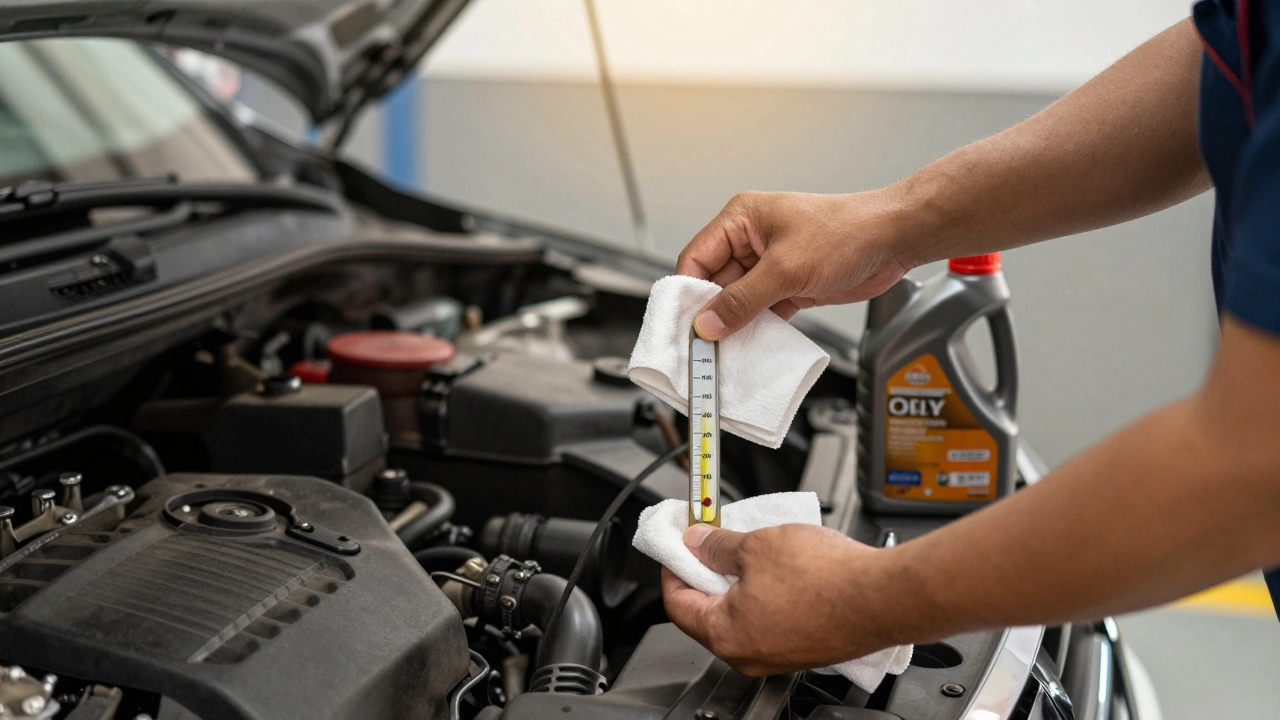
- Pull out the dipstick, wipe it clean with a lint-free rag.
- Reinsert it fully, then pull it out again.
- Look at the oil level. It should be between the minimum and maximum marks.
- If it’s below the minimum, add oil in small amounts-quarter of a quart at a time.
- Recheck after each addition.
Don’t just eyeball it. Dipstick readings are precise. Even a half-quart too much can cause problems in smaller engines like those in compact cars or turbocharged models.
What about synthetic vs. conventional oil?
Some people think synthetic oil behaves differently and needs longer to settle. It doesn’t. Whether you’re using full synthetic, synthetic blend, or conventional oil, the physics are the same. Oil is oil-it drains under gravity. The additives in synthetic oil don’t change how quickly it flows back into the pan.What does change is how long you wait between oil changes. Synthetic oil lasts longer, so you don’t need to top off as often. But when you do, the waiting rule still applies.
Signs you didn’t wait long enough
If you rushed and checked the oil too soon, here’s what might happen:- You added too much oil and now see white smoke from the tailpipe.
- The engine makes a knocking sound after startup.
- The oil pressure light flickers at idle.
- You notice oil leaking from the valve cover gasket or crankshaft seal.
These aren’t random failures. They’re direct results of overfilling. If you see any of these, turn off the engine and drain the excess oil. Use a suction pump or drain a little from the oil pan bolt. Don’t drive until the level is correct.

What if you forgot to wait and already started the engine?
If you added oil, didn’t wait, and turned the engine on, don’t panic. If you only ran it for 10-20 seconds, you’re probably fine. Modern engines are built to handle minor overfilling for short periods.But if you drove even a mile or two, shut it off and check the level now. If it’s above the max line, drain some oil. You don’t need to replace the oil filter or flush the system-just get the level right.
Here’s a simple rule: if the oil level is more than 1/4 inch above the max mark, drain it. That’s about 0.3 quarts. Enough to cause harm, not enough to require a full service.
Pro tip: Keep a small funnel and rag in your glovebox
Adding oil without spilling is hard. A funnel prevents mess, and a clean rag keeps the dipstick readable. Keep them with your oil bottle. That way, you’re always ready to top off safely-even at a gas station.Also, write the date and amount of oil you added on the bottle. That way, you remember what you did last time. Many people think they added a full quart when they only added half. That’s how overfilling starts.
Bottom line
You don’t need to wait hours. You don’t need to wait overnight. You just need to wait five to ten minutes after adding oil before checking the level. That’s all it takes to avoid expensive mistakes.It’s not complicated. It’s not magic. It’s just physics. Oil drains. It takes time. Respect that time, and your engine will thank you with years of smooth, quiet operation.