UK Car Tire Price Estimator 2026
Select your vehicle category and preferred tire quality to get an instant estimate for a full set of 4 fitted tires.
Estimated Cost (Set of 4)
£370
Typical Range: £320 – £420
- Base Tire Cost £370
- Fitting & Disposal Included
You’re driving along, the warning light pops up, or maybe you just hear that ominous thumping sound, and suddenly you realize: it’s time for new car tires. But then comes the panic. How much is this actually going to cost you? If you ask five different people, you’ll get five wildly different answers. One guy paid £150 for his set; another spent £800. What gives?
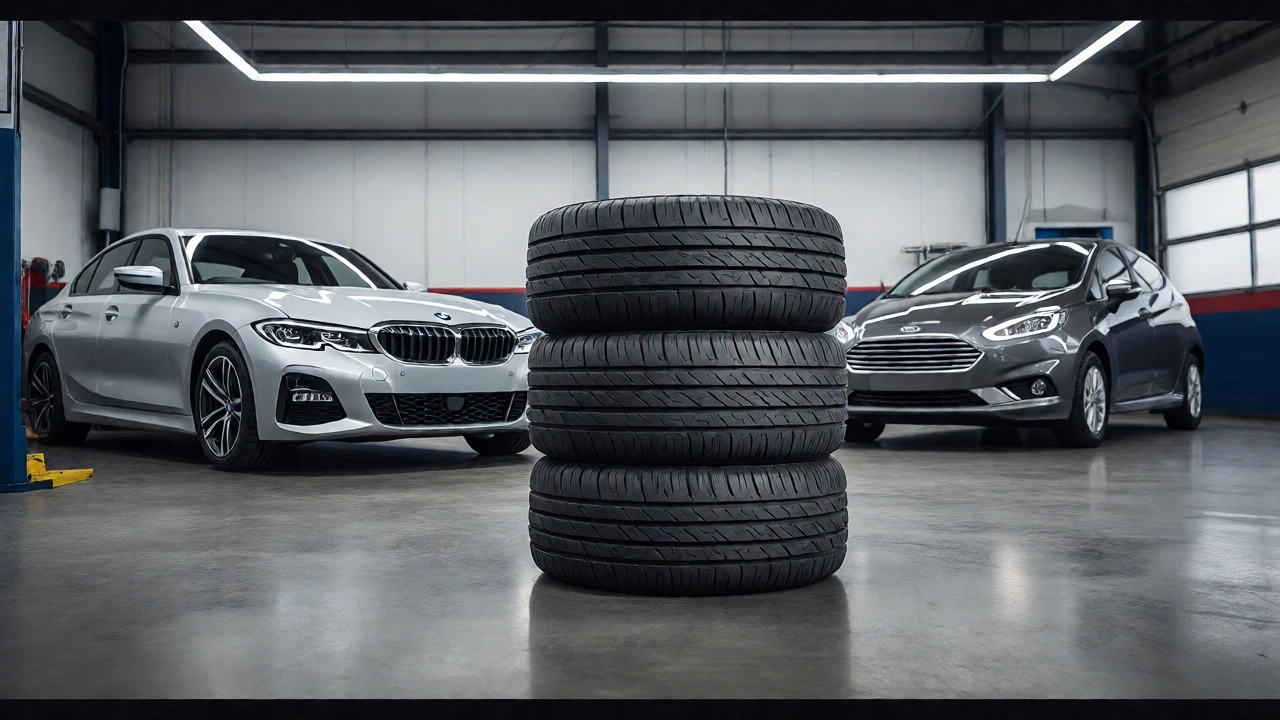
The truth is, there is no single "right" price. It depends entirely on your car, where you live, and how much you value silence versus savings. In the UK in 2026, prices have shifted due to raw material costs and logistics changes. A basic set of tires for a small hatchback like a Ford Fiesta might land around £200-£300 fitted. But swap that for a Tesla Model 3 or a BMW 3 Series with run-flat technology, and you could easily see bills topping £700-£900. This guide breaks down exactly what drives those numbers so you don’t overpay.
Why Tire Prices Vary So Wildly
Before you start hunting for deals, you need to understand what you’re actually buying. You aren’t just paying for rubber. You’re paying for engineering, brand reputation, and specific performance characteristics. When you look at the sticker price, three main factors dictate the cost: tire size, brand tier, and tire type.
Tire size is the biggest multiplier. A standard 15-inch tire fits many economy cars and is relatively cheap to manufacture. Move up to 18-inch or 19-inch alloys common on SUVs and executive saloons, and the amount of rubber and steel belt required increases significantly. More importantly, larger tires are harder to balance and mount, which adds labor time. For every inch you go up in rim diameter, expect the per-tire cost to jump by 15-25%.
Then there’s the brand hierarchy. The market splits into three distinct tiers:
- Premium Tier: Brands like Michelin, Continental, Bridgestone, and Pirelli. These use advanced silica compounds and noise-reducing tech. They last longer and offer better wet braking but command a high price tag.
- Mid-Range Tier: Names like Falken, Hankook, and Goodyear (often their secondary lines). These offer 80-90% of the premium performance for about 60-70% of the cost. They are the sweet spot for most drivers.
- Budget Tier: Brands like Landsail, Avon, or generic Chinese imports. These are functional and safe if maintained well, but they wear faster and often perform poorly in heavy rain or emergency stops.
Finally, consider the tire type. Standard all-season tires are the baseline. Winter tires add cost for specialized tread patterns. Summer tires are optimized for heat but harden in cold. Then there are Run-Flat Tires (RFTs), which have reinforced sidewalls allowing you to drive 50 miles after a puncture. RFTs can cost 20-30% more than standard tires because of the extra structural reinforcement needed.
Realistic Cost Breakdown by Vehicle Type
Let’s put real numbers on this. Based on current UK market data from major retailers like Blackcircles, Kwik Fit, and Halfords as of late 2025/early 2026, here is what you should expect to pay for a full set of four tires, including VAT and standard fitting fees.
| Vehicle Category | Common Size | Budget Set (£) | Mid-Range Set (£) | Premium Set (£) |
|---|---|---|---|---|
| Small Hatchback (e.g., VW Polo) | 195/65 R15 | £180 - £240 | £260 - £340 | £380 - £480 |
| Family Sedan (e.g., Ford Focus) | 205/55 R16 | £220 - £280 | £320 - £420 | £450 - £600 |
| Crossover/SUV (e.g., Nissan Qashqai) | 215/60 R17 | £280 - £350 | £400 - £550 | £600 - £800 |
| Executive Saloon (e.g., BMW 3 Series) | 225/45 R18 | £350 - £450 | £500 - £700 | £750 - £1,000+ |
| Large SUV (e.g., Audi Q7) | 255/50 R20 | £450 - £600 | £700 - £900 | £1,000 - £1,400+ |
Notice the gap between budget and premium on the large SUV? That’s nearly £1,000 difference. Why? Because premium brands invest heavily in research to keep those heavy vehicles stable. Budget tires on a 2-tonne SUV often feel vague in corners and take longer to stop. If you drive mostly short city trips, the budget option might suffice. If you do motorway runs, the premium safety margin is worth every penny.
Fitting Fees and Hidden Costs
The price of the tire itself is only part of the story. You also have to get them onto your wheels. Many online retailers include fitting in their quoted price, but local garages often charge separately. Here’s what typically gets added to the bill:
- Standard Fitting: Removing old tires, mounting new ones, and balancing. Usually £10-£15 per wheel.
- Valve Replacement: Often included, but sometimes charged £2-£5 per wheel. Always insist on new valves; old rubber cracks and leaks air.
- Disposal Fee: Recycling old tires isn’t free. Expect £2-£5 per tire.
- Wheel Alignment: Not always necessary, but recommended if your steering pulls or tires wear unevenly. A front alignment costs £40-£60; a full four-wheel alignment is £60-£90.
A common trap is buying cheap tires online and getting hit with high fitting fees at a third-party garage. Some independent fitters charge premium rates for online purchases because they make less margin on the tire sale itself. Always check if the retailer has a network of partner fitters who honor fixed-price installation.
Premium vs. Budget: Is the Upgrade Worth It?
This is the million-dollar question-or rather, the few-hundred-pound question. Does spending double on a Michelin Primacy instead of a Landsail GZ52 actually matter?
In dry conditions, the difference is minimal. Both will grip fine. But in the wet, the gap widens. Premium tires use silica-rich compounds that stay flexible in cool, damp weather. Independent tests consistently show premium tires stopping up to 10-15 meters sooner from 70mph on wet roads compared to budget equivalents. At 70mph, 10 meters is roughly two-and-a-half car lengths. That’s not just a statistic; that’s the difference between a near-miss and a collision.
Lifespan is another factor. A premium tire might last 30,000 miles, while a budget tire might struggle past 15,000. If you drive 10,000 miles a year, the premium tire lasts three years; the budget one lasts eighteen months. Over six years, you buy two sets of budget tires (£400 total) versus one set of premium (£600). The premium option becomes cheaper long-term if you factor in fuel efficiency too, as rolling resistance is lower on high-quality tires.
Where to Buy and Save Money
You don’t have to accept the first quote you receive. There are several strategies to lower the cost without compromising safety.
Buy Online, Fit Locally: Websites like Blackcircles, TyreAgent, and MyTyres often undercut high-street chains by 15-20%. They source directly from manufacturers and pass the savings on. You select your size, choose a fitting station near you, and pay upfront. The risk? Sometimes the fitting center tries to upsell you on alignment or nitrogen inflation. Politely decline unless you know you need it.
Check for Seasonal Sales: Tire prices dip during transitional periods. Late winter (February/March) sees discounts on summer tires as shops clear stock. Similarly, October brings sales on winter tires. Buying out of season can save you 10-15%.
Consider Part-Worn or Used: For older cars with low mileage, reputable used tire dealers sell tires with 6mm+ tread depth for half the price. Ensure they are under five years old (check the DOT date code on the sidewall) and have no repairs or bulges. This is risky for high-performance cars but great for daily commuters.
Negotiate Bundles: If you need tires, brakes, and an oil change, ask for a package deal. Garages prefer keeping you in-house for multiple jobs and may waive fitting fees or offer a discount on the whole service.
When Should You Actually Replace Them?
Don’t wait until the tire blows out. Check your tread depth regularly. The legal minimum in the UK is 1.6mm across the central ¾ of the tread. However, safety experts recommend replacing tires when they reach 3mm. Below 3mm, wet braking distances increase exponentially. You can use a 20p coin to test this-insert it into the tread grooves. If the outer band of the coin is visible, your tread is shallow.
Also, inspect for damage. Sidewall cuts, bulges, or uneven wear patterns signal underlying issues. If one tire wears faster than the others, you likely have an alignment problem. Fixing the alignment before fitting new tires prevents premature wear, saving you money in the long run.
Is it cheaper to replace tires one at a time or all four?
It is almost always better to replace all four at once, especially on all-wheel-drive (AWD) vehicles. Mismatched tires can damage the drivetrain and cause poor handling. On front-wheel-drive cars, you can sometimes replace just the axle pair (two tires), placing the newer tires on the rear for stability. However, buying a set of four usually unlocks volume discounts from retailers, making the per-tire cost lower than buying singles.
Do I really need run-flat tires?
Not necessarily. Run-flats allow you to drive briefly after a puncture without changing the wheel immediately. However, they are stiffer, heavier, and more expensive. They also reduce ride comfort and can be harder to repair. If your car came with run-flats, you can switch to standard tires if you carry a space-saver spare or a puncture repair kit. This switch can save you £100-£200 per set and improve comfort.
How long do modern car tires last?
Typically, 20,000 to 50,000 miles depending on the compound and driving style. Aggressive driving, under-inflation, and rough roads shorten lifespan. Regardless of mileage, tires degrade chemically over time. Most manufacturers recommend replacing tires after 6-10 years, even if the tread looks good, because the rubber hardens and loses grip.
Does tire pressure affect the cost?
Yes, indirectly. Under-inflated tires create more rolling resistance, reducing fuel economy by up to 3%. They also wear out faster, particularly on the edges. Keeping tires at the manufacturer’s recommended PSI extends their life and saves money on fuel. Check pressures monthly when tires are cold.
Can I mix tire brands on my car?
You can mix brands on opposite axles (e.g., Front Left Brand A, Rear Right Brand B) provided the sizes and speed ratings match. However, never mix different tread patterns or types (e.g., winter and summer) on the same axle. For best performance and safety, stick to the same brand and model on both sides of the same axle.