Brake Pad Replacement Cost & Urgency Calculator
Status Assessment
Cost Estimate (Front Axle)
| DIY Parts Only: | £0 |
| Professional Garage: | £0 |
| Potential Rotor Damage Risk: | Low |
You’re driving down the M60, and suddenly that high-pitched squeal hits you. Or maybe it’s a grinding noise that sounds like metal chewing on metal. Your first thought isn’t usually "physics" or "friction coefficients." It’s usually, "How much is this going to cost me?"
So, is it worth replacing brake pads? The short answer is yes, absolutely. But the long answer involves understanding why your mechanic is pushing for it, when you can actually wait, and how to spot the difference between a minor annoyance and a catastrophic failure. Let’s break down the real costs, the risks of waiting, and what you should look for before you hand over your keys.
The Real Cost of Ignoring Worn Brakes
People often think brake pads are just consumables like windshield washer fluid. They aren’t. They are part of a system where friction does the heavy lifting. When you ignore them, you aren’t just risking a squeak; you’re risking the integrity of your entire braking assembly.
Here is the financial reality: A standard set of front brake pads might cost £40-£80 for parts. If you let those pads wear down completely, the metal backing plate starts eating into the brake disc (rotor). Suddenly, you aren’t buying pads anymore. You’re buying pads and discs. On a typical family hatchback, that doubles or triples the bill. Add in labour time for machining or replacing warped rotors, and you’re looking at hundreds of pounds instead of tens.
Beyond the money, there’s safety. Stopping distance increases significantly as pad thickness drops below 3mm. In an emergency stop scenario, that extra meter or two could be the difference between a near-miss and a collision. Is it worth saving £50 now to risk a fender bender later? Probably not.
Signs You Need New Brake Pads Right Now
Your car talks to you. You just have to listen. Here are the four most common signals that your pads are nearing the end of their life.
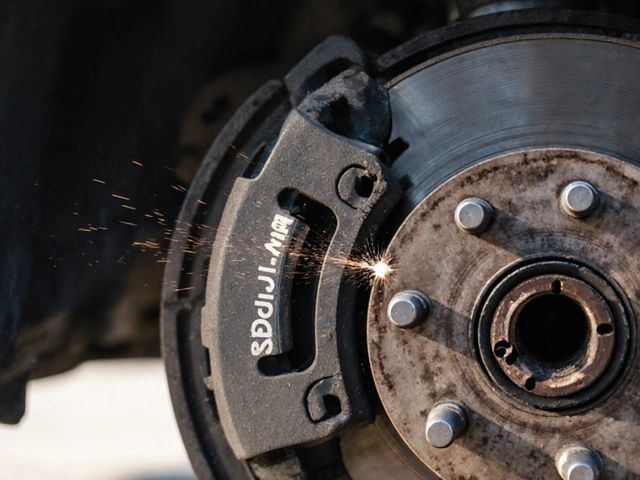
- Audible Squealing: Most modern pads have a small metal tab called a wear indicator. When the pad gets thin, this tab scrapes against the rotor, creating a high-pitched shriek. This is your warning light. It means you have perhaps 10-20% of pad life left.
- Grinding Noise: If you hear a low growl or grind, the friction material is gone. The metal-on-metal contact is happening now. This damages the rotor immediately. Stop driving if possible.
- Vibration in the Pedal: If the brake pedal pulses under your foot, your rotors might be warped due to uneven heating from old pads. While this sometimes points to rotors, it’s often caused by glazed or unevenly worn pads.
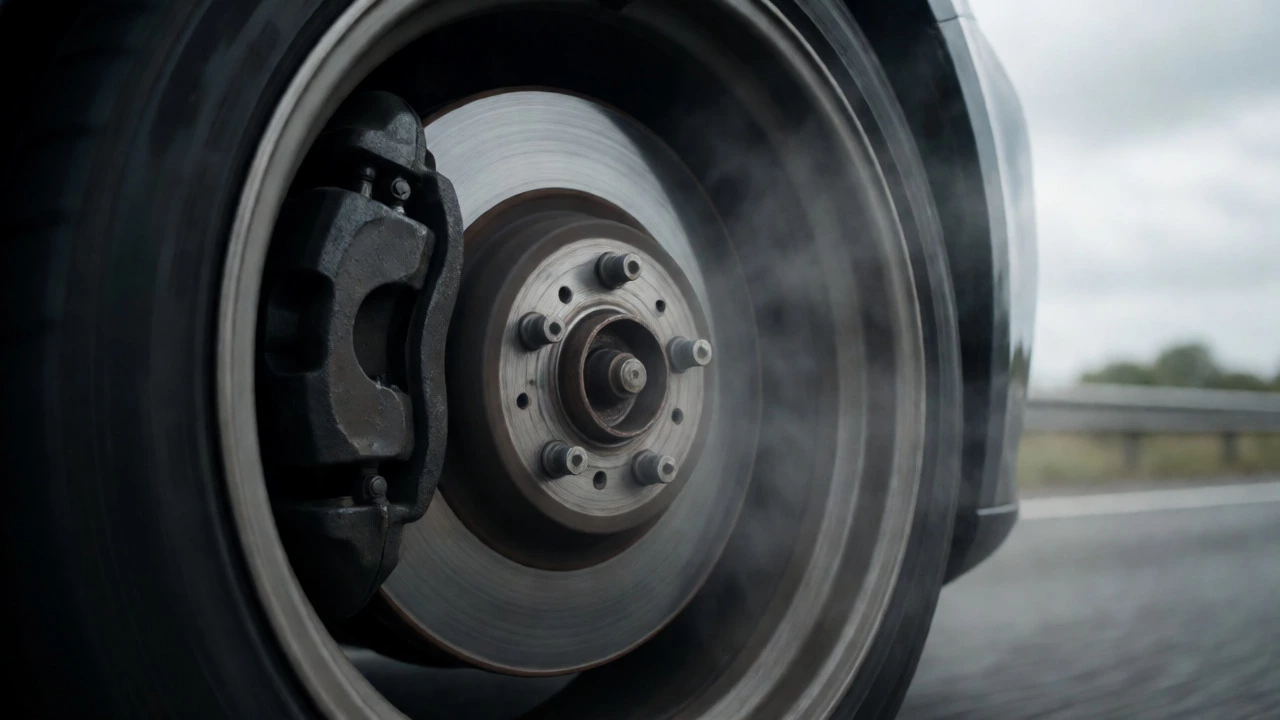
- Visual Inspection: Look through the spokes of your wheel. You should see a thick block of material between the caliper and the shiny metal disc. If that block looks thinner than a smartphone (less than 3mm), replace them.
If you notice any of these, don’t wait for your next MOT. Get them checked within the week.
DIY vs. Professional Replacement: What’s the Difference?
Can you do it yourself? Yes. Should you? That depends on your comfort level with tools and torque specifications.
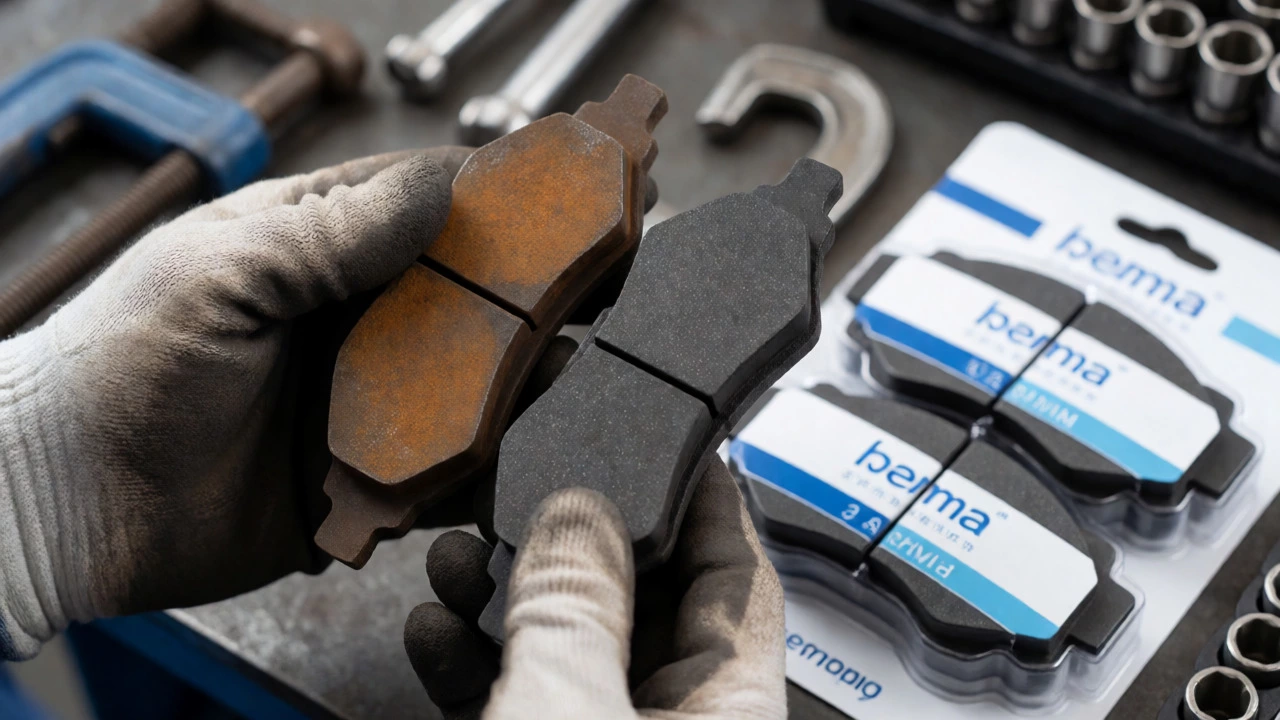
Replacing brake pads is one of the easier automotive jobs for beginners. You need basic socket sets, a C-clamp or piston tool, and some grease. However, mistakes here are expensive. If you forget to reseat the piston correctly or cross-thread a bolt, you’ll have a wobbly wheel or a dragging brake.
| Factor | DIY Replacement | Professional Garage |
|---|---|---|
| Parts Cost | £40 - £80 (Quality OEM) | £60 - £120 (Garage markup) |
| Labour Cost | Free (Your time) | £50 - £90 per axle |
| Risk Factor | High (If inexperienced) | Low (Warranty included) |
| Time Required | 2-4 hours | 1 hour (drop off/pick up) |
| Best For | Confident hobbyists | Busy owners, complex systems |
If you drive a car with electronic parking brakes (common in newer VWs, Audis, and Fords), the rear pads require a diagnostic tool to retract the electric motor. Doing this without the right scanner can damage the actuator. In that case, paying a pro is definitely worth it.
Choosing the Right Brake Pads
Not all pads are created equal. Walking into a shop or browsing online can be overwhelming. Here’s a quick guide to the three main types so you don’t buy the wrong ones for your driving style.
Ceramic Pads
This is the gold standard for daily drivers. They produce very little dust, run quietly, and offer consistent performance in normal temperatures. They are more expensive upfront but last longer and keep your wheels cleaner. If you commute in Manchester traffic, ceramic is usually the best choice.
Semi-Metallic Pads
These contain metal fibres mixed with friction material. They bite harder and handle heat better than ceramics. The downside? They squeal more, create black dust on your rims, and wear down rotors faster. Good for spirited driving or towing, but noisy for city use.
Organic/Low-Metallic Pads
Often found in budget replacements. They are quiet and cheap but fade quickly when hot. If you drive aggressively or live in a hilly area, avoid these. They lack the durability needed for heavy braking.
Stick to reputable brands like Brembo, EBC, or Bosch. Avoid unbranded "white box" pads from eBay unless you enjoy gambling with your stopping power.
When Is It NOT Worth Replacing Just Yet?
There are scenarios where you can safely wait. Mechanics sometimes push for early replacement to boost revenue, so know your thresholds.
If your pads still have 4mm of material left and they aren’t making noise, you likely have another 10,000 miles. Check your owner’s manual for recommended intervals, but always trust visual inspection over mileage counters. Also, if you are planning to sell the car in two weeks, replacing pads might not recoup its cost in resale value unless the current state is dangerous. A buyer will knock £100 off for "worn brakes," which is roughly the cost of the job anyway. So, fix it only if it fails the MOT test.
Troubleshooting Post-Replacement Issues
Did you just get new pads installed, but something feels off? Don’t panic. Here are common post-installation quirks.
- Squeaking after install: Often due to lack of anti-squeal shims or glazing. Drive gently for 100 miles to bed them in. If it persists, return to the garage.
- Soft pedal: Could indicate air in the lines (needs bleeding) or loose connections. Not normal for a simple pad swap unless the system was opened.
- Pulling to one side: Usually a stuck caliper slide pin. Needs greasing or replacement.
Always test your brakes at low speed in a safe area before merging onto the motorway. New pads need a "bedding-in" period to transfer a thin layer of friction material onto the rotor. Hard braking during this phase can cause premature wear.
How many miles do brake pads typically last?
Most front brake pads last between 30,000 and 70,000 miles. Rear pads often last twice as long because the front brakes do about 70% of the work. City driving wears them out faster than highway cruising due to constant stop-and-go braking.
Can I drive with worn brake pads?
You can drive with thin pads, but not with zero pads. Once the wear indicator touches the rotor, you have a few hundred miles of safe driving left. Once you hear grinding, the rotor is being damaged, and stopping distances increase dangerously. Limit speed and avoid highways until repaired.
Why are my new brake pads squeaking?
New pads often squeak during the first 100 miles as they bed in. Ensure the installation used proper anti-squeal grease on the back of the pads and that the hardware clips were replaced. If the noise continues after bedding in, the pads may be low-quality or the calipers may be sticking.
Do I need to replace brake discs every time I change pads?
No. Discs should only be replaced if they are below minimum thickness, warped, cracked, or deeply scored. If the discs are smooth and above the manufacturer's minimum spec, new pads can be installed directly onto them. Always measure the disc thickness before deciding.
Is it cheaper to replace pads myself?
Yes, potentially saving 50-60% of the total cost. However, you must account for the cost of tools (jack stands, wrenches) and the risk of error. For cars with electronic parking brakes, DIY savings diminish because you need specialized diagnostic equipment to reset the calipers.