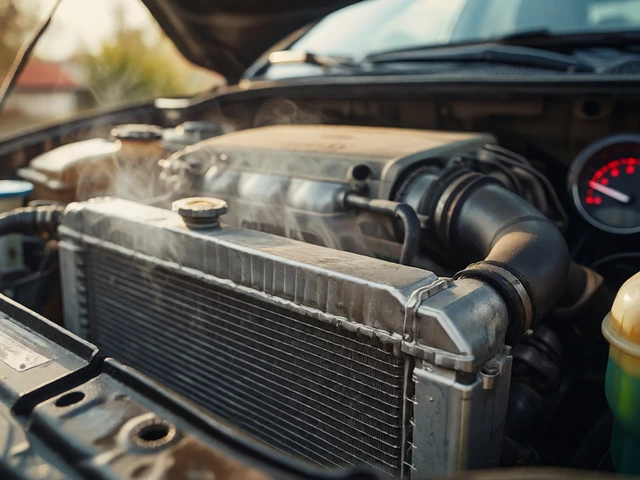
Exhaust System Decision Tool
Answer the following questions to determine the best exhaust configuration for your vehicle.
| Factor | Straight Pipe | Performance Muffler |
|---|---|---|
| Legality | Illegal (Fines/MOT Fail) | Legal |
| Noise Level | Extreme (>100dB) | Moderate to High |
| Low-End Torque | Often Reduced | Maintained/Improved |
| Resale Value | Negative Impact | Neutral/Positive |
Imagine you’re sitting at a red light. The car next to you roars like a jet engine taking off, shaking the windows of your vehicle. It’s loud, aggressive, and undeniably attention-grabbing. Now imagine the car behind you humming quietly, almost imperceptibly, as it accelerates smoothly away. Both cars might have powerful engines, but their exhaust setups tell two completely different stories. One prioritizes raw sound and minimal restriction; the other values refinement and compliance.
This is the core debate in automotive modification: straight pipe versus muffler. It’s not just about how loud your car sounds. It’s about performance, legality, longevity, and whether you want your neighbors to call the police or invite you over for a barbecue. Choosing between these two exhaust configurations requires understanding what actually happens inside your pipes when that fuel ignites.
The Anatomy of an Exhaust System
To understand why one setup beats the other for your specific needs, we first need to look at what an exhaust system actually does. It isn’t just a tube to get rid of smoke. It’s a complex network designed to manage high-pressure gases exiting your engine cylinders. These gases are hot, toxic, and carry energy that can either be wasted or harnessed.
A standard factory exhaust system consists of several key components working together. First, there’s the exhaust manifold, which collects gases from individual cylinders. Next comes the catalytic converter, a critical emissions control device that reduces harmful pollutants. Then, you typically find the resonator, which cancels out certain low-frequency drone noises. Finally, there’s the muffler, the large box at the rear that dampens the remaining sound waves before they exit through the tailpipe.
What is the primary function of a muffler?
The primary function of a muffler is to reduce the noise generated by the exhaust gases. It uses internal chambers, baffles, and perforated tubes to reflect and cancel out sound waves, resulting in a quieter operation that complies with local noise regulations.
Understanding the Straight Pipe Setup
A straight pipe exhaust removes all restrictions from the exhaust path. This means deleting the catalytic converter, the resonator, and the muffler entirely. You are left with a single, uninterrupted tube running from the engine manifold (or turbo downpipe) directly to the rear bumper. The goal here is simplicity and maximum flow.
Straight Pipe is an exhaust configuration that eliminates all restrictive components like mufflers and resonators, allowing exhaust gases to exit with minimal resistance. This setup is often associated with drag racing applications where every fraction of horsepower matters, particularly at high RPMs.Proponents argue that removing back pressure allows the engine to breathe better. When exhaust gases leave freely, the engine doesn’t have to work as hard to push them out. In theory, this should increase horsepower. However, the reality is more nuanced. While top-end power might see a slight gain on a dyno, especially in high-revving race engines, daily driving experience tells a different story.
The most immediate change is the noise. We’re talking decibels that can exceed 100 dB at idle and skyrocket during acceleration. It’s not just loud; it’s harsh. Without a muffler to smooth out the pulses, the sound becomes a chaotic roar. Many drivers find this fatiguing after just ten minutes of driving. Your ears will hurt, and so will your passengers’.
The Role of the Muffler
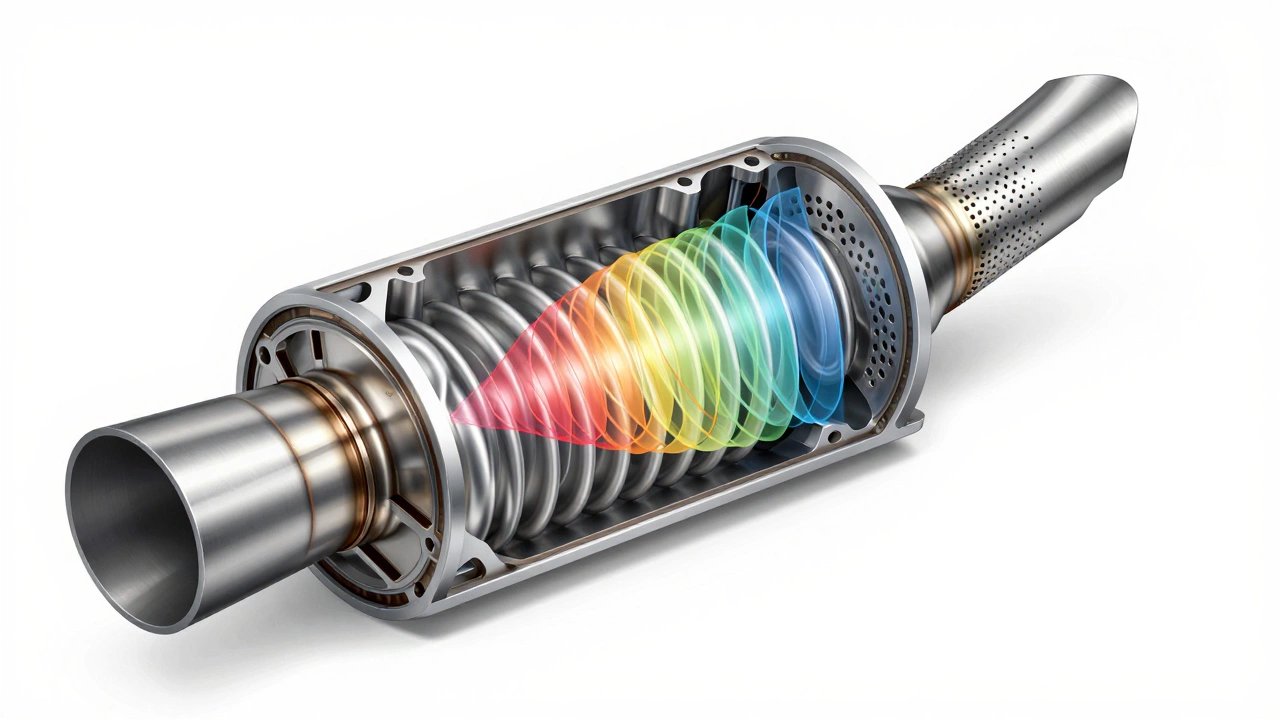
The muffler is the unsung hero of comfort. Its job is acoustic engineering. Inside a typical muffler, you’ll find a series of baffles and chambers. As exhaust gases enter, they bounce around these obstacles. Sound waves collide with each other, effectively canceling out frequencies that would otherwise be annoyingly loud. This process, known as destructive interference, tames the raw noise into a manageable rumble or whisper.
But the muffler does more than just quiet things down. It also helps maintain optimal back pressure. Back pressure is often misunderstood. People think zero back pressure is best, but engines actually need a small amount of resistance to keep exhaust gases moving efficiently at lower RPMs. Too little back pressure can cause the exhaust velocity to drop, leading to poor scavenging. This means fresh air-fuel mixture isn’t pulled into the cylinder as effectively, potentially costing you low-end torque.
Modern performance mufflers, like those from brands such as Borla, MagnaFlow, or Flowmaster, are designed to balance this equation. They use larger internal diameters and fewer baffles than stock units to reduce restriction while still providing adequate noise reduction. This gives you a deeper, sportier tone without the ear-splitting scream of a straight pipe.
Performance Comparison: Horsepower and Torque
Let’s talk numbers. Does straight piping actually make your car faster? For a naturally aspirated street car, the answer is usually no. In fact, you might lose low-end torque because the exhaust gases escape too quickly, reducing the scavenging effect mentioned earlier. The engine feels flat in the mid-range and only wakes up at very high RPMs, which is rarely useful in traffic.
| Metric | Straight Pipe | Performance Muffler |
|---|---|---|
| Low-End Torque | Often Reduced | Maintained or Slightly Improved |
| Top-End Horsepower | Minimal Gain (1-3 HP) | Modest Gain (3-5 HP) |
| Throttle Response | Harsh, Unpredictable | Smooth, Linear |
| Engine Longevity | Potential Risk due to Heat | No Negative Impact |
Turbocharged engines behave differently. Turbos rely on exhaust gas velocity to spin the turbine. A straight pipe can help spool the turbo faster by reducing restriction, but it also risks overheating the turbo bearings due to lack of heat dissipation provided by a proper exhaust system. A high-flow cat-back system with a quality muffler is generally the smarter choice for turbo cars, offering better reliability and consistent power delivery.
Legal and Environmental Consequences
This is where the dream of a straight-piped supercar often crashes into reality. In the United Kingdom, the United States, and most European countries, driving a straight-piped vehicle on public roads is illegal. The removal of the catalytic converter alone violates emissions laws. Even if you keep the cat, the excessive noise levels will fail any MOT test in the UK or noise ordinance checks elsewhere.
Fines can be steep. In some US states, you can face hundreds of dollars in penalties per violation. In the UK, you risk failing your annual MOT inspection, meaning you cannot legally drive the car until it’s fixed. Insurance companies may also deny claims if they determine your vehicle was modified in a way that increased risk or violated legal standards. Imagine getting into an accident and finding out your policy is void because your exhaust sounded like a chainsaw.
Environmentally, straight piping is disastrous. Without a catalytic converter, your car emits raw carbon monoxide, nitrogen oxides, and hydrocarbons. These contribute significantly to smog and respiratory health issues in urban areas. Modern engines are calibrated to work with specific back pressure and oxygen sensor readings. Removing the exhaust components throws off the air-fuel ratio, causing the engine to run richer (more fuel), which wastes money and pollutes more.

Cost and Installation Considerations
You might think straight piping is cheaper because you’re removing parts. While the initial material cost for a simple steel pipe is low, the installation can be tricky. Cutting off welds and fitting new pipes requires precision. If done poorly, you’ll have exhaust leaks, which are dangerous and noisy in all the wrong ways.
A quality performance muffler system, on the other hand, involves purchasing a complete kit. Prices range from £150 for basic aftermarket units to over £800 for premium titanium or stainless steel systems from top-tier manufacturers. Installation is usually bolt-on, making it DIY-friendly for someone with basic mechanical skills. You save on labor costs if you do it yourself, and you avoid the hassle of custom fabrication.
Consider resale value too. A car with a straight pipe has a much smaller market. Most buyers want a car that drives normally. A car with a reputable performance muffler system is seen as an upgrade, adding appeal to enthusiasts who want sound without the headache.
Which One Should You Choose?
If you plan to drive your car on public roads, commute to work, or take family trips, the muffler is the only logical choice. Specifically, look for a "cat-back" system with a high-flow performance muffler. Brands like Akrapovič, Remus, or Milltek offer systems that enhance sound character without breaking the law or annoying everyone within a mile radius. You get a deeper tone, slightly improved performance, and peace of mind.
Straight piping should be reserved strictly for track-only vehicles or dedicated drag racers that never see public streets. Even then, many racing series require mufflers to protect spectators’ hearing. If you’re building a weekend warrior that stays on private property, go wild. But for 99% of car owners, straight piping is a mistake that leads to regret, fines, and neighbor complaints.
Common Myths Debunked
Myth 1: "Straight pipes make my car louder, so it must be faster." Volume does not equal velocity. A loud exhaust doesn’t automatically mean more horsepower. In fact, as discussed, it can hurt low-end performance.
Myth 2: "Back pressure is always bad." Engines need balanced exhaust flow. Zero back pressure disrupts the scavenging effect, hurting efficiency. Modern headers and free-flowing cats handle restriction better than simply deleting components.
Myth 3: "I can just add a muffler later." Once you’ve cut your factory exhaust and removed the catalytic converter, going back is expensive and difficult. You’ll likely need to replace the entire system, including the cat, to pass emissions tests. Start with a reversible bolt-on system instead.
Will straight piping void my warranty?
Yes, modifying your exhaust system, especially removing the catalytic converter, can void your manufacturer's warranty. If an engine failure occurs and the dealer can link it to improper exhaust modifications, they may deny coverage under the Magnuson-Moss Warranty Act in the US or similar consumer protection laws in the UK.
Can I install a straight pipe myself?
Technically yes, but it requires welding skills and safety equipment. You'll need to cut off existing components and fabricate new pipes. Poor welding can lead to exhaust leaks, which are hazardous due to carbon monoxide entering the cabin. Professional installation is recommended for safety and fitment.
What is the difference between a resonator and a muffler?
A resonator targets specific low-frequency drone noises, often found near the engine or turbo. A muffler handles broader frequency ranges and overall volume reduction. Some systems delete the resonator but keep the muffler to eliminate drone while maintaining acceptable noise levels.
Is a straight pipe illegal in the UK?
Yes, straight piping is illegal in the UK. Vehicles must meet strict noise and emissions standards set by the DVSA. Removing the catalytic converter or muffler will result in an MOT failure. Police can also issue fines for excessively noisy vehicles under the Road Traffic Act.
Do performance mufflers improve fuel economy?
Slightly. By reducing exhaust restriction compared to a clogged stock system, a performance muffler allows the engine to operate more efficiently. However, gains are usually marginal, often less than 1-2 MPG. Any significant improvement usually comes from tuning the engine management system alongside the exhaust upgrade.