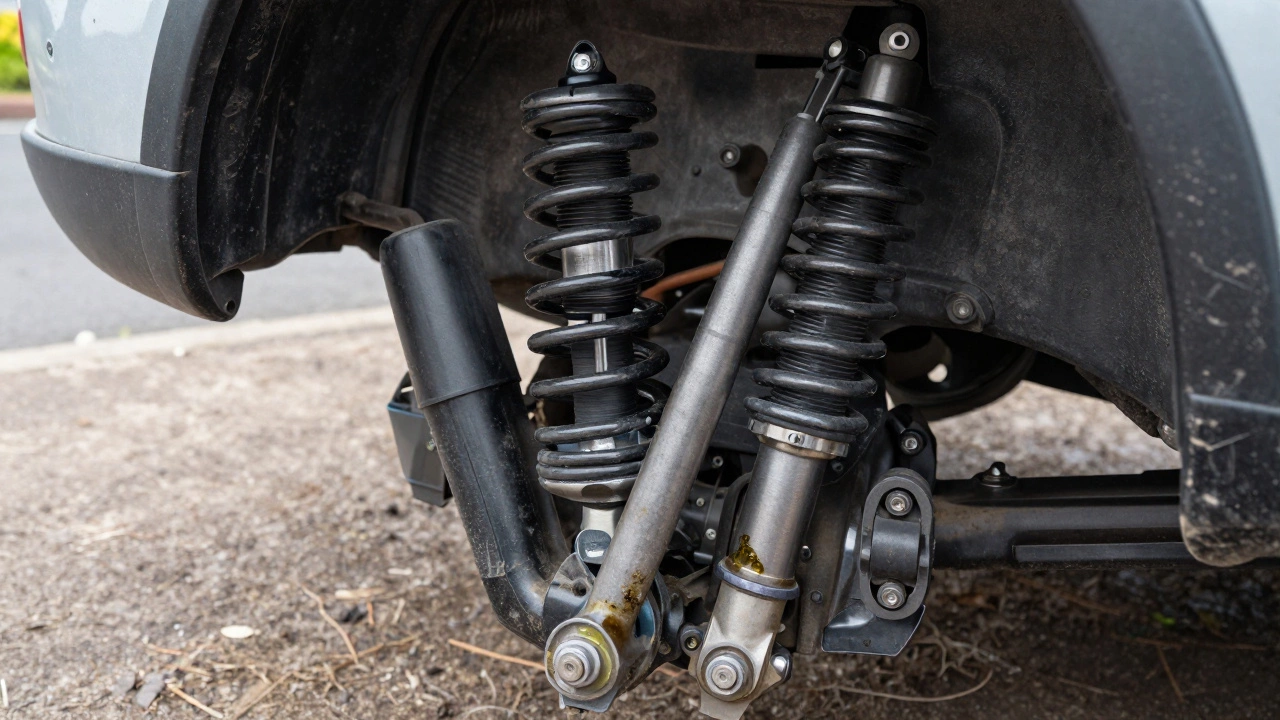
What Parts Are in Your Suspension System?
Your car's suspension keeps you safe and comfortable. Learn what parts are inside it, how they work, signs they're failing, and how to spot problems before they cost you more.
When your car suspension, the system that connects your vehicle to its wheels and absorbs road impacts. Also known as vehicle suspension, it keeps your tires on the road, controls bounce, and makes every drive smoother. If it’s worn out, you don’t just feel it—you see it in how your car handles corners, how it bounces over bumps, and even how your tires wear down. A bad suspension doesn’t just make your ride uncomfortable. It makes it dangerous.
Most people don’t think about suspension until something goes wrong. But the real clues show up long before a full breakdown. If your car leans too much when turning, or if it feels like it’s floating over small bumps, your shock absorbers, components that dampen spring movement and control wheel motion are likely worn out. If you hear clunking when going over speed bumps, or if your car bounces more than once after hitting a dip, those are not normal. A quick bounce test—press down hard on one corner of your car and let go—can tell you a lot. If it keeps rocking, your shocks are done. And if you notice uneven tire wear, especially on one side, that’s often a sign your suspension isn’t holding the tires level.
Replacing suspension diagnostics, the process of identifying worn or failing suspension parts through visual checks, driving symptoms, and mechanical tests isn’t always expensive, but ignoring it is. You don’t need to replace the whole system at once. Often, just the shocks or struts need swapping. But if you wait too long, you’ll start wearing out your tires faster, stressing your steering components, and even damaging your wheels. Some drivers think suspension repairs are a luxury. They’re not. They’re a safety must. A car with bad suspension takes longer to stop, handles poorly in rain or wind, and can lose control on uneven surfaces. That’s not a risk worth taking.
What you’ll find below isn’t theory. It’s real-world advice from drivers who’ve been there. We’ve pulled together posts that show you exactly how to spot failing shocks, what noises to listen for, how to test your suspension at home, and when it’s time to walk into a shop instead of DIYing it. You’ll see what parts actually wear out, how much repairs cost in the UK, and why some fixes are cheaper than others. No guesswork. No upsells. Just what you need to know to keep your car safe and your wallet intact.
 Dec, 4 2025
Your car's suspension keeps you safe and comfortable. Learn what parts are inside it, how they work, signs they're failing, and how to spot problems before they cost you more.