Suspension Problem Diagnosis Tool
Check symptoms
Select all symptoms you're experiencing with your vehicle suspension. The tool will identify potential issues based on your answers.
When your car feels bouncy over bumps, pulls to one side, or makes clunking noises on rough roads, it’s not just the road being rough-it’s your suspension letting you know something’s wrong. Most drivers don’t think about their suspension until it starts failing. But understanding what’s inside it helps you spot problems early, save money, and drive safer.
What Exactly Is a Suspension System?
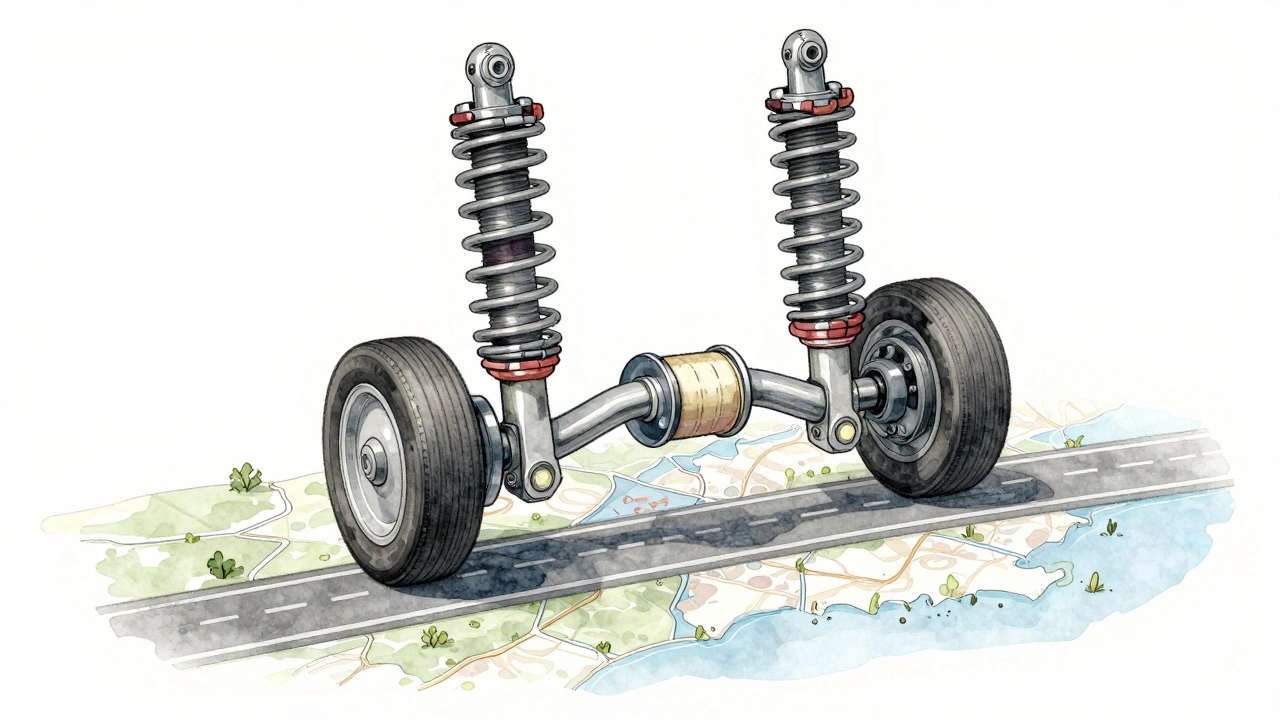
Your car’s suspension isn’t one part. It’s a team of components working together to keep your tires on the road, absorb shocks, and let you steer smoothly. Think of it like a spring-loaded harness that holds your car’s body steady while letting the wheels move up and down over bumps, potholes, and uneven surfaces.
Without a good suspension, your tires lose contact with the road. That means less grip, longer stopping distances, and a higher chance of losing control. In the UK, where roads vary from smooth motorways to cracked city streets and muddy rural lanes, a healthy suspension isn’t a luxury-it’s a necessity.
Key Parts in Your Suspension System
Here’s what you’ll find under your car, working quietly behind the scenes:
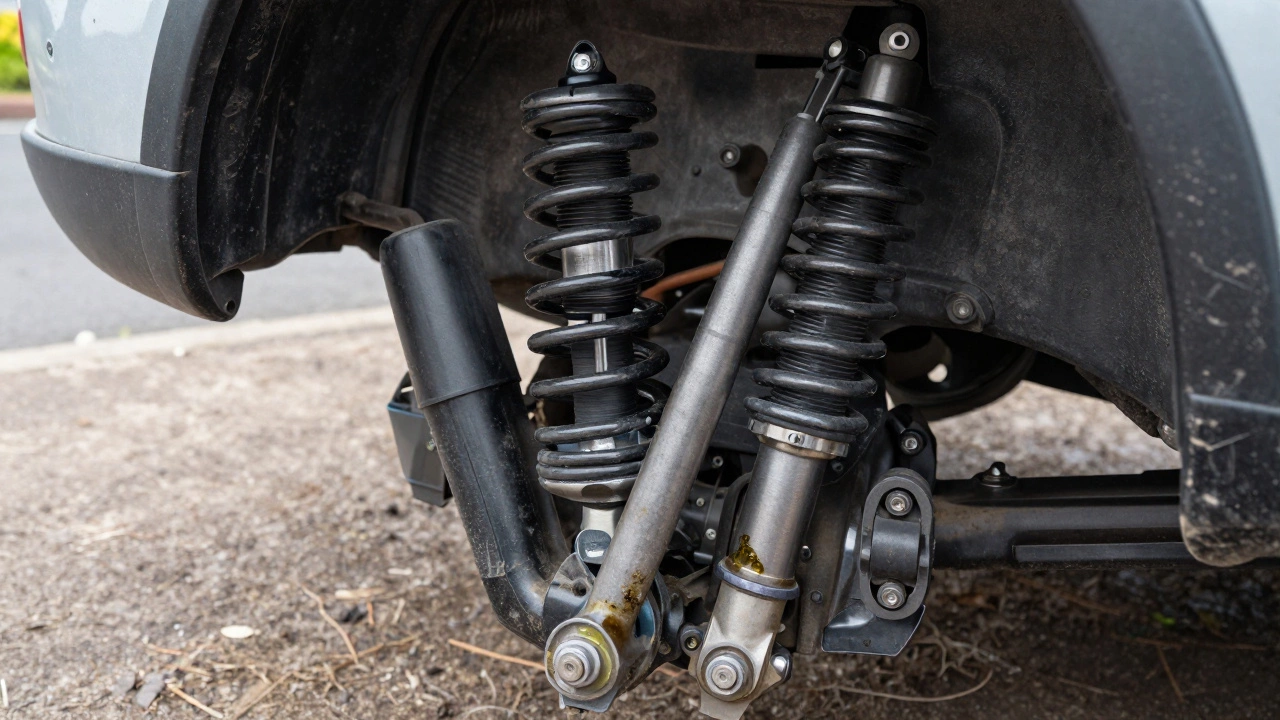
- Shock absorbers (or dampers): These don’t support the car’s weight, but they control how fast the springs bounce back. If your shocks are worn, your car will bounce like a trampoline after hitting a bump. Most manufacturers recommend checking them every 50,000 miles.
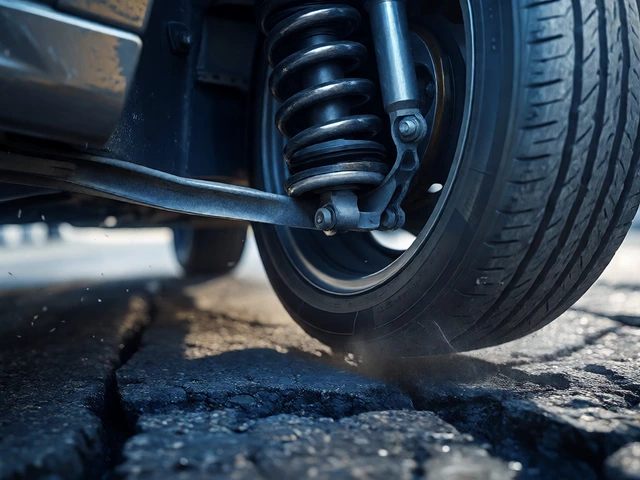
- Struts: These combine a shock absorber and a coil spring into one unit. They also act as a structural part of the steering system. Cars like the Ford Focus and Volkswagen Golf use struts in the front. Replacing struts often means getting a wheel alignment afterward.
- Coil springs: These are the metal coils you see wrapped around struts or sitting under the wheels. They carry the weight of your car and absorb impact. Over time, they can sag-especially on older vehicles or those carrying heavy loads regularly.
- Control arms: These connect your wheels to the car’s frame. They let the wheels move up and down while keeping them aligned. Worn bushings on control arms cause clunking noises and uneven tire wear.
- Ball joints: These act like human hip joints-allowing movement in multiple directions. A worn ball joint can cause steering wobble or even a wheel to fall off in extreme cases. If you hear a clicking sound when turning, it’s often a sign.
- Stabilizer bars (also called anti-roll bars): These connect the left and right sides of the suspension to reduce body roll during cornering. If your car leans too much in turns, the stabilizer bar links or bushings might be worn.
- Suspension bushings: Made of rubber or polyurethane, these cushion metal parts from rubbing together. When they crack or harden, you’ll feel more road noise and vibration in the cabin.
- Mounts and bearings: These hold the top of struts to the car’s body. A broken mount can cause a knocking sound when going over bumps or turning the steering wheel.
How Do These Parts Work Together?
Imagine driving over a speed bump. Here’s what happens in under a second:
- The wheel hits the bump and moves upward.
- The coil spring compresses to absorb the impact.
- The shock absorber slows down the spring’s rebound so your car doesn’t bounce uncontrollably.
- The control arm lets the wheel move in an arc while keeping alignment.
- The ball joint allows the wheel to turn as you steer.
- The stabilizer bar twists slightly to keep the car level.
- All the bushings flex to absorb vibrations before they reach the cabin.
If any one part fails, the others work harder-and wear out faster. A bad shock absorber puts extra stress on the springs and bushings. A worn ball joint makes the control arm move unpredictably. That’s why it’s not enough to replace just the part that’s noisy. You need to check the whole system.
Signs Your Suspension Needs Attention
You don’t need a mechanic to tell you something’s wrong. Here’s what to watch for:
- Excessive bouncing: After hitting a bump, your car should settle in one or two bounces. If it keeps rocking, your shocks or struts are worn.
- Uneven tire wear: Cupping (scalloped dips) or one-sided wear often points to alignment issues caused by worn suspension parts.
- Steering feels loose or pulls to one side: This can come from worn ball joints, control arms, or bushings.
- Clunking or knocking noises: Especially when going over bumps or turning. That’s usually a sign of loose or broken mounts, bushings, or ball joints.
- Car sits lower on one side: A sagging spring or broken strut will tilt your car. This affects handling and tire wear.
- Nose dives when braking: If your front end dips sharply when you stop, your shocks aren’t controlling the weight transfer properly.
One real-world example: A driver in Manchester noticed their 2018 Honda Civic kept pulling left after replacing tires. They assumed it was a tire imbalance. But after a suspension check, the mechanic found both front control arm bushings were cracked. Replacing them fixed the pull-and saved them from premature tire replacement.

How Long Do Suspension Parts Last?
There’s no fixed expiry date, but here’s a general guide based on real-world use in the UK:
- Shock absorbers and struts: 50,000-100,000 miles. In cities with potholes, they often fail sooner.
- Coil springs: 100,000+ miles, unless damaged by corrosion or heavy loads.
- Ball joints and control arms: 70,000-120,000 miles. Rubber bushings wear faster than metal parts.
- Stabilizer bar links: 40,000-80,000 miles. They’re often the first to go because they’re exposed to road salt and moisture.
- Bushings: 60,000-100,000 miles. Rubber hardens over time, especially in cold winters.
These aren’t hard deadlines. If you drive mostly on smooth roads, your parts last longer. If you haul heavy loads, drive on gravel, or live near the coast (where salt accelerates rust), expect to replace them earlier.
What Happens If You Ignore Worn Suspension?
Skipping suspension repairs doesn’t just make your ride uncomfortable-it’s dangerous.
- Longer stopping distances: Worn shocks reduce tire contact, making brakes less effective. A 2023 study by the RAC found cars with worn shocks took up to 17% longer to stop on wet roads.
- Increased tire wear: A misaligned wheel from bad suspension can destroy a set of tires in under 5,000 miles.
- Damage to other parts: A failing ball joint can break the steering linkage. A broken strut can damage the wheel well or fender.
- Higher repair bills: Fixing a $150 bushing is cheaper than replacing a $1,200 wheel hub after a crash.
It’s not just about safety-it’s about cost. Most garages charge £80-£120 per hour for labor. If you delay a simple bushing replacement, you might end up paying for three parts instead of one.
How to Check Your Suspension Yourself
You don’t need special tools to do a basic check:
- The bounce test: Push down hard on each corner of the car. Let go. If it bounces more than once or twice, the shocks or struts are worn.
- Look for leaks: Check the shock absorbers and struts for oily residue. If you see oil dripping or coating the part, it’s leaking and needs replacing.
- Inspect for damage: Look under the car for bent or cracked control arms, broken springs, or missing bolts.
- Listen for noise: Drive slowly over a bumpy surface and listen for clunks or rattles. Have a passenger help you pinpoint where it’s coming from.
- Check tire wear: Look at your tires. Cupping, feathering, or one-sided wear means your suspension is out of alignment.
Do this every 10,000 miles or before long trips. If you’re unsure, get a professional inspection. Many garages offer free suspension checks.
Replacing Suspension Parts: DIY or Pro?
Some parts, like shock absorbers, can be replaced by a DIYer with basic tools and a jack stand. Struts are trickier-they’re under spring tension. If you don’t have a spring compressor, don’t attempt it.
Ball joints and control arms require alignment afterward. That’s not a DIY job unless you have access to a professional alignment machine. In the UK, a four-wheel alignment costs around £50-£80. If you skip it after replacing suspension parts, you’ll wear out your tires fast.
For most people, it’s smarter to let a trusted garage handle it. Look for a garage with a good reputation and ask if they use OEM or high-quality aftermarket parts. Cheap parts can fail within months.
What to Look for When Buying Replacement Parts
Not all suspension parts are made equal. Here’s what to consider:
- OEM parts: Made by the same company that built your car. They match the original ride quality and durability. More expensive, but worth it for longevity.
- Aftermarket premium: Brands like Monroe, KYB, and Bilstein offer parts that often outperform OEM. Good for performance or heavy use.
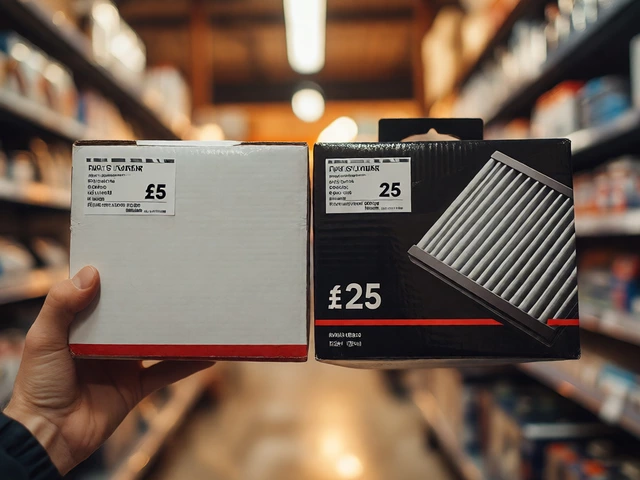
- Discount aftermarket: Avoid these unless you’re on a tight budget. They often use cheap rubber and thin metal. They might fit, but they won’t last.
- Warranty: Look for at least a 1-year warranty. Reputable brands offer 2-3 years.
For a daily driver in the UK, stick with trusted brands. Don’t save £30 on a shock absorber if it means replacing it again in 12 months.
Final Thought: Suspension Is Your Safety Net
Your suspension doesn’t get headlines. No one posts about it on social media. But it’s the quiet hero that keeps you safe on wet A-roads, through potholes, and around sharp bends. When it fails, you don’t just lose comfort-you lose control.
Don’t wait for a loud clunk or a warning light. Check your suspension regularly. Listen. Look. Test. And if something feels off, get it checked. A few minutes now can save you hundreds later-and maybe even your life.
What are the most common suspension parts that fail?
Shock absorbers and struts are the most common, especially in areas with poor road conditions. Ball joints, control arm bushings, and stabilizer bar links also wear out frequently. These parts are exposed to road salt, potholes, and constant movement, making them the first to show signs of wear.
Can I drive with a broken suspension?
You can, but you shouldn’t. Driving with a broken suspension reduces your ability to control the car, especially in emergencies. It also damages other parts like tires, wheels, and steering components. If you hear loud clunks or your car leans heavily, get it towed.
How much does it cost to replace suspension parts?
Costs vary by part and car model. Replacing a pair of shock absorbers can cost £200-£500 including labor. Struts run £300-£700. Ball joints are cheaper-£100-£250. Labor takes 1-3 hours depending on complexity. Always get a quote before work starts.
Do I need an alignment after replacing suspension parts?
Yes, absolutely. Any time you replace control arms, struts, ball joints, or steering components, your wheel alignment will be thrown off. Driving with misaligned wheels causes uneven tire wear and poor handling. A four-wheel alignment costs around £50-£80 and is essential.
How often should I get my suspension checked?
Check it every 10,000 miles or once a year, whichever comes first. If you drive on rough roads, carry heavy loads, or live near the coast, check it every 6 months. Many garages offer free inspections-take advantage of them.