Car Air Filter Advisor
Your Driving Profile
Recommendation Summary
Standard Mechanical Filter Standard
Pros: Consistent performance, lower cost, better moisture tolerance.
Cons: Less effective at capturing ultra-fine PM2.5 particles initially.
Electrostatic ("Polarized") Filter Premium
Pros: Excellent initial capture of fine dust/smoke/pollen.
Cons: Charge fades quickly (3-6 months), higher cost, sensitive to humidity, potential airflow restriction.
Select your driving profile and click "Analyze Options" to see which filter type offers the best value for your situation.
You might have heard the term "polarized" thrown around in auto shops or seen it on a box at your local parts store. It sounds technical, maybe even high-tech. But here is the thing: polarized isn't actually a standard category for engine air filters in modern automotive engineering. Most people asking about this are confusing it with two other things: polarized sunglasses (which affect visibility, not airflow) or specific electrostatically charged cabin filters that use static electricity to trap dust.
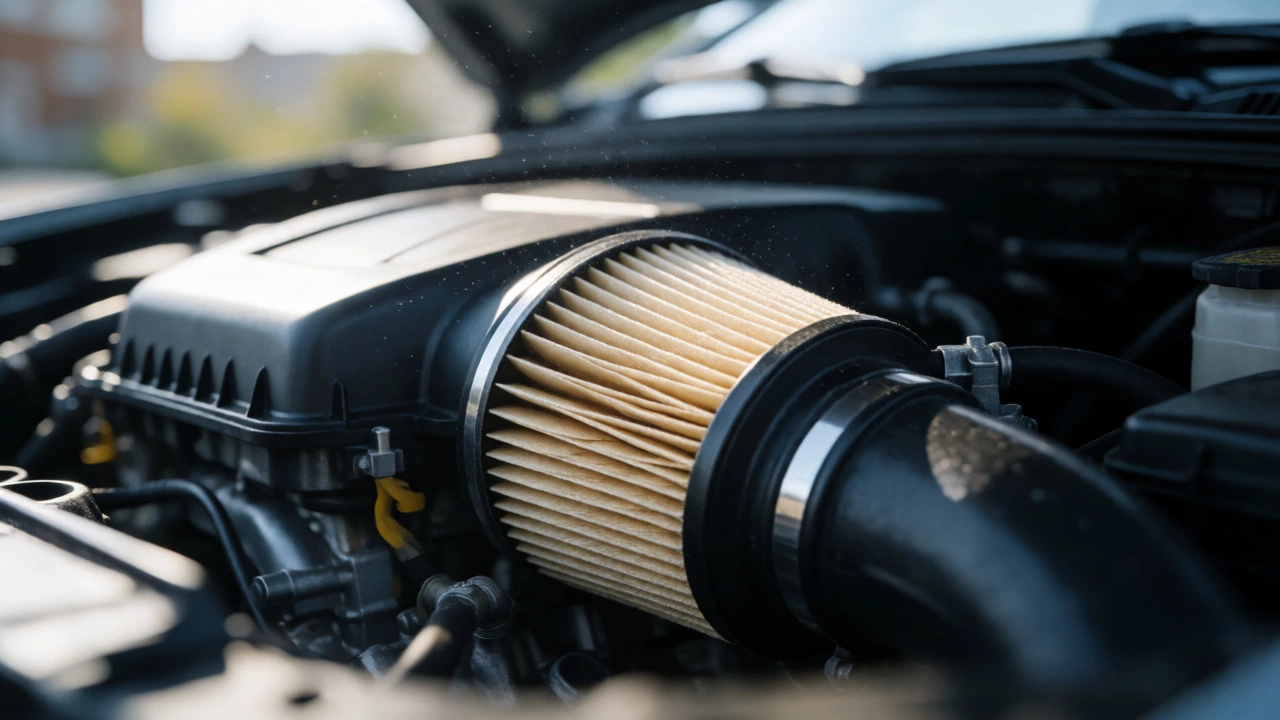
If you are looking at an engine air filter and wondering if "polarization" is a feature you need, the short answer is no. Engine air filters rely on mechanical filtration-physical barriers like paper, cotton gauze, or synthetic mesh-to stop dirt from entering your engine. They don't typically use magnetic or electric polarization to catch particles. However, if you are talking about cabin air filters that claim to be "electrostatically charged" or sometimes mislabeled as polarized, there are real downsides to consider. These filters use a static charge to attract tiny particles like pollen and smoke. While they sound great on paper, they come with specific drawbacks that can hurt your car's comfort and efficiency.
The Confusion: What Does "Polarized" Actually Mean Here?
Let’s clear up the jargon first. In physics, polarization refers to the orientation of waves, like light. That’s why polarized sunglasses cut glare off wet roads. But in air filtration? It usually refers to electrostatic attraction. Some premium cabin filters are treated with materials that hold a static electrical charge. This charge acts like a magnet for microscopic debris that would otherwise pass through the physical fibers of a standard paper filter.
But here is the catch: that charge doesn’t last forever. And relying on it has consequences. If you are shopping for filters, you need to know which type you are buying because the disadvantages differ significantly between standard mechanical filters and these electrostatic variants.
Short Lifespan of Electrostatic Charge
The biggest downside to filters marketed with "polarized" or electrostatic properties is that their effectiveness drops over time. The static charge is fragile. Humidity, heat, and just the passage of time cause the charge to dissipate. Unlike a physical barrier that works until it’s clogged, an electrostatic filter starts losing its special ability to grab fine dust after just a few weeks or months.
Imagine buying a vacuum cleaner that only sucks up dust really well for the first week, then suddenly becomes mediocre even though the bag isn’t full yet. That is what happens with these filters. You pay a premium price for that initial high-efficiency capture of PM2.5 particles (fine pollution), but you aren’t getting that level of protection for the entire service interval. By the time you are due for a replacement, the filter is essentially acting like a cheap, basic paper filter, but you paid three times more for it.
Increased Airflow Restriction
To create that static charge, manufacturers often pack the filter media tighter or add layers of synthetic material. While this helps catch smaller particles, it creates resistance. Air has to work harder to push through the filter medium. For a cabin filter, this means your blower fan has to spin faster to push air into the car. Faster spinning fans mean more noise. You will hear a louder hum when you turn on the AC or heater, especially on higher settings.
For engine air filters, if someone mistakenly installs a dense, high-efficiency filter thinking it’s "better," they might restrict airflow to the engine. Modern engines are tuned for specific air volumes. If the filter is too restrictive, the engine has to suck harder to get the air it needs. This can lead to a slight drop in throttle response. You might notice the car feels a bit sluggish when you step on the gas pedal hard. It’s not always dramatic, but in a sensitive turbocharged engine, every bit of restriction matters.
Sensitivity to Moisture and Humidity
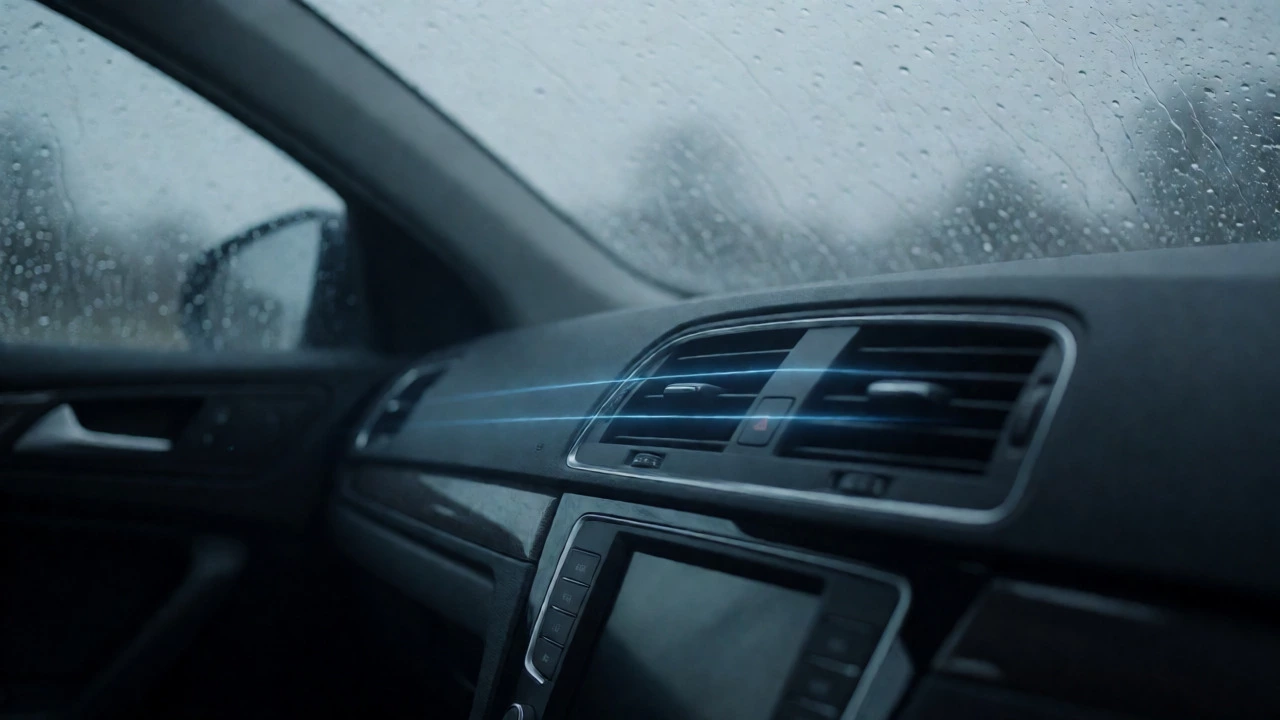
This is a big one for drivers in the UK. We live in a damp climate. Rain, fog, and high humidity are constant companions. Electrostatic charges hate moisture. Water molecules interfere with the static field that traps dust. If your cabin filter gets damp-which happens frequently when you drive through rain or use the defroster heavily-the polarization effect weakens significantly.
A wet filter also becomes a breeding ground for mold and bacteria. Standard paper filters can handle some moisture by drying out, though they degrade eventually. But if the electrostatic coating breaks down due to moisture, you lose the benefit entirely. Worse, if the filter stays damp, you might start smelling musty odors coming from your vents. That "old gym sock" smell is often a sign that organic matter is building up on a filter that isn’t draining or drying properly.
Cost vs. Benefit Analysis
Let’s look at the money. A standard paper cabin filter costs around £10-£15. An electrostatically charged or "activated carbon" filter (often confused with polarized tech) can cost £25-£40. Is the extra £15-£25 worth it?
| Feature | Standard Paper Filter | Electrostatic/Polarized Type |
|---|---|---|
| Initial Cost | Low (£10-£15) | High (£25-£40) |
| Filtration Efficiency | Good for large dust/pollen | Excellent for fine dust/smoke initially |
| Lifespan of Tech | Consistent until clogged | Degrades quickly (3-6 months) |
| Airflow Impact | Minimal restriction | Higher restriction, louder fan |
| Moisture Tolerance | Moderate | Poor (charge fails when wet) |
For most drivers, the standard filter does a perfectly good job. Unless you suffer from severe allergies or live next to a major highway with heavy diesel traffic, the marginal gain in air quality from the expensive filter isn’t noticeable enough to justify the cost, especially since the benefit fades so quickly.

Environmental Concerns
There is another angle we rarely talk about: waste. Because electrostatic filters lose their special properties relatively quickly, people tend to replace them more often than they need to physically replace a clogged paper filter. You end up throwing away a filter that still has plenty of life left in its physical structure, just because the "magic" charge is gone.
Moreover, many of these advanced filters use synthetic plastics and non-recyclable composite materials. Standard cellulose (paper) filters are biodegradable and easier to recycle in some municipal systems. When you buy a complex multi-layered filter with chemical treatments, you are creating more landfill waste for a temporary benefit. If you care about your environmental footprint, sticking to simple, high-quality mechanical filters is often the greener choice.
When Should You Actually Upgrade?
So, should you avoid these filters entirely? Not necessarily. There are scenarios where paying extra makes sense. If you drive a classic car with poor ventilation, or if you commute through tunnel-heavy routes like the M25 in London where exhaust fumes concentrate, an activated carbon filter (which adsorbs gases rather than just trapping particles) can help reduce smells. Note that activated carbon is different from electrostatic polarization, but they are often sold together in premium packages.
Also, if you have a medical condition like asthma triggered specifically by ultra-fine particulate matter (PM2.5), the initial boost in filtration might help during the first few months. Just go in with your eyes open: you are buying a consumable that degrades. Don’t expect it to perform like new after six months.
Practical Tips for Manchester Drivers
Living in Manchester, you deal with rain and urban pollution. Here is how to handle your filters without wasting money:
- Check your manual: See what OEM (Original Equipment Manufacturer) recommends. Usually, it’s a standard cabin filter every 15,000-20,000 miles.
- Smell test: If your AC smells musty, change the filter immediately. Don’t wait for the mileage interval. Mold loves damp UK weather.
- Engine filter check: For your engine, stick to reputable brands like Mann-Filter, Bosch, or K&N (if using reusable cotton). Avoid cheap no-name brands that might shed fibers into your intake manifold.
- Don’t trust marketing buzzwords: If a box says "Nano-Polarized Magic Dust Catcher," be skeptical. Look for HEPA ratings or specific micron filtration specs instead.
Is a polarized air filter better than a normal one?
Not necessarily. "Polarized" usually refers to electrostatic charging in cabin filters. While they capture finer particles initially, the charge fades quickly, making them less cost-effective long-term compared to standard high-quality paper filters.
Do polarized filters affect engine performance?
Engine air filters are rarely polarized. If you install a very dense high-efficiency filter, it might slightly restrict airflow, potentially reducing throttle response. Cabin filters with static charges can make the blower motor work harder, increasing fan noise.
How long do electrostatic cabin filters last?
The electrostatic charge typically degrades within 3 to 6 months, depending on humidity and usage. After this period, they function similarly to standard filters but at a higher price point.
Can I wash a polarized air filter?
Most disposable electrostatic filters cannot be washed. Washing removes the static charge and damages the media. Only reusable cotton gauze filters (like K&N) are designed to be cleaned and oiled, but they operate on mechanical filtration, not polarization.
Why do my windows fog up with a new filter?
If the filter is too restrictive, the defroster may not blow enough air onto the windscreen. Ensure you are using the correct size and type recommended by the manufacturer to maintain proper airflow volume.