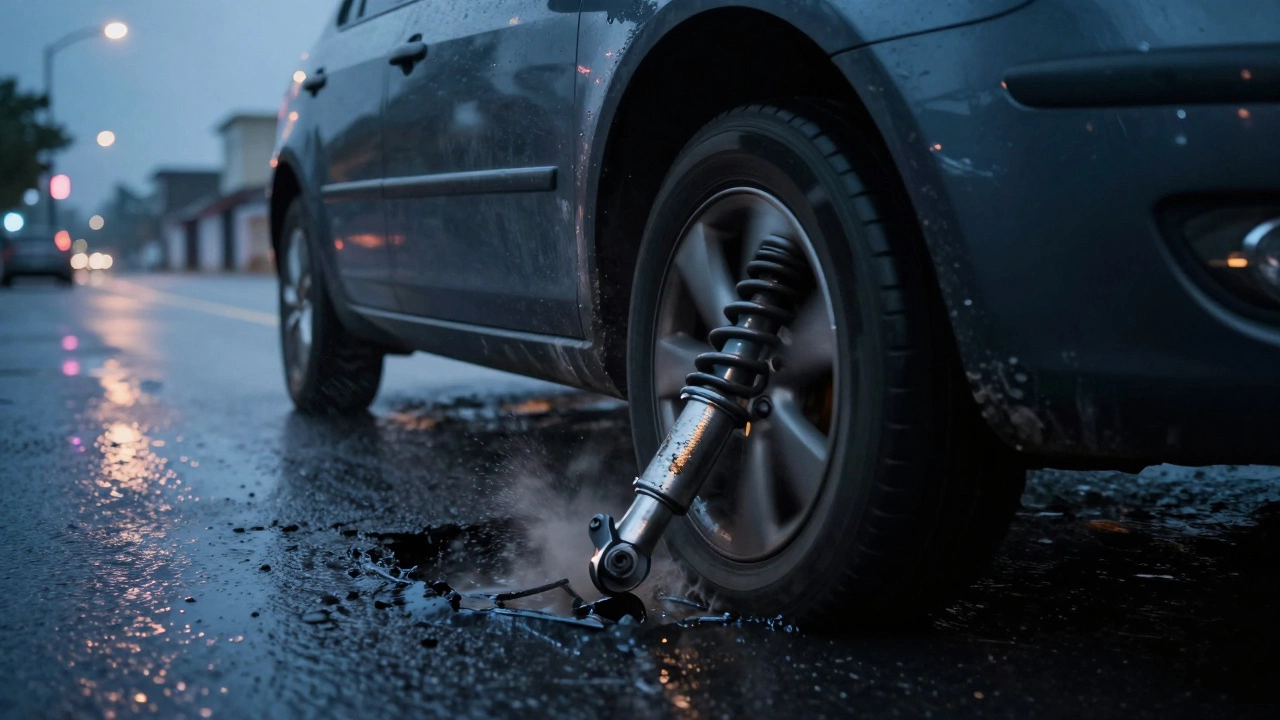
Suspension Noise Diagnostic Tool
What Noise Is Your Car Making?
Select the sound you're hearing to learn what it means and recommended actions.
Bouncing/Rattling
Rapid bouncing or rattling after bumps
What It Means
This rapid bouncing or rattling sound indicates worn shock absorbers. The shock can no longer control the spring's movement, causing the wheel to jump back and forth. It's often worse on rough roads and gets louder with speed.
Recommended Actions
- Do the bounce test: Push down hard on one corner of the car and release. If it bounces more than twice, replace shocks
- Check for oil leaks on the shock body
- Replace shocks in pairs for balanced handling
Estimated cost: £80-£200 per pair
Clunking/Thudding
Loud metallic clunk or thud over bumps
What It Means
This heavy, metallic bang typically indicates broken or worn internal shock components, or cracked rubber bushings. It means the shock can no longer control the spring's movement, causing metal to hit metal.
Recommended Actions
- Do not delay - this is potentially dangerous
- Check shock mounts and bushings for damage
- Have a professional inspection immediately
Estimated repair time: 1-2 hours
Squeaking/Creaking
High-pitched squeak or creak over bumps
What It Means
This sound often indicates dried out or cracked rubber bushings or mounting hardware. When the rubber wears, metal parts rub directly against each other, causing the squeak. This is common in older vehicles, especially in damp climates.
Recommended Actions
- Inspect rubber bushings for cracks
- Check mounting hardware for looseness
- Replace worn bushings as needed
Typically less expensive repair
Hissing/Air Leak
Faint continuous hissing sound
What It Means
This indicates a broken internal seal in gas-charged shocks. The gas is leaking out, which reduces the shock's ability to control rebound. You'll feel a floaty ride with increased body roll during turns.
Recommended Actions
- Replace gas-charged shocks immediately
- Check for visible gas leaks at the shock body
- Consider higher-quality replacement shocks
More common in performance vehicles
Don't Know Which Noise You're Hearing?
Listen to common suspension noises:
If your car suddenly sounds like a rusty spring being squished every time you hit a bump, you’re not imagining things. That noise is your suspension screaming for help. Bad shocks don’t just make noise-they turn your ride from smooth to jarring, and they can make your car unsafe to drive. You don’t need to be a mechanic to spot the signs. The sounds alone tell you a lot.
The Classic Clunking Noise
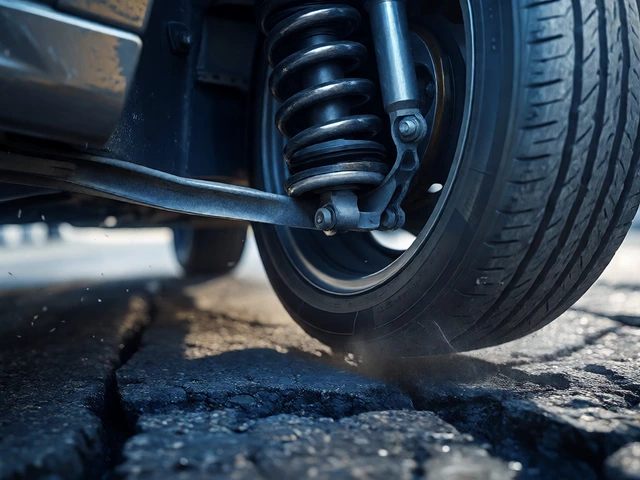
One of the most common sounds from worn shocks is a loud clunk or thud when you go over a pothole or speed bump. It’s not a light tap-it’s a heavy, metallic bang that seems to come from under the car. This happens because the shock absorber’s internal components have worn out or broken. The piston inside the shock can no longer control the spring’s movement, so the spring slams into its upper or lower mount. In older cars, the rubber bushings around the shock mount crack and collapse, letting metal hit metal. If you hear this, especially when turning or braking, don’t ignore it. It’s not just annoying-it’s dangerous.
The Bouncing or Rattling Sound
Ever notice your car bouncing up and down like a pogo stick after you drive over a bump? That’s not normal suspension behavior. A healthy shock absorbs energy and stops the bounce immediately. When shocks fail, the spring keeps rebounding. You’ll hear a rapid rattling or chattering noise as the wheel jumps back and forth. It’s often worse on rough roads or gravel. Some people mistake this for a loose wheel or bad ball joint, but if the noise follows the road surface and gets louder with speed, it’s almost always the shocks. Try the bounce test: push down hard on one corner of the car and let go. If it bounces more than once or twice, your shocks are worn out.
The Squeaking or Creaking Noise
Squeaks aren’t always about shocks, but they can be. If you hear a high-pitched squeak or creak when going over bumps-especially in cold weather-it’s likely the rubber bushings or mounting hardware drying out or cracking. These parts hold the shock in place and absorb vibration. When they wear, metal parts rub directly against each other. The sound often gets worse when the car is cold and improves after driving for a few minutes as parts warm up. This is a classic sign in cars over 8 years old, especially in places like Manchester where damp winters accelerate rubber degradation.
The Hissing or Air Leak Sound
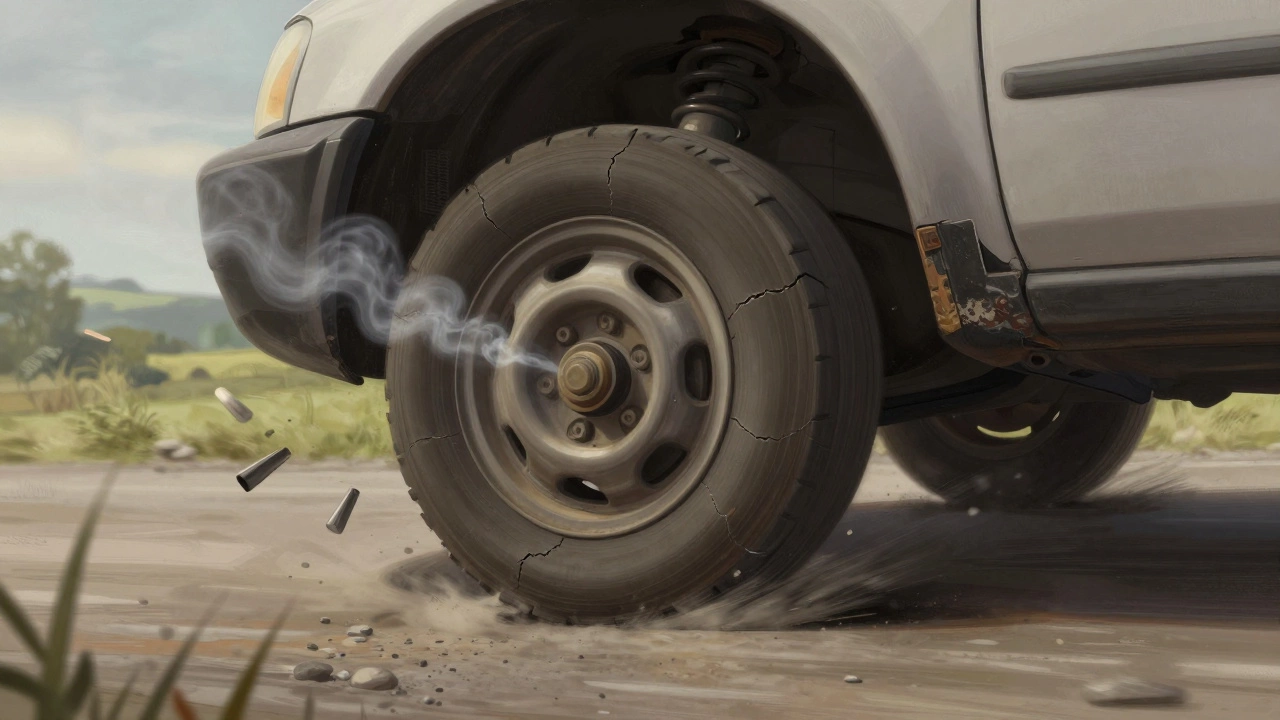
Some shocks, especially gas-charged ones, can make a faint hissing noise when they’re failing. This isn’t loud like a tire leak-it’s more like a quiet, continuous air escape. It happens when the internal seal breaks and gas leaks out of the shock chamber. Without that gas pressure, the shock loses its ability to control rebound. You might not hear it unless you’re standing right next to the car, but you’ll feel it: the ride gets floaty, and the car leans more in turns. This is more common in performance cars or vehicles with upgraded shocks, but it can happen in any car with age or heavy use.
Why These Sounds Matter More Than You Think
Bad shocks don’t just make noise-they ruin your control. When shocks fail, your tires lose contact with the road more often. That means longer stopping distances, especially in wet conditions. A study by the Auto Alliance found that worn shocks can increase braking distance by up to 20% on wet pavement. That’s the difference between stopping before a pedestrian and hitting them. You also get uneven tire wear. If your tires are wearing on the inside or outside edges faster than normal, worn shocks are often the hidden cause. And let’s not forget steering: bad shocks make your car feel loose or vague when turning, especially at highway speeds.
What to Do When You Hear These Sounds
Don’t wait for the noise to get louder. Here’s what to do:
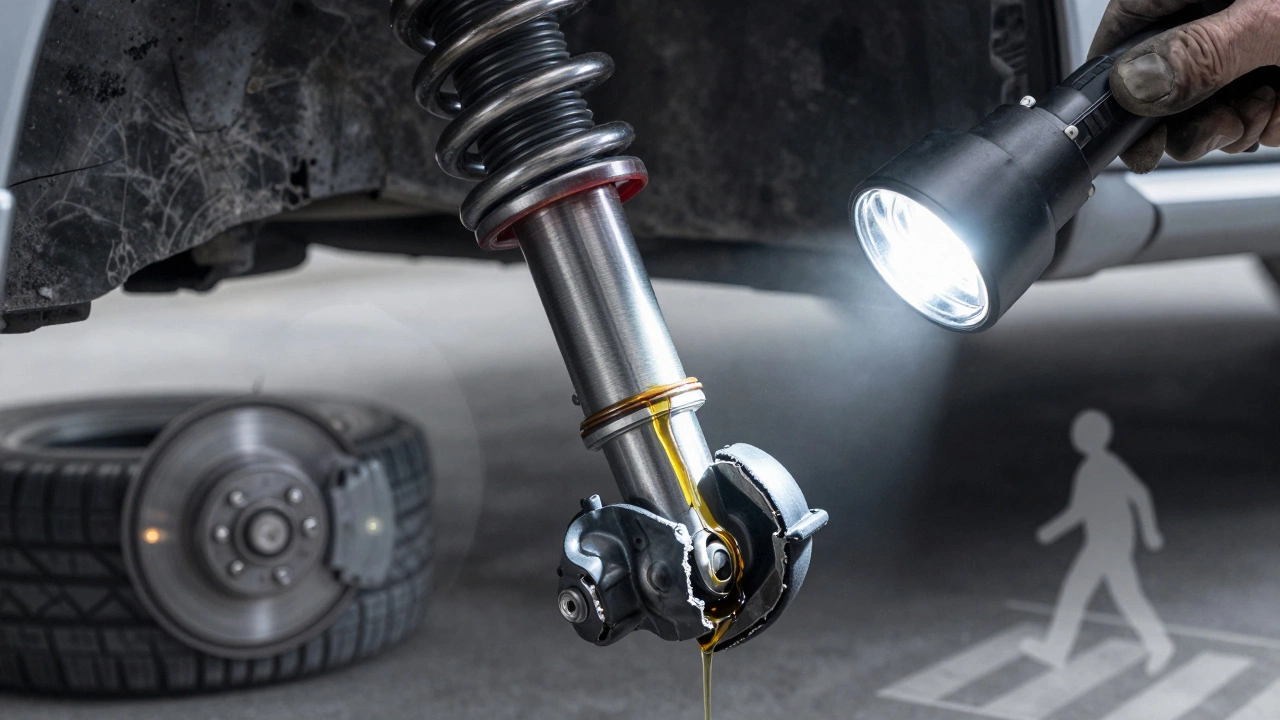
- Check the shocks visually. Look for oil leaking down the shock body-this is the #1 sign of internal failure.
- Do the bounce test on all four corners. More than two bounces means replacement time.
- Inspect the mounting hardware. Loose bolts, cracked rubber bushings, or rusted brackets need fixing even if the shock itself still works.
- Replace shocks in pairs. Always replace both front or both rear shocks together. Mixing old and new shocks creates uneven handling.
- Consider replacing struts if your car uses them. Many modern cars have strut assemblies that combine the shock and spring. If one is bad, the whole unit usually needs replacing.
Most shops can replace shocks in under two hours. Parts cost between £80 and £200 per pair, depending on your car model. Don’t go for the cheapest option-budget shocks often fail within a year. Stick with brands like Monroe, KYB, or Bilstein. They’re worth the extra cost.
What Doesn’t Cause These Sounds
It’s easy to blame shocks for every weird noise, but not every rattle is from them. A clunking sound could be a broken sway bar link. A squeak might be a worn control arm bushing. A rattling noise could be a loose exhaust hanger. That’s why it’s smart to get a professional inspection if you’re unsure. A mechanic can lift the car and check the entire suspension system in minutes. It’s cheaper than replacing parts you don’t need.
When to Replace Shocks Before They Fail
You don’t have to wait for noise to act. Most manufacturers recommend replacing shocks every 50,000 to 70,000 miles. But that’s just a guideline. If you drive on rough roads, carry heavy loads, or live in a place with bad weather, replace them sooner. In the UK, where roads are often pitted and wet, many drivers need new shocks by 60,000 miles. If your car feels less stable, tires are wearing unevenly, or you notice more body roll in corners, it’s time-even if the shocks look fine.
What Happens If You Ignore It
Driving with bad shocks doesn’t just make your ride uncomfortable. It damages other parts. The extra stress wears out your tires faster-sometimes in just a few thousand miles. It puts strain on your steering system, ball joints, and even your brake rotors. One driver in Manchester told me his car needed a new steering rack after two years of ignoring clunking shocks. The repair cost over £1,200. New shocks would’ve been £300. That’s not a gamble worth taking.
Bad shocks also increase your risk of losing control in an emergency. On icy roads, wet corners, or sudden swerves, your car won’t respond the way it should. Insurance claims show that vehicles with worn suspension are more likely to be involved in single-vehicle crashes. It’s not just about noise-it’s about safety.
Can bad shocks cause a car to pull to one side?
Yes, but usually only if one side is severely worn and the other isn’t. Uneven shock performance can cause the car to tilt or pull slightly during braking or cornering. However, pulling is more commonly caused by alignment issues, worn tires, or brake problems. If your car pulls, get a full suspension and alignment check.
Do I need to replace shocks if they’re not leaking oil?
Absolutely. Oil leaks are a clear sign, but many failing shocks don’t leak at all. Internal valves and pistons can wear out without any visible oil. The bounce test and ride quality are better indicators than leaks. If the car bounces more than twice after pressing down, or if the ride feels floaty and unstable, replace them.
How long do shocks last in the UK?
In the UK, shocks typically last 50,000 to 70,000 miles, but many drivers need replacements by 60,000 miles due to rough roads, frequent rain, and salted winter surfaces. Cars driven mostly on motorways may last longer. Those used for commuting on city roads with potholes often need new shocks sooner.
Can I drive with bad shocks for a short time?
You can, but it’s risky. Short trips on smooth roads won’t immediately break your car, but they’ll wear out your tires faster and reduce your ability to stop safely. If you’re hearing clunks or feeling excessive bounce, don’t wait. Get it checked within a week. The longer you wait, the more damage you’ll do-and the more expensive the repair.
Are aftermarket shocks better than OEM ones?
It depends. OEM shocks are designed for comfort and longevity under normal conditions. Aftermarket shocks from brands like KYB or Monroe often offer better performance and durability, especially if you drive on rough roads or carry heavy loads. They’re not always stiffer-many are tuned for better control without sacrificing ride quality. Avoid cheap no-name brands; they often fail within a year.
Final Thought: Listen to Your Car
Your car talks to you. The clunk, the rattle, the squeak-they’re not random. They’re warnings. Ignoring them doesn’t save money. It just delays the inevitable-and makes it cost more. If your car sounds wrong over bumps, don’t shrug it off. Get it checked. Replace the shocks. Your tires, your brakes, and most importantly, your safety, will thank you.